Political Games

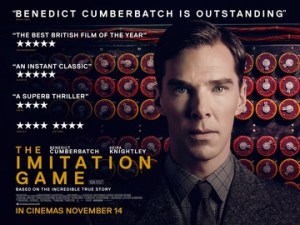
the_imitation_game_poster

The enigma machine held an almost impossible complexity for generating codes. It gave the Nazis a great advantage during World War II since it was beyond the ability of cryptographers to decipher it. It was against this background that Alan Turing developed what would come to be recognized today as the computer. A brilliant mathematician, Turing himself was an enigma, in part because he was a homosexual—and in Britain at the time acting on this was a crime. Turing famously committed suicide just at the start of a brilliant career, probably because of his conviction of this “crime.” Those of you who’ve seen The Imitation Game will recognize the plot of the movie, and most people who read about technology will recognize that the story is largely factual. We like to think we’ve progressed since the days when one’s sexual orientation was considered a crime, but the enigma of the election has proven indecipherable once again.

As we begin to realize just what the price will be to have an avowed bigot in the highest office in the land, it may be helpful to decode things a bit. I, for one, have to admit that having a few days off from work and avoiding the news as much as possible, has been restorative. Watching movies, spending hours at a time writing, and actually seeing family when we’re all awake have been wonderful. Now it’s time to face the cold realities of 2017 with early morning bus rides and a looming intolerance on the horizon.

I have to admit that my mind doesn’t work like that of a code-breaker. Some of the ancient languages I studied were originally decoded by cryptographers who turned their attention to trying to understand people whose only means of communication were forms of writing long forgotten. For me, as a student, it was more a matter of trying to understand what it meant to think like someone else. This may be what is most distressing about the fascist outlook brewing in Washington—there is no desire to even attempt to look at things from the other point of view. It’s a raw celebration of power granted in a moment of weakness. We have tomes and tomes of history to demonstrate just what’s wrong with all of this, but the enigma is that those who have no interest in learning will ever read them. We continue to play a silly political game without counting what we have lost. This may be a zero-sum game after all.

Erector Set Religion

When you think of robots, the first personality type to come to mind isn’t generally the religious sort. Engineers and mechanical wizards, those who understand electronics and pneumatics, computer programmers – they are the masters of the robotic world. Yes, I’ve been to meetings of robotics parents where mention of my ill-fated career is a conversation stopper. I can nearly hear the gears inside the heads of engineers when I tell them I am a former religion professor. They are trying to formulate a logical response, I always suppose, but I know that one does not exist. What more humanistic enterprise might there be than robotics? Humans making creatures in their own image, or in the image of entities stranger than anything found on Noah’s ark, intended for functions too difficult or too unpleasant for their human masters? The triumph of rational thought!

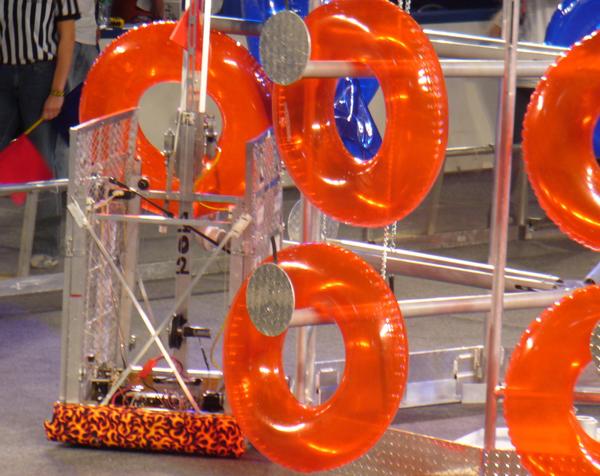
Yesterday I attended a regional middle school FIRST Robotics competition. These events always generate an enthusiasm that belies our national attitude toward the intelligent. (Americans have always distrusted those who think too much.) I feel a little out of my league. Actually, I feel like a T-ball second-stringer up to bat in the World Series. These kids (and adults) are smart. I may be president of a club, but I can’t even find a job, so I know the score before I go in. But the cars tell the true story. In a parking lot full of competitors I always notice how present God seems to be. The license plate right across from us read “HEISLRD” – registration-speak for “He is Lord,” and we all know who He is. A couple cars down a bumper sticker shouted “God rules.” Under these strictures, even a robot that I construct might have a chance. Inside, well-wishers often conclude with “God bless.” And yet they create godless, mechanical beings.

I sometimes wonder what the god of the robots must be like. A cross between Alan Turing and Eli Whitney, I suppose, only a bit more angular. A Transformer-like super being who can run even without a rechargeable battery and can wander far from the electronic grid. One who can be born without the messy organic compounds that make up biological life. The miracles this god creates would be perpetual motion, pristine lubrication, and the ability to heal computer viruses without the assistance of a programmer. Pure artificial intelligence. As I kneel, in my mind, before this non-organic, unfeeling deity of absolute rationality, I take comfort in knowing that we have become the old gods who breathed the first life into these creations and have stepped back to let them rule.

They look innocent enough

By the way, if you are purchasing anything online from Barnes and Noble between December 12 and 17, use Bookfair ID 10378297 and my robotics team will get a teeny-tiny cut of the profits. I plan to purchase a new edition of I, Robot.