Throwin’ Away My Shot

In what sense can someone claim to win when they failed to get the majority vote? A crooked one, by definition. Some might say “rigged,” to use language that has mysteriously disappeared once one party “won.” The definition of crooked is “not straight; bending; curved.” We cast our votes, and depending on which imaginary lines we live within, those votes are diverted to a party of electors. That means that the person who actually wins the majority vote might not win. When it happens—not often—it always benefits the Republican Party. So it has been in my lifetime. And the “winner” never mentions that the majority voted against him. It’s always a “him.” By a recent count Hillary Clinton had over 400,000 more votes than Donald Trump. That final figure may be closer to a million. Whose votes didn’t count? Compare that conservative 400,000 to the 2,000 votes that “won” Pennsylvania. Go ahead, Trumpetters, you like numbers. Isn’t that an order of magnitude or two out of whack? Doubled? Crooked.

The point of the electoral college is that it has now become a game. Games, as we know from each time George W. Bush was elected, can be cheated. “Hanging chad” is engraved on the tombstone of democracy. Was my vote one of the 400,000 that didn’t count? Most assuredly so. If you know how to read, chances are so was yours. Gaming a system hardly seems to be the basis for the will of the people. The people have spoken and they have been, once again, ignored. W didn’t endorse Trump. I wonder what he thinks of the electoral college now. How does it feel, Mr. President, to have thrown away your shot?
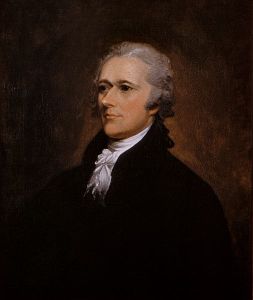
506px-alexander_hamilton_portrait_by_john_trumbull_1806

Some who claim that Republicans know what it feels like to lose need to stop and think. When has their opponent never won both the popular vote and the electoral college? It hasn’t happened in their lifetime. The electoral college may have made sense once, but it no longer does. When we try to tell young people that their vote counts, then put the candidate in office who decisively lost the popular vote, we’re really telling them “throw away your shot.” Still, Republicans are gloating even as the Democrats play by the rules (they’re nice people) and politely throw away their shots. It’s time we stood up for ourselves. When the most contentious candidates (the mind reels at where the GOP can go from Trump), not backed by any previous presidents of their own party, can win based on a technicality, we all need to stand in Weehawken and contemplate what this country has come to.


Before and After

Fresh from seminary with a head full of historical-critical theory competing against my immortal soul, I was lost in the Church of the Holy Sepulcher. I’d learned enough in class and in my own reading to know that the association of Jesus’ burial here only dates back to the fourth century. And also that the identification was made by a politician—Helena was the mother of Constantine—and not a archaeologist, or even a theologian (God help us!). The location was, in other words, hearsay. Three hundred years is a long time to keep track of where something happened. I sit on a bus trundling through Weehawken every day and ponder that we don’t really know where Alexander Hamilton was shot. Such are the ravages of time. I was young and, presciently didn’t know if I’d ever return to Israel, so I wanted to make sure at the time. It was holy confusion. Finally an elderly Coptic monk beaconed me into his edicule to touch the stone. He gave me a cheap rosary and asked for a donation.

churchoftheholysepulcher1885

The scene returned to me when a friend sent me a story about the “discovery” of the actual chamber behind the build-up. The report by Fiona MacDonald in Science Alert briefly tells the background to the location and describes the hurried excavation. Still, we have no idea if, as Indiana Jones might say, “They’re digging in the wrong place.” Tradition has nevertheless hallowed the spot. For seventeen-hundred years some people have suggested this is where it all happened, and where many of the liturgical churches agree. Some Protestant groups, attuned to the Bible a bit more than tradition, have suggested The Garden Tomb is the correct location. The years ago when an academic future seemed in store, I stopped by there too, just in case. There were no crowds.

An enormous amount of effort was poured into building and maintaining the Church of the Holy Sepulcher. Crowded with tourists and various orders of clergy, I wondered how anyone might find such an experience spiritual. Territories are marked out between the various denominations seeking legitimacy in stone. Who wouldn’t want to own the spot where it actually happened? Wouldn’t that be the ultimate truth claim? So more money is being spent. More digging is taking place. Science, some believe, might come to the rescue of religion. From my experience, brief though it was, trying to make sense of the Holy Sepulcher, I have my doubts. But what do I know? I’m not even sure if Copts use rosaries.


Commander in Heaven

I pity the nation that doesn’t have divine founders. Origin myths help to orient our thoughts about where we belong in the order of things. Given enough time, any national founder will become a god. When a friend recently shared a blog post about Gogmagog, I had to dust a few cobwebs from my memory to place the mythic founding of Britain. During our years in Scotland my wife and I read about the heritage of the British Isles, according to bards before the Bard. Bede, Geoffrey, and the anonymous author(s) of the Mabinogion. Long before the Romans arrived on those islands, there had been gods, demons, and giants. The Medieval writers, of course, were drawing from the Bible. Gog and Magog are figures from Ezekiel, borrowed by Revelation. Sacred writ says enough about them only to make them mysterious. Their combined role in British myth makes one think they might be giants.

The founding of Israel, of course, is treated as history by many. I don’t mean the recent founding of the political state, but rather the biblical version of things. Moses leading the Israelites out of an oppressive Egypt, miraculously through divided waters. Foundation myths are that way. We can watch the process unfolding, even after just a few centuries. George Washington’s literal apotheosis is virtually certain. Even Alexander Hamilton experienced an unlikely resurrection when he was in danger of being removed from the ten-dollar bill. For nations to thrive this kind of transformation must take place.

6082318543_90e9752777_o

This is perhaps easier on states whose origins are lost in antiquity. There was nobody there to see the general fall off his horse or the commander in chief inhale. This was what folklorists call illud tempus, the time of events unlike those of today. Quotidian time has become profane—just look at the headlines if you don’t believe me. Those who are gods today are only those who make themselves so. We can see it happening all the time, if we pay attention. The implications should give us pause, when we consider those we think of as heroes or giants. Time makes gods. And it is just possible that we might be better off without a pantheon so terribly large.


Hamilton

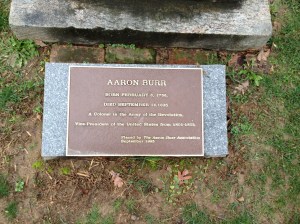
Religion and politics. It’s difficult to get over the wisdom instilled in your earliest years, and I was one of those who learned that religion and politics always cause potential friction in polite conversation. They are both, however, very important to people and knowing how to communicate about them irenically is a sign of maturity. While I can’t afford Broadway shows, I have read reports about the brilliance of a couple shows that feature—what else?—religion and politics. “Book of Mormon” has continued to be a success in the theater district, and, starting this summer, “Hamilton” joined the ranks of most popular Broadway shows. A hip-hop-inspired version of the story of Alexander Hamilton, the show offers history to audiences traditionally just out for a good time. I haven’t seen the show, but on a recent long car ride, I listened to the soundtrack and I have to admit that I haven’t stopped thinking about it since. Part of the reason is the sadness of the story—the dual between Aaron Burr and Alexander Hamilton ended up with one of the “forgotten founding fathers” dead, and another cast forever as a criminal.

IMG_2652

Although my interest in history has defined my career (such as it is), I don’t pretend to know much about the revolutionary period. One of the reasons is that I’m more than a bit ashamed by the treatment of American Indians by the colonials. It is hard to celebrate when you feel like a criminal yourself. Another reason has been that ancient history has always captivated me, and events two-to-two-and-a-half centuries ago feel too recent. Nevertheless, I find myself in New Jersey where much of the Revolution played out: Washington crossing the Delaware, the Battle of Princeton, the Battle of Monmouth, and many other famous episodes. The British of that time enjoyed the power of empire—keeping others down so that the privileged might see themselves entitled. In the musical, King George has a role, in my mind, similar to Pontus Pilate in Jesus Christ Superstar.

I can’t help but think that what Lin-Manuel Miranda has offered in “Hamilton” is an extended kind of parable. The show is noted for its multi-ethnic cast in a story that was almost entirely, historically speaking, one of white privilege. Who can hear the songs swirling around the shooting of Hamilton and not think of the equally insane shooting of young African Americans who, like Hamilton, have no intention of causing harm? There are writers and poets and lovers who still try to find their place in a country that bathes the uber-rich with adoration and tax breaks and far too much power. “Hamilton” may, if people actually pay attention, turn out to be revolutionary. Politics and religion share that feature in common.