Call Me AI

Let’s call them Large Language Models instead of gracing them with the exalted title “artificial intelligence.”  Apparently, they have great potential.  They can also be very annoying.  For example, during a recent computer operating system upgrade, Macs incorporated LLM (large language model) technology into various word processing programs.  Some people probably like it.  It might save some wear and tear on your keyboard, I suppose.  Here’s what happens: you’re innocently typing along and your LLM anticipates and autocompletes your words.  I have to admit that, on the rare occasions that I text I find this helpful.  I don’t text because I despise brief communiqués that are inevitably misunderstood. When I’m writing long form (my preference), I don’t like my computer guessing what I’m trying to say.  Besides, I type faster than its suggestions most of the time.

We have gone after convenience over careful thought.  How many times have I been made to feel bad because I’ve misunderstood a message thumbed in haste, or even an email sent as if it were a text?  More than I care to count.  LLMs have no feelings.  They don’t understand what it is to be human, to be creative.  Algorithms are only a small part of life.  They have no place on a creative’s desktop.  I even thought that I should choose a different word every single time just to see what this feisty algorithm might do.  Even now I find that sometimes it has no idea where my thoughts are going.  Creative people experience that themselves from time to time.

Certain sequences of words suggest the following word.  I get that.  The object of creative writing, however, is to subvert that in some way.  If we knew just which way a novelist would go every time, why would we bother reading their books?  LLMs thrive on predictability.  They have no human experience of family tensions or heavy disappointments or unexpected elations.  We, as a species tend to express ourselves in similar ways when such things happen, and certain words suggest themselves when a sequence of letters falls from our fingers.  LLMs diminish us.  They imply that our creative wordplay is but some kind of sequence of 0s and 1s that can be tamed and stored in a box.  I suppose that for someone who has to write—say a work or school report—such thing might be a boon.  It’s not, however, the intelligence that it claims to be.

Reading Algorithm

I appreciate help.  I really do.  It’s easy to feel overwhelmed in this world and others offering to help out are welcome.  But you do have to wonder about algorithms.  They seem to lack human sympathy.  And perhaps the ability to count.  Every year I enter the Goodreads Reading Challenge.  I would read without it, of course, but having that extra pressure doesn’t hurt.  Because of my convoluted mental makeup, I try to get things I have to do done early.  That means I want to finish my reading challenge before I have to.  In my commuting days I read about 100 books per year.  When I stopped commuting I had to bring that number down by about half—frankly, I don’t know where the time went, but I do spend more awake time with my family, which is good.

So I’ve settled on setting my Goodreads goals at about 50-60 books per year.  I often exceed it, depending on how many big books, or ponderous academic tomes I read.  Lately I’ve set the goal at 55, which is just over a book a week.  That seems doable to me.  This year I achieved that goal in September, but that doesn’t stop me from reading, nosiree!  I’m currently somewhere near the 60 book mark and I’ll keep going.  Now the help I was referring to is this: Goodreads typically sends an encouraging email in October suggesting how to meet your goal.  My message showed, via tracker, that I’d already met my goal, but telling me I could still meet it with these suggested books.

The books suggested are fine, I’m sure.  And that this message was sent via some formula that I have no hope of being able to comprehend, I’m also sure.  An algorithm, however, doesn’t feel for you.  I’m relieved to have the goal behind me and to continue pressing on regardless.  I could use some help in getting the lawn mowed, should an algorithm like to apply.  I particularly resent having to do so while wearing a jacket and stocking cap.  It’s time for the grass to be settling down for its year-end nap, isn’t it?  Or maybe an algorithm could do my job for me.  I guess that’s not funny, because that fate has befallen many humans, I suppose.  Maybe the solution is simply to read more.  That’s not a bad thing, but I don’t need an algorithm to get me to do it.


Al’s Rhythm

Algorithms.  Who can understand them?  I’ve been having some trouble with searches lately.  Not on the internet in general, but on specific websites (including this one).  While Sects and Violence in the Ancient World isn’t a particularly media-heavy site, I find it difficult to find images by searching.  For some reason, even when I put the title of the image in the WordPress search bar, it doesn’t always come up with the answer.  Well, given the time of morning I suppose I might’ve misspelled something.  Then I went to Amazon.  I’ve been working on my author page and wanted to update something.  I tried typing the distinctive title of my most recent book (Nightmares with the Bible—it is apparently the only actual book with that title [and titles can’t be copyrighted, in case you’re interested]) and found that it didn’t show up on the first three pages.  They were filled with books with other titles.  Algorithms.

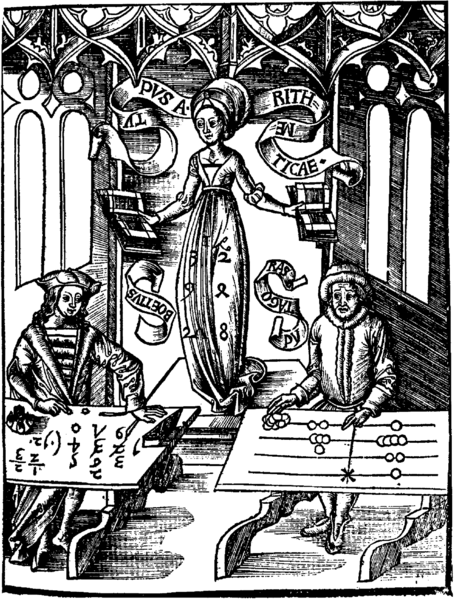
Now granted not a lot of people seek the book on Amazon (I’m a realist), but if you type an exact, and unique title in the search bar and it doesn’t come up, isn’t something wrong with your algorithm?  (By the way, algorithm is one of the many words English borrows from Arabic.  It’s named after a ninth-century mathematician, al-Khwārizmī.  You could do worse than to have something so useful named after you!)  I’m not so naive as to think Amazon isn’t thinking to throw better selling books at you first—if you’re like others you’ll buy those before you’d consider shelling out a Franklin for mine.  But still, isn’t searching made easier when what you enter is what you want to find?

The internet’s primarily about selling you stuff.  Some of us look up sites for information or entertainment, but then someone tries to sell you something.  (I’m not trying to sell you my book here, by the way—it’s not priced for individuals, or even mortals—I’m not even putting a link to it on Amazon here.)  I’m just wondering why, if you tell websites exactly what you’re looking for they can’t find it.  You have to wonder if we’ve reached the level of too much stuff.  There’s a lot of sorting to be done and new webpages are added every day.  Even though I’ve been writing here a dozen years now, there are far older blogs and many more newer ones.  Finding things is an important exercise, and maybe if we sit down with al-Khwārizmī for a while, we’ll be able to figure something out.

Image credit: Gregor Reisch via Wikimedia Commons