Reason to Believe

Gods, the experts say, are on the way out. Have been for some time. The loudest voices in this arena are the New Atheists who suggest science alone explains everything. Problem is, the gods won’t let go. My wife recently sent me an article from BookRiot. (That’s a dangerous thing to do, in my case.) Nikki Vanry wrote a piece titled “Dallying with the Gods: 16 Books about Gods and Mythology.” Most of what she points out here is fiction, and that makes sense because gods and fiction go together like chocolate and peanut butter. The first book she lists is Neil Gaiman’s American Gods—a book I read years ago and which has subsequently become an American phenomenon. There’s even a television series based on it now. Like Angels in America, only more pagan.

What surprised me most about this list is the books I hadn’t read. Or even heard of. After American Gods, I got down to number 10—Christopher Moore’s Lamb—before reaching another I’d read. Then down to 16, Till We Have Faces, by C. S. Lewis. There are, as Vanry notes, many more. Our experience of the world, as human beings, suggests there’s more to it than what we see. Not everyone would call these things gods, nevertheless there certainly does seem to be intentionality to many coincidences. Things pile up. Then they topple down on you all at once. Seeing such things as the works of the gods makes for a good story. At least it helps explain the world.
Many materialists do not like to admit that humans believe. Call it the curse of consciousness, but the fact is we all believe in things. Even if that belief is as strange as thinking fiction only comes from electro-chemical reactions in a single organ in our heads. Gods often appear in fiction. Frequently they’re in the background. Sometimes they’re called heroes instead of deities. At other times they’re right there on the surface. Such books carry profound messages about believing. It doesn’t matter what the authors believe. Believe they do. And such books sell. As a culture, we may be in denial. What we sublimate comes out in our fiction. There are gods everywhere. Singular or plural. Female, male, or genderless. Almighty or just potent. Reading about them can be informative as well as entertaining. We’ve got to believe in something, so why not gods?

Good, Evil, and Normal

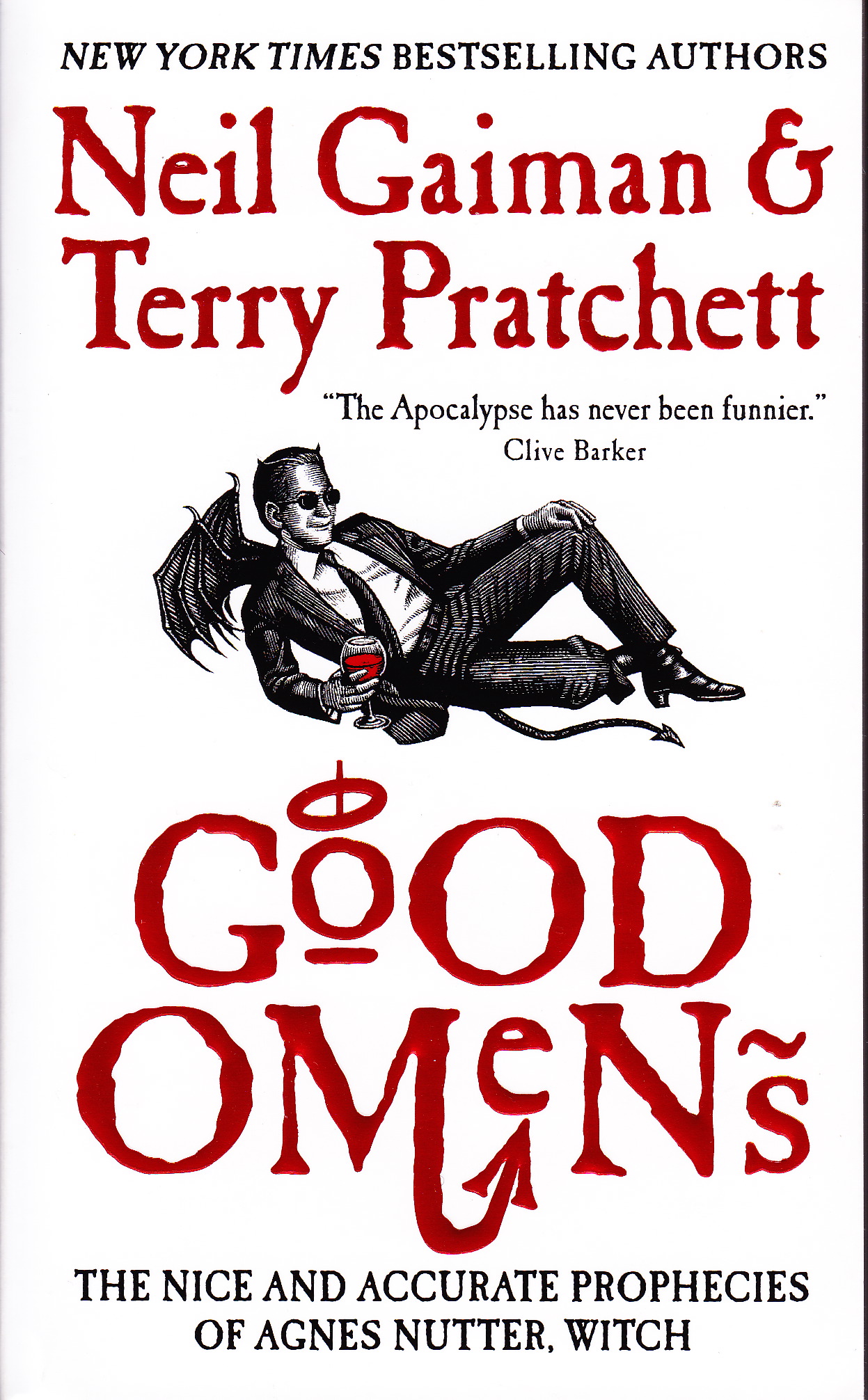
GoodOmensTo date I’ve read a fair number of Neil Gaiman novels. One of my students started me out on American Gods and I pursued his others on my own after that. I was a little unsure about Good Omens, however. I guess I’ve always been dubious about the quality of co-written books. Terry Pratchett, an accomplished novelist in his own right, paired up with Gaiman on this one, and it took the wisdom of another student, albeit recently graduated, to assure me that it was worth the effort. Given that it’s about the apocalypse, or perhaps an apocalypse that doesn’t quite take off, there seemed to be no reason not to give it a try. It is, at the end of the day, a charming book with colorful characters and an Antichrist who gets switched at birth and grows up in a normal household and herein lies the tale.

One of the most common religious themes in novels is the end of the world. The four horsemen of the apocalypse are one of the most striking literary tropes of the first century, if not of all time. The real question about the end of the world, it turns out, is—why can’t it be funny? For those who’ve pondered that, Good Omens is the book for you. It actually does help, however, if you’ve read the Bible. It adds to the cumulative effect. Subtitled The Nice and Accurate Prophecies of Agnes Nutter Witch, the book revolves around the certainty of the written word. Prophecy, however, just as in the book, only achieves verisimilitude in retrospect. The prophets didn’t always get it right, even in the Bible. Human choice often causes a breakdown in divine plans. In Good Omens, you’re pretty sure from the beginning that the world won’t end, but you’re not quite sure how it won’t end. The unfolding of the story eventually addresses how a prophecy can fail.

Free will, those who specialize in theology and philosophy will say, is among the more difficult of phenomena to pin down. Some predestinarians would say it’s all an illusion. We are programmed to do what we do. Ironically, some reductionistic materialists would say the same thing. Each of us, however, trudging through out days of toil and play, feels like we’re making our own decisions. True enough, sometimes circumstances decide for us, but if we were given the choice of good or evil, wouldn’t we approach it the way we approach just about everything else? Along the way, the demon Crowley asks a pointed, poignant question: why would God make people inquisitive and then forbid them some obvious, desirable fruit? Isn’t the conclusion foregone? Any writer today would know the outcome before the first sentence was finished. And so, free will is off and running. I hope that the fact that the world doesn’t end won’t be a spoiler for anyone, because I also hope that others will read Good Omens and learn a great deal about how demons can be good, angels can be naughty, and people will always just be people.


Write the Truth

XalliopePublication is a tricky business. Just ask my friend, K. Marvin Bruce. Marvin and I have known each other for years as he’s been trying to break into fiction publishing. I don’t envy him. His novel, Passion of the Titans, was under contract with an indie publisher who eventually reneged on their agreement. What can you do? As a supporter of publishers you don’t want to sue, so the novel is floating around again, looking for a home. Meanwhile, I was flattered to receive in my mailbox a copy of Calliope magazine. Calliope is published by the Writer’s Special Interest Group of American Mensa, Ltd. Marvin’s story, “Initiating an Apocalypse,” won third place in their fiction open. Not only am I pleased for my friend, but I was glad to see his story was about gods. Zoroastrianism doesn’t get much attention these days, but Marvin’s tale is about a hapless professor who wants to start an apocalypse by using Zoroastrian deities. I won’t give any spoilers since I’m sure few people have read the story.

His tale has me thinking of gods in fiction. I suppose mainstream literary fiction avoids deities, but fantasy, science fiction, and horror all make good use of them from time to time. Neil Gaiman’s American Gods made quite a splash, and although Marvin has no hope of becoming a widely recognized name, his novel also features gods. It is a literary incarnation. We like to see gods in some ways limited to human circumstances. Omnipotence rarely makes for a good plot. In many respects the Bible attests to this. If God is omnipotent (which is not a claim the Bible actually makes) why can’t the world be a happier place? Indeed, the solution most fondly groped by theologians is either free will or a version of the Zoroastrian solution: a god who is evil. Enter the Devil.

The Devil is also undergoing a kind of literary renaissance. We find a plethora of books and movies starring the prince of darkness. Despite the panegyrics of rationalism delivered by angry atheists, nothing salves the human soul like a good supernatural entity. Fiction writers have long recognized that. Gaiman was not the first to make the gods do his bidding in literature. There is a likelihood that even Homer knew the appeal. Many people can accept that gods might exist, and they certainly don’t object to stories in which they cavort. Fiction, as literary analysts know, teaches us about reality. The characters may not be literally true, but the fact is that in our minds there is still plenty of room for gods. And, if you one of the rare ones to read Marvin’s story, you’ll see that, true to human experience, deities don’t act as we expect them to. Savvy publishers, it seems to me, would do well to recognize the appeal of the gods.


Graveyard Culture

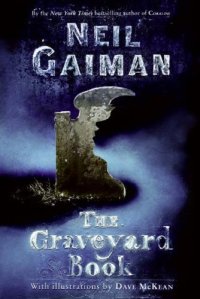
TheGraveyardBook During an Ancient Near Eastern Religions course a few years back, one of my students commented that something was like “in American Gods.” I suppose my quizzical look betrayed that I wasn’t familiar with the book, and, aghast, he said, “you’ve never heard of Neil Gaiman?” The funny thing about being a professional academic is, if you want to be good at it, there is little time to read. Popular culture is vast; I’ve never even heard of “Gangnam Style.” But I did subsequently read American Gods, and from then on I’ve been picking up Neil Gaiman books as a special treat in my literary diet. A couple years back another friend recommended The Graveyard Book, so I read it over my brief holiday break. It is the time of year for treats. Gaiman’s fantasy worlds, although seldom explicitly deity-populated, tangle the real world with the supernatural—just the juncture where religion emerges. Although defining religion is not as straightforward as looking it up in a dictionary, you can nevertheless feel when you’re in its realm.

Nobody Owens was raised in a graveyard among ghosts. Since science tells us there are no such things, religion steps up to the challenge with suggestions of an afterlife. Whether or not there’s a Heaven or Hell, ghosts partake in that uncanny milieu we call religion. And since this is fantasy, there are other mystical creatures as well. In Bod’s world werewolves are called “Hounds of God” and they are on the good side. Ironically, the only clergy mentioned (along with various political figures) are actually ghouls. The world of the dead involves a religion of its own where an altar and chalice lie deep beneath a special grave and a human sacrifice makes up the climax of the story.

Religion, of course, occurs where the supernatural meets regular people. We dismiss it at our own peril. When Bod attends school his teachers guess he must be from a religious family because he doesn’t have a computer or any electronic devices. Religion eschews such progress. And yet it touches on the real world. I recognized Highgate Cemetery almost from page one. It could be that my own visit there just last year was fresh enough in my mind that Gaiman’s descriptions naturally took over. Or it could be that since I walk that imaginary line that we recognize as religion every day I recognize its more familiar features. Neil Gaiman’s popularity is a testimonial to how we still need the hidden world unexplained by science. We may call it fiction but it is just as real in the human mind as anything in the quantum universe.


Dusting the Lilim

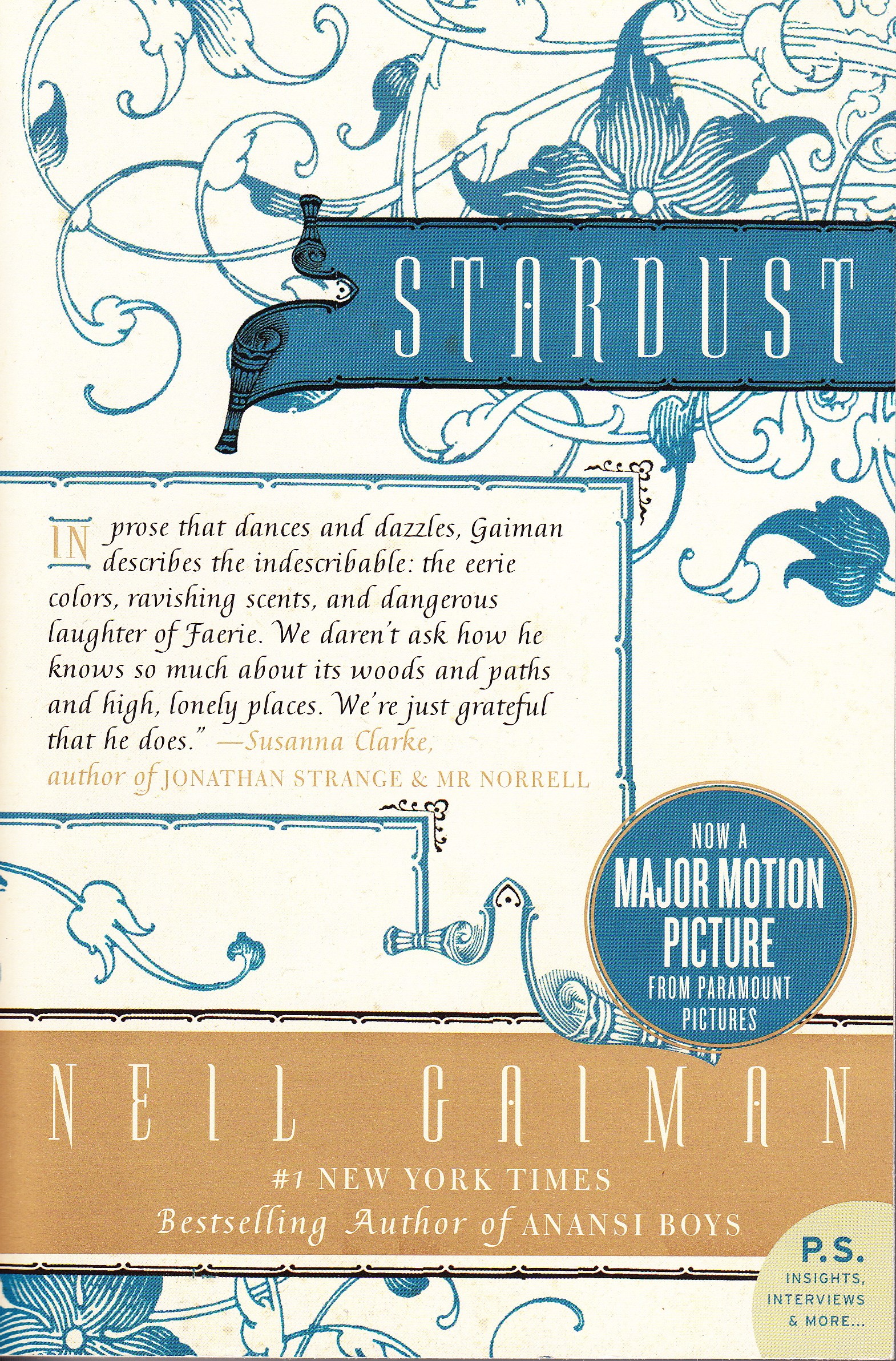
Having grown up on a literary diet of comic books and Doc Savage novellas, I have always had an appreciation for the fantastic. Since our town was relatively dull, it helped to have flights of imagination within the price range of those with humble means. I discovered Neil Gaiman (it seems that many profound writers are named Neil or Neal) through the machinations of one of my Rutgers students. After reading American Gods, which was an obvious starting place for someone of my erstwhile profession, I have sampled a bit more of his fare. I long ago gave up on comic books since I prefer the pictures I make in my own head, although I must admit that the few graphic novels I’ve tackled have required considerable thought. So it was that I came upon Stardust, a graphic-turned-prose novel.

Stardust serves up a number of folklore themes with the charm and wit that Gaiman generously doles out. It is a story replete with witches, fairies, and storm gods. A figurative smorgasbord of the mythical. What particularly arrested my attention was Gaiman’s use of the title Lilim for his witches. Lilim (or lilin) are mythical creatures of Semitic pedigree related to the (in)famous Lilith. Some traditions make the Lilim her children, and it has been suggested that they also put in an appearance or two in Mesopotamian mythology. Gaiman’s portrayal is fairly accurate here with the Lilim being selfish thieves of the night, but not entirely evil.

Beyond the escapism of relatively happy endings, this mix of evil tinged with the helpless inevitability of aging speaks paradigmatically of mythical ambiguity. Many modern-day religions tout the answers, but mythology parades the possibilities. The mythology of old continually returns to us in new forms. Using a mix of fantastical creatures from various eras of human story-telling, Stardust is a gentle fairytale for adults. Like the book of Ecclesiastes the story has a fatalism to it, no real happy ending but no hair-rending tragedy either. Turning the classic quest for the father into an unwitting search for the mother, the novel offers seemingly endless potential for hope. Although penned a few years ago, that message is still desperately needed today.


Death of the Gods

Americangods

Ancient gods surround me these days. Surely part of it is due to having recently finished Neil Gaiman’s American Gods (I know I’m a few years late on this, but novel-reading time is at a premium even when teaching only part-time). Gaiman’s not the first to have taken on the theme of “what if ancient deities still survived?”. As a child I read Lester del Rey’s Day of the Giants with its science-fictionalized version of Ragnarok, and even earlier H. P. Lovecraft had resurrected Dagon and Cthulhu. Gaiman’s treatment, however, is contemporary and is a barometer of how the old gods are faring these days.

Dark and witty, Gaiman’s treatment is a fun-house ride through the fanciful concept that old-time gods and folk-heroes emigrated to American with their believers. The resulting adventure brings a multi-cultural mix of supernatural powers that end up mostly focusing on the Norse mythological cast. Same was true of del Rey — the Norse mythology reflects a stark world of raw power, betrayal, death and resurrection, that resonates with northern European experience. Anansi and Chernobog also take starring roles in American Gods, although the only ancient Near Eastern deities with any prominence in the story are the Egyptian Thoth and Anubis in supporting roles.

Casting an eye over the American landscape, this assessment is perhaps true to life. Ancient Near Eastern deities seem so distant and unfamiliar. Gods long dead. Despite recent movements to revive the worship of Mesopotamian or Canaanite deities, their powers seem to have dissipated at the middle of the first millennium B.C.E. as Yahweh gained a prominence he has never relinquished, and the Greeks and Romans paved over the graves of Ninhursag and Yarikh with European versions of the more prominent West Asian gods. Universities reflect this lack of knowledge with slowly dying departments of Ancient Near Eastern studies. Like Gaiman suggests, America seems to have gone after the more modern gods suited to our present-day lifestyle.


Our Myth of History

“Myth” is a difficult word to define. In the ancient world, however, reality, or truth, was expressed in terms of myth. Today we assume that myth is “untrue” or false. This dichotomy often leads to an unfortunate undervaluing of ancient texts and stories. At root the problem is that we are on the far side of a paradigm shift. This podcast addresses the question of how we might try to understand myth in a way that fits with the modern outlook. Since historical veracity is the modern paradigm, it stands to reason that history has become the mythology of present-day thinkers.