Local Gothic

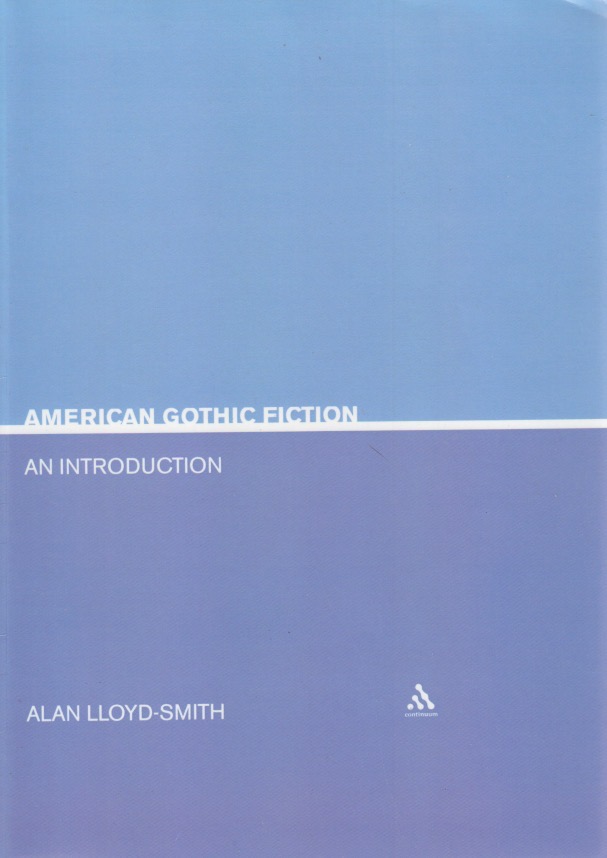
One of the most valuable aspects of the humanities is the range they give the imagination.  As an undergrad from a small town, I was astonished at the range of courses available in a liberal arts college.  Even so, I took only two in the literature department.  I wish I’d taken more.  You see, as someone who grew up poor, my reading has often been budget reading.  Used books found by chance and cheap editions in department stores of a town lacking bookshops.  I soon found that Gothic literature met my needs.  Alan Lloyd-Smith’s American Gothic Fiction: An Introduction is, as you might guess, a series book.  One of those books by an outsider analyzing a different culture’s literature, it is nevertheless quite good for the most part.  Until it decides, as many literary studies do, to go all theoretical.  Prior to that it’s very engaging.

For me it’s less the ideas than the mood of Gothic literature that I find engaging.  It creates a cozy feel, and when I read about Poe, Melville, and Hawthorne, I feel a sense of belonging.  Gothic transformed when it emigrated to America.  Lloyd-Smith does a great job of demonstrating how castles and cathedrals gave way to a landscape built by Native Americans, and an unexplored frontier.  How literature in America tended toward the Gothic from the beginning and even up to the point this book was written, hadn’t really effaced much at all.  Such things are inspiring to me.  It jumpstarted my own fiction writing again.  One curious feature, however, is that the book doesn’t discuss “The Legend of Sleepy Hollow” at all, other than a passing reference to Burton’s film.  There’s quite a lot on Poe and company, Charles Brockden Brown, and some of Charlotte Perkins Gilman.  Even Toni Morrison makes an appearance or two.  (He does cover Southern Gothic also.)

While this is clearly intended as a classroom book—wide, wide margins for note-taking, introductory level until chapter six—it is worthwhile reading for any curious adult interested in American literature.  My life has been a search for my tribe.  For many years it was a very religious search, that, unfortunately led to rejection that left me searching for a new home.  The horror community has been somewhat welcoming, and there’s something Gothic about that in its own right.  In any case, reading about Gothic brings its own melancholy joy.  I mostly enjoyed this book and learned quite a lot from it.  And, of course I bought it used.

Drifting

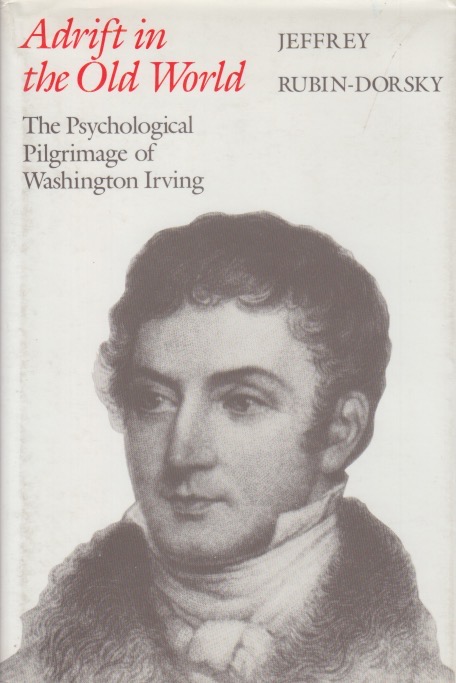
What really goes on in somebody else’s mind?  At best we can guess, and when that person’s been dead for a long time that guessing involves some reasoned speculation.  I enjoyed Jeffrey Rubin-Dorsky’s reasoned speculation in Adrift in the Old World: The Psychological Pilgrimage of Washington Irving.  The book itself is a few decades old now, but it does raise many relevant issues.  For me personally, it was, in parts, like reading my own psychological profile.  Irving is an interesting study.  (Unlike me) he had early success as a writer but he was a continual self-doubter.  He was also a poor investor, making money on his writing only to lose large sums investing in ventures that failed.  He also had a sense of not belonging which would seem strange for a New Yorker today.  Although he finally felt he fit in when he settled, as a famous writer, in Tarrytown, this book really only covers his European years.

While traveling for seventeen years in mainly Britain, France, Germany, and Spain, Irving wrote four very different “Sketch Books.”  These weren’t really short stories as we’ve come to understand them, at least not always, but they affirmed his place in the literary firmament.  Adrift in the Old World covers these four books while bringing incidental mention of several others into the picture.  Irving must be a difficult writer to cover.  He was not only prolific, but he wrote about diverse topics and sometimes at great length.  Of course, he was trying to make a living as a writer and people in those days had more time to read.  Breaking out a set of only four of his books makes this more digestible.

Even though I learned a lot from this book, it wasn’t always easy reading.  It gets a bit academic in parts and the paragraphs are far too long.  Still, there’s good information here.  I’ve been trying to wrap my head around Irving for some time now, as a glance at the books I’ve covered recently ought to suggest.  Although he’s not ignored by literary scholars, there aren’t many general interest books written on him.  There are other writers that more capture the modern imagination.  Still, literary history of the early United States is a fascinating venture in its own right.  For those who like to try to figure out what other people are thinking (and I have to admit to that avocation) this is a good entryway into what may have been the mental world of Washington Irving.


Becoming American

Image credit: John Wesley Jarvis, via Wikimedia Commons

I love reading literary scholars if they write accessibly.  William L. Hedges did, mostly, in Washington Irving: An American Study, 1802–1832.  There were several moments in my reading when I had to pause and consider the connections he was making.  This was his only book of note, but noteworthy it is.  You see, as a young person I had a difficult time figuring out what I was supposed to be as an American.  I read a lot about Europe and considered the various identities in the long histories there.  I tended to read European literature while having a lifelong soft spot for Poe.  Over time I began to read more American classics—ironically this wasn’t much part of my formal education in rural Pennsylvania.  Mostly I picked things up on my own.

Hedges, nevertheless, ties many of these things together in discussing Irving’s writing.  As he did so I started to realize that an American is a distinct kind of being.  Now, intellectually I’ve known that since childhood.  I was born and raised here, after all, as were the generations before me.  Still, recognizing the guilt of taking someone else’s land, it has taken many years to appreciate the literary accomplishments of the various writers who helped shape our national identity.  Hedges addresses many aspects of this through his analysis of Irving, but he’s at his best when he’s tying him together with Poe or Melville.  These early American literary lights offered a view of a nation haunted by history, but also funny at the same time.

This book was published three years after I was born.  Of course, I really didn’t start reading about Irving until about a decade ago.  You get the sense that he wasn’t sure of himself as a writer, but like many of us he had a thin skin when it came to criticism.  You see, writing is putting yourself out there for others to see.  It’s only worth doing if you believe you have something to say and you want others to hear it.  For many writers that means being discovered after death.  Today many make livings writing acclaimed novels.  They can only do so, however, because Irving and his generation suggested something new: you didn’t have to have a traditional job and just write on the side.  You could, if chance cooperated, create literary works that others would purchase and support yourself that way.  And then, more than a century after you’d gone, someone else would write about what you had written.  Thankfully, sometimes accessibly.