All Relative

Among the most compelling questions raised by consciousness is “where am I from?” Humans are a species of widely traveled individuals and despite the fiction that we all derive from happily married couples, we often end up distant from our relatives. Over time we may forget who they were. Our descendants, however, may be very curious. I have spent some time, over the years, climbing my family tree. It’s endlessly fascinating because you find that the research is about people’s stories, not just who was coupling with whom. Those of us of non-American ancestry who live in America often wonder how we came to be here. Families preserve stories, and sometimes those stories are embellished over time. I’ve spent more than an afternoon or two in county clerks’ offices thumbing through records to try to push things back just one more generation. Who were these people who led to me?

The Mormons, among other aspects of their theology, have contributed greatly to genealogical research. It is an American religion indeed. My family recently gave me a DNA tracing kit, run by ancestry.com, as a gift. Although it wouldn’t answer all the questions about my background, I suspected it would either confirm or deny some of the stories. The results just came in, and, amazingly, family stories were right about on the mark. I’ve always called myself an “American mutt” but it would have been more accurate to say a “northern European mutt.” Mostly Germanic, English, and Irish, I fit into the typical early settler paradigm. There are minor traces in there that I’m not sure I understand, maybe less than one or two percent—some Asian, some African. All of this will take more research. You never really find out who you are. Completely.
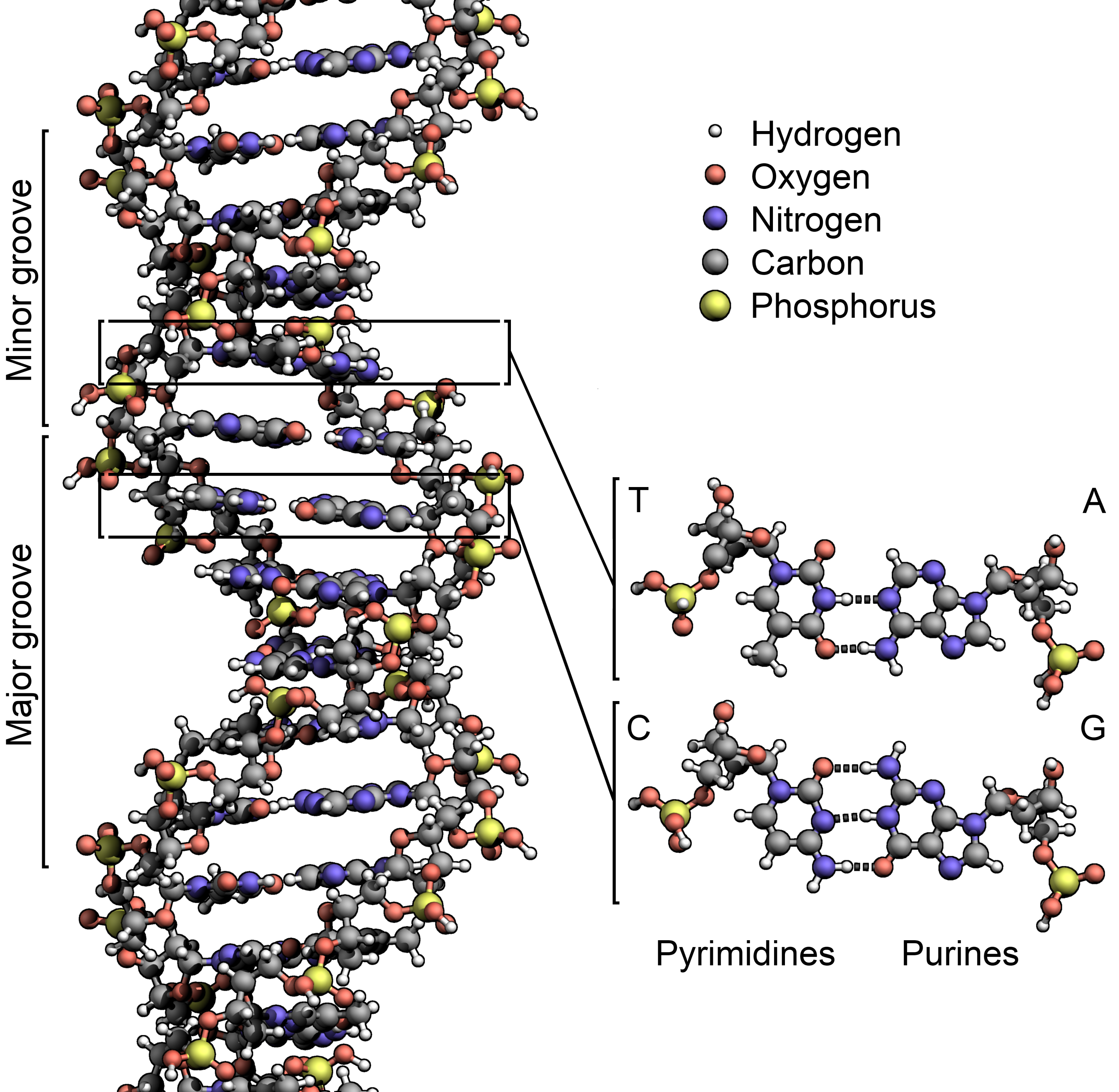
Image credit: Zephyris, Wikimedia Commons

Image credit: Zephyris, Wikimedia Commons

DNA testing is the stuff of science. It isn’t a precise science in that it can’t tell the stories of those ancestors. It takes family tradition to do that. I know that one Irish ancestor stowed away on a ship and she arrived in America not as a paying passenger. I know another branch came as a German engineer and his wife, and that their son opened a bakery. Some of the branches have been here since the Revolutionary War, but they were also germanic—were we Hessians? I haven’t had time to read through all that the Mormons have discovered about me, but I’ve got a pretty good idea that family tradition hasn’t failed me here. While the stories can’t themselves be confirmed by the science, they are not inconsistent with the results. And when it comes to finding out who’s your daddy, the answer really depends on how far back you look.

Mystique-alism

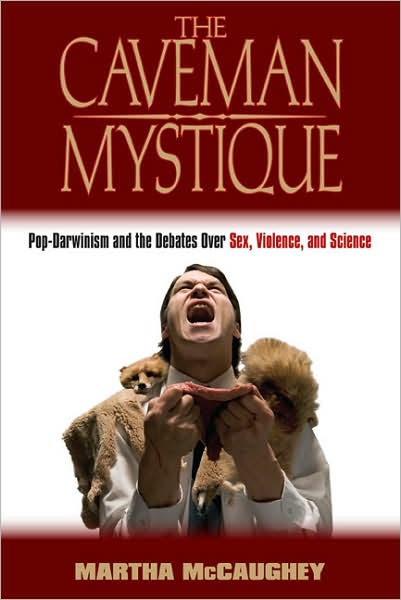
CavemanMystiqueReading in a public place gives peer pressure an entirely new meaning. Public transit is a place where I spend at least fifteen hours a week. Not having converted to Kindle, or even Nook, I still prefer the feel of paper in my hands. With the open book, however, comes exposure. On the bus you have no control over who climbs in next to you. You’ll be spending an hour, maybe two, side-by-side, and although s/he may never see you again, it could be that tomorrow they will find themselves once more at your side. I’m very conscious of the books I choose under such circumstances. I shouldn’t care what others think, but I do. Recently my choice was Martha McCaughey’s The Caveman Mystique: Pop-Darwinism and the Debates Over Sex, Violence, and Science. The issues here were multiple. McCaughey consciously chose her riff on The Feminine Mystique as a catchy, if very appropriate title. The person plopping down next to you with a bleary eyed glance over on an early morning bus will probably catch only one or two words in the title. One of them will be the only word with an x. Still, this important little book has big implications for the “s word,” and how men are socialized to think about sex.

Darwinism, and evolution, are concepts that are keyed to religion in the United States. There is no avoiding it. McCaughey, as a sociologist studying science, shows just how many assumptions scientists make about the universal applicability of their work. She suggests something that many of us have learned over the years: absolute objectivity is not possible for any human being. We are all socialized. We all bring biases to our work. We’re all human. McCaughey doesn’t question the results of scientific investigation, however. Her concern is that in a male-dominated field the results might be, well, screwed up. In a series of delightful thought experiments, she shows how very basic sexual biases get played out into larger scenarios that tend to excuse the inexcusable: violence against women. Men have to be taught to be cavemen. Science, improperly disseminated, gives men an excuse for blaming evolution for their lack of character. It seems to this man, at least, the McCaughey is certainly on target.

In a particularly insightful paragraph, McCaughey writes, “Invoking God’s will, or nature’s [i.e., science], hides the political context in which such a will was ‘revealed’ or ‘discovered.’” How easy it is for both scientists and religious believers to conclude that the way of their belief system is the only explanation for the world. Both camps forget they are profoundly political. As humans we can’t escape it. The world defies easy explanation—there are truths that we haven’t discovered yet. The main point of The Caveman Mystique, however, is clear. Just as men have been led to believe that the caveman is inevitable, they can be also taught that such a statement is a lie. Biologically there are gender differences, but socially—and this is the ability humans boast of—we can and must insist on equality.