
Frisbee, like Kleenex and Band-Aid, is a brand name that has become generic. Since at least the time of ancient Greece people have been fascinated with flying discs, and like many kids of my generation I grew up with a Frisbee or two around the house. We didn’t have much money, and in my younger days I remember playing “frisbee” with the lids to large margarine tubs—it’s more difficult to get these to do tricks, but they fly passably well with the right flick of the wrist. When I got to college I started to hear about a new game called “Frisbee golf.” It usually involved a group of friends and their flying discs picking out a target and seeing who could get their Frisbee there in the fewest tosses. Well, college was a couple decades ago (ahem), and who has time for Frisbee in the serious adult world of trying to stay employed? When some friends asked me to join in a game of disc golf over a recent weekend I knew a couple of things had happened. First, Frisbee had been either usurped or commodified to the point that it was either illegal or gouache to use their discs to try to hit “that tree over there,” like the redneck with his shotgun on a Friday night. Second, to play the game you needed to have the right equipment. Out on the course we came across a couple of guys with “golf bags” full of discs that they had to flip through like so many CDs before each toss. I felt woefully amateur. Like golfing in jeans.
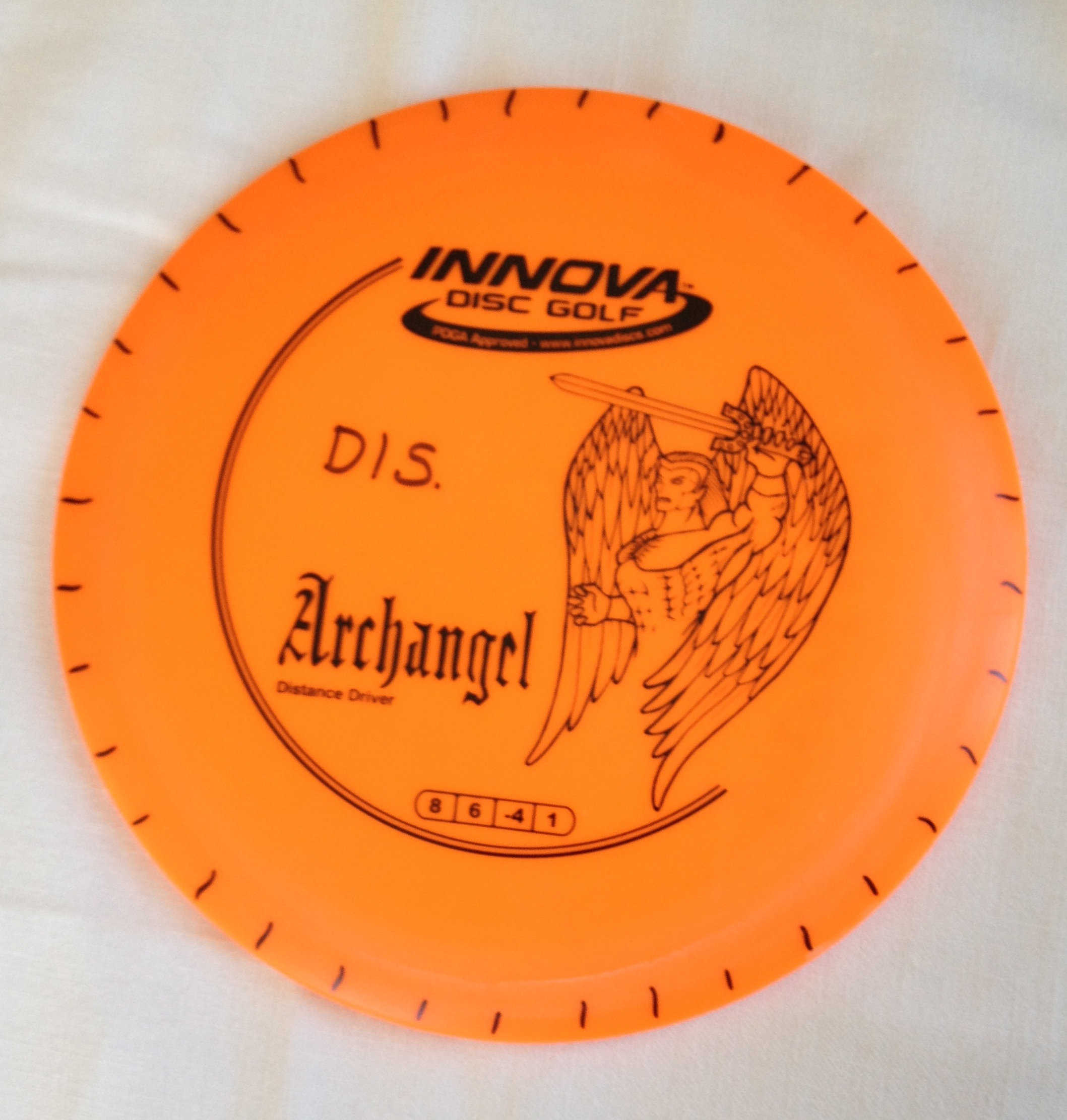 Fortunately my friends had discs. Scientifically engineered discs, no less. Different “Frisbees” (not a technical “Frisbee” among them, not even a Wham-o) with different weights and characteristics made for specific tasks. I thought of the famous sculpture of the discus thrower and wondered what Plato would’ve made of all this. Since we were a large group with limited discs, we each chose one to be “our” disc so that we could follow it. It was either a rare show of masculine aggression or perhaps religious curiosity that drew me to the distance disc called Archangel. Bright orange, the Archangel was emblazoned with an actual heavenly being with his (a masculine angel, this) sword. He wore a vaguely Egyptianizing headdress that brought to mind the plagues of Egypt. The disc was heavy compared to a Frisbee, and had an edge like a, well, a sword. A dull sword of course, maybe wooden as opposed to steel. That disc could fly (although it didn’t improve my score much).
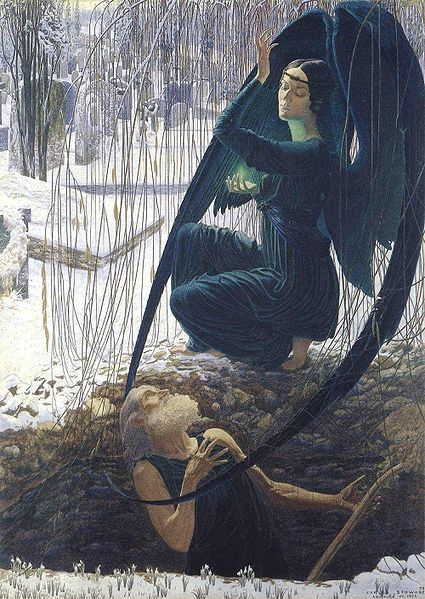
Angels have had a long fascination for us mere mortals. Originally a class of messenger gods in antiquity, monotheism forced them into a subservient role where swiftness was essential. For some, such as the Angel of Death (more likely the source of the imagery behind my Archangel), weaponry was essential. Unlike the Angel of Death my aim wasn’t very accurate. Or maybe that is just like the Angel of Death. No firstborn were slain by an hour’s diversion of tossing some Frisbees around, but my thoughts had been driven back to the biblical origins of my implement. I wondered why there was no archangel of peace. A few days later it was announced that Nelson Mandela had died. My thoughts went to Gandhi. To Siddhartha Gautama. Even to Jesus. Yes, there have been those who’ve insisted on the way of peace. And many differences might be settled by a friendly game of Frisbee golf, minus, of course, the copyright infringement.

 Steve A. Wiggins