Before Current Parameters

I recently had cause, for a work project, to survey which Episcopal seminaries are still around.  You see, I began my teaching career at Nashotah House.  (There were few teaching jobs in the early nineties, although we’d been promised a glut in the late eighties when I set out on that career track.)  In any case, I remembered marveling that the Episcopal Church had eleven seminaries.  For perspective, one of the largest Protestant denominations, the Methodists, only had thirteen.  Enrollments were high in those days.  Before the rise of the Nones, seminary teaching was a viable, if perhaps staid, option for a career.  Or in the case of some of us, it would be a holding pattern until something more suitable came along.  (I’ve always thought of myself as a small college professor.)

So the list of Episcopal seminaries is now down to ten, but those ten are much diminished from what they were back in the nineties.  Seabury, the nearest competitor to the south of Nashotah, has merged with Bexley Hall to make a very small federation.  Berkeley at Yale is a Jonah in the whale.  Episcopal Divinity School had to vacate campus and merge with Union in New York, leaving the tradition Episcopal stronghold of Boston.  The others seem to be clinging on.  In the midst of all this I learned that the Anglican Church in North America, a conservative break-away denomination, has reissued the Book of Common Prayer.  The BCP, as it’s fondly known, has a long and venerable history.  The 1979 edition has both a more conservative and a more modern liturgy, but even that doesn’t seem to be enough to prevent fracturing.
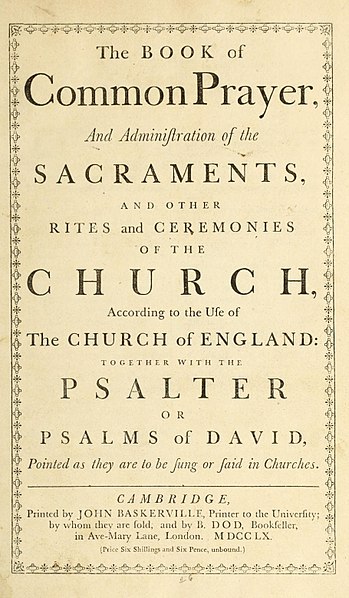
Photo credit: Church of England, via Wikimedia Commons

Fracturing.  Estimates for the number of denominations in North America set the figure at about 40,000.  No wonder Nones are among the fastest growing category!  If you’re going to place your eternal salvation on a bet, and there are that many options to choose from, the odds seem awfully long.  In some cases it’s a matter of being in the right state, or city, where the “one true church” exists.  If you miss it by thirty miles you could end up in Hell.  And all this with shrinking numbers.  The landscape has changed since I entered the seminary world.  Even as the numbers go down the fragmentation increases.  From a bird’s eye view this looks pretty odd.  Even if you look to the Prayer Book for solace you have to ask which one.  I just make the sign of the cross and move on.


Pretty as a Prayerbook

Stolidity.  Canons all across this deck are known for it.  Visions of unchanging texts, however, tend to be false perceptions.  Even the canon of the Bible differs, depending on who you talk to.  So it is to be applauded, I suspect, that the Episcopal Church is planning to revise the Book of Common Prayer.  The last revision was 1979, and before that, 1928.  This schedule should be telling you something—the BCP, or simply “Prayerbook” as it’s commonly called, was never a changeless canon.  We mere mortals rely on experts to change the words by which the Almighty is approached, and although Episcopalians are thin on the ground in this country, world-wide they’re a formidable sect.  They’re united mainly by their commitment to the BCP.  And with good reason.

The days of the British Empire are long gone, but when it ruled the waves (and even before) this island state contributed a number of religious elements to the world.  The Prayerbook was born out of struggles with Rome for secular power disguised as sacred.  We try to live with a fiction of separation, but churches and states have always had mutual influence—just consider the way secular Trump has changed Christianity and you’ll see.  The BCP was to define English Christianity and in doing so became a Scripture in its own right (or rite).  Phrases from the Book of Common Prayer pepper the English language so as to rival the Good Book itself.  When church attendance was an expectation, you couldn’t help but internalize it.

A certain seminary, nameless here forevermore, will not be pleased with such change.  When I taught there many still clung to the 1928, claiming the church had erred (a strange position for someone in a voluntary organization and who vows to support its decisions) by adding “inclusive language” in the ’79.  This, they averred, was a man’s religion.  And they meant biological males.  Stolid.  Or perhaps stale.  Like the fiction of unchanging canons, the myth of the rational male hierarchy exists only to be exploded.  The two longest reigning British monarchs have been queens, after all.  World wars tend to be the legacy of male rulers.  So, although a tiny seminary in the woods of Wisconsin will likely rage, the BCP could use a bit of a makeover.  The world has changed substantially since the 1970s.  Mainline churches have been steadily shrinking and redefinition with a declining financial base makes good sense.  “This is another day, O Lord. I know not what it will bring forth, but make me ready, Lord, for whatever it may be.”  Even if it be changing canons.


Episcopal Pity

Call me naive. Really, I won’t mind. I’ll readily admit that I was raised in a conservative household that held a fundamentalist view of Christianity. But even though I grew and matured and eventually joined the Episcopal Church, I have always held consistency as one of the basic building blocks of any religious outlook. What’s fair for you ought to be fair for me. When I read that the Episcopal Church has been suspended, like the bad boy of the Anglican Communion, my mind went back to the consistency issue. The Anglican Communion, like many Christian bodies, is marked by strong membership from “conservative” constituencies. This was clearly felt while I was on the faculty of Nashotah House. As a conservative institution, we received many visits from diocesan leaders from more “traditional” cultures. They always expressed concern with America’s sinful, “liberal” culture. We should be more biblical, they opined. They didn’t, however, mind us paying the bill.

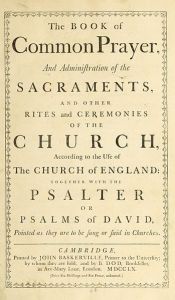
Book_of_Common_Prayer_1760

The Episcopal Church is being kept after school because of its approval of homosexual marriage. This is a social justice issue that has the backing of many major Christian denominations. Cultures in the developing world, however, see it as sinful and claim marriage is one man, one woman. Well, most of the time. I’m no anthropologist, but I do pay attention to what people say. While at Nashotah House we had a student from Kenya. He was already a priest, but he was there to get some basic training. Naturally enough, his biblical understanding was quite literal. Once I asked him about his life back home. He had a wife, it turns out, and kids. They couldn’t be with him in Wisconsin, so I asked how they lived when he wasn’t there to support them. He told me his brother took her as wife while he was away. His brother was already married, but in his culture it was traditionally for brothers to act as husbands in the absence of the latter. He gave me to believe that “husband” was used in every conceivable sense of the word. He was, of course, against same-sex marriage.

Levirate marriage (a brother “taking over” a wife) is arguably biblical. The problem is that the Bible states the first brother must be dead for levirate marriage to take effect. My point is not to condemn the “traditional” marriage arrangements of the visiting priest’s culture, but to try to get some consistency here. There are a wide variety of “marriage” practices recognized in traditional cultures. They have two things in common: women are subservient to men and their needs, and males mate with females. Beyond that, variety, as the traditional saying goes, is the spice of life. There used to be another traditional saying about the inappropriateness of peering into other people’s bedrooms. So the naughty Episcopal Church has been sent to a corner with a dunce mitre on its head. Meanwhile the other boys, typical of those in middle school, sit around and talk about the girls they’d like to have. It’s tradition we uphold, after all.