The Next Phase

Sometimes I get things backwards.  You have to understand that in the pre-internet era finding information was somewhat dicey.  Those of us from small towns had limited resources.  The movies I saw were on television, with a rare trip to the theater being a treat.  Books, on the other hand, could be had for a quarter or less at Goodwill.  There I found the sci-fi horror Phase IV by journeyman writer Barry N. Malzberg.  I knew there was a movie, which I hadn’t seen, and I assumed it was based on this novel.  Actually, the book was a novelization of the movie.  But it’s more complex than that.  The movie was based on an H. G. Wells story, screen-written by Mayo Simon, then novelized. That novelization made a real impression on me as a kid and I knew that I would eventually have to see the movie.
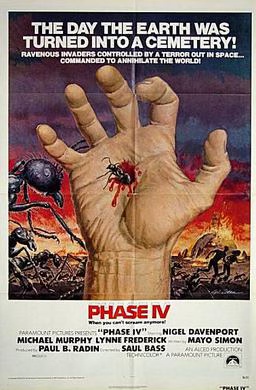
Some scenes from the novel were still alive to me before watching the film.  It occurs to me that maybe you don’t know what it’s about.  Intelligent ants.  Some cosmic event boosts ant intelligence and two scientists are sent to Arizona to sort it out.  A local family ignores an evacuation order, and when one of the scientists destroys the oddly geometric anthills, a war is on.  (I remembered the destroying the anthill scene.)  The war is both of might and wits.  Meanwhile the family is attacked—I remembered the scene of the ants eating the horse—with only a young woman surviving.  She’s found by the scientists after the first pesticide is released.  The ants attack, intelligently, the research station.  We never do see the expected ants popping out of Dr. Hubbs’ infected arm, but it’s clear by the end that the ants have won and we’re living in Phase IV.

A few observations: this is a scary movie, even if seventies’ fare.  The sci-fi elements dampen the horror down a bit, but it is still scary.  And it also references religion.  I watched the movie a few weeks after seeing The Night of the Hunter for the first time.  What does a Depression-era serial-killing preacher have to do with ants?  The hymn, “Leaning on the Everlasting Arms.”  Now, there’s a project out there for someone inspired by (if such a thing exists) Holy Horror.  Is there a discernible pattern of how hymns are used in horror?  I suspect there is.  That hymn is used so differently in these two movies that I’m convinced something deeper is going on.  If you’re interested, the idea’s free for the taking.  I’ve just spelled out two of the movies for you.

Spider Thoughts

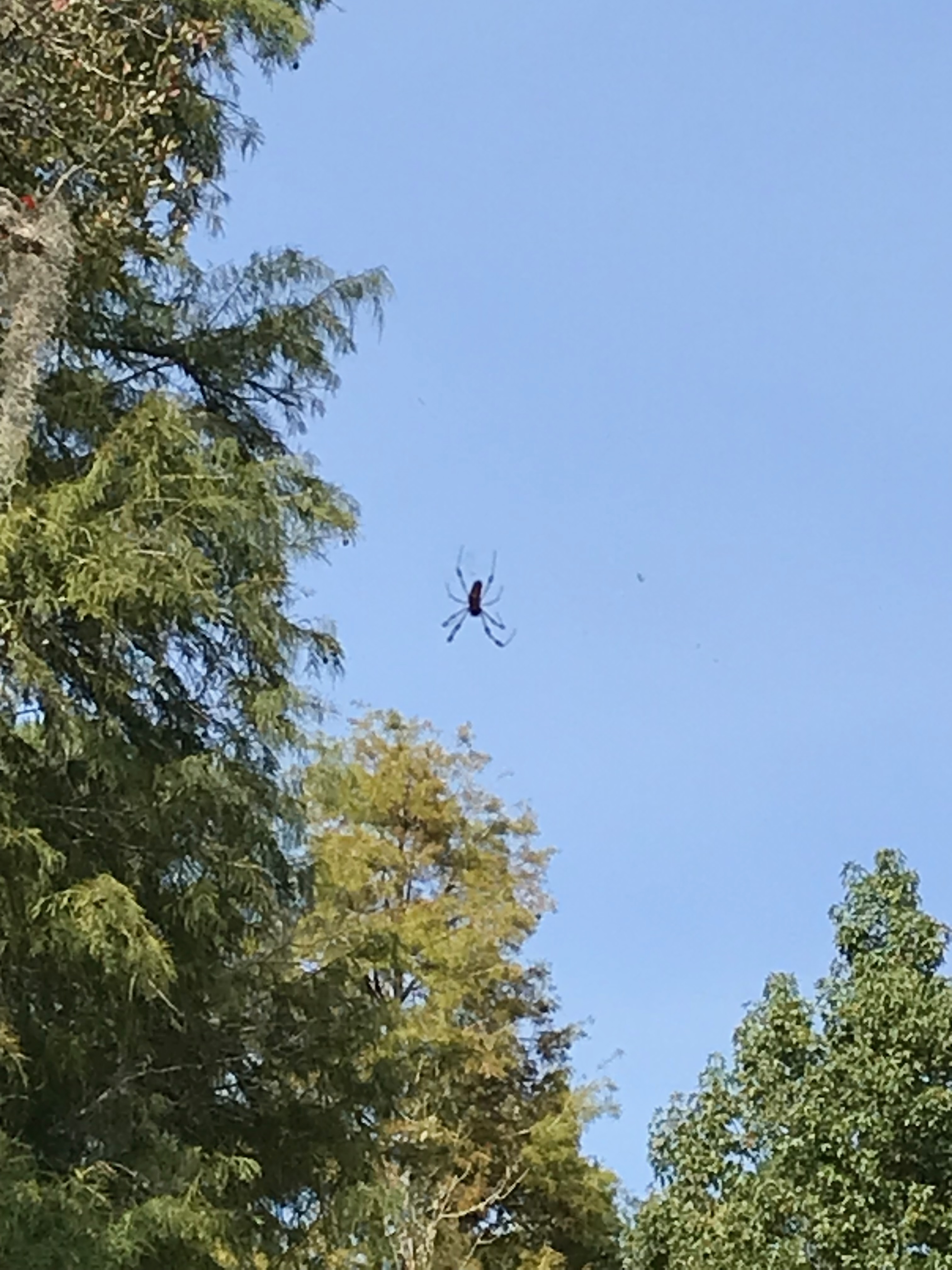
Spiders know.  Spiders are aware of when they’ve been seen.  I’ve been noticing this for some time now.  You can verify this yourself, but it may take some resolve, depending on your level of arachnophobia.  You walk into a room first thing in the morning and see a spider placidly hanging from its web.  If you intentionally look at it, it knows.  Leave the room for at least ten minutes and then come back.  The spider will be gone.  When you first stare at it, it won’t move.  Nature’s flight, fight, or freeze response has a clear winner here.  Spiders play it cool.  This happened recently on a weekend.  I had my wife verify this for me.  I pointed out the spider (I’d already stared at it) and told her I was doing an experiment.  She’s been married to me for thirty-five years, and such things no longer come as a surprise.

I told her my thesis and suggested we both just get breakfast ready as normal.  The spider didn’t move, even with clatter of bowls and spoons.  When my wife went to take her bowl to the sink several minutes later, the spider had vanished.   (This doesn’t seem to apply to spiders actively descending on a web in front of your face, I’ve noticed.  They’re too busy with their spider thoughts.)  Animals are smarter than we give them credit for being.  Who ranks spiders on their list of smart critters?  But they are.  And I wonder what they think of me.  If a spider crawls on me, I run away.  Like a spider I won’t return to the same place where it happened, at least not for some time.  All of this brings Rupert Sheldrake to mind.

Sheldrake has been summarily wiped off the table by other scientists, in part because he has explored the sense of being stared at.  Materialistic science tells us there can be no such thing since being seen is passive and we have no sense organs to detect it.  We have all, however, had the experience of turning around to find that someone has indeed been staring at us.  As so often happens with materialism, we’re told simply to discard it as fantasy.  But that’s not the way it feels.  So I look at my most recent spider—I know there will always be more—and know that s/he knows they’re being stared at.  When you’re small running may not get you away swiftly enough.  Freezing makes more sense.  Freezing and waiting.  The thing you fear (for a spider it’s me) will generally go away on its own, looking for something more material, I suspect.


Planting Knowledge

In an effort not to harm other living creatures, I became a vegan about seven years ago.  Generally it’s not too difficult, although many eateries still think you have to exploit animals to eat anything.  Vegan fare is quite good, and some of it is remarkable.  Then I saw the article in Popular Mechanics, “So It Turns Out Plants Have Had Voices This Whole Time” by Jackie Appel.  Well, “voices” may be stretching it a bit, but they do make sounds.  According to the article, plants “talk” at the same volume as humans tend to, only it’s in a range that we can’t perceive.  Other animals, however, may.  That’s right, your dog may be able to hear the noise plants make.  This is one of the reasons I marvel at scientific arrogance.  Human senses simply can’t perceive all stimuli—how can we claim that what we term “supernatural” doesn’t exist?  We don’t have nearly all the data.

Meanwhile, we live with animals whose sense of smell would send us running even more frequently to the showers.  Animals who can hear plants “talking.”  Animals who can perceive magnetic fields.  We’ve evolved knowing what we need to know.  (At least in part.)  What then do plants communicate?  Can they hear one another?  The sounds plants make, if “translated” to human perception, seem to be “I’m thirsty,” “I’ve been hurt,” or “I’m fine.”  The terminology here is Appel’s but you get the idea—plants broadcast their status.  Can plants scream?  One of my students reminded me a few years back that I once wondered to her what a tomato felt when it was being sliced.  I responded, “That sounds like something I would’ve said.”

They know.

So now I’m a vegan and plants are joining the conversation.  My hope is that they don’t feel pain.  As far as we know, plants don’t have brains.  Even so, heliotropes are smart enough to follow the sun across the sky.  And even fully grown trees move—very, very slowly—to optimize the light they require.  Such intelligence in nature always leaves me in a state of wonder.  We’ve been told for centuries of human exceptionalism.  Sure, we have opposable thumbs and have figured out how to communicate intricate things vocally.  So much so that we can represent them in written form (such as you’re reading right now) and can know what someone’s saying even at great distances.  That doesn’t mean we’re the only remarkable creatures.  But it does leave me with the dilemma of what to eat.


Natural Wonder

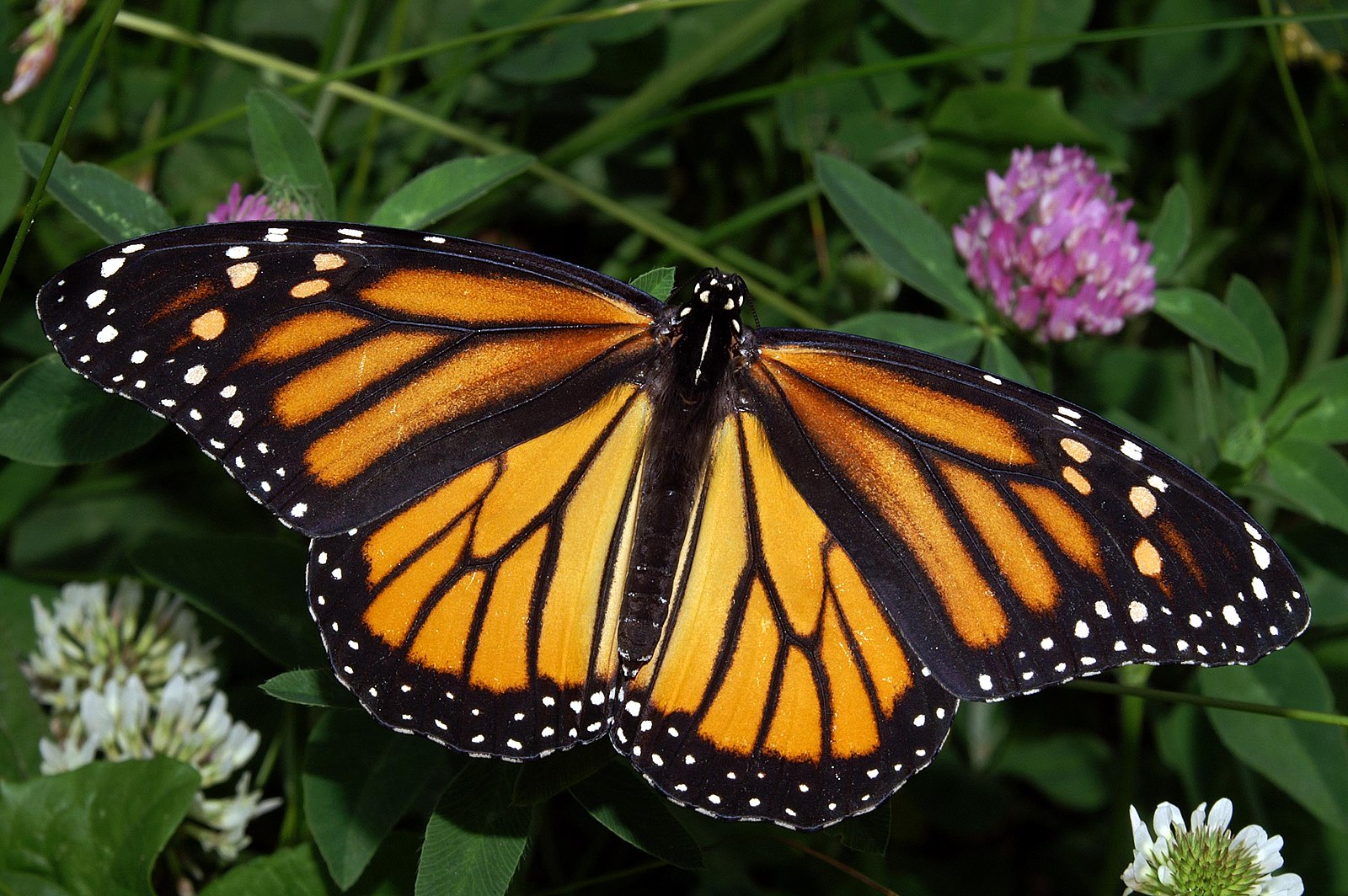
I recently heard a talk about monarch butterflies that left me in awe, once again, of nature.  These remarkable insects have been in the news because of declining numbers—largely because of global warming, it seems.  We’ve only begun, however, to learn how remarkable they are, even with the head-of-a-pin-sized brains.  You might wonder why I’m discussing butterflies in November, but it’s not the first time I’ve done that.  Besides, global warming has made it relevant.  So what about monarchs?  Perhaps the most remarkable thing is that they migrate.  And to do so it takes about four generations.  This deeply embedded behavior shows an intelligence in nature that we’re reluctant to grant.  Still it’s clearly there.  I live in Pennsylvania and we have monarchs around here and they can be found as far north as southern Canada.

Photo credit: Kenneth Dwain Harrelson, via Wikimedia Commons, GNU Free Documentation License

These monarchs around here aren’t the ones who left their overwintering spot in Mexico.  The earliest ones we see up here may have flown in from the Carolinas or the Midwest, where they may’ve been born.  As adults they feed on flower nectar, but to be born they require milkweed plants.  Monarchs only lay their eggs on this one plant family.  The milkweed contains a toxin that they’ve evolved to eat and that toxin gives them a really bad flavor.  That’s why birds tend not to eat monarchs.  So they reproduce in northern locations until environmental cues change the late season eggs.  These late season generation produces the butterflies that will migrate.  Instead of hanging around sipping nectar, they find south (they can tell time and they only fly on days with a south wind) and make their way to one specific area in Mexico to overwinter.  They don’t eat at that stage.

In the spring, hungry, they following blooming desert flowers north.  They follow the food supply, birthing new generations to carry on, until they reach the latitude they prefer.  So some stay around here, eating and reproducing until the cycle begins again in the autumn.  It might seem like a lot of extra work (consider what we do in the office all day and try to criticize) yet it demonstrates the remarkable intelligence of nature.  That migrating generation has to know to fly south and they have to be able to find direction.  Once there, and ready to return, their offspring’s offspring will (we suspect because of other species) know where their great-great-grandparents lived and they head there over three generations.  All of this is being endangered by global warming, however. Because one species thinks of itself alone as remarkable.


Gorilla Thinking

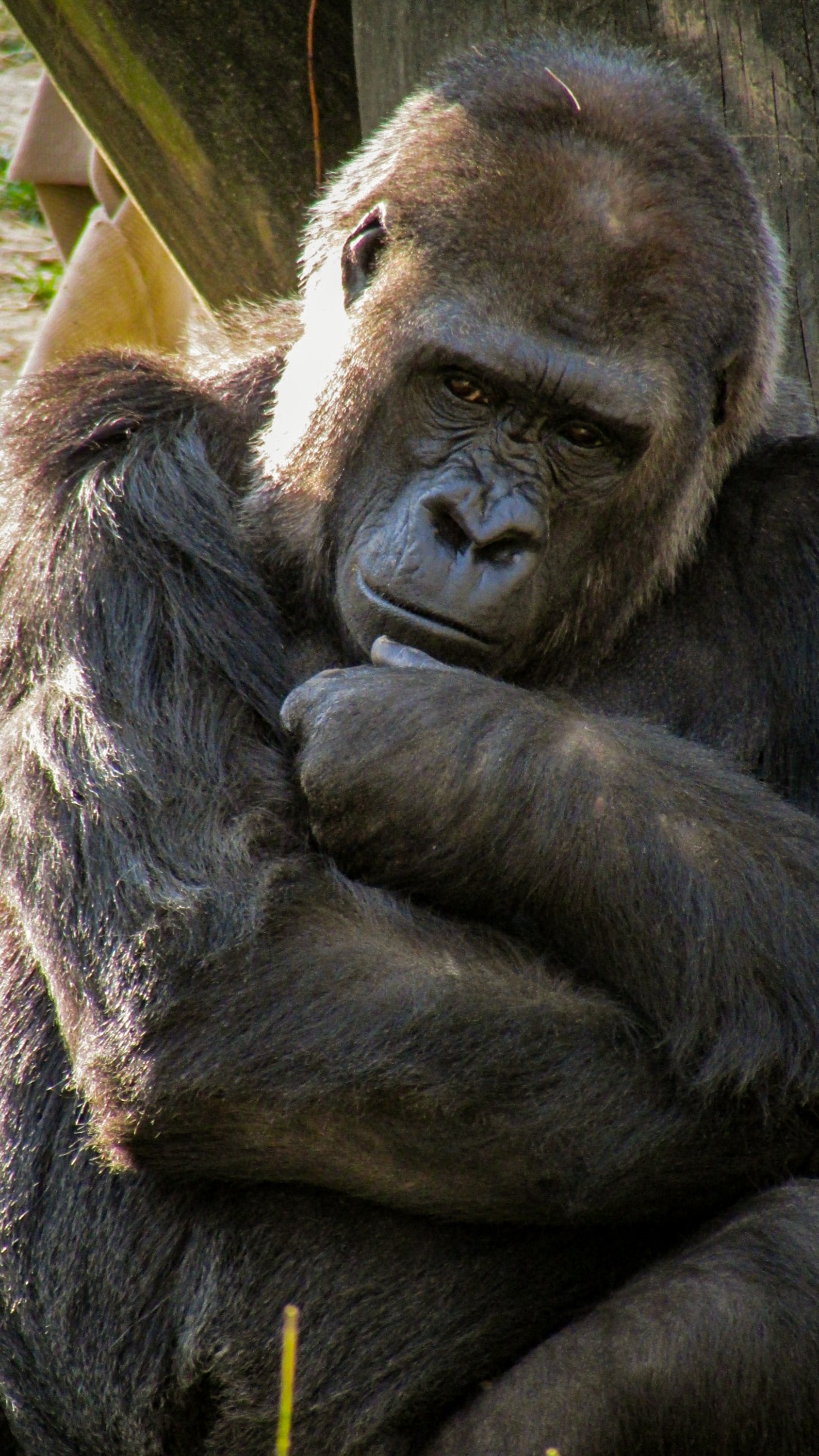
We don’t understand consciousness, but we want to keep it all to ourselves.  That’s the human way.  Or at least the biblically defined human way.  Animals, however, delight in defying our expectations because they too share in consciousness.  Take gorillas, for example.  Or maybe start with cats and work our way up to gorillas.  We all know that cats “meow.”  Many of us don’t realize that this sound is generally reserved for getting human attention.  Cats tend not to meow to get each others’ attention.  According to Science Alert, gorillas in captivity have come up with a unique vocalization to get zookeepers’ attention.  Not exactly a word, more like a sneeze-cough, this sound is used by gorillas at multiple zoos for getting human attention.  Even if the gorillas have never met in person.

Photo by Joshua J. Cotten on Unsplash

This is a pretty remarkable demonstration of consciousness.  What’s more, it’s an example of shared consciousness.  The same vocalization shared over hundreds of miles without a chance to tell each other about it.  We’re very protective of consciousness.  As a species we like to think that consciousness is uniquely human and that it’s limited to our brains.  Moments of shared consciousness we chalk up to coincidence or laugh off as “ESP.”  Funny things happen, however, when you start to keep track of how often such things occur.  It might make more sense to attribute this to moments of shared consciousness.  In our materialist paradigm, however, that’s not possible so we just shake our heads and claim it’s “one of those things.”

Animals share in consciousness.  We don’t always know what their experience of it is—indeed, we have no way to test it—but it’s clear they think.  I live in a town, so my experience of observing wild animals is limited to birds, squirrels, and rabbits, for the most part.  I often see deer while jogging, and the occasional fox or coyote, but not long enough to watch them interact much.  But interact they do.  Constantly.  These are not automatons going through the motions—they are thinking creatures who have sophisticated ways of communicating with each other.  Ours includes vocalization, so far uniquely so in the form of spoken language.  The great apes—chimpanzees and orangutans, according to Tessa Koumoundouros—also vocalize and do so with humans.  Now we know that gorillas do too.  And we all know that a barking dog is trying to tell us something.  If we took consciousness seriously, and were willing to share it a bit more, we might learn a thing or two.


Following Instinct

An article from the Christian Science Monitor a few years back made me think how common knowledge runs ahead of science, but without the rigorous evidence.  The article is “Ravens might possess a Theory of Mind, say scientists.”  Of course they do.  The ravens, that is.  So do many other animals.  It’s pretty obvious when watching them interact on a daily basis.  We’ve over-flogged the idea of “instinct,” using it as a way of preserving the biblically-inspired idea that people are separate from animals.  We can be an arrogant species.  We say we get to determine when other species are intelligent or not.  When they do something smart we say, “That’s just instinct.”  Is it?  How do we know that?  And isn’t “instinct” one of the greatest fudge factors ever invented?

We do not know what consciousness is.  We claim it for ourselves and a few of our favorite animals only.  The ravens in the article show by their behavior that they know, or assume they know, what others are thinking.  I’m always struck how experiments set up to measure this assume a human frame of reference.  Paint a spot on an animal and place it in front of a mirror.  If it shows curiosity about the spot it has a self-awareness, a theory of mind.  Maybe other species aren’t as concerned about zits as we are.  Maybe they consider it vain to fawn over themselves.  Maybe they use sight in coordination with scent and hearing to identify themselves.  No matter what, at the end of the day we must say how our intelligence is superior.  (Then we go and elect Trump.)

Need I say more?

Scientists have to be skeptical—that is their job.  Looking for evidence and coming up with hypotheses and theories and whatnot.  That’s how the scientific method works.  The scientific method, however, isn’t the only way of knowing things.  We learn and animals learn.  We like to think our “theory of mind” makes us unique, but watching how animals interact with each other, even when they don’t know someone else is watching them, shows more sophistication than we normally allow.  Nobody has to be convinced that the corvids are intelligent birds.  Their lives are different from the nervous little finches and wrens, however.  Does that mean wrens and finches have less developed minds?  I think not.  Until we learn how to think like animals we have no business claiming that they have no theory of mind.  Maybe if we could define consciousness we might have a claim.  Right now, though, all we have are instincts to go on.


Getting Your Goat

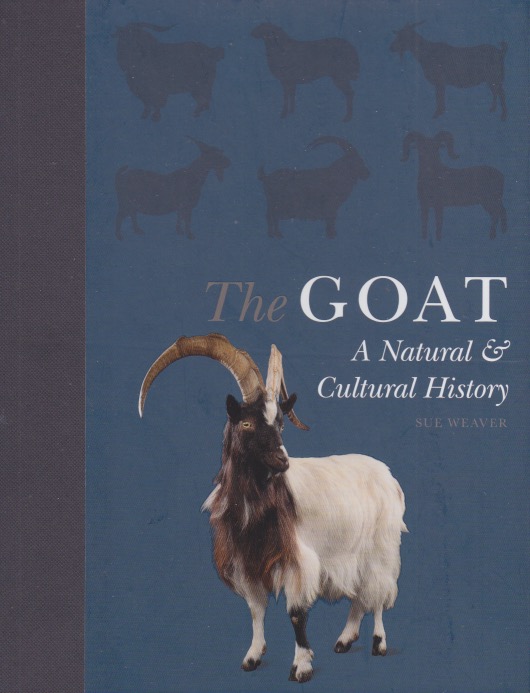
I have to confess to having known very little about goats.  Although one book does not an expert make, I still feel that I know quite a bit more now than when I started Sue Weaver’s masterful The Goat: A Natural and Cultural History.  I can’t convey it all to you here (that’s what the book is for), but I can offer a few highlights.  I do have to say that books that measure animals by the human exploitation of them tend to bother me a bit.  There’s something about reading how they make good pets but then they taste good too.  Especially since one of the takeaways is just how intelligent goats are.  I suspect even smart animals wouldn’t hang around if they knew their owners were licking their chops behind their backs.

Goats were very early among the domesticated species.  People do keep some breeds as pets, kind of like herbivorous dogs.  Goats require stimulation and tend to be playful and curious.  And they put up with humans quite well.  They climb.  You can find goats in trees in some locations since they do like to ascend whatever they can.  I remember seeing goats on the roof of a restaurant in Wisconsin (I can’t remember the name of the place, but I do recall the goats were supposed to be there).  Having not grown up on a farm I’ve never been too close to goats, but this book does make me interested in knowing more.

The book is heavily illustrated and it describes several varieties of goats as well as general goat physiology and behavior.  In fact, it answers that age-old question of how to tell the sheep from the goats.  Behaviorally they’re quite different, with goats being more individually minded and not always acting as a herd.  More individualistic, they nevertheless crave company.  And it is this difference between the sheep and the goats that starts to give the latter a bad name, perhaps because of their willfulness and individuality.  Goats are good followers, but on their own terms.  Sheep apparently don’t think much about it.  They follow any leader.  Historically, and unfortunately still, in some locations, goats have been preferred sacrificial animals.  Indeed, some gods, such as Pan, are portrayed with caprid qualities.  It is the intelligent, it seems, that are often targeted by the gods.  In any case, goats have long had associations with the divine in human minds.  And Weaver’s book parses goats in great detail.


Squirrel Wisdom

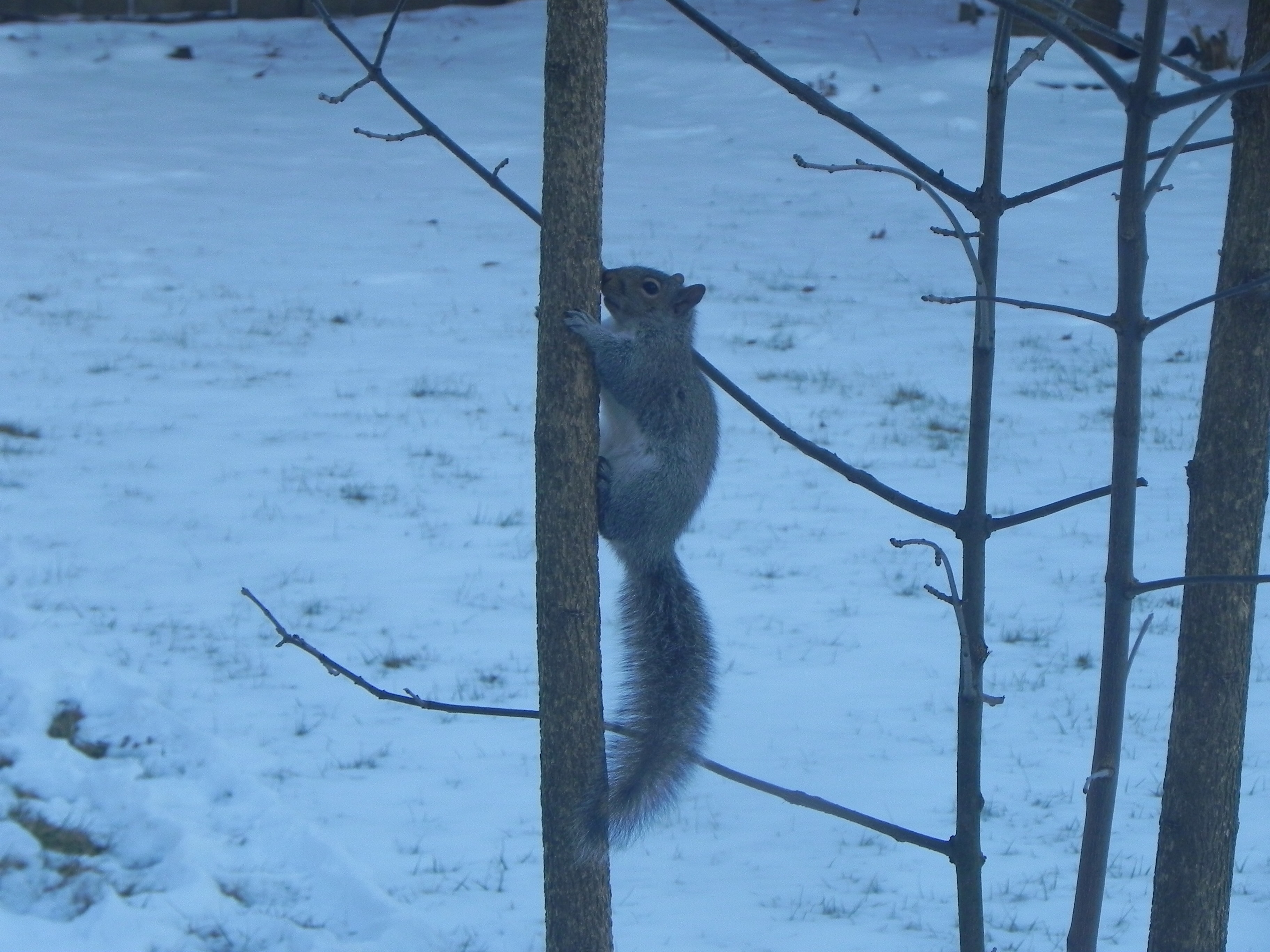
In a dangerous world prey animals have evolved to over-multiply.  That’s clear from watching the gray squirrels from my office window.  There’s a stand of maybe a dozen pine trees across the street, and some days it’s like the bark itself is crawling, there are so many squirrels chasing each other.  Especially when mating season begins.  Of course, squirrels get into everything.  We have a problem with them in our improperly sealed garage.  They have a biological need to gnaw and really animals don’t share the human concept of indoors versus outdoors.  They don’t understand that we want them outside, not in.  This leads to my love-hate relationship with squirrels.  I’m usually on the side of the prey, but they can be a real nuisance.  Still, they’re cute and furry and they take their chances going, well, outside.

So the other day there was a kind of love fest, a Woodstock of squirrels, if you will, in those pine trees.  The sun was out and the hormones must’ve been raging like a high school Friday.  A few minutes later I glanced outside and couldn’t see a single one.  A blur of wings caught my eye as a red-tailed hawk landed on a branch.  All the squirrel play had ceased.  Where there had been dozens just moments ago, not a single individual could now be seen.  The hawk seemed in no hurry, lazily flapping from branch to branch, swiveling its head around, watching.  It might not’ve been in a squirrel mood that day, or the prey might’ve been too well hidden.  Or maybe they knew if you play the game right, predators will just go away.

The squirrels’ conflicting urges both had to do with survival.  In a way from which we could learn, they seem aware that the group outweighs the individual.  Something about their level of consciousness gives them a deep wisdom.  We tend to call flighty individuals among our own species squirrelly, or we can say that we’re feeling squirrelly about something.  Rodents, however, are smart.  In fact, they understand some things better than humans do.  After all, there are so many of them because our species has killed off most of their predators, just as we’ve done for deer.  There’s a reason there’s so much road kill.  Watching the abundance of squirrels it becomes clear that they’re in tune with the ways of nature.  They have to chew or their teeth will grow too long.  And they definitively don’t know the differences between outdoors and in.  Still, they deserve our respect, even if they’re occasional nuisances.


Yellow Jacket Redux

Back before what year it was really mattered, I stepped on a yellow jacket nest.  (I know I wrote about this last summer, but there’s a point being made here.)  So traumatic was the ensuing horror scene that I literally did not wear shorts (other than those obligatory for gym class) for at least a decade.  I’m still reluctant to do so.  The south side of our house is the best real estate in town.  For bugs.  After last year’s unfortunate yellow jacket massacre, I went out and patched every hole I could find and reach.  I missed one.  (Actually, it is where previous owners didn’t bother to reattach a porch light after installing a new porch.  The gap was too big to use filler and I was trying to figure out how to do the repair when it got cold out last fall.)  So the jackets are back.  Ironically, not two feet from where they settled last year.

I really don’t want to kill the little buggers.  I have respect for all of life, and if they didn’t regularly get into the house I’d leave them be.  They’re only doing what they evolved to do.  At times it seems like all of life is an experiment presided over by some alien race, curious about what would happen if a few select species were given an intellectual boost.  You see, these yellow jackets are smart.  They’re problem solvers.  When I realized what they were doing—it was already too late—I started going outside at 3 a.m. (I’m awake anyway) and duct-taping the gaps shut.  I did this three days in a row before I realized what would happen if the police drove by.  A guy in a hoodie in the dark, standing next to a window on someone’s back porch with a roll of duct tape in his hand?  How do you explain your way out of that one?

Nature couldn’t have given these yellow jackets a real analog for duct tape wrapping the entry to their home, but each day they came back and buzzed around it contemplatively.  I figured the stickiness of the tape (I could barely get it off my fingers) would dissuade them.  They began digging under it.  Not only that, they began building an exterior entrance tunnel.  Soon they had an even better fortified nest with an easily guarded means of ingress.  Their brains may be small, but working together they can accomplish truly remarkable things.  More so, in many ways, than this human who watches them with fear and reverence.


Learning from Nature

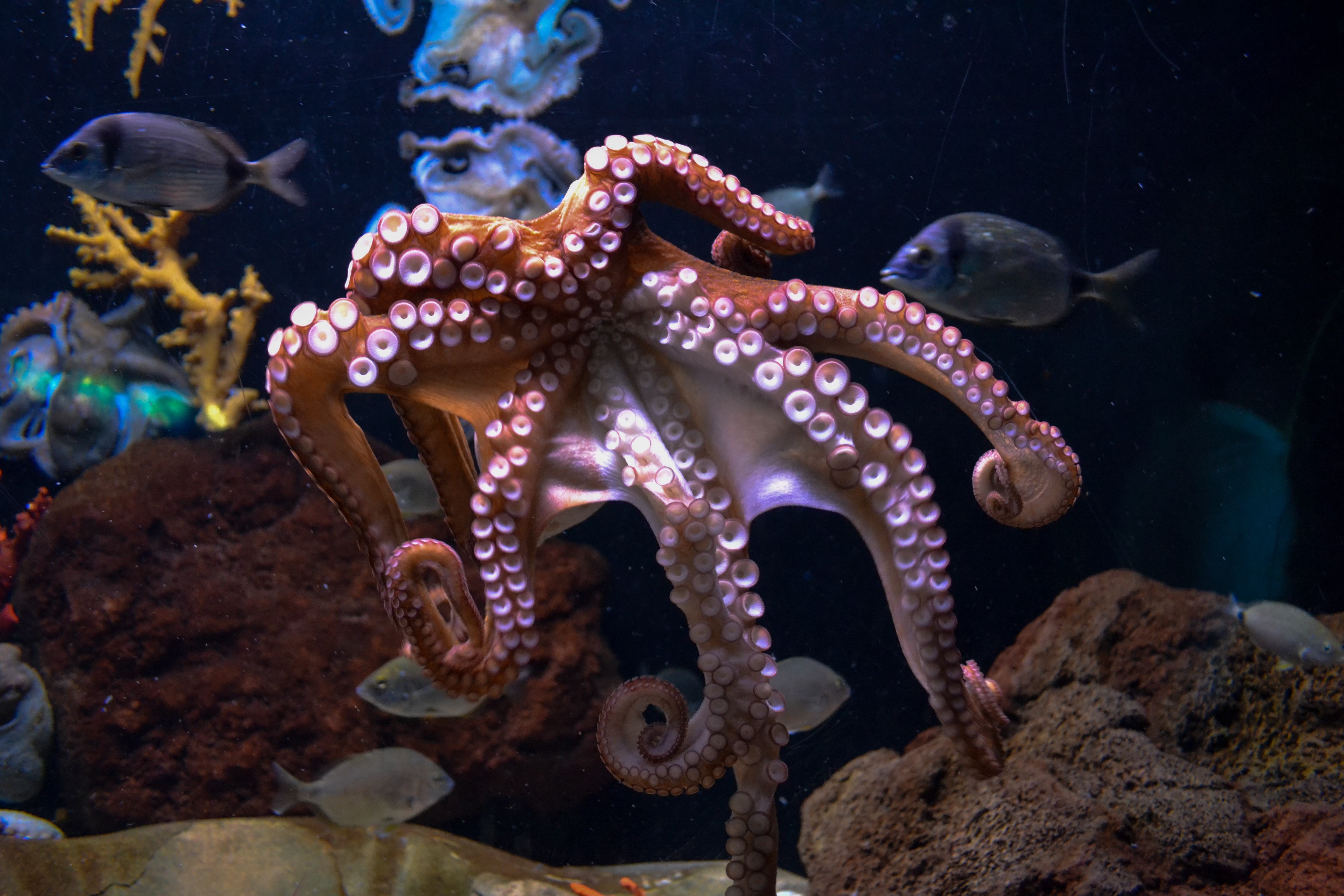
Netflix is one of those companies that has shown that new models for providing both television and movies are emerging.  Of course there are many subscription services, but Netflix rose to the top of the pile during this pandemic.  I don’t watch it much, since my time is generally otherwise spoken for, but I did have a chance to watch My Octopus Teacher, a documentary about Craig Foster’s relationship with an octopus.  The story unfolds over a year in which Foster comes to know, and to be recognized by, an octopus.  Quite apart from the Cthulhu references that may come to mind, octopuses are often skittish, highly intelligent mollusks.  Perhaps what made this movie such a surprise hit was just how emotionally attached viewers become to the cephalopod through Foster’s relationship with her.

Photo by Serena Repice Lentini on Unsplash

Almost immediately in the documentary, the viewer is struck by just how intelligent octopuses are.  The particular personality—and there is no other word for it—featured in this film is able to think and solve problems.  Not only that, but she is capable of forming a relationship with a human being she came to trust.  For many decades we’ve been taught that animals are like automatons, reacting with stock behaviors, because they can’t think.  Any claims to animal intelligence were chalked up as “anthropomorphism,” or inappropriately allowing animals to share in that coveted human trait of being “intelligent.”  The idea comes from the Bible and not even scientists would question it for the longest time.  Spending part of each day with one octopus, however, gives the lie to animals being subject to programmed behavior.  Like both Heisenberg and Schrödinger demonstrated, being involved in the scenario necessarily changes it. 

Animal intelligence has great implications for religion, of course.  This is perhaps why it is such a taboo subject.  What does it mean if animals can think and act intentionally?  Does it imply morality?  Foster implicitly raises that very question as he tries to decide whether to keep the pajama sharks away from the octopus he’s befriended.  Is he watching nature or has he become a part of it?  Our religions are often our ethical signposts.  In more recent years ethics has been shifted to the philosophy department since many people outwardly distrust the obviously mythical aspects of religious stories.  Nevertheless, the implications are clearly there.  Doesn’t it make a difference that our world is filled with other intelligent beings apart from those of us with opposable thumbs?  Watch My Octopus Teacher before deciding on an answer.


Whale Tales

Photo by Richard Sagredo on Unsplash

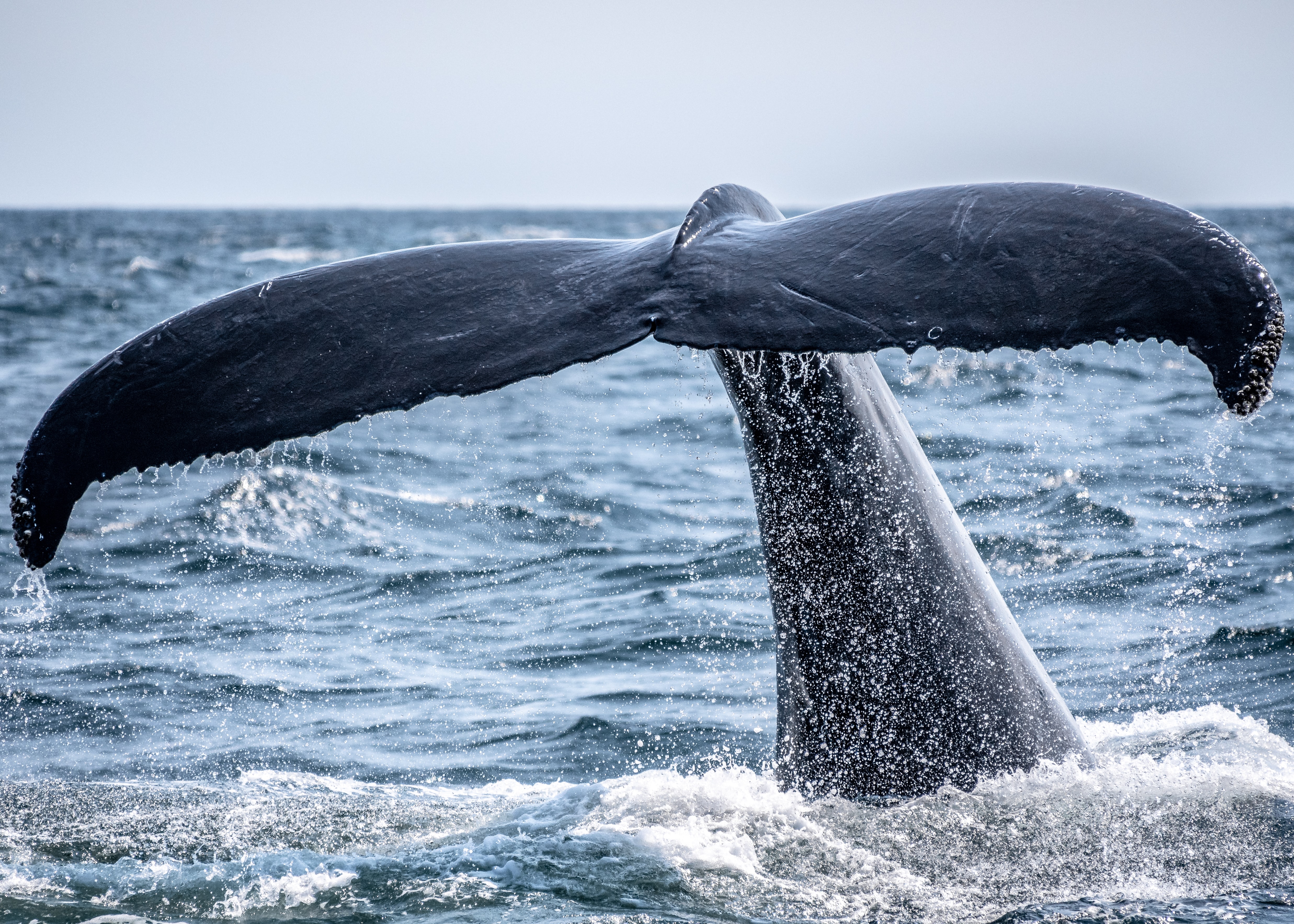
Always I’m surprised when other people seem surprised, specifically about animal intelligence.  Then I have to remind myself that our culture has absorbed the biblical view that people are different so thoroughly that even scientists believe it.  I watch the birds out my window quite a lot.  What they do is intentional and often quite intelligent.  True, not all animals are college material, but they are far brighter than the “automaton” paradigm with which I grew up.  So when I saw a piece in The Guardian titled “Sperm whales in 19th century shared ship attack information” I kept the tab open until I could read it.  Then I woke up this morning wondering why one of my many open tabs had the header “Sperm” on it, only to remember that I was going to read about whales.

I’ve written about Moby-Dick many times on this blog.  Although Melville didn’t experience financial success with it, he managed to pen one of the most profound and memorable novels ever.  One of the things he stressed was the intelligence of the whaler’s prey.  The Guardian article describes how, due to the magic of digitized log books, researchers can now compare captains’ notes about whaling.  What this comparison makes clear is that whales shared the information about attacks and avoided the areas where they occurred.  Despite the massive size of their brains, researchers had supposed whales to be rather stupid—or automatons—simply waiting to get slaughtered.  Animal intelligence is visible anywhere as long as we’re not afraid of that bogeyman, “anthropomorphism.”

We’ve been taught that human beings are so special that we think other animals act like us only because we’re projecting onto them.  Since the Bible informs us that we’re special and they’re further down the food chain, we must assume that creatures who destroy their own planet believing that they’re serving the will of God are somehow smarter than animals living in harmony with their environment.  We’re so smart that we had to add an extra sapiens to Homo sapiens to show just how special we are.  I’ve long suspected that animals are far more intelligent than we allow them to be.  Philip Hoare’s article offers us yet more evidence that we’ve underestimated our non-sapiens companions time and again.  Ironically we can accept that evolution explains how life forms change over time, but we somehow can’t let go of the story that says we’re somehow different.  I think we need to get out more and simply watch how animals behave.


Animal Spirituality

I had little scientific basis for my claims.  It wasn’t that I didn’t have evidence, but it was more one of those “if you see something say something” kinds of scenarios.  I have been claiming for many years that animals experience some kind of spirituality.  My evidence was drawn from disparate scientific materials I’d read, along with ancient religions.  Egyptians believed baboons worshiped the sun.  Chimpanzees make threatening gestures toward the sky during thunderstorms.  Penguins grieve.  Human spirituality, it seems to me, is part of our kinship with other living creatures.  Then I found an article by none other than Marc Bekoff titled “We’re Not the Only Animals Who Feel Grief and Spirituality,” in no less a prestigious place than Psychology Today.  Bekoff, some of whose books I’ve reported on here, has studied animal emotions professionally.

Our ideas of human exceptionality, it seems to me, often get us into trouble.  Arrogance is perhaps the most dangerous of psychological states.  When we see ourselves as part of a continuum, and realize that it can go on beyond us—yes, there are likely greater intelligences—humility should be an expected response.  Those who are arrogant frequently experience their comeuppance, even if they have to get elected to high office for it to happen.  We share emotions with our fellow creatures, and, now according to at least one expert, we share spirituality.  What is spirituality?  It seems to be an awareness that the body isn’t everything.  In my lexicon it’s listed there right with consciousness, mind, and soul.  We know it because we feel it.

The interconnectedness of the world, and beyond, is something many want to take exception from.  Looking around, such folks say, “Hey, we’re different than all of this.”  Yes and no.  We’re different, but that makes us no less a part of it.  Nature is our matrix.  We build fancy houses, but so do bower birds, and they do it without benefit of opposable thumbs, or even hands.  Of late we seem reluctant to admit that even human beings have spirituality.  That doesn’t stop us from feeling it, however.  I’m glad that others see it in the animal realm also.  Anyone who’s “owned” a dog knows what it’s like to receive worship.  We’ve selectively bred these wolves to adore us.  Is it so much of a stretch, then, to suppose that other animals also feel a sense of admiration for what’s beyond themselves?  Only the most arrogant wouldn’t pause to consider it.


The Parable of the Doves

A loud flapping of wings.  I looked out my window in time to see a mourning dove land on the roof opposite with audible bump.  The poor thing sat there, looking stunned.  Then another flapping of wings.  Another dove flew over the gutter onto the higher roof.  It was then that it dawned on me that these two were being pushed out of the nest.  I’ll admit that I doubted the wisdom of a dove building a nest in the neighbor’s gutters, especially when the tropical storm dumped several inches of rain on us last week.  Sometimes animals know what they’re doing, however, and even after the storm I could see the mother dove winking at me, her head just above the level of her aluminum-sided home.

The stunned youngster sat there for quite some time.  As soon as Mom was gone, the one that had flapped above climbed back into nest.  Was I watching a parable unfold?  Mom flew back when chick number two decided to flap down and join its sibling.  Throughout the morning I watched as the mother returned, landed in sight of her offspring, then showed them how to get down to the ground.  Ensuring they were watching, she waddled to the edge, dropped, and spread her wings.  She did this several times as the young birds kept carefully away from the edge.  Mom, it seemed to me, was growing impatient.  She’d occasionally fly back to peck them, but the siblings simply wouldn’t take the leap.  She started coming back to feed them instead.  I wondered how she managed with two beaks jammed into her own at the same time.

I kept an eye on the drama the entire day.  By the time I turned in for the night, the two youngsters were bedded down next to each other on the roof.  Their mother had landed, cooed insistently to them, but they dutifully ignored her, afraid of falling.  We look at birds and think they’re built to fly.  It’s one of their greatest assets.  It is the kind of gift, however, that requires overcoming obstacles.  Just because you can fly doesn’t mean that you’re not afraid to fall.  There’s learning involved.  Such episodes of animal intelligence always inspire me.  We could learn so much if only we would take the time to see how birds learn to fly.  The transition from coddled nesting to the freedom of the skies is not easy, and being built to fly still requires overcoming a very natural fear.


Unnatural Nature

It began as an odd sort of noise.  I had the study windows open during the morning of a heat wave and I heard a small, but metallic noise coming from the roof outside.  My study overlooks part of the first floor roof and slinking to the window I saw a sparrow trying to pick up a roofing nail.  We’ve had the roofers over twice already since we moved in a couple years back (and will have them again), and some of the nails from their work on the second-story roof landed here.  I’ve noticed sparrows pecking at them before.  Instead of skittishly flying away when I came up—I was only about a yard away—she still tried to lift the nail without success.  She then flew even closer to me, snatched up a different nail, and flew off with it.  Sparrows have, of course, adapted well to human dwellings, but what would a bird be wanting with a nail?  Surely not to make a nest?  It wasn’t even shiny—it was a rusty old one from the shingles replaced—since everyone knows birds are attracted to bright objects.

I’ve been a close watcher of nature my entire life.  This isn’t the same as being an outdoorsman, but when I can see outside, or when I do spend valued time outdoors, I look closely.  I always keep an eye out for animals on my daily jogs.  And I watch animal behavior through the window when work isn’t too pressing.  Still, I wonder about what a sparrow could want with a nail.  The next-door neighbors moved out a couple of months ago, and I watch the sparrows on their porch roof.  With no human activity nearby, they frequently gather there.  They seem to be picking up bits of human detritus—even pulling at, it looks from here, nails.  Now this behavior has me a little worried.  I’ve read about sparrows before and despite their innocent looks, they can be very aggressive birds, even attacking and sometimes killing larger perching fowl.  The idea of them weaponizing themselves is disconcerting.

Intelligence in nature is one of the last features many scientists want to admit to the the discussion.  There seems to be too strong a supposed correlation with shape of the physical brain and the ability to “think,” it seems to me.  I don’t know what the sparrows are planning, but clearly it involves gathering rusty old nails.  Even as I was writing this I noticed sparrows chirping aggressively.  Looking out my window across the street, I saw that a squirrel had crawled across an electric cable into a bushy roost where there must’ve been a sparrow nest.  Sparrows began flying into the fracas from all over the place, loudly chirping.  I couldn’t see what what happening because of the leaves, but the squirrel soon rushed out with a whole flutter of sparrows in pursuit.  Perhaps he’d discovered their plan with the nails.

Now, the next order of business…


Peaceful Lessons

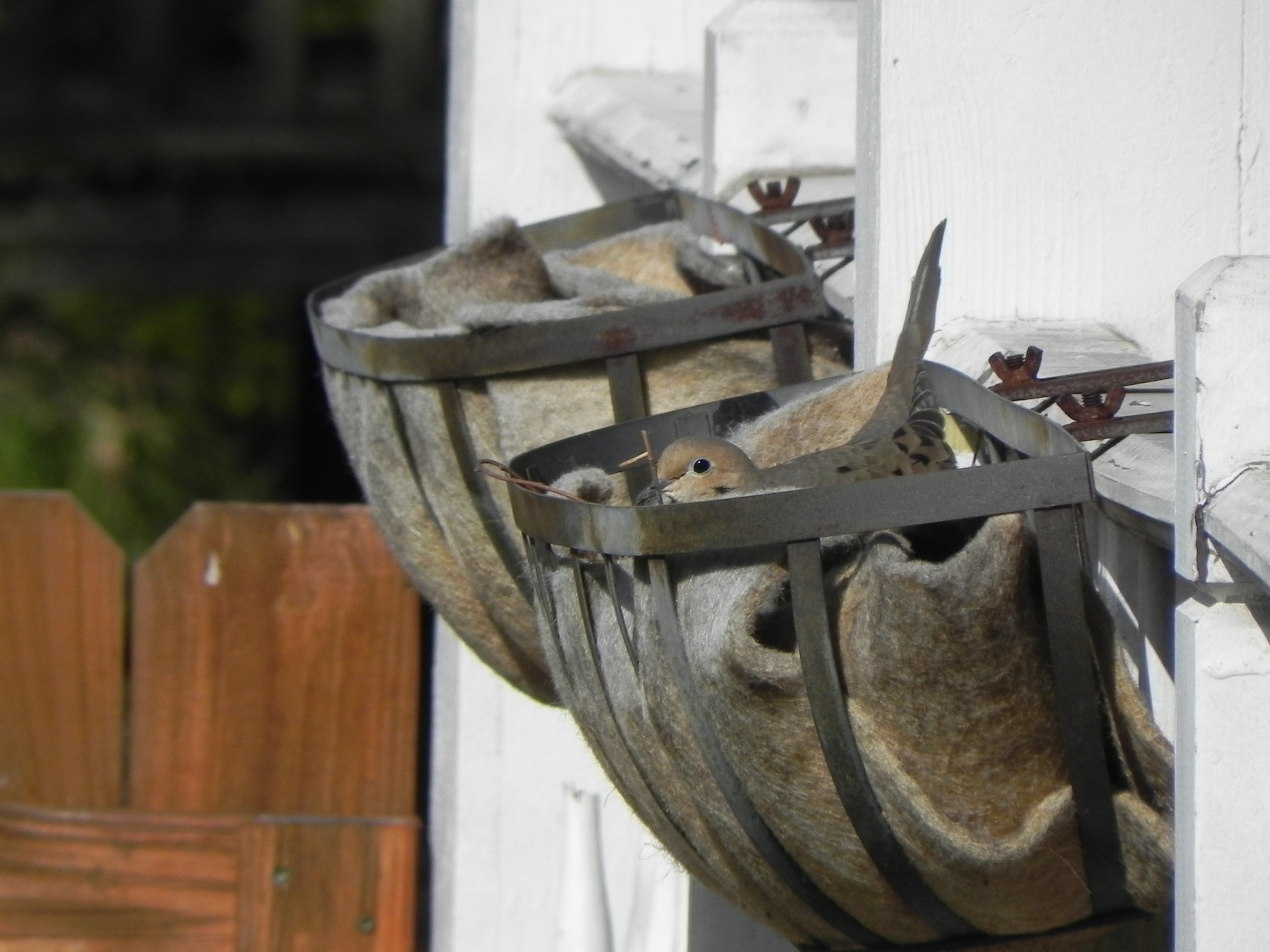
We are all, I think, looking for hope.  Probably due to the way I was raised, I often seek signs.  There’s no way to know if said signs are mere coincidences or the more intense variety known as synchronicities, yet we have a hopeful sign here at home.  On our front porch we have some plant hangers.  Spring crept up on us this year and we haven’t got around to putting any pansies in them yet.  The other day when I was stepping out to get the mail, I noticed feathers in one of them and feared there’d been a bird-related accident there.  As I took a step toward the planter, the head of a mourning dove popped up.  She blinked at me curiously, but didn’t fly away.  I knew then that she had built a nest in the as-yet unused planter and she was sitting on her eggs.

Monday was fiercely windy around here.  And rainy.  I wondered how any birds could fly in such weather.  A mourning dove flew up—perhaps one of the pair on our porch—and landed on the electric wire leading to our house.  The wire was swaying and bucking so furiously that the dove constantly had to shift and fluff and flutter just to stay in place.  The poor bird was in constant motion.  Then it showed a sign of animal intelligence.  There’s a much larger wire that runs down our street, from which other houses are supplied.  It’s more stable in the wind due to its girth.  The dove flew up to that wire instead.  There it was able to perch without having to constantly adjust itself to the gusts.  Peaceful and intelligent.  That’s what the world needs.  I have hope.

The dove has long been a sign of peace.  It’s understood that way in the Bible.  It was the dove that brought an olive twig to Noah, indicating that although all he could see was water there was, somewhere, dry land.  These days we need to be reminded that although it seems that the storm will last forever, even hurricanes eventually exhaust themselves.  The dove, clearly not happy about the horrendous wind buffeting it on that wire, nevertheless persisted in a kind of stoic optimism that things are as they should be.  There is great wisdom in the natural world.  If we can get to a window we can see it playing out before our very eyes.  Now when I step out the door, I glance at the dove, and she looks back at me.  We wink at each other.  She doesn’t fly away, for she understands.  She has a wisdom to which we all should aspire.