Backyard Wisdom

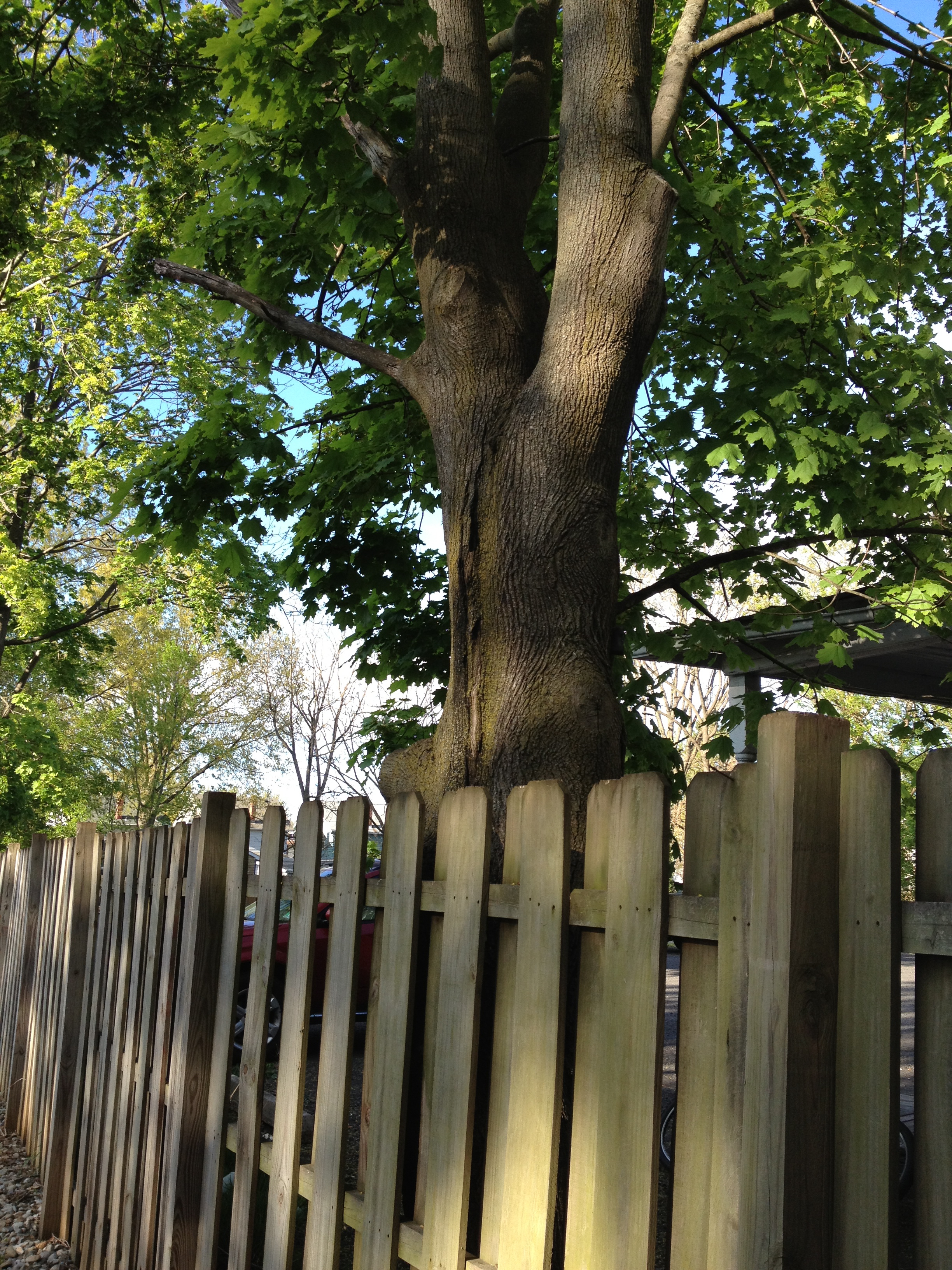
From where I was sitting, the robin appeared to be asleep. It was an overcast and chilly spring morning, so I had to admit that I was a little envious. Our back yard is divided from the neighboring landlord’s property by a kind of picket fence with square-topped stanchions every ten feet or so. The robin was sleeping on the stanchion closest to an old maple tree. A wiggle of movement caught my eye. Further down the fence, maybe seven or eight pickets back, sat an impatient gray squirrel. It was sitting up on its haunches, and flashing its bushy tail in an obvious attempt to draw attention to itself. The robin sat, implacable. The squirrel looked around like a nervous commuter who will be late for work. It hoped a picket or two closer. Up on its haunches, looked around, jiggled its tail. Still the robin sat. The squirrel turned toward the maple tree and reared back, preparing to jump. It was too far. The squirrel turned back to look at the bird. The robin, flapping its wings a time or two, hopped into the air and landed on a picket two further down beyond the stanchion. The squirrel climbed onto the now vacant spot and leapt into the tree. The robin flew back to its original post.

This little exchange brought home to me once again the intelligence of animals. I don’t know what was going through the minds of these two different species, but they obviously both wanted to be at the same place at the same time. Perhaps some moral imperative passed in unspoken form between them. The squirrel needed to be close enough to make the leap into the tree, and the robin was clearly comfortable where it was sitting. Something had to give. I don’t know if robins peck on squirrels when nobody’s looking, but the rodent, larger than the bird, was obviously cautious. In the end, a compromise was reached and each ended up where they wanted to be.

More than a show of intelligence, I also saw this as a parable. I imagined how differently it might have worked out if the robin were a Christian and the squirrel a Muslim. Would there be any giving way? Any acknowledgement of the need of the other? A few wing flaps, a little leap to the left, and the squirrel found its sanctuary. The robin simply returned to where it was. They both wanted the same sacred space. They didn’t raise voices or argue—the whole exchange was terribly polite. Behavioral biologists often suggest that we can learn much by watching animals. As I watched what must have been only a minor incident in the backyard world of robins and squirrels, I felt as if two of the great teachers of our many religions were enacting a parable for humankind. If only we would pay attention.
IMG_0675


I Think, Therefore I Believe

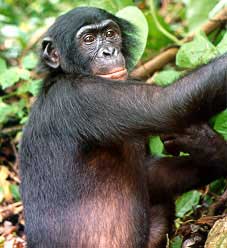
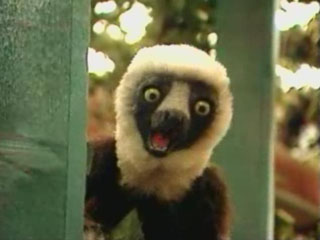
This week in Time, an article by Jeffrey Kluger explores the intelligence of animals. Quite apart from many examples of how bonobos can string together relatively complex concepts using symbol cards (thus evidencing more intelligence than New Jersey’s current governor), the article demonstrates that many animal species display what we would recognize in other humans as intelligence. The article then develops the corollary that if animals think then perhaps they sense emotion as well. Having raised my daughter on Kratt’s Creatures and Zoboomafoo, none of this was new to me. I may be no scientist, but watching closely how animals behave, it has always been obvious to me that we are more like points on a continuum rather than a “special creation.”

Not to put too fine a point on it, this is what lies behind the human obsession with its non-animal status. As Kluger states, “For many people, the Bible offers the most powerful argument of all. Human being were granted ‘dominion over the beasts of the field,’ and there the discussion can more or less stop.” Unfortunately for our animal companions, the use of the Bible to repress others does not stop at human beings who don’t share your religious views. Many use the Bible as an excuse to do as they please to creatures who demonstrate similar emotional responses to people in similar situations and who, increasingly we realize, also think. Kluger’s article opens with an interview with Kanzi, a bonobo. One of the inevitable conclusions is that this great ape is able to think ahead and make plans. Evolution on this point has apparently skipped many Neo-Cons.

For years I have been telling my students that animals display behaviors that we label as “religious” in humans. The difference is that we are able to ask other humans what they are thinking and thereby gain somewhat direct access to their thought process (if they are telling the truth). Because we fail to share language with animals, we assume we are superior thinkers. To me this does not stand to reason. Animals are as fully members of this planet as humans are. Our desire to exploit them is more a reflection of human dominionist tendencies than a reflection of their lack of intelligence. We may even have animals to thank for the basic tenets of religious thought since religions are better described as evolved than revealed.

Maybe not the best sign of animal intelligence, but consider the Neo-Cons...


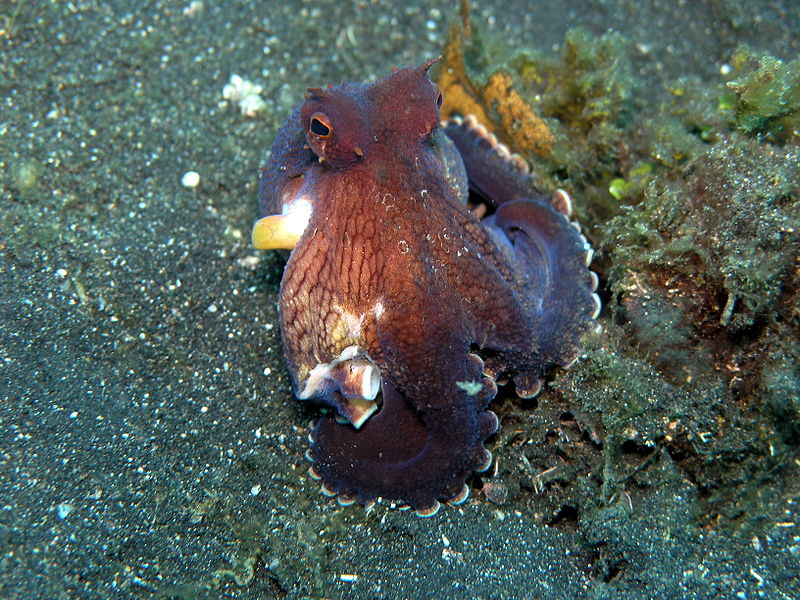
Oral Octopus

Veined Octopus

Juxtapositions fascinate me. As a former editor I notice the layout of stories on a page knowing that word counts, subject matter, photo sizes, and general interest all play into the placement of material. I recently posted an entry on Sacraments and Sea Cucumbers that had been suggested by such an editorial flourish. Yesterday’s paper wafted another such epiphany.

By now everyone knows that televangelist Oral Roberts died on Tuesday. Although he pioneered much of what is now recognized as televangelism, his true motives were clear when the money began piling up. I’m not the judge of his religious sincerity, but his ministry was a multi-million dollar enterprise, and he even founded a “university” named after himself. Meanwhile, housebound octogenarians on limited incomes gladly sent him their money to continue his good work. There is a very substantial profit to be made in preaching to the choir. All televangelists know that.

Immediately beneath the Oral Roberts story in the New Jersey Star-Ledger was a much more fascinating story about the veined octopus. Biologists have long known that octopi use large shells and other natural detritus for shelter. Octopi had been known to use coconut halves for that purpose as well. What is new in this story is that veined octopi have been observed collecting coconut halves (often discarded by human gatherers), emptying them out, and moving them to a place where two halves can be made into a neat shelter, thereby demonstrating a more advanced brain structure than most televangelists. In short, these invertebrates are utilizing tools. It is only a short step on the way to octopus televangelists, but if they know how to gather their valuables, this development can’t be far behind.


Religious Origins

There’s no question that religion is a distinctly human phenomenon. Although the concept of “religion” is used to lump together all kinds of belief and praxis systems around the world, it is now an aspect of every culture ever studied. When on an interview recently for a religion teaching post, I pondered whether to be entirely frank or to play it safe: should I discuss the origins of religion or a more conventional topic? (I went the safe route and did not get the job, if anyone wonders if there might be a moral to all this…)

For several years now I have been exploring whether it is possible to trace religion back to the animal coinhabitants of our planet. While my musings have taken me from singing Neanderthals to mourning penguins, it has become quite clear that at least the most basic levels of religion also exist in what is often termed “lower” life forms. My epiphany began while watching David Attenborough discussing the purpose of birdsong. Religion and music have been nearly inseparable in human experience (if one can overlook some extremist reformers). My thoughts turned to elephants who “bury” their dead with branches and penguins who clearly mourn the loss of their young — watch March of the Penguins if you doubt it! Death and religion have walked the long and disjointed journey of humankind hand in bony hand. By the time we get to primates we find baboons stopping to watch the rising sun (an act the ancient Egyptians supposed to be solar worship) and chimpanzees raging against thunderstorms as if they despise Baal even more than Hosea. A bonobo was recently documented as uttering the word “yes” to a keeper’s question, officially making her more articulate than some clergy I’ve known. Even today there are churches that still call their leaders Primates! For those who doubt that animals are capable of worship I would suggest the true acid test — purchase a dog.

The C of E's newest primate?

The C of E\’s newest primate?

We guard far too jealously that which makes us better than our animal companions. As observation and research progress and that line in the speciological sand grows ever more effaced, I wonder why religion might not have its roots in our very animal nature. While reading a book on biblical flora recently, I pondered if a even larger step back might be taken. Consider the heliotropes, for indeed they do toil and spin.