Whale Tales

Photo by Richard Sagredo on Unsplash

Always I’m surprised when other people seem surprised, specifically about animal intelligence.  Then I have to remind myself that our culture has absorbed the biblical view that people are different so thoroughly that even scientists believe it.  I watch the birds out my window quite a lot.  What they do is intentional and often quite intelligent.  True, not all animals are college material, but they are far brighter than the “automaton” paradigm with which I grew up.  So when I saw a piece in The Guardian titled “Sperm whales in 19th century shared ship attack information” I kept the tab open until I could read it.  Then I woke up this morning wondering why one of my many open tabs had the header “Sperm” on it, only to remember that I was going to read about whales.

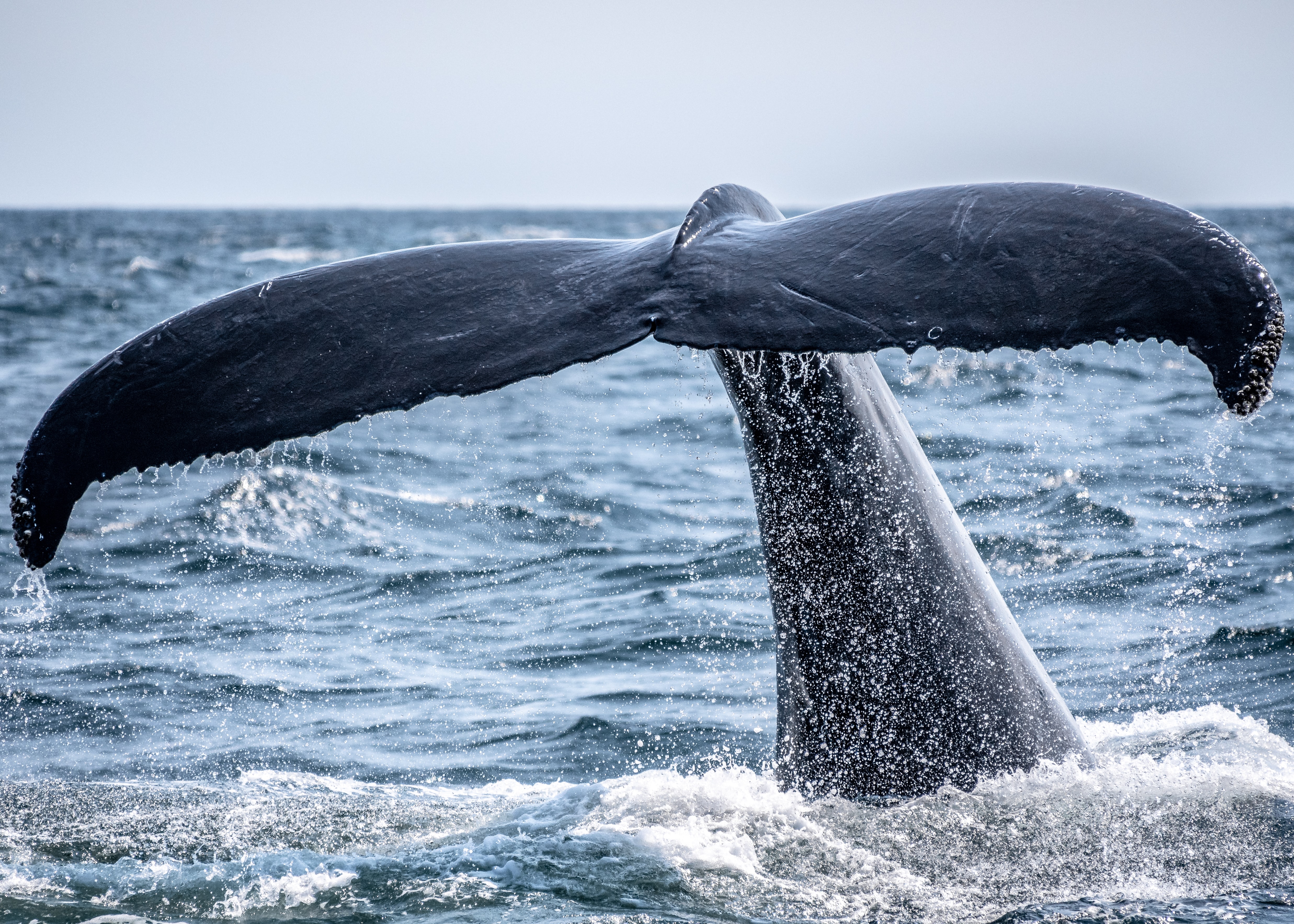
I’ve written about Moby-Dick many times on this blog.  Although Melville didn’t experience financial success with it, he managed to pen one of the most profound and memorable novels ever.  One of the things he stressed was the intelligence of the whaler’s prey.  The Guardian article describes how, due to the magic of digitized log books, researchers can now compare captains’ notes about whaling.  What this comparison makes clear is that whales shared the information about attacks and avoided the areas where they occurred.  Despite the massive size of their brains, researchers had supposed whales to be rather stupid—or automatons—simply waiting to get slaughtered.  Animal intelligence is visible anywhere as long as we’re not afraid of that bogeyman, “anthropomorphism.”

We’ve been taught that human beings are so special that we think other animals act like us only because we’re projecting onto them.  Since the Bible informs us that we’re special and they’re further down the food chain, we must assume that creatures who destroy their own planet believing that they’re serving the will of God are somehow smarter than animals living in harmony with their environment.  We’re so smart that we had to add an extra sapiens to Homo sapiens to show just how special we are.  I’ve long suspected that animals are far more intelligent than we allow them to be.  Philip Hoare’s article offers us yet more evidence that we’ve underestimated our non-sapiens companions time and again.  Ironically we can accept that evolution explains how life forms change over time, but we somehow can’t let go of the story that says we’re somehow different.  I think we need to get out more and simply watch how animals behave.

Moral Animals

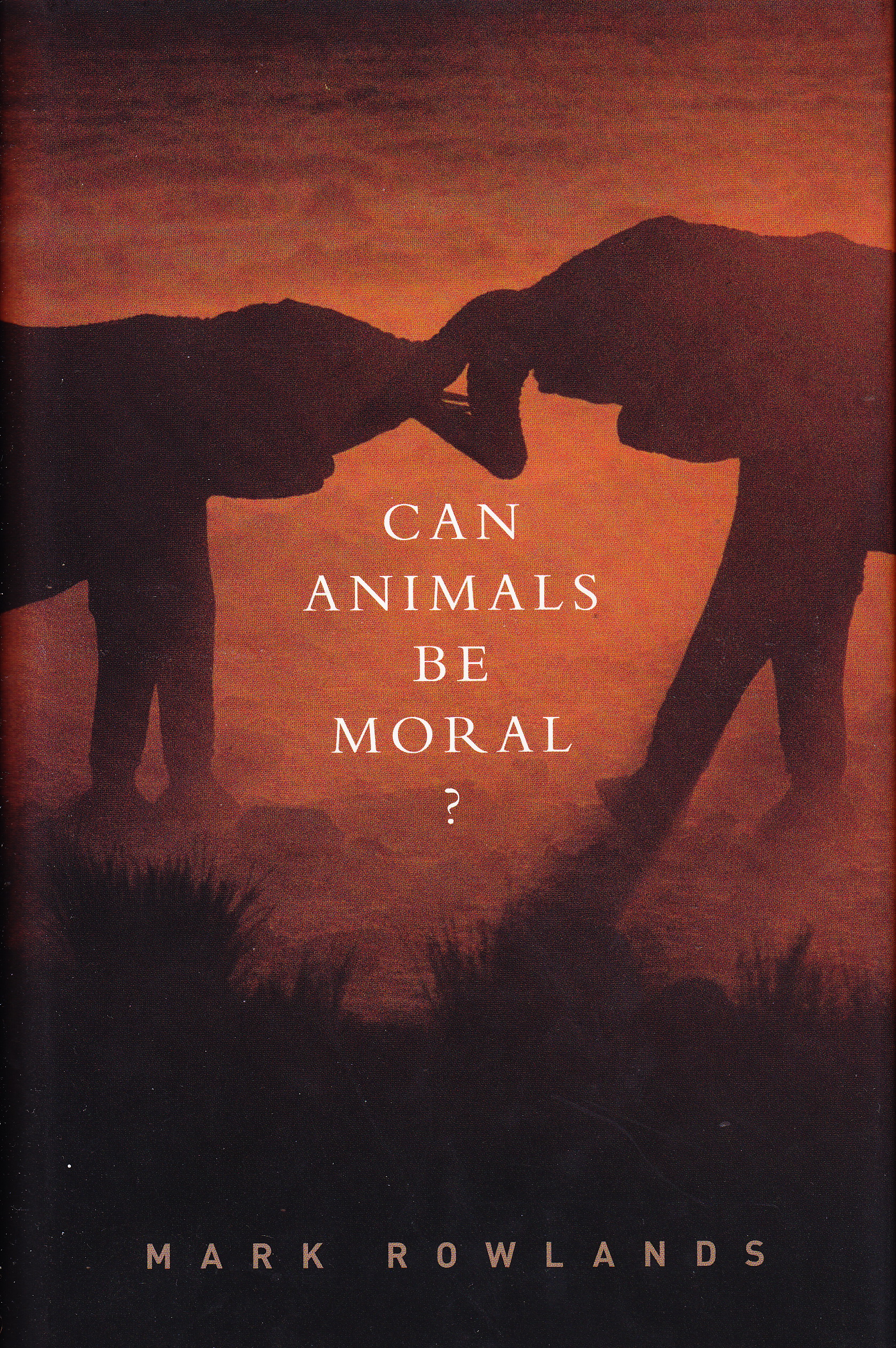
CanAnimalsBeMoralFor all of my life that I can remember, I have felt an affinity with animals. Even when I was relentlessly taught that evolution was wrong—Satanic even—I still held onto the idea that animals are more like us than they are different. I know this is partially the great sin of anthropomorphism (although I secretly doubt it is a mortal sin), but when I’ve interacted with animals, or watched them interact with each other, they’ve convinced me that they’re thinking. Since, however, we are the very top of the food-chain, we can’t allow such things. That’s why I turn to philosophy. Perhaps public transit isn’t the best place to appreciate fully a book of philosophy, but it’s the only time I have. Those who think categorically and with such rigid logic surely must have something to say on the issue of our fellow creatures. Mark Rowlands’s Can Animals Be Moral? is one of those books that might not be best read on a bus. I found myself constantly wanting to draw diagrams to visualize the course of his thought as we hit another pothole, or an angry bird killed a green pig in the next seat over.

While the animal stories that make such an engaging case are not a major part of Rowlands’s book, they nevertheless, for many of us lesser thinkers, seal the deal. When an animal acts in a way that shows its own lack of self-interest (how un-human!) we should sit up and pay attention. The question of morality, however, is thorny. Philosophers of ethics and religious analysts of the same seldom come near one another in their conclusions. We don’t know why we think morally, but it is clear we often do. It is obvious that it isn’t solely because of religion, although religion sometimes has a hand in it. It is, at the end of the day, a matter of feeling what is right. I feel that it is right to treat animals as thinking, feeling creatures. But are they moral?

Rowlands shows that some of the implications of animal morality can be serious. It was not that long ago that some animals were put on trial for the harm they’d putatively caused. Some were executed. (I wonder if they were eaten afterward?) If we attribute morality to animals, can they be blamed for their actions? Here is where the brilliance of Rowlands’s carefully argued book comes out—animals can be moral subjects without being moral agents. That is to say, they can act morally, but they can’t reason it out. I’m sure that I’m not saying this right, but the basic idea still appeals to me. Reading his final chapter on how moral Martians might view the naked apes of this planet gave me the chills. When we take ourselves off the top of the food-chain, the view becomes very sobering indeed. Would we want to be treated by Martians the way we treat animals on our own planet? Morality lies at the answer to that hypothetical question.