Contains Cookies

In the early days of this blog I used to get regular reactions from other bloggers.  This was back before I started the long commute to New York City and when I actually had a little spare time on my hands.  I always enjoyed the interactions, but followers eventually dropped away and I now often get no responses to my posts at all.  That’s why I was thrilled when two recent posts came together with a response one of my faithful readers sent.  I’d written about keeping books neat, along with a piece related to ancient food, when a friend pointed me to the story of a cookie found in a 1529 Cambridge copy of Augustine.  According to the piece on Delish, the cookie was left in the book about half a century ago and had only now just been discovered.
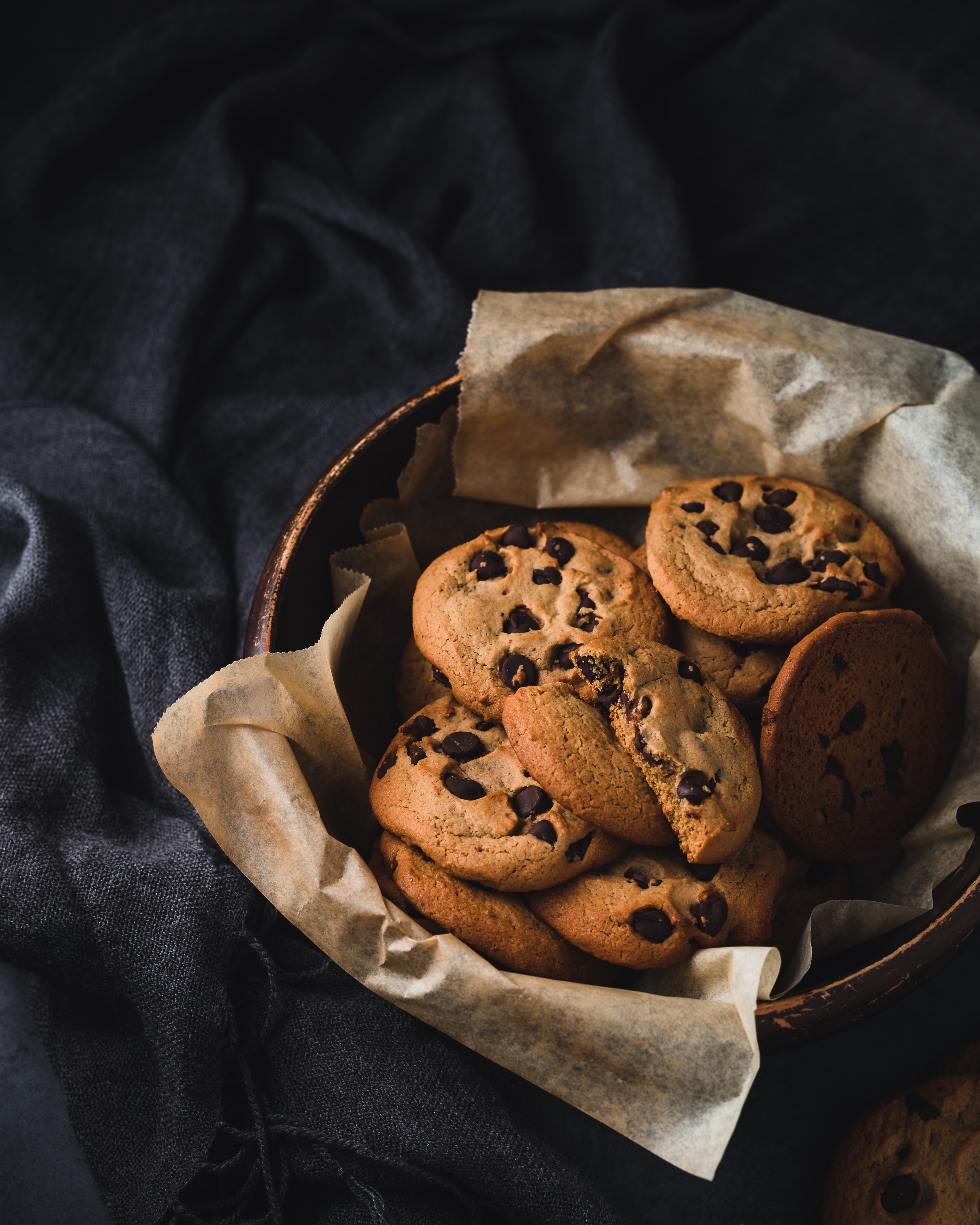
Photo by Mae Mu on Unsplash

Now, like most readers of religious studies, I have opinions about Augustine that aren’t pristine.  Still, I respect books.  I suspect all the bakery jokes necessary have been made about this particular bookmark, but what strikes me as odd is that nobody discovered a cookie placed in a book when I was less than ten years old, until now.  Let that say what you will—Augustine still sells wildly in translation, of course.  Not too many individuals go back to the source, however, at least not reading as far as the cookie.  I don’t know about Cambridge, but Edinburgh used to have books from the seventeenth century on the open stacks in the New College library.  I’m sure the older volumes weren’t frequently consulted.  And I’m not the one to point a finger; I have no catalogue of my own books so I have to remember what I already have.

Books aren’t a great investment, financially.  I remember back when Antiques Roadshow was all the rage.  Every episode I saw where someone brought a really old book led to certain disappointment.  No matter how rare, the value was measured in hundreds of dollars rather than thousands.  Those of us who invest in books do so for different reasons.  Our money is being exchanged for knowledge, learning, and thinking.  Back when Amazon used to give out bookmarks with each purchase one had a quote from Erasmus, “When I have a little money, I buy books; and if I have any left, I buy food and clothes.”  We are kindred spirits it seems.  Buy books and you’ll grow in wisdom, but you may go hungry.  That’s the way the cookie crumbles.

Net Worth

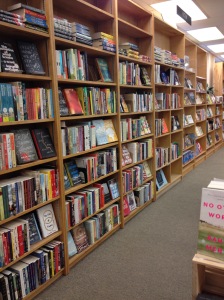
Net worth—a strange concept for human beings—is calculated on the basis of how much cash you’re “worth.”  While on that lonely task of sorting through the attic, I came across many boxes of books for which we didn’t have room in our apartment.  Our guests, who’ve been few, feel obligated to comment on how many books we have, as if it’s an infirmity to be delicately broached.  Or for which something might be prescribed.  I grew up believing that what we call “net worth” should be assessed in how much a person knows.  Knowledge, not money, in my fantasy moments, would drive the world forward.  Books are cheap (generally, but you don’t want to know what I’ve paid for some of these volumes when I really needed them!) and don’t retain resale value, except perhaps in the textbook market.  They’re considered a throwaway commodity.

Although I didn’t read it, a recent bestseller claimed you could find happiness by removing clutter, and high on the priority list of things to ditch was books.  Will you ever read that again?  For me the question is rather, will I ever need to look something up in there again?  Surprisingly often the answer is yes.  Considering the fact that books are knowledge, they’re a remarkably good bargain for the price.  Regardless of clutter.  Perhaps that’s a kind of wisdom itself.  Books are heavy, though, especially in any numbers.  Weight means something.  What they contain has the potential of being priceless, even though it’s available to anyone else with a copy.

I used to watch Antiques Roadshow, back in the days when you could still get television reception with just an antenna.   You always felt bad for the poor hopeful who’d brought an old book, dreaming of riches.  Apart from handwritten manuscripts, books are mass produced, almost by definition.  The printing press, after all, was designed to produce multiple copies.  Sure, if you go back far enough, or you have a tome rare enough, you might get a nice price for it.  Everyone I saw on the Roadshow left with their disappointment worn obviously on their faces.  You’re better off buying a vase.  That’s only if your bottom line is your net worth, though.  If you want to strive for what’s really important in life, I’d go for the book almost every time.  Of course, while up there moving those boxes around I began to wonder about the net worth of a good back brace as well.