Satanic Struggle

Around these parts folks are in an uproar about an after-school Satan Club.  The idea is an action to get Evangelical undies in a bunch, and it’s only proposed when a school system supports an overtly Christian club.  Reaction more than action, really.  Right now Nextdoor.com is bursting at the seams with indignation about something most people don’t understand.  I can’t claim to be an expert, but I’ve read plenty of books about Satan and many of them deal with Anton LaVey’s Church of Satan.  The Church of Satan believes in no literal Devil or Hell.  It was established to draw attention but also to make a statement when Christian Nationalists start to get too pushy.  Still, people are afraid of Satanism as the numerous international panics about it have shown.  And conspiracy theories don’t help.

It seems to me that the solution to all of this is education.  People, naturally enough, react to things emotionally.  I do it all the time.  (This is one reason that Artificial Intelligence will never be truly that—humans think with their emotions as well as with reason.)  The sad thing is, there are many easy ways to correct mistaken assumptions.  The information is out there and it’s easily found.  It’s easier, however, to spout off on social media like you’re an expert on something you know nothing about.  Trump introduced a culture of outrage—did his supporters suppose nobody else was capable of doing the same?  The Church of Satan was established as such an outrage.  In a nation of literalists, they hit a nerve.

The Church of Satan does not worship the Devil.  It supports social causes and it cooperates with law enforcement when some unbalanced individuals think it means something that it doesn’t.  To my way of thinking, this creative endeavor, despite getting the attention it sought, might’ve been better thought through.  Although extremism appeals to those who, like Herostratus, crave fame at any cost, does it really move us any closer to where we want to be?  Part of the problem is that many outspoken political figures want us all to be the same as them.  White, Christian, male, heterosexual.  I really can’t imagine a worse kind of nightmare.  Humans crave variety and new ideas.  As I sit here watching a new, uninformed Satanic Panic developing in my own backyard, I wonder if we all wouldn’t do our blood pressure a favor by sitting down with a book.  And maybe learning what this really is about.  Shoving matches seldom end well.

Magic Tricks

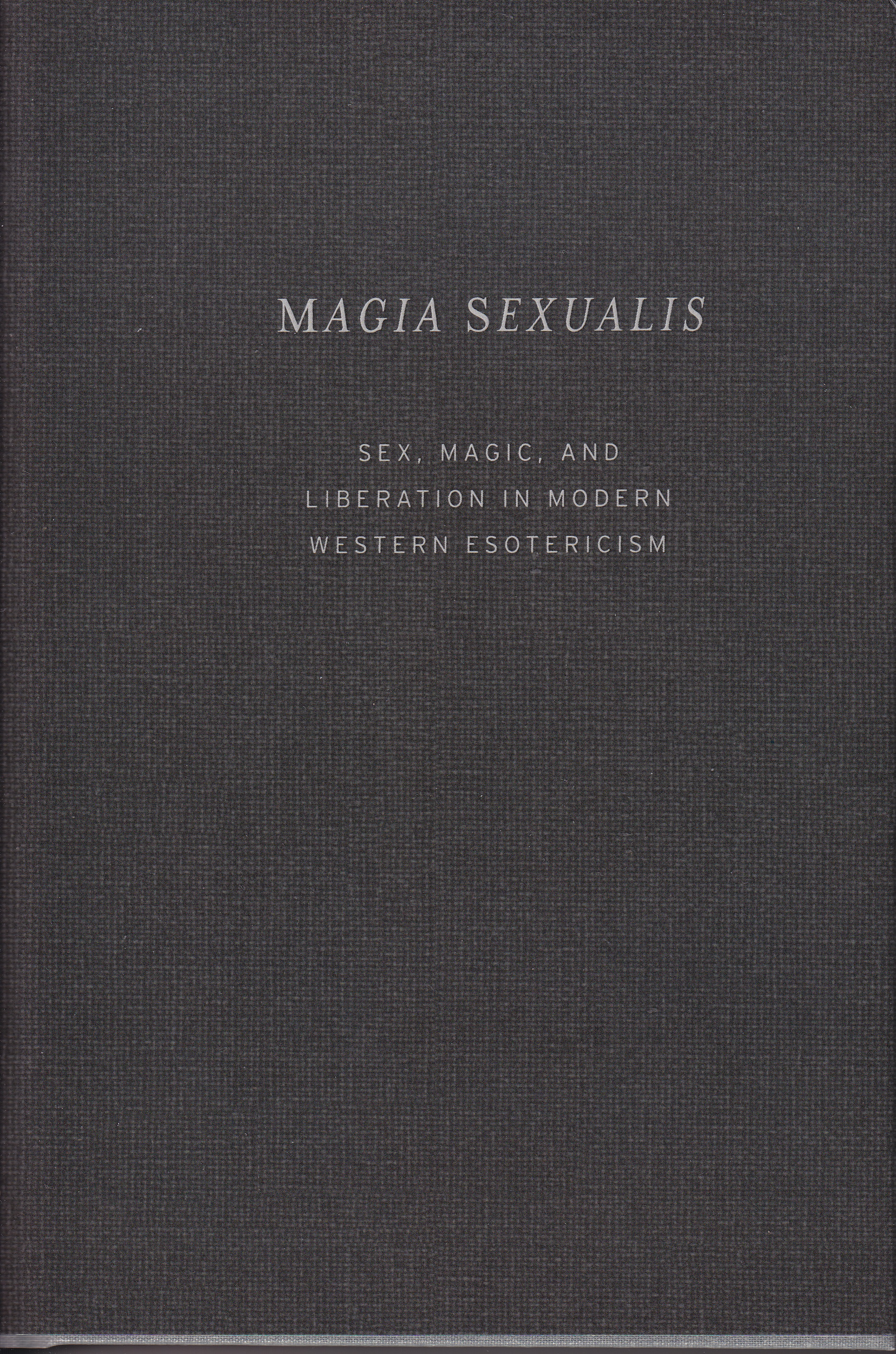
Magia SexualisTo a scholar who has spent many years studying ancient religions, new religions hold a strange appeal.  After all, we are trained to look at obscure texts from forgotten cultures and to decipher the mute clues they have left behind.  New religions have the benefit of being (generally) documented in ways that ancient religions aren’t, and often exist in societies more literate than those of the remote past.  Finding out about them may be easier, but understanding them may be just as difficult.  In my research on magic, I was led to Hugh B. Urban’s Magia Sexualis: Sex, Magic, and Liberation in Modern Western Esotericism.  I’ve always found Urban’s work engaging, and since this book is one of the few academic studies to investigate magic seriously, I was eager to see what he had to say.  As usual, I wasn’t disappointed.
 
Sex magic is frequently at the heart of magical beliefs.  Urban shows that this has been the case from ancient times.  Those of us who’ve studied ancient Syrian, Egyptian, Mesopotamian, or Aramaean religions aren’t surprised by this.  Those cultures inhabited a world pummeled by magic, and it doesn’t take a genius to figure out that sex might have had something to do with it.  The majority of Urban’s book, however, concerns figures starting in the nineteenth century who introduced new religious forms of sexual magic into the occult circles of their times.  Focusing on a specific practitioner in each chapter, he brings us up to the present with some familiar, or often less familiar, names.  Magic, by its very conception, is a religious idea.  Even if some of the more notorious modern magicians such as Aleister Crowley and Anton LaVey took religion in a darker direction, it was still religion.  The founding of Wicca by Gerald Gardner naturally receives some attention.
 
As Urban notes from the beginning, sex magic is not a topic for titillation.  It involves some transgressive, but also original thought about something that is so basically human that we all know about it even if we won’t discuss it.  And the dark practitioners have seemingly exhausted the vaults of extremism regarding sexuality that even a straight-laced, nay even Presbyterian, culture may find itself with no further options.  Where does one go when the foulest of profanities has been executed?  Certainly not back to the beginning, for we’ve come too far for that.  The postmodern world deconstructs itself leaving us to wonder if there can be any magic left at all.  It is no wonder, I should venture, that Harry Potter was gathering steam even as Urban wrote his book.  Magic will, by its nature, always find a way.