Fear of Big Books

I have to get over my fear of big books (I can’t find an official name for this and so I’ll coin machrysbibliophobia—and why did my autocorrect replace this with machrysbibliophobmia when there’s no such word?  It’s a scary world where my fears go unnamed—go, aporripsophobia!)  I’ve read many large novels with payoff (several by Stephen King and Neal Stephenson) and plenty of nonfiction from which I’ve learned a ton (perhaps literally).  But still, when a book I really want to read is big, I tremble.  I try to decide how to justify the time.  Now, I know I don’t have to justify time reading—that’s a constant activity.  I think it’s more a question of caesura, places to stop and perhaps claim credit for work done.  I’m not a fan of multiple volumes since that drives prices up.  Maybe just say it a bit more succinctly?

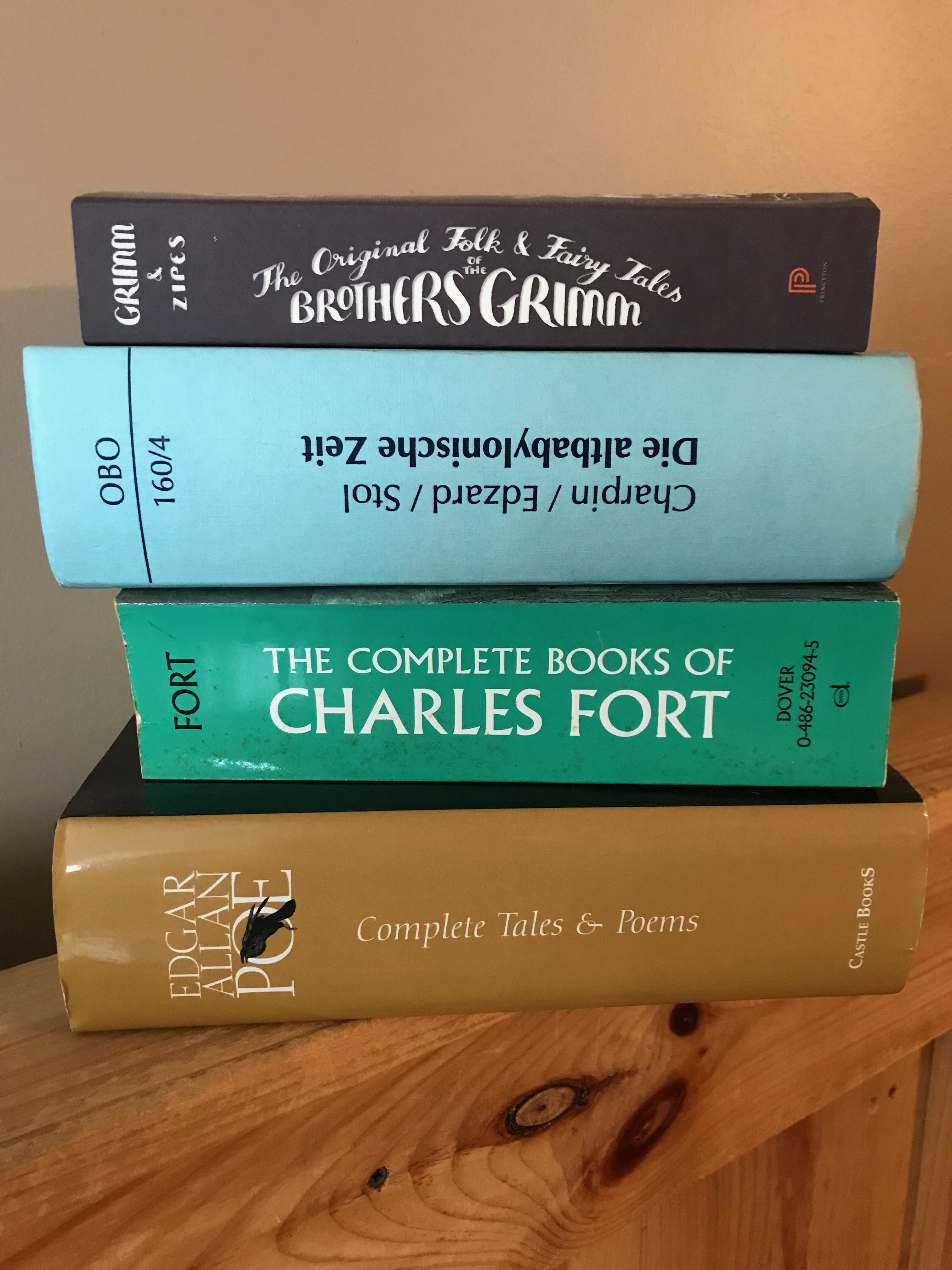
In my case—and I can only speak for myself—it’s all about a sense of accomplishment.  The distinct, discrete book that I’ve jammed into my gray matter along with its companions.  Some of us are driven by the shot of joy that accompanies completion.  I have a few compendia of authors/genres I really like.  I dip into them but never quite seem to have the time to finish them.  You see, recently watching the X-Files got me thinking about Charles Forte.  I have a compendium of his four books and I read Book of the Damned right through.  But I’ve got three more to go.  How are you supposed to count that on Goodreads, without its own ISBN?  Or the collected fiction and poetry of Poe.  It’s nice to have it all in one place, but will I ever read it cover-to-cover?  I tried once, really I did.
Scary books

As I write this I just started a big book.  It’s on a topic I really find fascinating but I’d been putting it off for some time because of my machrysbibliophobia.  I’ve been entrenched from before page 1.  I know it’s going to take me quite a long time to finish it—I have a job that takes its pound of flesh daily, and even when I do get a day off, well, mowing season is here.  And the porch needs painting again.  Maybe if non-Catholic monasteries were a thing I’d have time to devote to the reading I really must get done before my time’s up.  I like big books, but I’m also afraid of their ramifications.  Enough so even to name my fear.

Hellish Fears

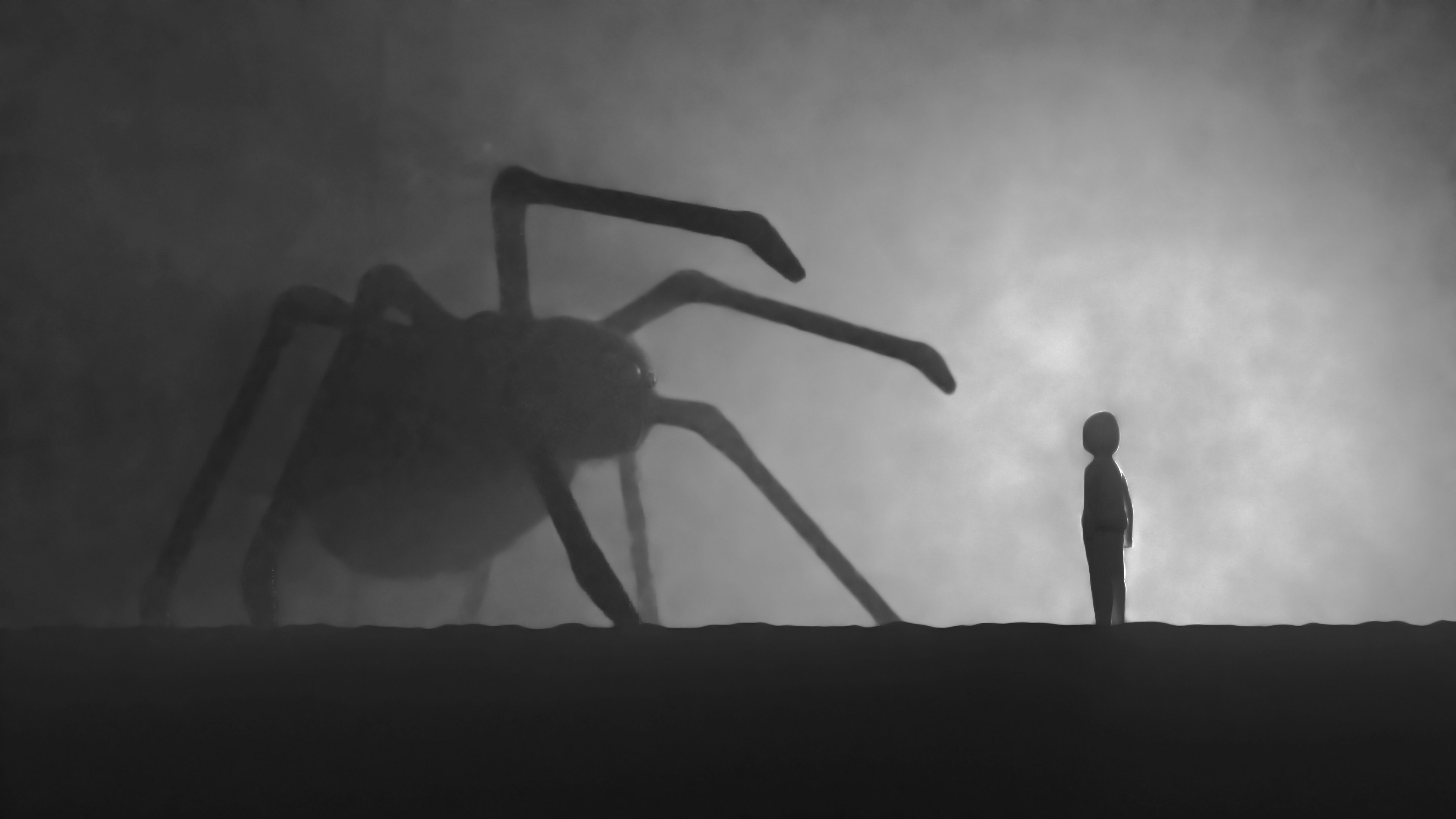
Aporripsophobia, the fear of rejection, and the fear of punishment (mastigophobia, or as I prefer, “spankophobia”) are closely related.  They define me.  Much of this comes from the fear of Hell, which I internalized early in life, along with the Calvinistic theology that backed it.  Some have thought that I’m “thin skinned” or afraid of criticism.  That’s not quite it.  I’m afraid of what criticism implies—I did something wrong and therefore may be punished for it.  What brings this on, all of a sudden?  Well, as I was getting ready to jog the other day a police car stopped in front of our house on a routine traffic violation.  My immediate thought was that I had done something wrong.  They were here for me, not the guy whose car they were attending.  Then this brought back that time in Boston.

I moved to Boston on my own, with all I had in a VW Beetle (old style).   I know now that the headache I had after that long drive was a migraine.  (I’ve had maybe a half-dozen in my lifetime, and they’re unmistakable.)  I parked the car, stumbled into my new apartment and went to bed.  The next morning I had a ticket for parking with the left tires to the curb (against the law in Boston).  I didn’t know it was illegal.  Even with a migraine I would’ve not parked that way had I known.  The receptionist at the police station actually said to me “Ignorance of the law is no excuse.”  That terrified me.  I thought it was only something Gilligan said.  If you don’t know all the laws how can you possibly avoid punishment?  And isn’t punishment rejection?

Some think I always have to be right.  They may not know the underlying cause—being wrong is to be subject to punishment.  And punishment leads to Hell.  When I was in Kindergarten the first time, I was held back partially because I was four but partially because I colored the triangle in the left corner purple instead of yellow, opposite to the verbal instructions.  It was because I don’t know my right from my left—I still don’t.  To me that first ever school correction was seared forever into my gray matter.  I’d done something wrong.  I was held back in school.  More likely than not, I was going to Hell.  I’ve known people to suggest, as does Richard Dawkins, that raising a child in a religion is child abuse.  I understand parents’ motivation, however.  You don’t want your child to go to Hell.  If they end up living in it all their lives I guess it’s a small price to pay.

Photo by Vadim Bogulov on Unsplash

Bounce Back

Bounce-backs are when an author receives a rejection letter and immediately emails the publisher back.  They are some of the worse ways to ensure future prospects with a publisher.  Now, I’m more sensitive than most editors, but I know of none, absolutely none, who feel good about writing rejection letters.  We’ve all received them and we know how bad it feels.  In publishing in general the appropriate response to a rejection is silence on the part of the author.  Since I submit more fiction for publication than non, it is mostly in that realm that I experience rejection.  (I’ve had my fair share in the nonfiction realm as well.)  I know, however, that if I want a future chance with a publisher you simply walk away from a rejection.

Photo by Mel Elías on Unsplash

Bounce-backs are a bad idea for a number of reasons.  First of all, they don’t change anything.  Unless a rejection is conditional (it rarely is), all a bounce-back does is make an editor who probably already feels bad about it feel even worse.  Misery may love company, but it’s unprofessional to spread it around.  Secondly, bounce-backs hurt your future prospects.  Nobody wants to establish a professional relationship with someone who can’t take rejection.  A third reason is you’re asking someone who’s already considered your project and who’s moved on, to take more time with a book (or article, or story) to which they’ve already said “no thank you.”  A fourth reason is that a bounce-back announces loudly and clearly, “I didn’t take time to think about this; I’m reacting emotionally.”

One of the best things an aspiring writer can do—and this includes academics—is to learn about the publishing industry.  There are tons of resources out there.   The best information I personally have found on success in academic publishing is reading about how to submit fiction for publication.  I have a very long list of rejections to hold up against the twenty-something stories I’ve had published.  None of those rejections felt good.  Obviously, I thought my material was good, otherwise I wouldn’t have sent it in.  I try not to take it personally, but slowly learning those lessons has led to more frequent success.  You need to practice submission to get better at it.  I’m somewhat of an expert on aporripsophobia, so I can say with confidence that even a nice, polite, “thank you” in response to rejection is not favored.  Simply let it go.  That’s the professional thing to do.


Aporripsophobia

I’m proposing a new word.  Given that there are lengthy lists of phobias available on the internet, and since fear and I are well acquainted, I was surprised to discover that fear of rejection has no name.  It is simply called “fear of rejection.”  That makes it sound so juvenile that it need not be taken seriously.  Without revealing too much (I don’t know how you might use this information—you could reject me!), this is one of my lifelong fears.  I have theories as to why this may be, but if you want to hear them you have to get to know me first.  In any case, I am proposing the word “aporripsophobia” for fear of rejection.  Before you turn this down, let me assure you that I took four years of Greek in college, and even taught it for a year.  “Aporripsē” is Greek for rejection, and, of course “phobia” is fear.  The standard euphonic vowel before the o in phobia is open for grabs, but since it’s my word, I’m suggesting another o.

Unless it’s a keyboard smash, a web search on Google that brings no results is rare.  Just to be sure, I checked out aporripsophobia and the mighty search engine turned up no results.  One thing I’ve learned about the writing life is that rejection is part and parcel of it.  Almost every writer has a history of rejection slips because, until someone takes a chance on you and makes some money off you, who wants to risk it?  The first few I received nearly solidified my slavery to aporripsophobia.  My advice to other writers, however, should they want it, is keep on trying.  In the past two years I’ve been asked to write two academic articles and a book.  I’ve also been asked to contribute to some online resources.  None of these are big or visible projects, but to someone with aporripsophobia, that’s fine.

Even introverts, you see, need other people.  Many of us suffer from a form of over-stimulation when around too many people.  Some of us are extremely alert to our senses, finding it difficult to ignore strong odors or weak pains.  Lots of people around can be frightening—crowds are loud and there’s so much—too much—going on!  That doesn’t mean, however, that the quiet don’t need others.  In fact, the quiet with aporripsophobia may get into a feedback loop where the need for alone time is translated as snobbery or arrogance when in reality it’s simply a way of handling the stress of being around too many people.  The feeling of rejection then rushes in.  I have probably said too much already, but I wanted to get aporripsophobia out there before someone louder did.  I missed meteorotheology as a coined word, so, like my advice to writers, this is how I keep on trying.  Finding aporripsophobia on Google some day down the road could lead to its opposite, I think.  Its rejection, on the other hand, would be the supreme irony.