Apples to Apples

Religion is all about death. Well, maybe not all, but still…

All religions deal with death in some detail. Perhaps that’s because death is such a universal experience. I think about it quite a lot—not to do so seems to be caught at a crisis without having thought through the implications—but mine are not always morbid thoughts (although, by definition, they may be). When I read Mary Roach’s Stiff a few years back, before I started this blog, I was amazed by the number of ways one could decide to have their “remains” treated. When I was a kid it seemed that there were only two options: bury them or burn them. To some religions the latter option felt a little close to Hell and was condemned as a sin. Occasionally I’ve posted here about various new methods that have made the news: having yourself morphed into a bullet or diamond.

In what I hope was not too much of a hint, my wife shared a further option with me—having yourself turned into a tree. Now while this seems what nature intended, it also feels profoundly Asherah-like. I have my doubts that Asherah was a generalized tree-goddess, but there is some kind of connection between wood and the goddess. Certainly by the Rabbinic Period of Judaism any tree in or near a sanctuary could be understood as the goddess and therefore a threat to monotheism’s hegemony. The solution: chop down the tree. Now Asherah whispers back, when you die, I can make you a tree.

People, like all animals, biodegrade when they die. Some saints apparently avoid this fate while others are pickled to a state of perfection artificially, but for us regular folk nature has a plan. Animals eat the plants, plants eat the animals. We are all consumers. Bios Urn is the brainchild of Gerald Moline and features your deceased body packaged in a biodegradable urn along with tree seeds of your choice. All you need is a post-holer and a bit of rain. Some might wish to be a redwood with their aspirations to immortality. I think I would prefer to be an apple tree. Apple trees give back year after year. Plants, by their floral nature, are givers. The apple tree gives in a way that seems especially divine. After all, many are those who claim it is the very tree of Eden.
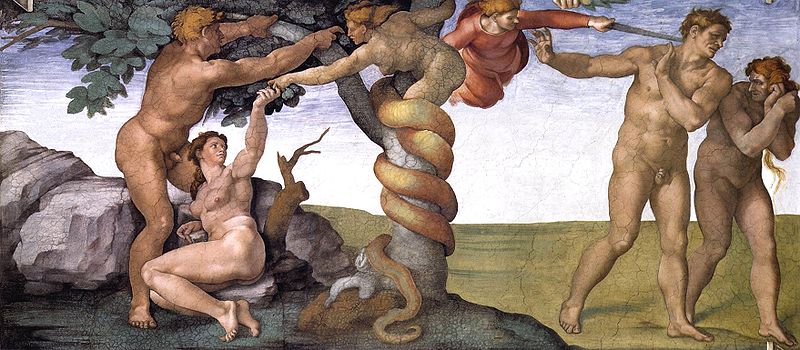
What everyone wants
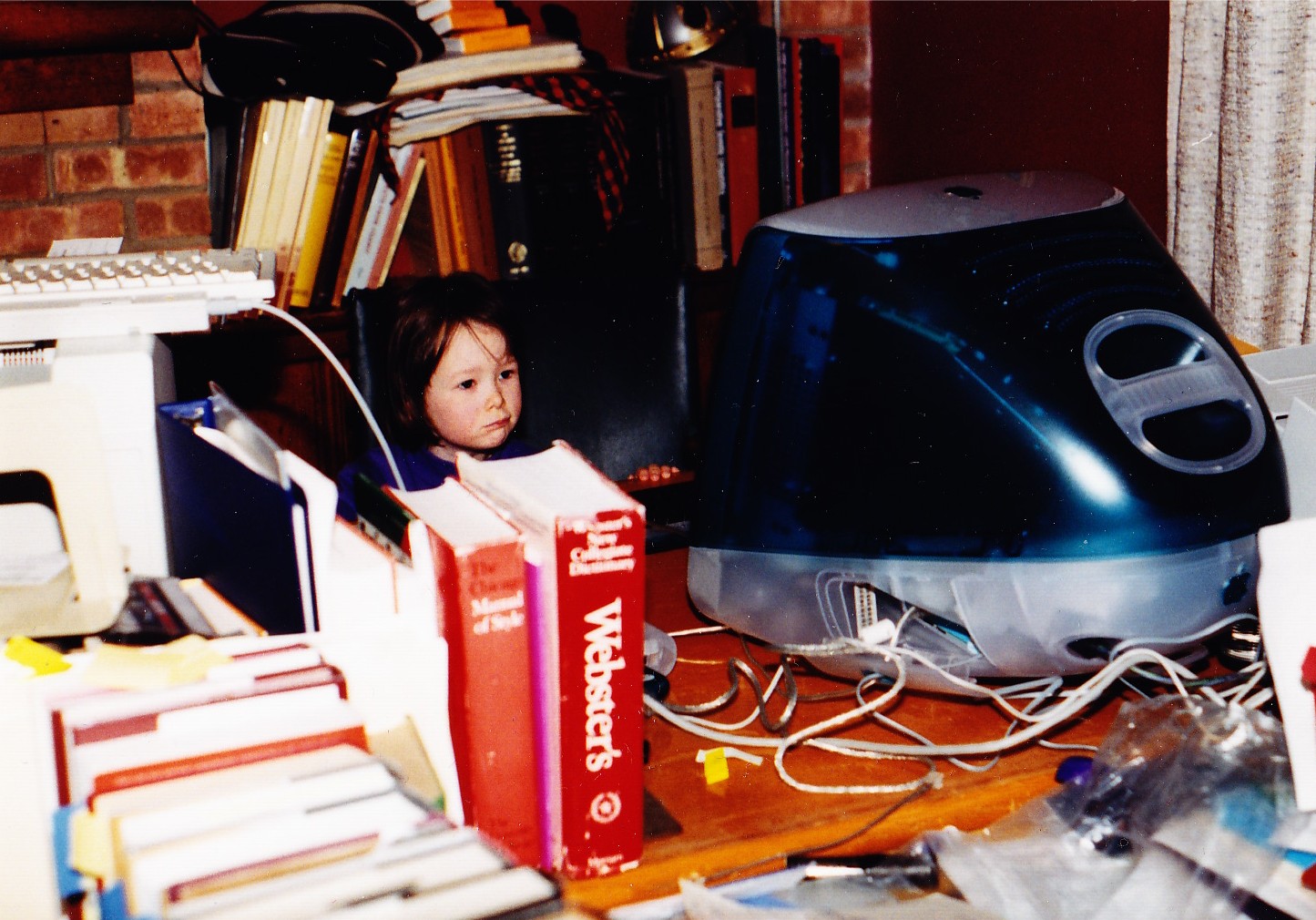
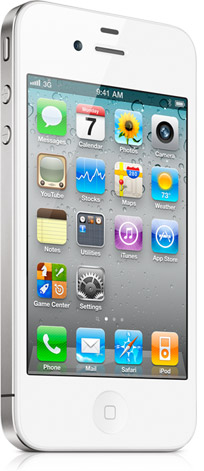
What everyone wants


Job Well Done

By now the world is well aware that Steve Jobs has died. As an avowed Mac user, an encomium for a man I never knew seems somehow appropriate. In a world where most religious leaders are known for their lack of vision and staunch conservatism (“Where there is no vision, the people parish,” to paraphrase Proverbs 29), Steve Jobs gained high priest status among technocrats for making the computer accessible. Even if you are reading this with a PC—thank your lucky Mac-OS-emulating Windows that you didn’t have to begin with a god-forsaken C-prompt—Jobs’ impact is part of your daily life. Although Mac has always been second fiddle in the computer market, Apple has always taken the lead in the gear: your iPods, iPhones, iPads, perhaps even the letter ”i” itself. We have entered the world of the Matrix, so much so that earlier this year it was reported that Apple fans experience a high like a religious encounter when they behold Apple’s mighty hand.

Nevertheless, a deep uneasiness overtakes me when I consider how helpless I am without my electronic accoutrements. When my laptop crashed last month, I was completely disoriented for about a week. I didn’t know what the weather was supposed to be like, who had tried to email me, and just how few people had decided to read this blog. I had become immaculated, and I was embarrassed. I miss the days of wandering carefree through the forest, concerned only about bears, cougars, and getting lost. Not having to wonder if there is an email I had left unanswered or if some new gadget had been invented, or if I had forgotten the birthday of someone I barely know on Facebook. No, electronic reality has supplanted actual reality. On the bus I’m nearly the only one who passes 90 minutes with a book. The glow of LCD screens peer like huge eyes in the pre-dawn of a New Jersey highway.

If it hadn’t been for Apple, I would not have joined the computer race at all. Back in college, several of my friends and I vowed we would not give in to the computer craze. I made it through my Master’s degree using an honest-to-God typewriter with ribbons, white-out and retypes. Today I can’t image how I ever survived all that. My wife first encouraged me to use a computer. She took me to the computer lab at the University of Michigan one Saturday and sat me in front of an Apple. “See, it’s easy,” she said. She was my Eve, offering me the bite of an Apple I’d never be able to put down.

We dream of building legacies, something to show that we’ve passed through this weary wilderness. Steve Jobs did not live to be an old man, but he has left a legacy. This blog, and countless others like it, would be inconceivable, were it not for his genius.

The apple tree keeps giving.


Confessions of a Luddite

I am not now, nor have I ever been, a techie. I learned my computer skills on a Mac, and I have been an adoring follower of Apple ever since. Every time I see Windows at work, I sneer at how they try to emulate the real thing: the Mac operating environment. Only clunkier. It is like watching hand-drawn cartoons in high-definition. Regular readers of this blog expect a daily post, but my valiant laptop, alas, had what is akin to a religious experience and I’m losing it. I’ve done my blog posts from that laptop for nearly two years. I sometimes work on them during the long commute to New York City. When my Mac Book encountered the plethora of signals from a Manhattan office building, it froze up. At home it no longer recognizes my base-station router. With my limited technical knowledge I’ve tried every trick on the Internet that doesn’t involve some Geek God going off into jargon that a humble reader of ancient languages can’t understand. I am grieving.

Yesterday, thinking about my plight, I saw the parallels with religious experience. My laptop in my eighth-floor office is like Moses climbing Mount Sinai, but less robust than the 80-year-old prophet. Having encountered a higher being—signals from the heavens, hundreds of them—it has bowed in acquiescence. It has received an epiphany that I missed while going about my daily editing duties. When it returned home, it was not able to recognize the one signal that has been its lord and master since it was first booted up. Nothing from restarting the router to reinstalling the entire factory-set system to clearing and restricting the access to the one true network has helped. My computer, to borrow a phrase from Atwood, has gone into a fallow state. That is a kind way of saying it is a mere paperweight or doorstop.

According to the standard interpretation, that is similar to an encounter with the divine. It leaves you marked, transformed. Sometimes incapacitated. Or perhaps the correct analogy is that of idolatry. My computer has gone on after foreign gods and no longer recognizes the one who gave it birth. I have suffered through two sleepless nights because of it. I even visited the local Apple store where they suggest I clear the AirPort history. Like I know what that means. Perhaps I have the analogy all wrong. Maybe my computer is the deity and I am the acolyte. It is mysterious and powerful and I am left in tears after an encounter with it. But really, it feels like a friend has died. I haven’t been able to post my quirky observations. I have to borrow a friend’s computer. Am I a prophet or just another Luddite awaiting my own theophany?


First Byte

The scientific study of religion poses dangers to the native environment. It doesn’t take a specialist to realize that different people respond to different religious stimuli; some like smells and bells and others prefer the stripped-down Puritanical style. Even beyond that some people get their religious thrills from nature, others from meditation, and some from controlled substances. In a story on CNN late last week, it was revealed that some Apple users find worshipping their favored brand a religious experience. A study by British neurologists discovered that the same areas of the brain are stimulated by both thoughts of the deity and Apple gadgets. MRIs have been utilized for many years now to study where the brain “lights up” during intense spiritual states. It seems we now have proof that God is a Mac user.

While some would cite this story as an example of idolatry, others would interpret the results in a more technological way. Our brains resemble motherboards, in some sense. Even Stephen Hawking’s famous interview of last week had the genius saying that human brains are just like computers. (I must confess to siding with Stuart Kauffman (Reinventing the Sacred) on this one—the brain does seem to be more than the sum of its parts.) If our brains are computers, then the Mac question is a literal no-brainer. Having worked in offices where every PC tries to be a Mac knock-off (wake up, folks! Windows is a Mac emulation environment) I too can sense a superior being behind that Apple with Eve’s first byte removed.

Should we attempt to explore where religious impulses originate? As intimated by Newberg, D’Aquili, and Rause (Why God Won’t Go Away), if we are able to find the God centers in our gray-matter and stimulate them electronically, we may trigger religious rapture on demand. How does this artificial stimulation differ from the religious experience brought on by years of meditating, praying, or fasting? Or Apple products? Our brains are complex and only imperfectly understood. Religions have been around long enough for us to get a grip on their origins. Billions of believers worldwide, however, would prefer that other people keep their hands off their Apples.

Original thin?