House Spiders

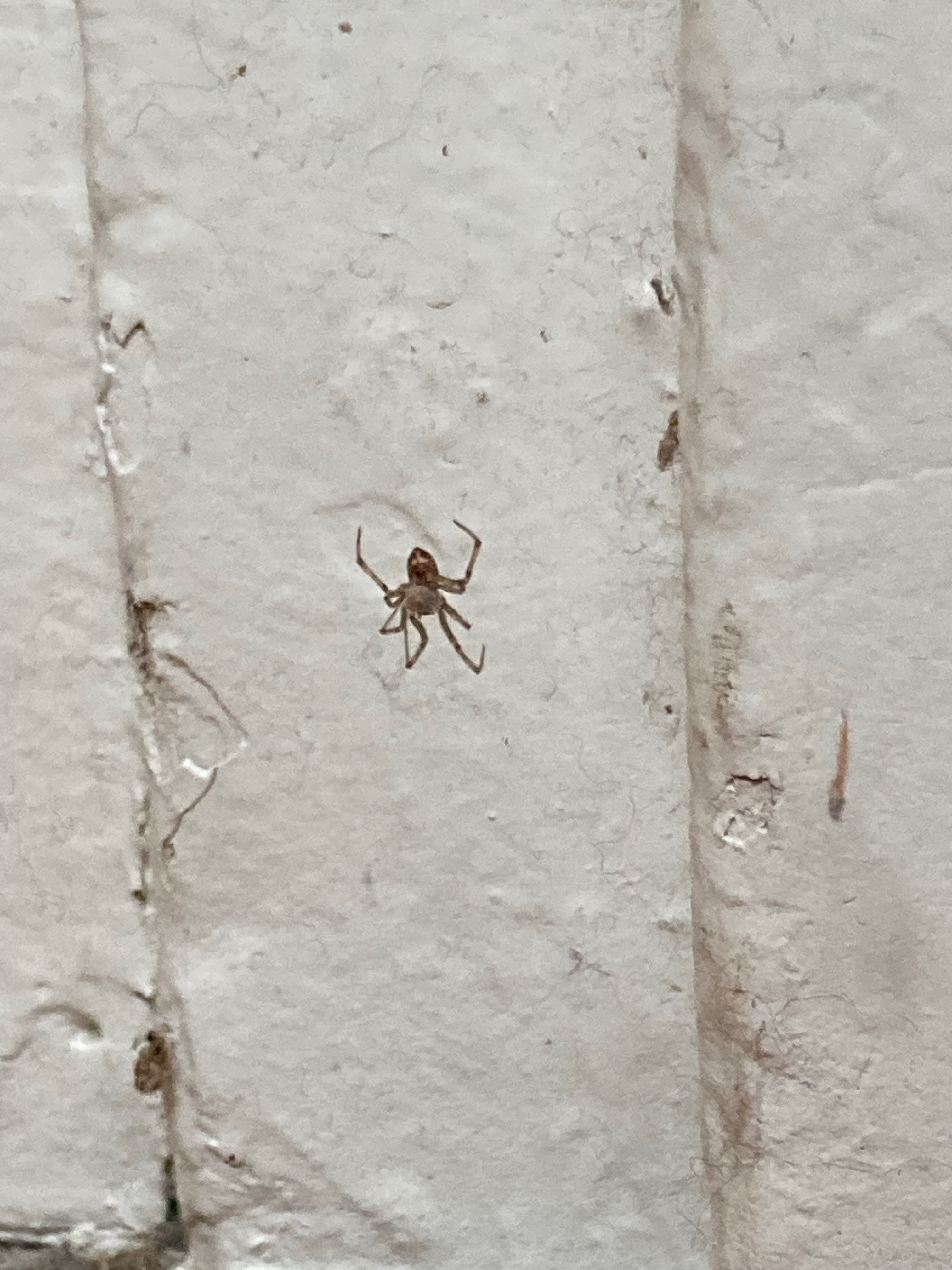
I give them names, the spiders who choose to live in our house.  That’s how I named Henry, shown in the photo.  I grew up with an almost debilitating arachnophobia, and as with most of my fears, worked hard to overcome it.  So when a spider moves in, I let them stay.  Unless they’re too big.  Here’s where it becomes interesting.  Like quantum mechanics, there seems to be an arbitrary point when something is “too big” for the rules to apply.  What is that tipping point?  The other day I bumbled into the kitchen early to get some water, having given up coffee years ago.  There was a spider that I could see from across the room.  It was very large.  It’s a sign of how much I’ve overcome my phobia that I was able to walk around the counter and to the sink to fill up.  I kept a wary eye across the room, however, in case Octavian made any funny moves.
The spider held very still, as arachnids often do when they know they’ve been spotted.  I sometimes wonder if they know how scary they are to other creatures.  I searched around for a jar large enough to catch and release, without pinching any legs, and crept over.  Turns out Octavian was faster than I am first thing in the morning.  And, honestly, I was still recovering from a vaccine that had knocked me out the day before.  At least I can blame that.  I wonder if that’s one of the reasons fear of spiders is so widespread—they’re fast.  Or is it something inherently menacing about those eight legs?  I’ve never experienced any kind of octopus phobia, so I can’t think that it’s merely the number.  The jointed legs?  That seem disproportionate to the body size?  Whatever it is, days later I’m still cautious in the kitchen.

I have a great appreciation for spiders.  I don’t like to be startled by them, but otherwise, if they keep their distance, I’m fine with them.  I do wonder what they think, living in a world of giants.  Some insects, in the same size range as arachnids, seem ignorant of the human threat.  It’s not unusual for an ant to find its way inside and walk right up your foot and leg, oblivious to the danger.  They seem to have no fear.  Spiders, however, do.  They’re very good at running and hiding.  I like to think they know our house is generally a safe space, until the vacuum cleaner comes out.  When I’m behind it, I always try to give Henry and his friends a chance to get out of the way.


Insect Inside

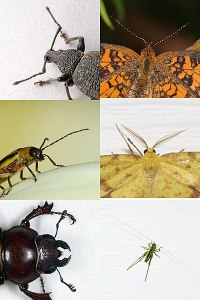
It seems a shame we don’t have an accurate name to classify all of them.  Insects, arachnids, and arthropods, I mean.  Those creatures smaller than us that inspire fear.  I suspect I’m not alone in experiencing a profound ill-at-easiness for some time after a close encounter with various of these small creatures.  Some experiences can be sublime, such as the other day when praying mantis on the glass of our front door provided a wonderful opportunity to look at a marvel from a seldom seen angle.  More often, however, the response is one of terror at being outnumbered, out-gunned, or out-run.  Spiders can be speedy as well as scary and I often yield the floor to them.  If I’ve got an empty peanut butter jar handy I try to catch and release, but I’ll look with worry at the spot of the encounter for days.

Photo by Rosie Kerr on Unsplash

Or the flying, stinging things.  Mostly they’re good for the environment and I don’t like to kill anything.  The other day, however, while returning the recycling bin to the garage I failed to notice paper wasps had built a nest (in just a day, since I’d taken the bin out only the afternoon before) above the door.  They were offended that I’d invaded their space—their concept of time is completely off from that of creatures that tend to live decades and want to stay in the same location for years at a time—and decided to attack.  This was a new stinging experience for me.  One flew down and stung my face then quicker than lightning landed on my right hand and bit again.  Its poison burned, I can tell you.  I’ve had run-ins with lots of stinging things in my time, but the shock probably added to the hurt.  I couldn’t even get the garage door shut, as previously mentioned.  

The next morning I awoke unsettled.  Houses have cracks and crevices.  They settle over time and critters can find their way in.  I understand.  Everyone needs a home.  But opening a door and being unexpectedly attacked hardly seems fair to me.  I hadn’t even seen the nest.  It’s easy to forget, in this virtual world of pandemic proportions, that we share the planet with a wide variety of others.  The large predators are mostly gone.  The countless small ones are still here, however, and many of them enjoy the way we’ve warmed the place up for them.  I have a feeling that when we finally outlive our welcome on our home, the insects, arachnids, and arthropods will be glad to stick around.


Milkweed and Honey

I’ve never thought of bugs as an ethical concern. Well, not directly anyway. I had some truly frightening encounters with insects and arachnids as a child, so I tended to avoid bugs when I could. At times, I hesitate to admit, I took advantage of my size and smooched them. I did, however, mature out of that. Many years ago I stopped killing bugs that got inside, choosing instead to favor capture and release. I’d trap them in one of a variety of empty peanut-butter jars we kept around the house expressly for that purpose. The imprisoned intruder is then escorted outside and released. It seemed the only fair way to handle the situation—I don’t believe in exploiting size, and hating things with too many legs is prejudicial. Then I heard that insects are dying out.

Public domain, from Wikimedia Commons

Instead of bringing glee, this instilled a kind of panic. According to a story in the Washington Post, scientists have noted a 75% drop in bug biomass over the past several years. Stop and think about that. Insects contribute so much to our lives that we barely pay them any mind. Everything from pollination to breaking down decomposing organic matter, bugs do it. We need our insects. As with most things these days, it seems that we humans are the likely culprits. We destroy habitat, we spread pesticides everywhere, we try to take all kinds of land and make it in our own image. And we’ve sacrificed our insects along the way. As the article states—driving around country lanes on a summer night doesn’t bring up the windshield splatter that it used to. I stopped to think about that. It seems to be true.

The tiny members of the animal kingdom do a tremendous amount of work. I know they’re not doing it for us, but the things they do we don’t have to—and oftentimes can’t—do. All fruits and vegetables are pollinated by insects. Honey has been the main place where some of this shortage has been felt most directly. Bees have been disappearing. So have monarch butterflies. The fact is, we can’t live in a world without bugs. This does make it an ethical issue. If we’re going to claim dominion over all things we have no right to overlook the smallest creatures. Sure, they can, well, bug you. They fly in your face or bite you while you’re sleeping. They’re only doing what they evolved to do. I don’t mean to bug you about it, but we need to look after the minuscule and vulnerable among us.