
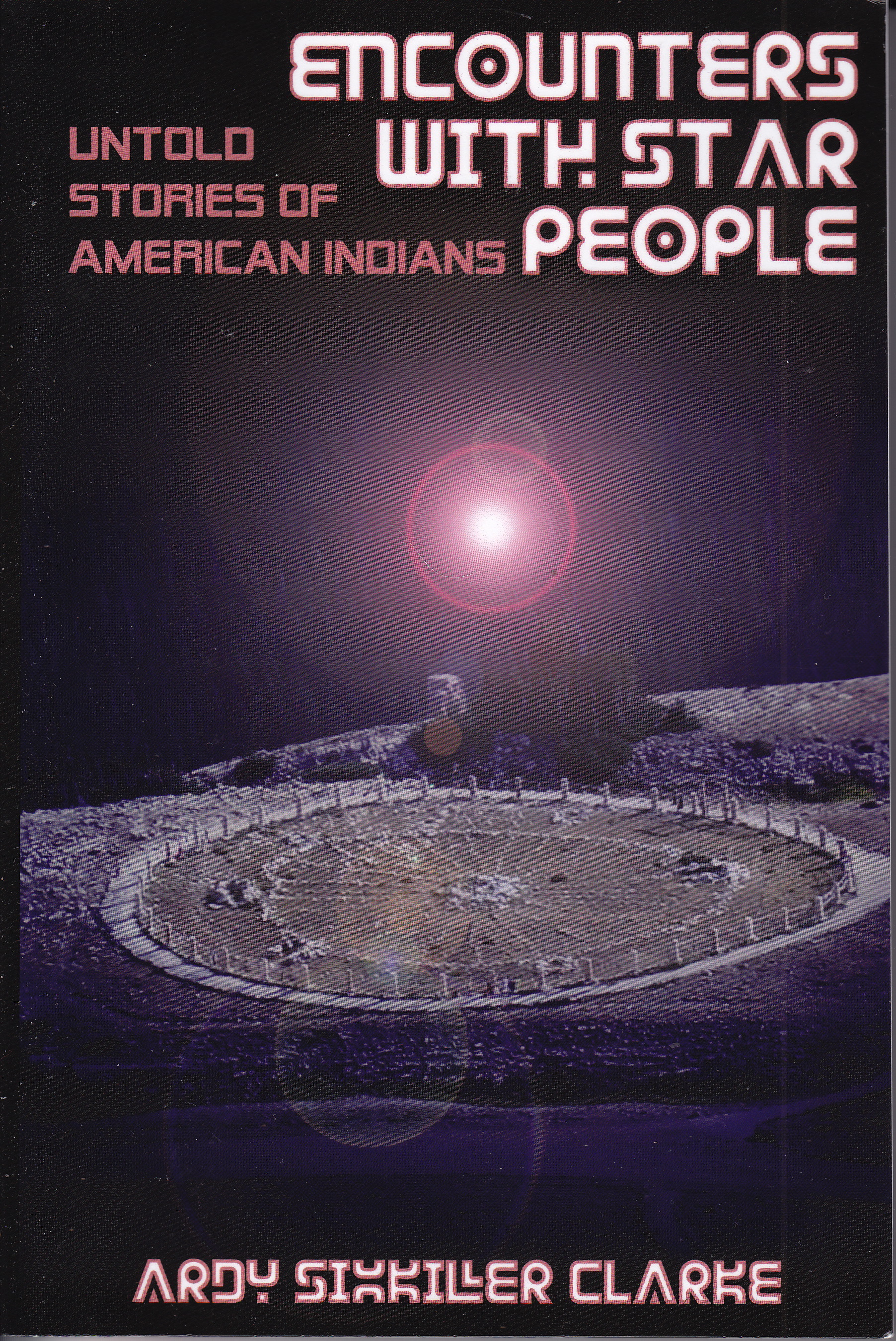
 American Indian culture fascinates me. As my usual readers know, so does the unusual. A few years back I read Ardy Sixkiller Clarke’s Encounters with Star People. Clarke is an American Indian who holds a Ph.D. and had several years of university teaching and administration to her credit. She has degrees in psychology and education. In other words, she’s credible. Being American Indian she’s also aware of the cultural belief in star people. Those of European descent, often expressing their self-supposed superiority, deny such things exist. Interestingly the mainstream media seems to have taken an interest in the subject of UFOs lately, and that is also the phenomenon that Clarke investigates in her books. Her follow-up More Encounters with Star People: Urban American Indians Tell Their Stories is another compelling glimpse into a different way of looking at the world.
The book consists of contextualized interviews with people of American Indian ancestry, and, as Clarke points out, with nothing to gain by telling their stories. They don’t want their names or locations to be revealed. They don’t want money. Many of them don’t even want to be mentioned in a book. These stories will take you into very strange places. Places without the filters most of Anglo culture puts before anything that might hint at the paranormal. I’m intrigued by the nearly universal (outside a narrow European outlook) belief that the world is not as it seems. Because European-based cultures developed the most sophisticated weaponry and an economic system that takes no prisoners, its view, by default is considered the accurate one. Time may tell on that.
I read quite frequently about indigenous cultures. Often widely separated and not in any direct contact, such groups often drew very similar conclusions about the world. These views are actually shared by those of European stock, but only when carefully labeled as fiction: fantasy, science fiction, speculative stories of any sort. All of these are widely consumed. They are also safely considered “not real.” I’ve been rewatching The X-Files over the past several months. Its success and its continuing fan base show that as long as we can agree that we’re watching something not true, we enjoy monsters and aliens. And besides, Halloween wasn’t that long ago. Still, I wonder if we’re missing out on things we might learn if we’d be willing to consider what the original inhabitants of this continent have believed. It would take us to some strange places, but we might just emerge wiser.
 Steve A. Wiggins