World History

I don’t doomscroll, but I occasionally fall down a virtual rabbit hole.  One of the truly interesting things about being an editor is reading proposals from other editors.  China’s been a hot topic for the past several years and so I hopped on over to Wikipedia to find out who this Chiang Kai-shek was, after reading a proposal.  I’d heard his name from childhood on, but I’d never read any history of China.  For my entire life it has been a communist country, often with frosty relations to the United States.  One thing led to another and I landed on the page titled Warlord Era.  This sounded like something out of a fantasy novel, so I thought I’d see what that was all about.  When you scroll down to the Warlord profiles section, you find some really interesting stuff.  One of these warlords was a real eclectic guy known as the “model governor.”  Another was a strict Methodist who banned alcohol and dressed like a common infantryman.  Yet another was known as the “most well endowed man in China,” in the southern regions, that is.
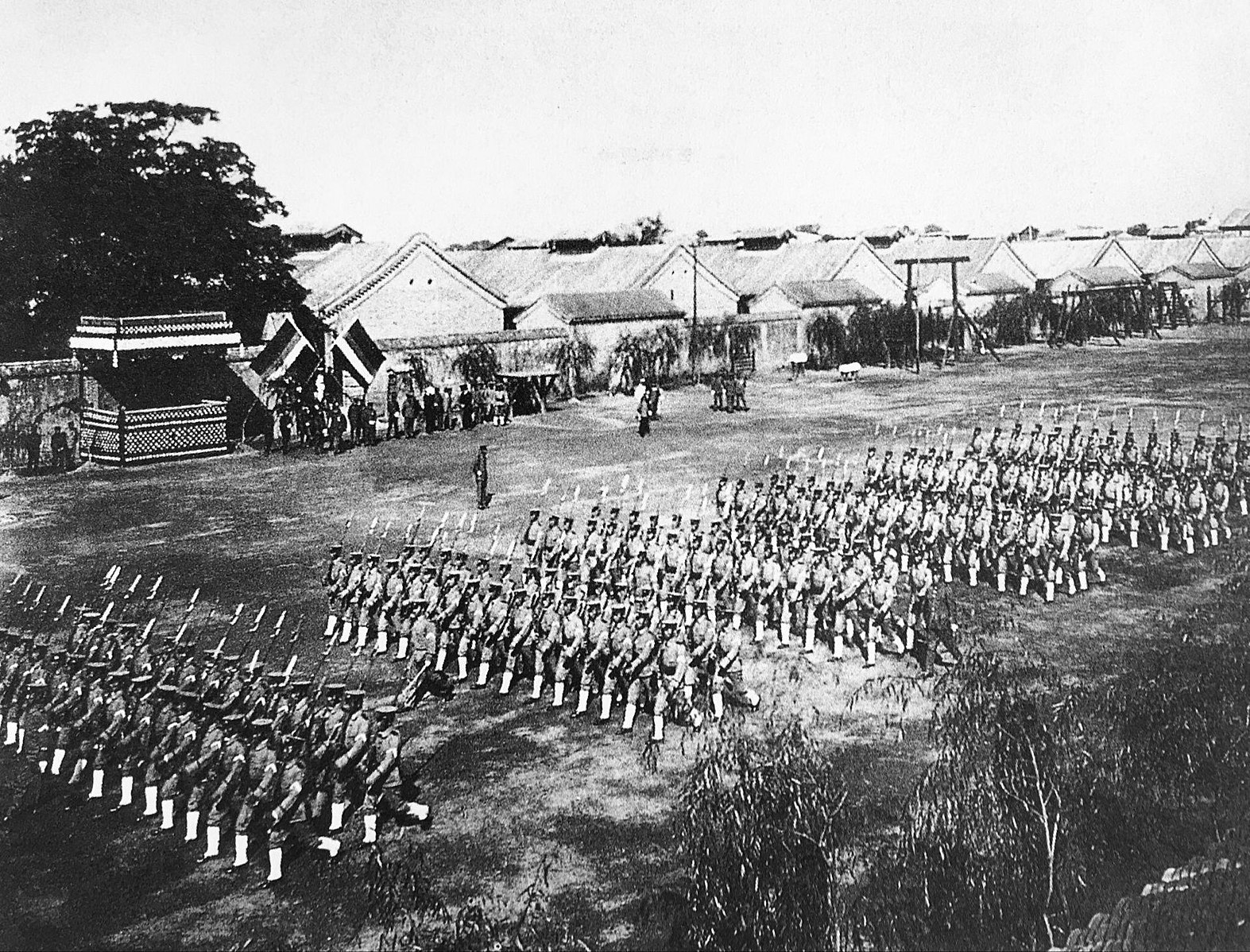
Beiyang Army; image credit—unknown photographer. Public domain via Wikimedia Commons.

Now, I’ve never read any Chinese history, but these guys sound a lot less threatening than anyone you’d find in a Mario Puzo novel.  They may have been terrifying in real life; Fidel Castro wore a common soldier’s uniform, but I’d have been frightened had I found him lurking under the bed.  Of course, I’ve never read any histories of Cuba either.  There’s a lot to learn in this world.  I enjoy reading history, but my writing projects tend to direct my non-work reading these days.  I’ve been acutely aware that my time on this fascinating planet is limited and that none of us can learn everything.  It saddens me that world leaders show so little interest in the planet they “govern.”  Even a little reading on Wikipedia should be enough to grease those wheels.

One of the strange ideas that occurred to me once while reading a different proposal was that China conducts business deals with, for example, nations in Africa, in which the United States is not involved at all.  When this thought launched I realized just how parochial the outlook of many of us is.  I lived overseas for three years, but still, the United States, in better and in worse, is my home.  It’s the place I know (or thought I knew).  Where some of my ancestors lived for over two-and-a-half centuries.  As appealing as Canada often seems, my fate appears to be here, along with my heart.  So I don’t doomscroll.  But I do read about China and realize how little I know.

Continental Religion

In the course of my duties as an editor of religious studies, I was pondering the origins of the world’s major religions. Now, agreeing on what the major religions are is an exercise fraught with political incorrectness. What does “major” mean, after all? In any case, when we count in terms of numbers, there are more Christians, at the moment, than any other single religion. They are followed by Muslims and Hindus. So far there is little upon which to disagree, at least according to self-professed affiliations. Buddhists are usually counted as the next largest group, followed by Sikhs. When religionists mention “the big five,” however, they usually mean Judaism, Christianity, Islam, Hinduism and Buddhism. There are likely far more followers of traditional Chinese folk religion, perhaps mixed with Confucianism and Taoism, than most accountings record—such beliefs aren’t neatly categorized. Jains make up a sizable population, and Shinto is often classed in with all those religions of the far east. Many of the more modern religions, such as Mormonism and Jehovah’s Witnesses, sprang from Christianity, and so can safely be classed as a form of that faith.

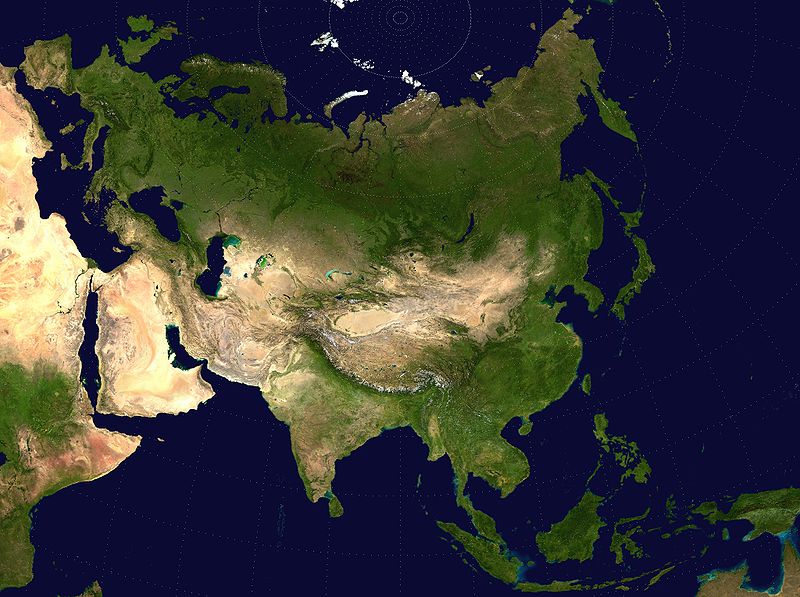
What occurred to me that day was that all the major religions of the present world began in Asia. Judaism and Christianity, with all their numerous progeny, started in Israel or Palestine. Islam, as we all know, began in Arabia. Hinduism, Buddhism, Sikhism, and Jainism all have their origins in India, the big winner for the seed-bed of religions. Traditional Chinese religions and Shinto trace themselves to the far east. Yes, there are indigenous religions throughout the world. Native American and African religions are not to be discounted, yet they never quite attain the level of public awareness to be qualified as “major” religions. In this spiritual accounting, “major” has nothing to do with importance. For the religions with the largest followings we must turn our eyes to the one-stop continent, Asia.

Where major religions begin

Where major religions begin

Considering this, the obvious question is why. Why Asia? Civilization itself began in Asia, and one of the marks of a civilized society, at least until the day of the New Atheists, has been religion. Religion may be abused, as might any human innovation, but it has also been a harbinger of a more civil world. Not only fear of the divine, but also a sense of gratitude toward whatever forces might be greater than humanity, allowing us to survive for another season, or through another storm. Even in the world of science, religion has been a motivator. Gregor Mendel, the scientist who gave us genetics, was a monk experimenting in a monastery. Sir Isaac Newton was an occultist. Francis Collins is an evangelical Christian. Religion is at least as old as civilization. Its forms may be morphing, but, I suspect something our Asian forebears knew: religion will never truly go away.