Alchemy

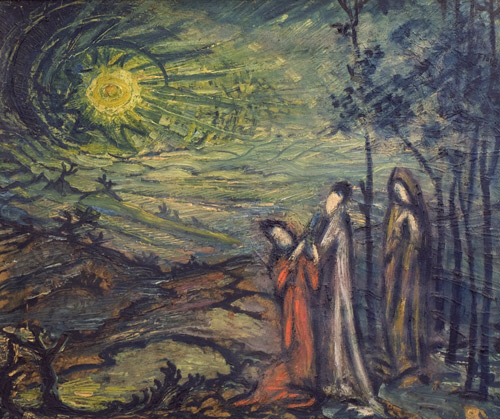
While reading about alchemy (surprised?  Really?), I found myself learning about Jakob Böhme.  His name was familiar—he’s one of those many people I know vaguely about but having been raised in an uneducated household really knew nothing concerning him.  In any case, Böhme is considered a mystic who began as Lutheran, but who came to trust his own spiritual experience (the latter being more or less the definition of a mystic).  I read about how one day he experienced a vision while staring at sunlight reflected off a pewter dish.  Now, I have had visions but you’ll need to get to know me personally if you want to hear about them.  But at that moment Böhme believed the spiritual structure of the world had been revealed to him.  I couldn’t help but think of what had happened to me at the foot of the Mount of Olives.

It was 1987 and I was a volunteer on the dig at Tel Dor.  Visiting Jerusalem one weekend with friends, we came to the Church of All Nations, built around the traditional garden of Gethsemane.  It was hot and I was feeling tired and I went inside the church to sit.  I spied a purple stained-glass window high overhead with the sun shining through it, in a shadowy alcove.  In an instant of rapture, everything made sense to me.  It was as fleeting as it was shocking and to this day I cannot articulate the certainty I experienced in that one brief moment alone in a church.  It was an assurance that, despite all outward appearances, this does indeed make sense.  This experience has never been precisely replicated in my life, but those who know me know that there is a certain color of glass that, if I see the sun through it, instantly brings me serenity.
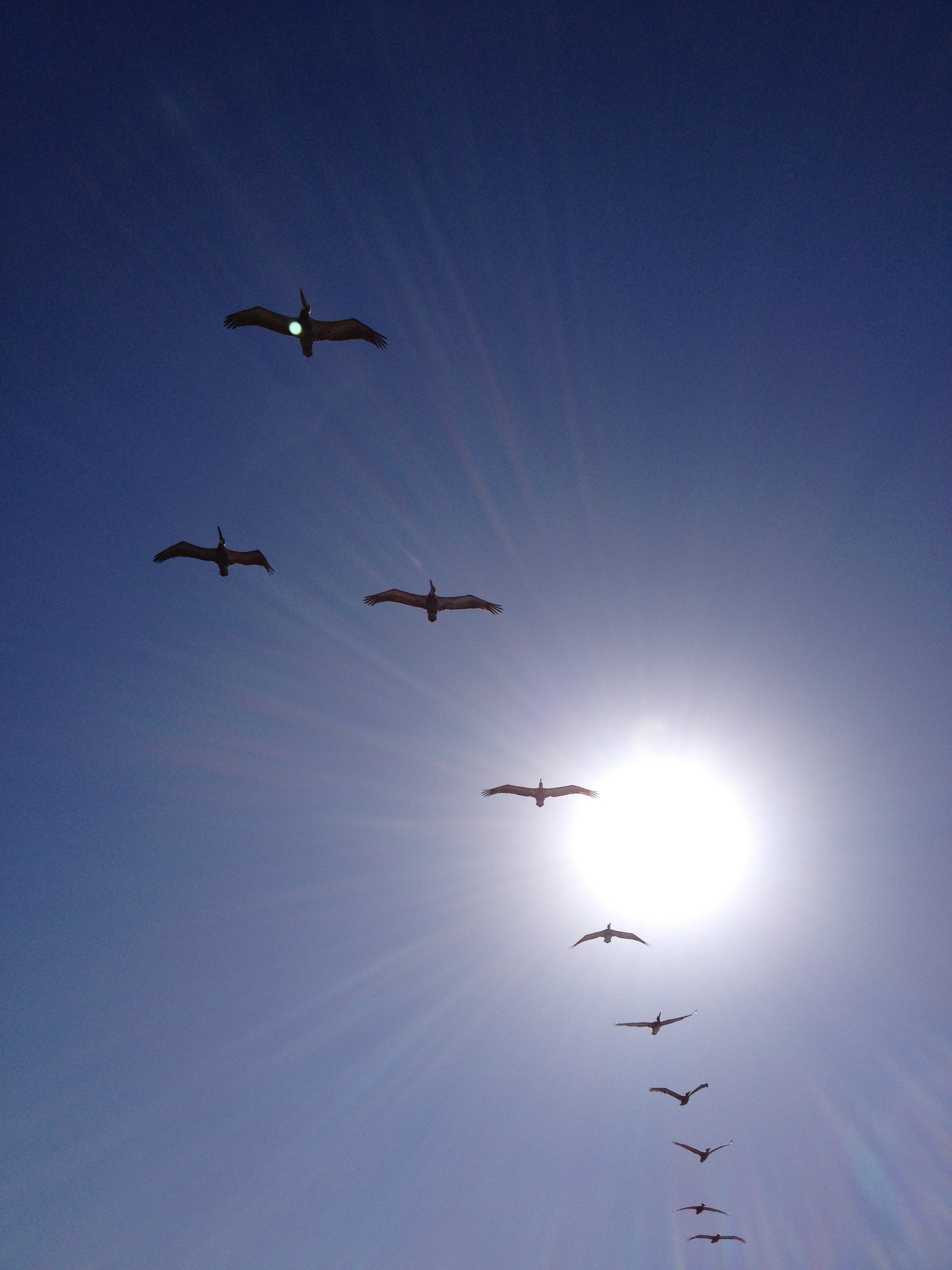
Sunlight can do such things.  One morning while out jogging at Nashotah House, the rising sun struck me directly in the eye.  Immediately stopped running, holding my head against a migraine that had suddenly developed.  I was sick the rest of the day, lying in a dark room with a damp washcloth over my eyes, head splitting apart.  I’ve been cautious with the sun ever since.  Some things are so full of glory that to see them directly is to invite danger.  Yet we’re compelled to look.  I felt that I understood Böhme.  And I know that if the sun is right, and a certain color of glass is at hand, and if I’m brave enough, I can almost get back to that place.
Asteroid

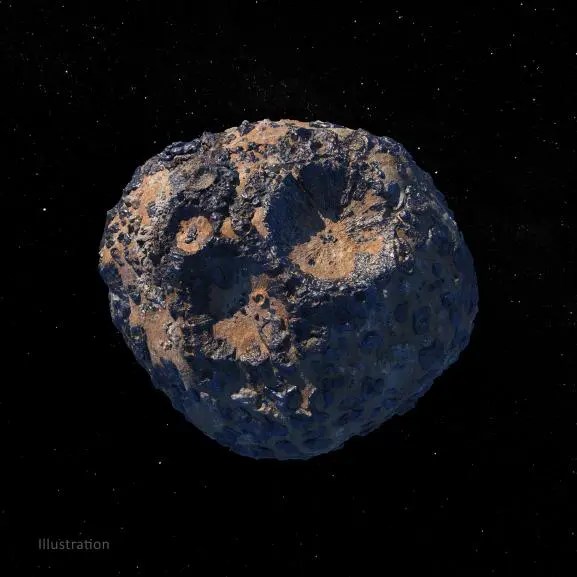
So, that asteroid.  Good thing Trump won’t be in office in 2032.  Well, it’s only a three percent chance it’ll hit us, but chances are things can’t get much worse anyway.  It might be a good idea to make some plans now—but wait, we currently deny science is real and spend our time renaming bodies of water.  Hmm, quite a pickle.  If science were real it would tell us that an asteroid is not the same as a meteor, although it can become one.  Back in high school astronomy class—yes, our Sputnik-era high school had its own planetarium—I learned that the difference between a meteoroid, a meteor, and a meteorite.  Want to go to school?  Here’s the quick version: a meteor is something in Earth’s atmosphere (thus, meteorology).  A meteoroid is a space rock, or even dust, in the solar system somewhere.  Once it enters our atmosphere it becomes a meteor.

Most meteors burn up as shooting stars and never hit the ground.  Yes, that atmosphere is a pretty good idea.  If a piece does make it to the ground, that piece is a meteorite.  Although your chances of being hit by a meteorite are minuscule, they can be impish.  Not far from here, a few years back, a meteor smashed through the backseat window of a car after a couple had just put their groceries inside.  The meteorite stopped inside a carton of ice cream.  The window had to be replaced, and I can just imagine the conversation with the insurance company.  Or take that meteorite heard on a recording for the first time.  In Charlottetown, Prince Edward Island, a doorbell camera caught a meteorite strike just outside someone’s house.  Both of these were tiny critters, though.

Our 2032 friend is quite a bit bigger.  Sometimes when large meteors heat up, they’ll explode in what is called a bolide.   In western Pennsylvania back in January of 1987 (if I recall correctly) my brother and I were working on a jigsaw puzzle during the holiday break when our house shook.  A loud bang had us worried—we lived in a refinery town, and explosions weren’t a welcome report.  We ran outside to find neighbors also outside looking around.  We later learned that a flaming fireball had gone overhead before exploding, a bolide.  The actual explosion took place quite a distance from us, but sound travels in our atmosphere.  So a possible near miss is scheduled eight years from now.  Let’s hope people show some sense at the polls before that happens. Or we could just rename it MAGA and hope that it hits somewhere else.

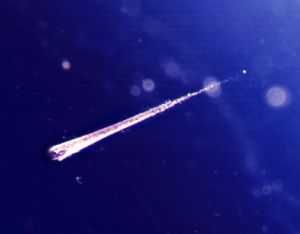
An asteroid. Image credit: NASA, public domain

Eclipsing the Earth

We need a new word.  One for the high an eclipse brings you.  I’m finding myself having difficulty coming down from it.  It seems so mundane to have to do something as ordinary as work after experiencing totality.  We only caught very brief glimpses of the moon over the sun through small breaks in the clouds, but we did get to experience totality.  How do you come down from that?  The next day we had a several-hour drive to get home so that we could all be at work yesterday morning.  What could be more ordinary than that?  And the eclipse happened on a Monday, not an unusual day for a holiday.  Only it wasn’t a holiday, but a “vacation day.”  So was the driving day.  At my age you need a day to recover from all the driving too.

Several friends have posted their amazing photos and videos of the event, so I’ve decided to “release” my video to the wild.  A few explanatory notes: we were in upstate New York, on the shore of Lake Ontario.  It was chilly and we were bundled up (we came home to 80-degree temperatures, which was quite a shock).  The video may seem to have not much happening for the first couple of minutes and this is because electronic cameras tend to “even out” the light (film photography is much better).  When I started filming this it was getting dusky but the phone smilingly tried to make it look like normal daylight.  That wasn’t the case.  (Be patient—drama takes time to build!)

It occurred to me that many people (who had clearer skies) thought totality was all about the moon over the sun.  I take a more Buddhist approach.  The Buddha admonished not to mistake the hand pointing at the moon for the moon itself.  The real experience of an eclipse is what is going on down here on earth.  My video shows how the sun faded, and then went completely dark and back again in a matter of minutes.  My experience of this was quite a spiritual one.  If I’d been looking up I very well might have missed it all.  In other words, being in a cloudy situation, totality was an opportunity to take in what was happening on earth, in real time.  There is a lesson in this.  Life tends to deceive us into thinking the most important thing is the peripheral one.  Experiencing an eclipse is all about being, and living, on earth. 


Eclipse 2024

Eclipses.  They’re fully explainable.  Or are they?  Yesterday’s solar eclipse, with totality within driving distance of many Americans, led to an inexplicable need to see it.  April, we’re told, is the cruelest month and upstate New York is known for its “ever-changing skies.”  I admit I was skeptical.  Together with some friends we arranged to meet near the umbra, in Penn Yan, and to drive from there to totality up on Lake Ontario.  As is typical in New York, the day started out fair, with a few high clouds.  It was chilly, but this is April.  Our destination: Fair Haven Beach State Park.  The location was nice; we arrived early and found a good spot.  The clouds, however, were willful and wanted to remind us, like last week’s earthquake, that we’re not really in charge here.

As the day went on—totality for us was 3:20 p.m.—more and more people came into the park.  To its credit, with what must be a limited state budget, it absorbed many eclipse seekers without any trouble.  By 3:00 the cloud cover was heavy-ish.  Our friends had heard a sponsored eclipse speaker, however.  Totality was nothing like even 99%.  This would be of a different magnitude, even with clouds.  I remember three previous eclipses.  One in school with the pin-hole method where you really don’t see anything, one in Wisconsin after teaching one morning at Nashotah House, and the 2017 which I saw in midtown Manhattan.  None of this prepared me for totality.  Around 3:18 it started to look dusky.  We could catch glimpses (but no photos) of the crescent sun.  Within seconds it was completely dark.  It was another of those transcendent earthly things, like the earthquake three days earlier.

Perhaps I’m getting old enough to realize that you can’t really describe such feelings.  Maybe I’m getting sensible enough to understand such things are called ineffable for a reason.  All the planning, worrying, anticipating, was for this moment.  Yes, there were clouds overhead, but the park was full of cheering people.  They too had come here for something extraordinary and to my surprise I found tears in my own eyes.  I captured no photos of stunning clarity, but I had experienced something I’d heard about since childhood but had only glimpsed in the most crude of facsimiles before.  We were able to experience a kind of rebirth that comes only after night.  Conditions weren’t ideal, but are they ever?  And an encounter with the numinous always comes on its own terms.

The sun, hours before being eclipsed

Pondering Origins

I’m not a numbers guy.  I never had any interest in statistics, and I tremble when I see my accountant’s number pop up on my phone at tax time.  But exponential sequences have an inherent fascination.  Think about your ancestry (I recently wrote about genealogy and that got me pondering).  You have two parents.  And they each had two parents.  By the time you get back to ten generations (eight greats before grandparents) you have 1,024 ancestors of roughly the same generation.  That’s a lot of people just to make one individual.  Think of all the circumstances that might’ve led to any two of them having been kept apart—then where would you be?  Of course the numbers double each generation which is where my reasoning capacity shuts down.

At some point, doesn’t it seem, that there wouldn’t be enough people available to make you?  I know that’s not true—you’re reading this and that proves this false—but it does make each individual life a thing of wonder.  Or even at the level of your own parents.  If you have siblings you know how different even biologically similar people can be.  And there are many others who could’ve been conceived instead of you or me.  The chances are astronomical that we’re here at all.  I often wonder if such circumstances are why our minds seek religious answers.  People are meaning-seeking creatures.  And against such long odds, it seems that maybe we’re a miracle after all.  Naturally, a driving force behind it all suggests itself.

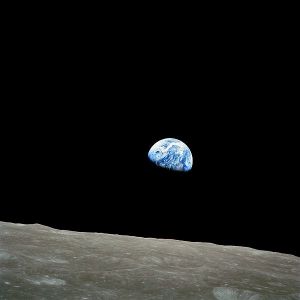
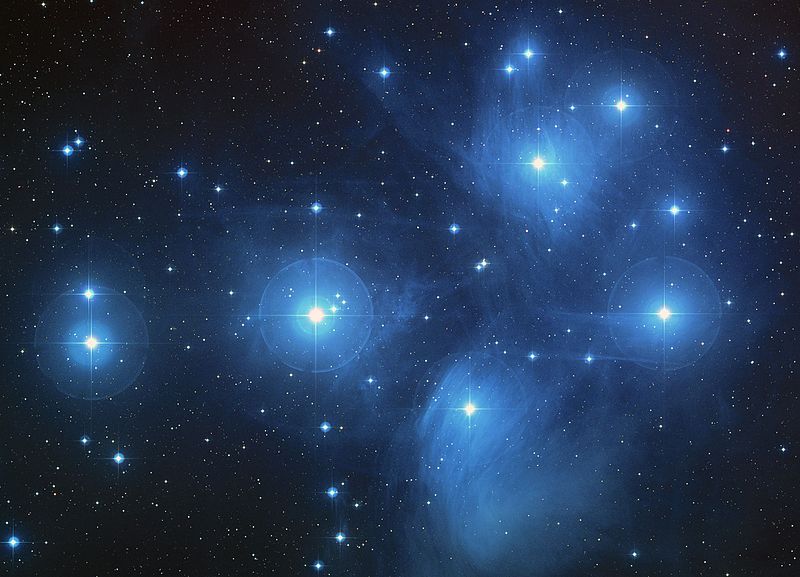
Photo credit: NASA

Science has been a real boon for the billions of us alive today.  There’s no doubt that dispassionate, rational thought can lead to amazing outcomes.  At the same time, the doubt creeps in that this is the only explanation.  It occurs to me when watching the birds in the spring.  How do they know their own species and with whom to mate?  Is all of this driven by that notorious fudge factor we call “instinct”?  I have no answer to what the source of that will to keep life going is.  Biology tends to be among the slipperiest of sciences.  Life is difficult to define when we don’t even know everything that’s out there in our infinite but expanding universe.  The numbers are just too massive.  All I know is that by the time you get back to twenty generations (eighteen greats) it took over a million people to make just one of us.  And that’s by the numbers.


Space Ads

So, I’ve got enough stuff to worry about down here—the chimney needs some attention, that backyard gate still doesn’t hang right, and Giant keeps on running out of the cereal I buy—to have to turn my attention to space.  I love outer space, although, unlike some people I’ve never been there.  One of the simple pleasures in life is to be outdoors at the lake and watching the night sky where there’s no light interference.  Then I learned about space advertising.  You see, as an editor you get to read about all kinds of topics, and this came up in a proposal one time.  I had no idea that companies had been proposing billboards in space to fly across our nighttime skies.  It’s hard enough to use the internet anymore without hacking your way through a jungle of ads, and now they want to clutter our view of the nighttime sky so there’s no escaping capitalism.

“Space, the final frontier.”  This is a mantra that many of us grew up with in the sixties.  Most of us can’t afford to, and really have no desire to, go into space.  Born down here, we’re content to stay down here.  That doesn’t mean we can’t look at the sky with wonder.  Already you can’t go to the beach or a stadium event without planes flying banners trying to draw your mind back to the commercial world.  Even in remote forests you can find litter stamped with some company’s logo, trying to sell you more.  It’s enough to make you want to get to space to get away from it all.  Now that companies can afford to fly people to space as tourists—this is pretty strictly limited to the top one percent, of course—they feel they have the right to clutter the nighttime skies so that you’ll have that midnight urge to go buy a Tesla.

The original space advertising?

At this time of year we look to the nighttime sky in hopes of seeing a special star.  People with too much money cause so many unnecessary problems for the rest of us.  This has been apparent throughout history, but has been brought into sharper focus in the days of late capitalism.  Having too much only makes you want more, it seems.  And since other people have some you need to flash your company in their faces constantly.  From what I’ve read the only reason space advertising hasn’t really taken off is that it costs millions to get your ad up there.  Despite inflation it seems that these kinds of costs always come down.  And yet you can’t even get a contractor to come out and do something about that deck that’s falling apart.  And I do hope that they’ll have my cereal at the store this week.


First Images

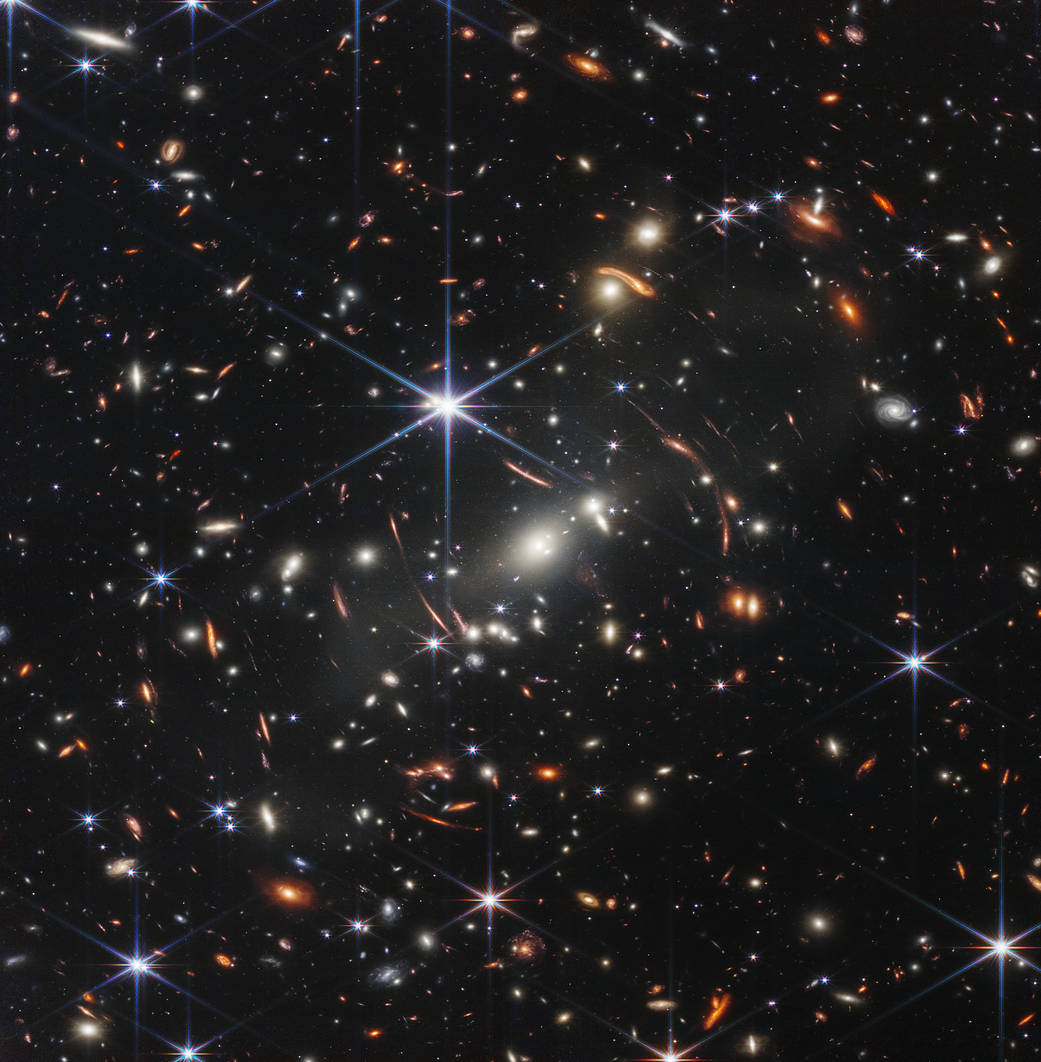
I awoke to an image from the James Webb Space Telescope.  Looking at the universe at it was 4.6 billion years ago is a humble and terrifying experience.  Our universe is so incredibly vast and we are tiny.  As we on this planet bicker and kill and destroy, out there something truly wondrous looms.  Those tiny pinpricks of galaxies.  Our own galaxy so massive that we can’t comprehend it.  Our own midsize star large enough to hold more than a million earths.  Our own planet big enough that no human being can see it all in a lifetime.  What in the world are we fighting for?  This image is just a patch of sky about the size of a grain of sand held at arm’s length.  How many grains of sand would it take to fill the visible sky?

Many people argue that such things are a waste of money.  Yes, there are very real, human-created problems right here on earth.  The siren call of space, however, has the potential to save us.  If we look into that immense universe just out there and realize that we are part of something larger than ourselves, we can stop fighting and hating and electioneering.  Keep looking up instead.  Costs, after all, are relative.  Our entire economic system is arbitrary.  We decide what’s valuable and what’s not.  We make rules that allow individual human beings to control the lives of countless others based on nothing more than agreed-upon principles.  Food could be freely distributed.  Medicine could be given to the sick.  What’s required is perspective.  If looking at the universe doesn’t provide perspective, what can?

I often wonder about life in those distant galaxies.  Given the sheer numbers it’s practically impossible that life evolved only here.  We’re told that teleological thinking is wishful and naive, but looking at the way life behaves I have to wonder if that’s true.  Life may be seeking goals.  If it is, than intelligence may be among them.  We’ve got billions of years and billions of lightyears to work with.  And when I look at the headlines I find those of the James Webb Space Telescope to be the most hopeful of all.  Galaxies are all about possibilities.  Stars being born where the outcomes may be better than one gender assuming it’s better than another.  Or that the “right to bear arms” means  stockpiling assault rifles to kill others in a fit of pique.  No, this money’s not wasted if only people might listen and pay attention to the stars.


Many Moons

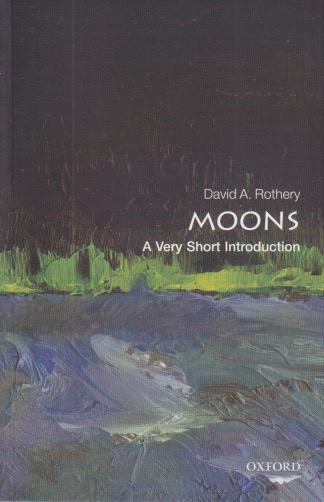
Once you get beyond the very basic level, astronomy quickly become all about numbers.  It’s both fascinating and a shame.  Fascinating because scientists have been able to send probes millions of miles away, calculating, for example, where the multiple moons of Jupiter and Saturn will be so that they can fly by for an interplanetary peek.  The shame is that many people star-struck by the concepts can’t pursue it as a career.  That’s where books like David A. Rothery’s Moons: A Very Short Introduction come in.  I’ve read a number of books on the moon, but I’ve fallen behind on what we’ve learned about the moons of the outer planets.  This short treatment covers them in just enough detail.  I certainly learned a lot by reading it.

Rothery points out that apart from Earth, in our solar system the likeliest candidates for life are actually some of the moons of Jupiter and Saturn.  Heated by tidal action and volcanism, and having under-surface oceans, conditions may be right for such worlds to spawn life.  Even if microbial, finding life elsewhere would confirm what this dreamer has supposed all along—we’re not alone in the universe.  As Rothery also notes, there are far more moons than planets in our solar system, so that may also apply to other systems as well.  Exoplanets have been discovered for decades now.  If other suns have planets and those planets have moons, who knows what might be out there?  And all this has been happening for billions of years, whether or not we notice it.

For me, it’s concepts such as these that make astronomy so fascinating.  Also, as the book points out, there are all kinds of oddities in our own astronomical back yard.  Asteroids that have their own moons.  Moons that have unusual geological (or lunar) features that haven’t been explained.  Moons that have been torn apart by their host planet.  Moons that have been captured in orbit when passing by.  Probes have been landed on moons other than our own, and the ethics of doing so (since we might transmit microbes unintentionally) are topics of discussion.  There’s a lot crammed into this brief study.  I also can’t help but wonder what amazing things the next generation will discover.  Our knowledge of this universe, impressive as it is, doesn’t even break the crust of ice moons out there, where there is nitrogen ice and methane ice.  Parameters beyond imagination.  It may all come down to numbers in the end, but moons are so much more than that.


Used or New?

A recent post on a used book got me to thinking.  Back when I was acting like a trained researcher my reading was very specialized and focused.  Even so, my personal reading was eclectic.  I think that’s the result of having been raised poor.  With no bookstore in our town, and no Amazon (or Bookshop.org), book purchasing was catch as catch can.  Since my fortunes haven’t dramatically increased in life (long story), my purchasing habits have remained pretty much the same.  I’ll buy used books or movies if I can.  Since these are about the only things I buy, they loom large in my mind.  And the thing about buying used is that it’s often opportunistic.  I can pretend it’s intentional and say I’m trying to be well-rounded, but the fact is I try to save money where I can.

This really struck me as I was reading something written by a film maker.  Now, I’ve penned two books about horror films, and I tend to watch them quite a lot.  What struck me about what I was reading was just how many films the writer knew.  Academics can be that way—knowing everything about a subject.  When researching my first book, A Reassessment of Asherah, I read everything I could find in pre-internet days about the goddess.  That is a thoroughly researched book.  When you’re a graduate student your job is to become as familiar as possible with your subject, no matter the language of the research (within reason).  As just an editor my movies and my books are a matter of what I find in my eclectic life.

I often imagine what my life would be like if I could’ve remained a professor.  In those days I read fewer full books—research is often a matter of reading only the parts relevant to your project—and certainly less fiction.  I was never a well-paid academic, teaching at a small school that considered on-campus housing a large part of the compensation package.  I didn’t buy many books then, either.  Some of the most important ones were, you guessed it, used.  I wonder if I would’ve ever have shifted my interest back to horror.  During those days I didn’t need horror (it was a gothic campus and I was beginning family life).  Since then I’ve become an even more eclectic person.  My fascination with geology began then and still comes back when the stars are just right.  And even they, I suspect, might be remnants of even older, used stars.

Photo credit: NASA

Whose Holiday?

I write a lot about holidays.  One of the reasons is that even long before capitalism, societies took breaks right in the middle of things.  One of the major seasons of celebration was the vernal equinox.  Easter is tied to Passover, of course, but since nobody knows the year of Jesus’ crucifixion the actual date can’t be determined.  Passover is a moveable feast and since the lunar calendar is essential in setting Passover’s date, Easter is calculated as being the first Sunday after the first full moon after the vernal equinox.  There has been talk of the three major branches of Christianity—Catholic, Orthodox, and Protestant—agreeing on a set date for Easter but even if that happened there would be splinter groups who liked it the old way and the confusion would only grow.

Since astronomical observation has grown so mathematical, the date of Easter can be calculated far into the future.  We know just when the vernal equinox will occur, and we know when the full moon will come around.  All that’s needed is some calendars and a whole lot of patience (and maybe a calculator).  Despite society’s obvious preference for Christmas, Easter has its own array of attendant holidays for some Christians.  (Not all Christians celebrate Easter.)  For instance, for some today is Maundy Thursday.  Tomorrow most will recognize as Good Friday.  Nobody’s quite sure what to call Saturday, and many Christians will begin to celebrate Easter at midnight even before Sunday wakes up.  Easter does last more than a single day, in some traditions, but it’s not quite as developed as the twelve days of Christmas.

Lately I’ve been considering that how these holy days are sacred for some and secular for others.  One of the realizations that globalization has wrought is that not everybody shares the same concepts of how universal events—such as the vernal equinox—should be commemorated.  Although on the equator every day’s not quite an equinox due to the earth’s tilt, it isn’t as dramatic as the changes that occur in temperate zones.  Christianity was custom-built for European holidays, which is what it tends to keep.  The history of the holidays is more complex than it might seem at first.  Add to that widespread disagreement around the world as to both religion and to when certain events should be calculated and you’ll need more than a slide-rule to figure it out.  So as we begin the Catholic and Protestant Easter season (Orthodox Easter is about a month away yet), it may be helpful to remind ourselves that what day it is might just be a matter of perspective.

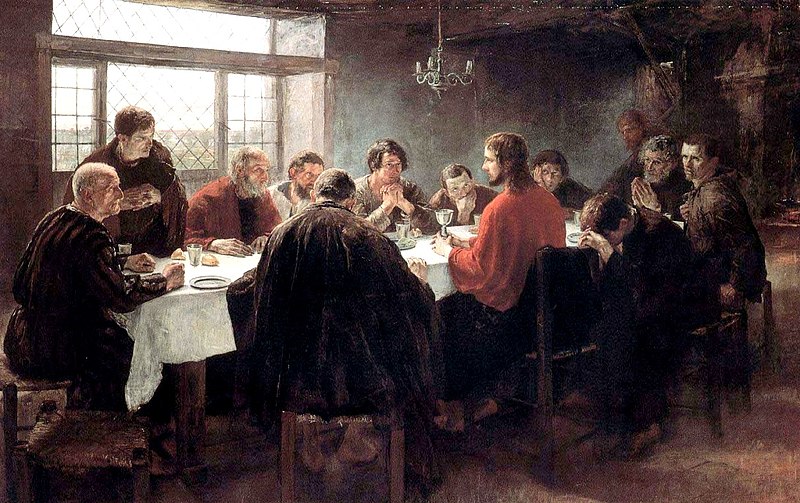
Stiftung Gertrud Schnürle 1975, Fritz von Uhde, The Last Supper, via Wikimedia Commons


Sunrise Sunset

The earliest sunrise doesn’t take place on the longest day.  Things like this are what kept me out of a career in astronomy.  No, the earliest morning occurs about a week before the summer solstice.  It keeps staying light later in the evening, but the darkness creeps back in the a.m.  I know this because I awake before sunrise and I jog at first light in the summer.  For a couple of weeks now I’ve been having to start my jog later and later as I wait for the sun to catch up.  The latest sunset is about a week after the solstice.  Now matter how you count it, the days are getting shorter now.  Another lesson I’ve learned from my early morning jogs is that it’s chilliest just before sunrise.  The temperature keeps dropping from what it is around 3:00 a.m., meaning that it’s coolest just before the sun comes up.  Life lessons from the jogging trail.

I took astronomy both in high school and college.  Always fascinated by space I guess I was optimistic that perhaps the mathematics would’ve dropped out of it somewhere between diploma and baccalaureate.  My mind is more of the humanities type, dealing with approximations and analogies.  The concepts I get, but I can’t swim in formulas.  One of the main sources of perplexities was just what I’ve been describing about the earliest dawn and latest evening.  Shouldn’t they be the same day?  And how is it that the longest day is neither the earliest sunrise nor latest sunset?  Math may explain that, but I can’t.  There’s a wonder in it all.

Jogs before work (for I start that early as well) are possible only a few months of the year at this latitude.  They will give way to lunchtime breaks soon enough and yet summer has only just started.  The days will seem longer although in fact they are getting shorter.  You see what I mean about approximations and analogies?  I still occasionally read books about astronomy, and when NASA (or some privately funded venture) makes announcements about what’s going on in the heavens I pay attention.  Yes, I would liked to have gone into astronomy, but life has a way of steering you down certain paths.  Besides, there’s a certain wonder in retaining the mystery of how the longest day occurs three times in the course of two weeks, depending on your definition.  


Monsters and Gods

Nothing makes you feel quite as old as seeing a documentary where the names of the experts are unfamiliar to you because they’re too young.  So it was when I watched PBS’s Ancient Skies episode “Gods and Monsters.”  They had me at “Monsters” although I know that when paired with gods the term generally refers to Greek mythology.  This documentary had a pretty cool rendition of Marduk battling Tiamat that would’ve left many a Babylonian quaking in his or her sandals.  Ranging across the world, it showed the earliest efforts to understand astronomy, and then went on to contrast it with how the ancients nevertheless still believed in gods.  It was a striking kind of condescension, I thought.  Many scientists today still believe in a deity, although it’s no longer the fashion.

That sharp dichotomy, that either/or, bothers me a bit.  It’s not that I have a problem with science—I’ve always supported the scientific method.  No, it’s the idea that everything is explained that bothers me.  We understand so little about the universe.  Yes, we’ve made great strides over the past millennia, but we’ve not even been out of the cosmic neighborhood yet.  And I wish we could acknowledge that even on earth life is still a mystery that can only be solved with poetry as well as reason.  “Gods and Monsters” made the point that the ancients realized the explanatory value of stories.  Myths weren’t just idle constructs to pass the time.  They were ways of understanding how this universe works.  Some people take their mythology too seriously, of course, but that doesn’t mean that no stories are required to make sense of it all.

It was the inherent conflict implied between science and religion, I think, that bothered me the most.  Not everything in life comes down to an equation.  That doesn’t mean that equations are wrong, just that they’re not everything.  One of the points Ancient Skies makes is that people of bygone eras had a very sophisticated understanding of the sky.  It featured the builders of the great pyramid of Khufu, those who constructed Stonehenge, the Maya, and the Babylonians.  They all knew much of the math that would only be formulated in Europe much later.  And they all assuredly believed in gods.  It didn’t prevent them from complex thought in either architecture or astronomy.  Our modern dilemma is the razor burn left by standing before the mirror too long with Occam.  You don’t have to shave to support science.


Heavens Above

When things get bad down here we start to turn our eyes to the heavens. A couple of news stories in the past few weeks have encouraged such star gazing. We’ve read about Curiosity’s long look back over five years on Mars, and the possible discovery of planets billions of light years away. The thing about other planets is that we still haven’t learned how to live on our own without ruining it. Endless thoughtless “development” doesn’t make major religions rethink their declarations on birth control even as we destroy our arable land to make way for more shopping malls. People may starve to death but you can always count on the survivors shopping. Those who collect the money at the end always look so strangely familiar. Have I seen your portrait on some currency or other?

Curiosity has been five years on our most similar neighbor. Having long outlived its life expectancy, it seems to be a harbinger with an important message to tell us, if we were willing to listen. Mars is a beautiful wasteland. Some look at it and think it could become another earth. A little on the chilly side, perhaps, but nothing you can’t fix with fossil fuels and shopping venues. Who needs to go outdoors anyway? Amazon can deliver it right to your airlock. We can hurl disco balls into orbit and still pass legislation that strips basic human needs from large swaths of the population. Space, they say, is the final frontier.

At the same time we’re discovering our universe is chock full of planets. So much to acquire! Of course, with each new planetary discovery we have to think that maybe there’s life out there somewhere. Since Homo sapiens are the measure of all things—if you don’t believe that you haven’t been listening to the White House—we are entitled to exploit anything we can reach. It’s called capitalism, stupid! The assumption is that anything can be owned. And if flying saucers are buzzing around our military jets like metallic mosquitoes we say they can’t be from out there because the universe is for our exploitation, not for sharing. “Now I know,” Victor cries “what it’s like to be—“ as thunder covers that last bit. There are billions of galaxies out there, made up of billions of stars. Many of them have their own planets. Some surely have intelligent life. And we wonder why aliens don’t land on the White House lawn. Appropriately named, Curiosity sits on Mars and stares backward in wonder.


New Religious—Bang!

Religion, no matter what the skeptics say, gives us something to believe in. Even those who claim no religion believe in their non-religion. We can’t escape belief. It’s no surprise, then, that new religions constantly emerge. As people find new things—or events—meaningful, and they come together around the phenomenon or episode, a religion eventually emerges. Take the example of the Chelyabinsk meteorite. On February 15, 2013 a resounding explosion rocked Chelyabinsk. What was likely a former asteroid had headed for Russia (which they seem to prefer almost as much as Donald Trump) and became a meteoroid (the name for meteors while they’re still in outer space). Once it entered the earth’s atmosphere and became a meteor proper, it superheated and exploded in the sky—a phenomenon known as a bolide. For those of us who’ve experience them, bolides are unforgettable. Once the pieces of the exploded meteor hit the earth they became meteorites.

Image credit: NASA/ESA, public domain

Meteors are an everyday occurrence. Any time you see a shooting star—which you can do any clear night—you’ve seen one. Large, exploding meteors are rare. Shortly after the Chelyabinsk meteorite fell, according to Astro Bob, the Church of the Chelyabinsk Meteorite formed. This group did not wish for the main body of the surviving meteorite to be raised from Lake Chebarkul, where it fell. Their protests became religious as they chanted, prayed, and sang. A new, if temporary, religion was born. Astro Bob goes on to say that religions and meteorites are no strangers. Indeed, up until the Middle Ages and even a little beyond, it was believed that rocks could not fall from the sky. A meteorite, then, was a sign from either God or, well, you know who. When the impossible happens religions are quick to follow. Astro Bob’s story was written in 2013, so he doesn’t declare the fate of the Church. The meteorite was raised from the bottom of the lake in October of that year.

New Year’s Day in 1987, while I was home from seminary on break, putting a puzzle together with my brother, our house shook. A loud boom accompanied the shock wave. We ran outside to find the neighbors staring at the sky, and a few casting a wary glance toward the petroleum refinery in town. The news later that day told us a bolide had exploded nowhere very near us. We were within the shock wave, and those fortunate enough to be outside that January saw a flaming meteor in the daytime sky. I remember it well thirty years later. I already had a religion at the time (Methodism, starting to tend toward Episcopalianism) so my plate was already full. It was nevertheless a dramatic event, and when your world is literally shaken, you will naturally look for something to believe.


Hoping for Light

Although the stores have been playing Christmas music for some weeks now, it is technically Advent. I think we could all use a little Advent as days grow shorter and dark nights increase their influence over our lives. As a nation we’ve been brutalized by a minority candidate and this has become a bleak December that Poe would certainly have understood. The spinning mind occasionally falls upon George W. Bush who somehow has begun to look normal. The president who told us when America was under attack we should shop. After all, that’s what people do in December, right? We buy things to make ourselves feel better. It sure is dark outside most of the time. Advent is all about candles and light and hope.

img_2638

One of the more endearing aspects of human beings is our ability to see the positive amid negativity. Darkness is the natural state of the universe. Stars are tiny points of light in an endless cold and dark universe. Most of what’s out there has no light beyond those willing to burn bright enough for others to see. We, however, see the light of daytime as normative, slumbering away the hours of darkness. We thrive in light and the light has to be augmented by candles as we struggle against the natural darkness that would, if it could, encompass the universe. Darkness, despite its emptiness, is endlessly hungry. Advent reminds us that we must be light if we want anyone to see in the growing nighttime.

We miss this important dynamic if we leap straight from Halloween to Christmas, pausing briefly for Thanksgiving. The church has made its fair share of mistakes, but Advent wasn’t one of them. Experts tell us Jesus wan’t born in December. Christmas isn’t really a physical birthday. It’s an ancient rite concerned with the return of light to darkened skies. A fervent appeal for our colorful lights and candles to encourage the light that we know, we believe, is out there to return to us. Scientists tell us that it’s just that the earth lolls at 23 degrees on its axis and all of this is just a balancing act. That may be so. I’ve never been off the earth to check. Down here on the ground, however, the days come only reluctantly and the nights linger longer and longer. And we can choose to see darkness as our natural state, or we can ignite a candle to encourage the light to return.