Centuries and Millennia

This past week I had a look at Christian Century. It has been about a century since I’ve read it, so I noticed quite a few changes in that time. Magazines in general, I’ve noticed, have been on a weight-reduction program. They are thinner and more direct than they used to be. Also, the last time I looked at Christian Century, perhaps in my college days, it was still assumed that Christianity was the dominant paradigm for American society. Church attendance wasn’t stellar, but it seemed pretty solid. In my town, in any case, pretty much everything was closed on Sundays. There was a sense of status quo ante, perhaps it was just that social changes of the sixties and seventies were taking a while to settle into the cracks. My college town was pretty far from the forefront of theological, or even social developments, and enough other places must have still been as well. There was no denying that you had great odds of finding Christians, self-professing, in places outside the halls of government.

Christian_Century_Dec_2010

It was almost sad that Christian Century felt so diminished. Inside I was surprised to see so many ads and reviews concerning themselves with secularism and/or atheism. Attempts to understand, or convert, were the foci of seminars and books. Get things back to the way they used to be. A century ago. One gets the sense that subscriptions might have slipped a bit. The consensus is breaking up. Too much information—too many choices. People aren’t sure what they will choose after all. The Christian Century seems to have been the nineteenth or twentieth. We are sadder but wiser.

It could be that I’m misreading this whole thing. After all, a couple of the articles were written by big name scholars teaching at big name institutions. One of them, however, is admittedly not a Christian. Those who are are, it seems, trying to learn about this sea change that happened around them while they perhaps supposed everything was progressing as normal. Growing up where I did, I know that I was unaware that people could not, in great masses, not go to church. That other religions were not but minor blips in an otherwise uniformly Christian country. Considering the posturing of many televangelists, I’m not the only one who thought so. It may be that another Christian century is to come. Or even a millennium. Until that happens, however, the institutions that look backward instead of toward a future approaching very fast will feel, I suspect, that a century quickly slipped by and left them wondering in its wake.



Religion Is Fundamental

One of the books on my shelf growing up was a cheap paperback entitled How to Be a Christian without Being Religious. The idea appealed since having to do all that “religious” stuff seemed kind of like Catholicism or some other formal system of behavior rather than a kind of organic relationship with God. Ironically now, fast forward an indeterminate number of years, and the “spiritual but not religious” demographic is quickly rising. From the secular side. As a sign of this new direction society seems to be turning is the Hart and Crescent Award, designed for Girl and Boy Scouts who are members of a nature religion. Perhaps the most widely recognized religion of this category is Wicca, the modern incarnation of witchcraft, according to some, simple nature religion according to others. The award, according to the website, is open to any young person who completes the requirements to learn about the earth and earth religion.

762px-Shaman_tableau

Also worthy of note is a story in last week’s Time magazine about atheist churches. Ministers from a number of traditions, disenchanted with belief systems that just don’t match what we know of reality are starting to form congregations of unbelievers. This may distress some materialists who find no reason to be spiritual, but the fact is, people naturally are. The article cites, for example, Bill Maher who stands against the idea. There is security in numbers, and in a society where people find themselves increasingly isolated from others, joining together on a Sunday morning for time with likeminded non-believers may not be such a bad thing.

One aspect of Josh Sanburn’s article has me a little puzzled, however. He notes that Richard Dawkins has torn religion apart in his books, and yet, here it is. Dawkins and Maher and other vocal atheists seem to believe that religion has brought us nothing but evil. How quick we are to forget that civilization itself is typically defined as having a formal concept religion, as well as several other components of what it means not to be “savage” or “barbarian.” That religion may not be Christianity. It may be Wicca. It may be the Houston Oasis and its atheistic system. People need common cause. Reason is great, indeed marvelous as far as it goes. People, however, are not entirely rational. They can be spiritual without being religious. And they can be religious without being believers. If you persist in it, your Scout can even earn an award for caring for the earth. And that should be no cause for complaint.


Born Identity

Richard Dawkins, most famously in The God Delusion, made the claim that children are born without religion. Faith is something we’re taught in the growing up process, and we generally learn it from our parents or guardians. A recent piece in The Guardian (the newspaper, not ersatz parent) by Andrew Brown, stakes a bold, and surely correct, counterclaim: children are not born atheists. This isn’t just wishful thinking. As Brown points out, study after study has shown that people, especially children, are prone to belief. Where Dawkins does have a claim to verisimilitude, however, is that religious branding is not a product of nature. We have to learn what flavor of religion tastes good. As Brown points out in his opinion piece, we also have to learn to be the nationality that everything from our passports to our job applications requires of us. I can’t decide to be Scottish or Canadian. I’ve tried both, and here I am, an American mutt, just as I was assigned at birth.

What should  I believe?

What should I believe?

Like nationality, religion is frequently a matter of where you are born. Take a look at a world map of religions and see. India is the most statistically likely country to be born Hindu. It can happen elsewhere, but it would be unlikely where no Indians live. Life sometimes offers the opportunity to change belief, generally through education or through proselytization, but it is fairly uncommon. Most people don’t think too deeply about their religion. You accept what your parents tell you about what’s poisonous and what’s not, and how to drive a car. Would they steer you wrong on religion? Not willfully, surely.

The tabula rasa myth has been one of the most difficult to eradicate. We’re born with all kinds of things going on inside already. Specific religious belief is not one of them, but the tendency to believe is. We believe because it is human nature to do so. We can learn not to believe, and we can even become wealthy by sharing that outlook vociferously. You can also get a good deal of money by being religious and selling alternatives to science. The Institute for Creation Research is well funded, from what I hear. The one place where there is no money, and where you’re not likely to be noticed, is in the middle. Some of us are born as middle children. We had no choice in the situation, and no matter what we decide to believe, we’re no less Episcopalian than we are atheist, or vice versa.


The Cthulhu You Knew

DissectingCthulhuThe word “fan,” an apocopated form of “fanatic,” is a word borrowed from the realm of religion. Most often associated with sports, it can refer to any overly enthusiastic devotee. While I enjoy reading H. P. Lovecraft’s fiction, I think I would stop short of calling myself a fan, but were I to take that step I would have some serious competition. The circle of those truly enamored of Lovecraft have yet to break into the hallowed, or perhaps haunted, halls of the western canon. Fans there are, but not the sort who find regular play in literature classes. Still, as I read S. T. Joshi’s edited collection, Dissecting Cthulhu: Essays on the Cthulhu Mythos, I came to realize just how committed Lovecraft’s fans are.

My fascination with Lovecraft arises from his felicity with gods. Some argue that his gods are aliens, but even Erich von Däniken hasn’t stopped the true believers. Dissecting Cthulhu is a collection of articles from a variety of Lovecraft analysts debating the fine, and sometimes gross, points of the postulated “Cthulhu Mythos.” Cthulhu hardly requires any introduction these days. He has basked in his underwater fame since the internet has made a star of him. The eponymous deity of the alleged cycle, the divinity, or alien, was never really put front and center by his creator. Deities are all the more powerful for being unseen. Here is where Lovecraft the atheist becomes Lovecraft the theologian. By creating gods we tacitly admit their subtle power over our psyches. We may call them aliens or monsters, but compared to us, they’re gods.

After reading Dissecting Cthulhu, however, I’m not sure that I could say much more about him than before. This is often a problem shared by theologians—what more can you say about an entity that won’t sit still long enough to be interviewed? Gods will be gods. The rest of us are humble hermeneuts. There’s no doubt that Lovecraft touched on a deep and abiding current in human experience when he held alienation high as the standard of life on earth. Somehow we resent Cthulhu for not being there, even though his is no octopus’s garden under the sea. Other galaxies were discovered and partially understood for the first time during Lovecraft’s lifetime. Suddenly it felt pretty lonely down here with all that empty space up there. It is better to populate such a large expanse with gods. Not seeing is believing after all.


Faithful Places

PlacesOfFaith Is there any more American a diversion than the road trip? Those of us who live on large land masses with relative ease of travel sometimes like to go for, well, the fun of going. If you’re a sociologist, however, you might find funding for a road trip if you can put a thesis behind it. Christopher P. Scheitle and Roger Finke made such a trip and entitled the results Places of Faith: A Road Trip Across America’s Religious Landscape. This isn’t really an academic book, but it does contain some interesting information about faith communities that might otherwise remain off the radar (with the exception of mega-churches, one of which they visit in Houston). Religion, it becomes clear, is still a large part of life for many Americans, and not just small-town rubes like yours truly. Thriving faith communities are found in New York, San Francisco, Houston, Detroit, and Salt Lake City. Scheitle and Finke don’t neglect the smaller venues either, stopping at rural sites in Nebraska and Pennsylvania. Perhaps the biggest take-away from their book is that religion is diverse and deeply embedded in the United States.

While many claim that atheism is humanity’s next big step forward, it has to be admitted that freedom of religion (without which atheism might be problematic) has gone far. Although Places of Faith sticks pretty close to Christianity, Islam, Buddhism, and Judaism, there can be no question that many, many other religions constitute a nation where “mainstream” is not as normative as it may seem. As also became clear from the descriptions and photos the authors provide, religions are fond of splintering. Faith can be made of brittle stuff. As I’ve argued before, we are really each our own entity of personal religion. We share some traits with the larger group, but unless we’re an identical twin, likely nobody thinks quite the same way we do. Religious leaders know this well—uniformity is often a thinly veiled illusion.

Having studied religion for most of my life, I can’t say that there was too much new to me in this little book. It provides a tolerant, and colorful tour through some religions that will be less familiar to those who don’t consider just how broad the landscape is. You won’t become an expert in Mormonism or the Amish, but you might learn a thing or two about both. The authors encourage something that many religion majors know by rote: you learn a lot by exploring your local religious landscape. As a college student I tried not only Presbyterianism and Pentecostalism, but also the Jehovah’s Witnesses and the occasional foray into that mysterious realm of Episcopalianism. There was more diversity, even in that small town of Grove City, than I had the ability to explore on my own. This much was certain, however, people find meaning and comfort in their beliefs. To deny them that is to deny them what makes religious freedom the wonder that it is.


Beliefism

A question never adequately resolved revolves around the status of atheism. What exactly is it? Well, I suppose it is many things, actually. One thing that seems indisputable is that religion has been part of human culture from the beginning. It would seem likely that not all believers carried the same level of conviction, and there may have been “atheists” shortly after theism evolved. The difficulty is that both belief in god/s, and/or the lack thereof, are matters of personal conviction. That somewhat blurred line has been crossed, according to some, by the recent growth of “atheist churches.” In several web stories my friends have pointed out to me, a growing movement of atheist “mega-churches” has been noticed. These are groups of atheists who meet for many of the same reasons religious folk do, sans salvation. It is a social occasion, and a chance to fellowship with like-minded non-believers, and to support their lack of faith. Some atheists bristle at this (as do some religious), claiming that it cheapens the atheistic enterprise (or that religions somehow hold a copyright on belief-based gatherings).

Herein lies the rub. Atheists are no more cut from the same cloth (or lack of cloth) as religious believers are. There are varieties of unbelief. Some obviously see that the weekly gathering has benefits. There’s no question that atheists can be every bit as humanitarian as religious believers are. Besides, who doesn’t like to meet with people who think like them? “Minister” might not be the leader’s title of choice, although it has a long pedigree in politics as a secular title (as, for example, in the Ministry of Defense). The slow decline in mainstream Christian services, however, might suggest that atheist services would be inclined to grow. Weekends were originally created for religious reasons and still generally remain the religious meeting days of choice. Some religious groups do not insist on doctrine to be members—Unitarians are a prime example of this—but the value of meeting together is human, all too human.

Clearly the purpose of an atheist gathering is not primarily worship. I should imagine, however, that wonder is still part of the non-religious vocabulary. God is not necessary for feelings of awe and joy. And sometimes it is fun to get together for some structured activity that isn’t work (for those who have jobs). An Associated Press story, however, points out the irony of the gathering of “people bound by their belief in non-belief.” There is, however, believing going on here. There can be no escaping it. Despite all the problems associated with omnipotence, the idea of a deity where the buck indeed stopped was an ebenezer for grounding belief. Even the most outspoken of atheists share this with the literalist and the moderate—they all believe. And as long as people believe, they will seek groups of those who share similar views. Why not? Even the truth requires belief.

What does it  mean?

What does it mean?


A Theistic Nation

That’s a dill-pickillial of a peccadillo, if you’ll pardon my Ned Flanderism. I’m referring to the issue of the Supreme Court dealing with public prayer. Again. In a recent Chicago Tribune story, prayer before town board meetings in Greece, New York have led to accusations of violation of citizens’ rights. In a similar, but unrelated, situation, a friend asked me what I thought about religious symbols on public property. He asked the basic question that if atheism relies on no symbols, isn’t the absence of symbolism tacit approval of atheism. These issues are very difficult to resolve for a number of reasons. The first non-partisan elephant in the room is the fact that we do not have an acceptable definition of religion. Universities shy away from hiring specialists in religion and we, as a society, and, more restrictively, as an academy, can’t agree on what religion is. Is atheism a religious belief system? Some would argue that it is, and that it shouldn’t be the default stance—that would favor one religion. From what neuroscience seems to tell us, atheists aren’t born, they’re made. Religion, of some description, is normal human thinking.

A further issue involves both symbols and prayers. A symbol means nothing without interpretation. As I told my friend, unintentional crosses are ubiquitous. You might have to look a bit harder to find unintentional stars of David or yin-yangs, but I’m certain they exist. Without the Christian eye, however, those unintentional crosses are just architectural features or natural spaces between corners. The same applies to prayer. If I decide to speak, it is a matter of interpretation whether my words are prayers, a guy talking to himself, or, increasingly, somebody chatting on their blue tooth phone as they walk past a church. Intention, a specific aspect of interpretation, certainly plays into the sometimes coercive power of a symbol or a prayer. Do those Ten Commandments on the courthouse lawn just represent a nice piece of art, or do they bear an intended message? Do intended messages not attempt to persuade others that they are true?

Smart folk like Supreme Court justices have difficulty with this issue every time. I’m not surprised. We don’t know how to quantify religion, even though most of us are pretty sure of it when we see it. Some would argue that many eastern religions are in fact philosophies. Some would claim that atheism is the opposite of religion. Atheism is not so very far from some strains of Buddhism, however. And like it or not, people are all subject to belief. We seem to like forging ahead in the darkness on this issue. State universities hide their religious studies programs like embarrassing warts. What rational person would want to waste time studying such superstition? The Supreme Court of the United States, I might point out, just for one.

Religion or not?

Religion or not?


Disorganized Religion

In an Advice column in last week’s Chronicle of Higher Education, subtly pseudonymed Madalyn Dawkins contributed a piece entitled “Dodging the God Squad.” Dawkins, the wife of a senior college administrator, is an atheist and she shares anecdotally the woes of non-believing administrators everywhere. Even in state universities administrators must not reveal their lack of belief because powerful donors may withdraw their support or other administrators may bring them down. This leads Dawkins to posit a “God Squad” that silently polices university administrators, ensuring a kind of conventional belief structure. Of course, with any covert operation speculation must be involved. Dawkins notes that instructors may declare themselves non-believers with few consequences, but for administrators the game is much more political.

Doubtlessly covert religious groups exist; we discover them all the time. In this case, however, I wonder if Dawkins has wandered into that territory some of have written about for years but to which most academics are blind: the world is actually a very religious place. I sympathize with Dawkins. Those who are educated cannot unlearn what they’ve discovered on their academic journeys. What they often do, however, is suppose that others have kept apace. I see this all the time in the public posturing of the other Dawkins, Sir Richard, that is. Railing against belief as if it is a disease, he doesn’t seem to understand why the unwashed masses don’t get some kind of flu shot of the mind and destroy this pesky infection. What academics sometimes—often—forget is that religion serves many valuable functions in people’s lives. In a world where the privileges of an academic lifestyle are rare and becoming rarer, the disparity is only going to increase. There is no “God Squad.” There is society and there is academia.

I’ve been around the quad a time or two. I know that academic administrators often see no reason to study religion. Many of them are non-religious, as I’m sure many people know. Supposing that all others share their views, however, they cancel funds for the study of religion (one of the departments hardest hit by the “it doesn’t lead to a job squad”), as if silencing the rational voices in this discussion will make the phenomenon go away. Higher education exists for the sake of society. Those who are educated can help to educate others and slowly, slowly progress will ensue. Some of us have tried patiently to do just that over our years in the classroom. I never belittled a student’s religious belief. I did try to raise questions, and I tried to teach students to raise their own questions. My positions, however, were repeatedly cut out from under me by eager administrators. There is no God Squad. For the sake of us all, however, it would be best if administrators acted like this mythology is really true.

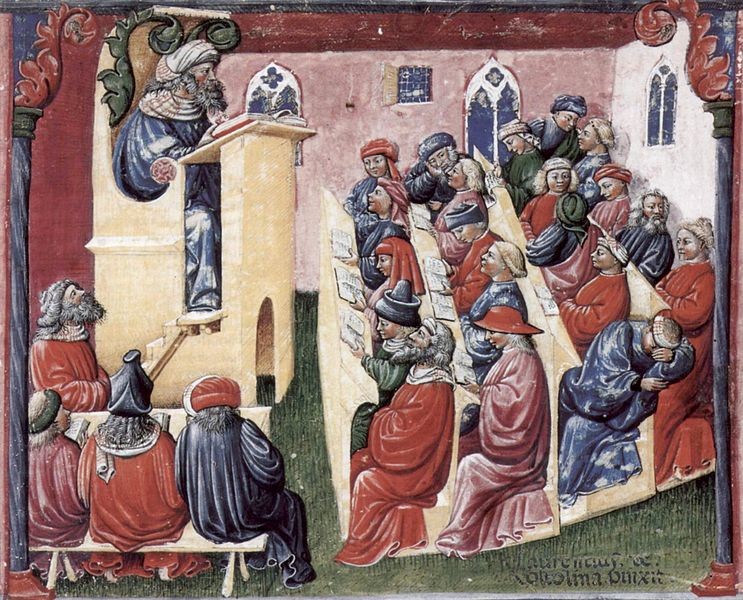
An early view of higher education.  Literally.

An early view of higher education. Literally.


The Power of Magic Again

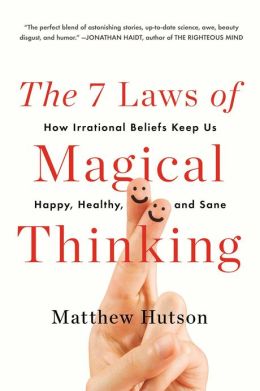
7laws Magic is everywhere. It may not be real (or it just might). There’s no doubt that Matthew Hutson believes the supernatural has nothing to do with it. The 7 Laws of Magical Thinking is a provocative book in that regard. An atheist who argues that we shouldn’t discourage magical thinking because it is so darned human, Hutson is a rare kind of treasure indeed. The 7 Laws of Magical Thinking begins by pointing out that we can’t psychologically accept what is really real. Reality always eludes us. Our brains are hardwired to accept what Hutson calls magic (including what I call religion). Those who enjoy provocation can take some satisfaction in knowing that either side can add another layer to the shell: physics explains everything, but maybe magic is responsible for making the universe conform to the laws of physics. And so it goes.

Although I enjoyed Hutson’s book–and he’s clearly a gifted writer—I couldn’t help but wonder at a very deep parity between the determinism he believes is really real and the magical view that is implied by such self-help manifestos as The Secret—the things that happen to you are meant to happen. I know, I know—Hutson’s point is that there’s no agency involved in determinism, but my point is that the end result is still the same. You end up where you are. I’m not so sure. Determinism has always left me cold. But since I’m no God I guess I can’t change that, yet I wonder if there might not be something outside this closed system after all. No one can peek and tell.

Neurology may tell us more than we want to know about the mechanics of the brain, but consciousness is reality. Science may some day lay its cold hands on consciousness, but it will always be someone else peering into my head wondering what I’m thinking. I’d have it no other way. I was strangely cheered to note that Hutson ends his whimsical study with a “stab at a secular spirituality” (a good stab, that is—not the malicious kind). I’m sure that many materialists will find such an a gesture as pandering to the masses. I think Hutson is sincere, however. Even the über-rationalists, as he points out in the book, slip into magical thinking and metaphors. It is the human condition. Those who watch Star Trek (original series, please!) know that the most tormented crew member of the Enterprise is Mr. Spock. The rationalist who can’t connect with emotion is a soul in torment. Even if that soul is a myth. The rest of the crew, I am certain, believes in the power of magic.


Weird Tales

WeirdTaleSince I first discovered H. P. Lovecraft, I believe that I have read all his published fiction. Most recently a multi-year marathon took me through the S. T. Joshi editions published by Penguin Classics. Reading those editions led to a natural curiosity about S. T. Joshi; H. P. Lovecraft is still an author struggling for respectability, although the internet has brought him great fame. The literary elite consider many genre writers as gauche, and those who read them decidedly low-brow. When I saw that Joshi had written a book entitled The Weird Tale (the genre designation preferred by Lovecraft), I decided to learn more. Joshi, I had known from his webpage, is an ardent atheist, but also a true admirer of Lovecraft’s craft. Since I’ve tried my faltering hand at fiction a time or two, generally having even less success than Providence, I wanted to see what Joshi had to say.

Few things are as inspirational as reading about writing. Those of us compelled to do it find it an endless source of fascination. What drives us to it? We don’t know. Where do the ideas come from? We can only guess. Why do we do it? We must. And so, it is clear, also felt the authors surveyed in Joshi’s fine little book. Although the names of Arthur Machen, Lord Dunsany, Algernon Blackwood, M. R. James, and Ambrose Bierce mostly just tickled some remote tendrils of synapses in my skull, this study was the first real knowledge I had of any of them. While some patterns emerge, there is a notable diversity of background to the writers of the weird. One element that Joshi doesn’t fail to notice is their religious conviction, or lack thereof. In many ways this is odd, but in others it feels perfectly natural. Many materialists count creativity as the predetermined motion of particles and energy that evolution makes inevitable. The writers, however, refuse strictly to conform.

Lovecraft was an atheist and mostly a materialist. Joshi is puzzled, however, when Lovecraft seems to call this certainty into question. I’m not. Lovecraft did not believe in God, but he invented gods. How difficult it must be for a creative mind to dabble in the divine and simply walk away at the end of the day. Lovecraft was no stranger to peculiar residues that clung to the unwary and the bizarre transformations that could occur under the aegis of misplaced belief. But like the narrator of many of his tales, at the end he too knew he’d been affected. I don’t mean anything as crass as deathbed conversion. Rather, like all those who are truly intelligent, we must admit that there are some things we just don’t know. Cthulhu may not be slumbering beneath the sea but many will not sleep easily at night with their closet doors open. To expect anything less of Lovecraft, to me, seems just too weird.


Neither Black nor White

What hath Rome to do with Lagos? In the portion of the newspaper where religion is freely discussed—the Sunday edition, of course—Jeff Kunerth published a thoughtful piece entitled “Black atheists might feel lonely, but they’re not alone.” Kunerth reveals a double dilemma for the African-American non-believer: strong emic social pressure to be religious and etic deconstruction of race by many atheists. I know African-American humanists, and I have been informed of the lack of attention given to humanism and race. Both, in many circles, are troubling concepts. We like to think we’d evolved to the point of “race” disappearing from the social spectrum, but we also feel pride concerning cultural achievements, some of which are tied to “race.” Where would our culture be without the influence of African-American music, story, and art? Is belief required to truly belong?

I often wonder why it is that skin tone is used to divide people. Inevitably my thought goes back to the Bible. In the ancient view reflected in the book of Genesis, all creatures, humanity included, were created with inviolable boundaries of “kind.” As mules and ligers demonstrate, however, boundaries are often only as strict as we permit them to be. “Can the Ethiopian change his skin?” Jeremiah rhetorically asks in 13.23 of his eponymous book, “or the leopard his spots?” Not only is race fixed, but gender as well. Each according to his own kind. It’s this easy division that’s troubling me. Humans of all “races” may interbreed, something not possible for the liger or mule. We are free to change our outlook. The leopard spots are in our minds.

None of this is meant to belittle the difficulties faced by black atheists, or any others who are excluded by their own “kind.” It is simply a suggestion that we might enlarge the pie, to borrow from Getting to Yes, before dividing it. Belief has to be a matter of conscience, and acceptance should be a matter of principle. Too often religious beliefs divide rather than unite. Atheists and true believers, of one “race” or many, have a common cause to make a better world for all. The prophet anticipates a negative answer to his rhetorical question. Allow me, Jeremiah, respectfully to disagree. Yes, a leopard may change its spots anywhere except in the prejudiced savannah of the human mind.

Leopard_africa


Wrongful Resurrection

Re-Animator

H. P. Lovecraft was a tortured man. An atheist, he saw the inevitable dilemma of human life. We want to live forever, but even the short time we have is full of suffering. Almost Buddhist in his sensibilities, Lovecraft also knew the hubris of trying to reach too far. I was reminded of that when I recently watched Stuart Gordon’s Re-Animator. Like most of Lovecraft’s stories, the translation to film is difficult. The angst and haunting lie far too deeply embedded in the original stories to show, even with the finest acting, with any degree of verisimilitude. And the tales have to be padded out to get to that magic 85-minute mark. Nevertheless, there is something of their master still in them.

Re-Animator is based on Lovecraft’s short story, “Herbert West—Reanimator.” West discovers the secret to bringing the dead back to life. In the movie version, the result is unremitting chaos. The dead are somewhat zombie-like until Dr. Carl Hill, very freshly dead, retains his consciousness and begins his insidious plan to create a cohort of more proper zombies to do his will. Like Gordon’s other interpretation of Lovecraft, the eerily moody Dagon, there is a little too much blood-lust for my liking, but a point is being made, so I watch on. The point is very much at the heart of Lovecraft’s personal dilemma. We want to live forever, despite the pain and disappointments of the life we know. Life is optimistically resilient that way.

Lovecraft died a painful, natural death at the age of 46. His writings never demanded much attention during his life—thus seems to be the fate of many of the truly original. In the 76 years since his death he’s gained an enviable following. He might almost be said to have achieved a kind of immortality. A safe immortality. As he knew in life, resurrection is a double-edged sword. We may be reluctant to give up the only life that we (most of us, anyway) have consciously known, but have we really considered the implications of going beyond the line that nature has drawn for every living thing ever animated? Our technology keeps us alive in bodies that only continue their inexorable march toward the grave.

Am I sounding a bit bleak? Blame it on the rain. Immortality, in any belief system, only comes at a great cost. H. P. Lovecraft knew that and took the risk in spite of it.


None Too Human

Apropos of nones, CNN’s Belief Blog ran an opinion piece about the nones earlier this week. It seems that Rep. Kyrsten Sinema came out of the closet as a none at her swearing in. Nones are among the fastest growing non-religions in the world. I suspect a lot of it has to do with the internet; those who subscribe to no particular faith have discovered that it is okay to do so. Or not do so. It is so easy to see, online, that lots of others think that way. Many of these people are not atheists, and many describe themselves as spiritual, but the problem seems to be with organized religions. Religions are, of course, human inventions. Our experience of the world doesn’t ever seem to key completely to science or expectations of fairness or justice. Some of it may be due to illusion, or delusion, but we get the sense that something serious may be going on here. Many formal religions have tried to systematize something that can’t be tamed or taught to perform on cue. And since religious leaders are only human, there should be no surprise that they come fully loaded with the cadre of human weaknesses.

Despite claims of epic voyages to Hell in a small, wicker conveyance, things in human terms aren’t as bad as they used to be. Sure, the economy continues to mope, and far too few people are far too rich, but generally we’re living longer, we’re healthier (or at least bearing up better under conditions that would’ve rendered us unhealthy decades ago), and we’ve got lots and lots of toys to play with. Maybe we’ve reached a level of contentment that blocks out that quiet voice begging for attention. It is a still, small, voice. One of the things I notice is that quiet is hard to find anymore. Our gadgets beep and chirp and mutter and belt out rap or soul or rock in just about any venue where people are found. Religions have generally been nurtured in places of silence. We’ve become the nones.

The anti-atheists have done a good job equating non-belief with moral turpitude, but the ethical atheist is not hard to find. Religions have always been concerned with morals. At least since the Enlightenment, however, philosophers have weighed in on ethics, often without a theistic underpinning. The idea, according to humanists, is that we agree to certain moral expectations by our very humanity. Some don’t play by the rules, to be sure, but most of us do. Some with, some without a deity or deities telling them to do so. Once you sidle away from the angry New Atheists, you can see that atheists can be good people. Looking to blame evil on lack of belief is too easy and consequently misguided. Conservative Christians, progressive Muslims, atheists, polytheists, and nones all have their humanity in common. We are, or should be, no matter what our faith commitments or lack thereof, humanists.

Already empty, or about to be full?

Already empty, or about to be full?


Shelley, Byron, Trelawny, and Ahab

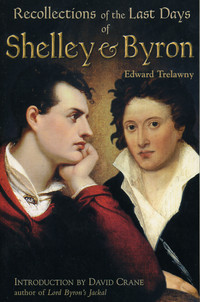
“I took up the word [atheist], as a knight took up a gauntlet, in defiance of injustice. The delusions of Christianity are fatal to genius and originality: they limit thought.” The words come from Percy Bysshe Shelley, according to Edward Trelawny. After visiting the display Shelley’s Ghost at the New York Public Library last week, I was struck by how little I knew of Shelley. I’d read some of his poetry, and had watched the fictional movie Gothic (maybe more times than is really healthy) to get a sense of this candle in the wind, the Romantic poet who died in a shipwreck before reaching 30. Edward Trelawny’s reputation as an historian is somewhat suspect, but he did form friendships with Shelley and Lord Byron and arranged the disposal of their earthly remains. His book, Recollections of the Last Days of Shelley and Byron, while somewhat self-serving, weaves an intriguing account. Among the mementos in the library display are some fragments of Shelley’s skull, taken after his cremation by Trelawny. This erstwhile biographer did prove his mettle by reaching into the pyre and pulling out Shelley’s heart, according to his own account, that eventually returned to Mary Wollstonecraft Shelley, his widow.

Trelawny admired Shelley’s atheism, and even applauded Darwin’s Origin of Species when it appeared. The nineteenth century was setting the stage for a strange Frankenstein’s monster of political and religious backlash against the freedom of the Romantics. Not all of the Romantics, obviously, were atheists, but their works extolled the wonders of nature and a sense of liberty from tyranny that would define them as dreamers and idealists. Lord Byron comes across much less favorably in Trelawny’s account, although their friendship lasted through some difficult times. After the poet’s death, Trelawny claims to have examined his feet, discovering the cause of a lifelong limp. His psychologically astute conclusion is that Byron’s disagreeable personality traits arose from his lifelong anger and anxiety about his birth defect.

Being an ardent admirer of Herman Melville’s Moby-Dick, I have to admit that the elements of anger at the divine for a limp (Captain Ahab forcefully stomps into mind), and the emphasis on ships and shipwrecks (as in Shelley’s death) tie these three literary geniuses together into a knot of suffering and seeking. Religion had consoled many in the nineteenth century, just as it continues to do now in the twenty-first. Among many of those who have endured through their literary works, however, God had slowly disappeared. Not quite as dramatic of a demise as Shelley’s, nor as unforgettable as Captain Ahab’s, but one for which there will be few biographers.


Varieties of Non-Religious Experience

The New York Public Library is an icon of rationality. Daily tourists throng by—some inspired by Ghostbusters, others by Between the Lions. Nestled in among some of the tallest buildings in New York City, it is a symbol of culture amid its antithesis, business. Nearing its last days is a small display in the library entitled “Shelley’s Ghost.” Containing handwritten manuscripts and a few artifacts from Percy Bysshe Shelley’s cradle to his grave (literally, his baby-rattle and fragments of his skull), the display celebrates one of England’s most famous and short-lived poets. Shelley, although his life was scandalous at points, was no doubt an idealist. A vegetarian, advocate of “free love,” and protestor, he would have fit well into life a century-and-a-half after he died. He was also an early atheist.

“If ignorance of nature gave birth to gods, knowledge of nature is made for their destruction,” he wrote in The Necessity of Atheism. Not quite the angry atheism often found today, but then, despite his obvious spirituality, Shelley was a rationalist. Born during the English Enlightenment, be was a strange mix of the alchemical and the reasonable. To his young mind the truth was self-evident: the belief in gods grew from nature and therefore the study of nature would reveal those origins. Today the origin of gods is still up for debate, as is the nature of the human animal. It is routine for scientists to claim that our brains are simply processing electro-chemical signals that have no reality beyond this physical world in which they occur. To be a human, however, sure feels like more than that. Shelley was a writer at this nexus. No one writes poetry like that who believes their brain to be full of only electrons.

Reductionism often gets us into trouble. The problem has always been that humans are myopic; we can only see so far and yet assume we have all the data. This myth persists despite the fact that we know some animals pick up on environmental factors that we as humans miss. It need not be supernatural to claim that there is more to the world than we can perceive. This is a double-edged sword. Many of the absolute pronouncements of religions simply don’t match our experience of the world. We find ourselves bombarded by authoritative statements by experts who know as little as we do. I have yet to hear a televangelist who can claim on any intellectual basis any reason that anyone else should pay attention to his raving. Perhaps what the world needs is a few more like Shelley’s ghost—rationalists who still recognize the necessity of poetry.