First Tower

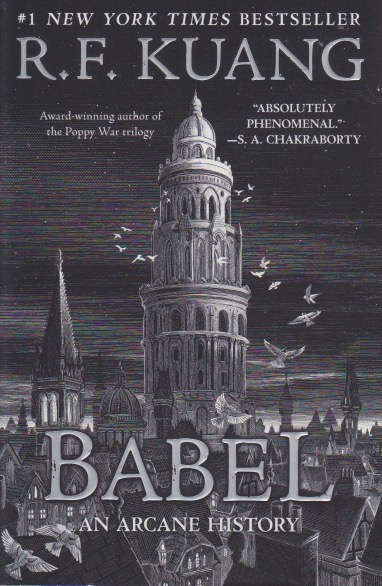
In these days when daring to think feels dangerous, R. F. Kuang’s Babel: An Arcane History feels dangerous to read.  Good literature is like that, even if it’s uncomfortable to read as a “white” man.  A fantasy largely set in Oxford, it’s based on the premise that languages, when placed next to one another, engraved in silver, have enormous power.  The power to run an empire.  This is a post-colonial story, and I took comfort in the working class support, for their own reasons, of exposing the very dangerous world of capitalism.  With its “human capital” as we’re now being called by businessmen.  But I digress.  Four students, three from abroad, are brought to Babel, a tower in Oxford that houses the Royal Institute of Translation.  Their use of their native tongues helps build immense power in this Oxford tower.  Power that fuels Britain’s imperial goals.  But all is not well in academic paradise.

Slowly three of the four scholars come to realize that their home countries are being exploited for purposes of yet further exploitation.  The wealth always flows back to England, and even the small emoluments it offers to those other nations cannot negate the fact that the end goal is British superiority.  The protagonist is Chinese, taken from poverty to live in academic luxury, in exchange for what was his birthright—his linguistic ability.  It doesn’t end well.  This is not a happy novel.  But it does highlight something we seldom consider; our language ability is truly an amazing thing.  We try to convey a fraction of what’s going on in our heads to another person, and that person has some ability to understand it.  And languages are ways of thinking.  I used to tell my students that all the time.  It’s more than just words.

This is also a fairly long book.  As with most fairly long books, you’re left feeling it once the story concludes.  Even though language allows us to communicate, it’s sometimes uncomfortable to hear what someone else is thinking.  We don’t have to be woke to realize that Black, or Asian, or indigenous experience is quite different from what we call “white.”  And such voices deserve to be heard.  We live in a time when white men don’t like to be told that they’ve participated in oppressive behaviors.  Probably most of them (for I believe people are generally good) are not intentionally evil, but they participate in a system which can be.  And often unthinkingly so.  Thus these days thinking feels dangerous.  And this book will make you do so, nevertheless.

Under the Influence

A news story over the weekend—when oddball stories of religion are welcomed by the media—revealed that a judge in Muskogee County, Oklahoma sentenced a youth to a decade of church for a serious DUI crime. An underage drinker, the defendant committed the unforgivable sin of killing another youth while driving under the influence. It is a sad and tragic case. Law makers in Oklahoma are challenging the church decision, according to the video blurb on Newsy, but there is a much deeper flaw in the logic of Judge Mike Norman here. Had the lack of compassion and common sense so blatantly on display during the recent presidential campaign come from other than committed “Christians” it would have been considered downright shocking. We tend to excuse misanthropy when it comes wrapped in doctrinal packaging, a Twinkie in a Cliff Bar wrapper. The judge himself maybe needs a little churching.

There was a time when the moral values of a good, Protestant upbringing were unquestioned. The problem is, we live in a much more diverse world now. What is particularly telling has been the evangelical response to this growing siblinghood of humankind. It is seen as a great evil, perhaps the reverse of Babel itself. We are bringing people of different religions together in what is comprehended as an unholy mix. Thing is, many of these people participate in religions far older than Christianity that have no Babel story to put themselves in proper context. How can they know they’re inferior unless we can get them to read our Bible, attend our churches, learn our religion?

Timothy McVeigh went to church during his youth. Reverend Jim Jones started his own church. Would time in Westboro Baptist Church in nearby Kansas count? There is a reason that church and state should be kept separate. As an institution the church is nearly as diverse as the human race that invented it. Religion has seldom been the solution to crime. Law enforcement officials used to wear a pentagram for a badge, not a cross. But that was back in the days when Oklahoma was the wild west and white-steepled churches didn’t exist to inveigh against the evils of a satanic symbol worn by the representatives of the territory. And since Oklahoma doesn’t believe in evolution, we’ve got to wonder if some things will ever change.

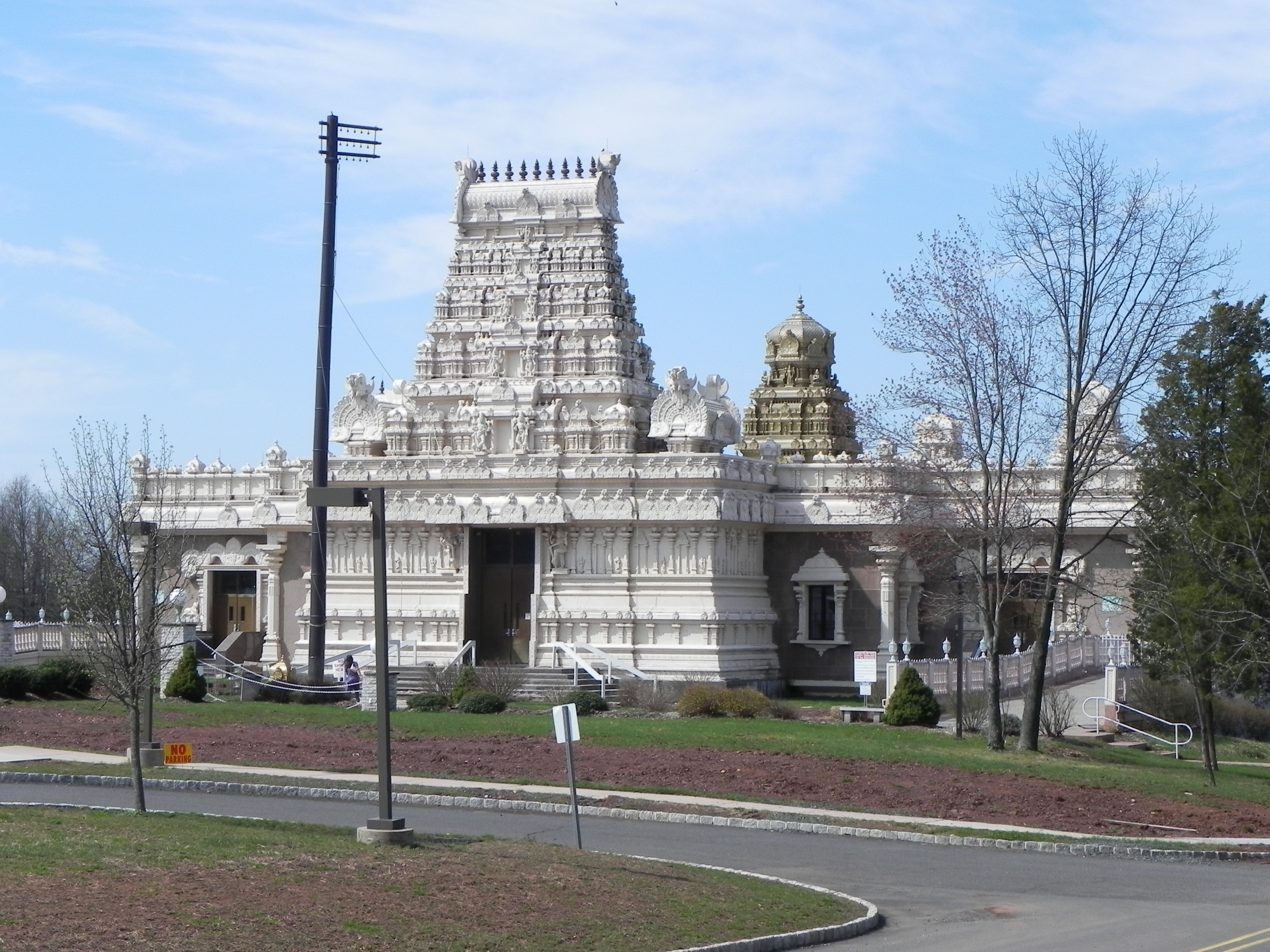
Would this church be all right?


Preoccupied

I wonder if I’m the only one who feels uncomfortable with the proliferation of armed military guards in public places. I know the rhetoric that “freedom is not free” (what is it then?), but when the coffee hasn’t really kicked in yet and I walk by guys young enough to be my kids holding machine guns in the bus terminals and train stations of New York, I really don’t feel safer. Sometimes I might look like a radical. Sometimes I don’t get my hair cut as often as convention dictates I should. Sometimes I forget to trim my beard. Some days I throw on my denim jacket as I head out the door in the predawn hours. Some days no one sits next to me on the bus. Am I the enemy here? I don’t like the idea of strangers seeing me naked in airports—even if only electronically. I do like the freedom of expression, but it is no longer really free.

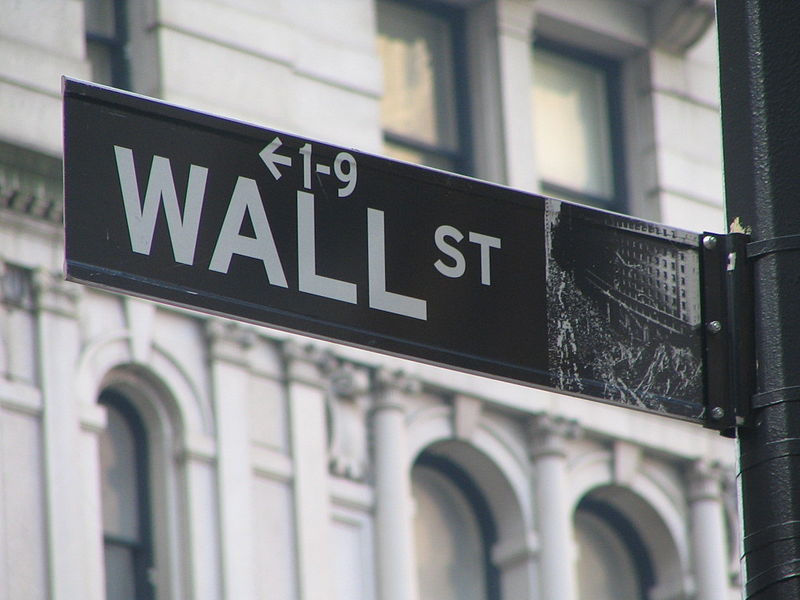
I suppose that’s why I’ve noticed the other peacetime occupation going on in New York: Occupy Wall Street. It is time that people say “enough!” The religious leaders with the loudest voices declare this a dangerous thing, “class warfare” they say. The wealth that lines the very upper crust, however, is simply obscene. Was a day when wealth came with a healthy dose of social responsibility. They just don’t make Andrew Carnegies any more. A few Octobers ago my family visited Sleepy Hollow, New York. The cemetery made famous by Washington Irving (who is buried there) also houses William Rockefeller and Andrew Carnegie. On the top of the most prominent hill is a classical style, opulent mausoleum for the Rockefellers, overlooking all others. Down at the base of the hill, hidden away in a humble, quiet corner is the modest tombstone of Andrew Carnegie. I am certain that Carnegie was no saint, but he did not let his wealth go without doing some good for his fellow citizens.

Freedom is not free, but excessive wealth is tax-free. And Jesus was a venture capitalist, I’m told. We are a nation occupied in peacetime. We are occupied by our own military and their commanding officers in the towers of Wall Street. The GOP can’t support Occupy Wall Street, for it will alienate the moneyed vote it so craves. Call it “class warfare” instead. Those uppity middle and lower class bums! When the select few human beings climb too high in their towers to see the suffering of those down below, images of Babel come to mind. Babel is code for Babylonia in the Bible—the wealthy, powerful oppressor of the poor and displaced. If wealth breeds superiority, we are all in very deep trouble; the battle is already lost. In the meanwhile, I suspect Jesus might secretly be on the side of those camped out in sleeping bags, waiting for the sign of Jonah. And it has nothing to do with being swallowed by a whale.

Or maybe it does.