Goodbye, Linda

It’s out of the ordinary for me to post twice in one day, but I’m compelled to do so by the passing of a friend I’d never met.  I’ll already published today’s post when I learned the news.  Linda S. Godfrey was a Wisconsin journalist.  She’s known for her many books on paranormal and weird subjects.  She was the reporter who first took “the beast of Bray Road” seriously.  I only discovered her after we’d moved from Wisconsin, although we didn’t live far from her in those days.  Fascinated by her work on the beast, I contacted her with some information I’d read and we opened a very occasional exchange of stories.  She was my very first Twitter follower, and she published one of my true stories (anonymously, by request) in one of her books.

I know that academically-inclined folks are dismissive of her work, suggesting she was credulous.  I always looked at it differently—Linda was willing to listen to people.  Yes, she probably talked to some people with mental issues, but here’s a true secret—all people have mental issues.  Although I never met her in person I had the sense from her writing that she didn’t simply accept what others told her, but she was willing to consider it.  I remember visiting Rutger’s University library while I was an adjunct there, to find a difficult-to-locate reference for her.  I mailed her a photocopy of what I’d found.  As I say, we never met, and we only corresponded once in a great while.

Seeing that her blog hadn’t been updated for some time (so this is related, you see, to my earlier post), I began to wonder if she was well.  Like most of us born to write, I knew it was unusual for her not to post.  Not knowing her personally, I didn’t think it polite to ask.  I’ve read several of her books, some of them highlighted on this blog.  Often dismissed as “only a cryptozoologist,” my sense is that Linda was hounded by the need to know the truth.  Yes, the world is a mysterious place—it’s not nearly as well understood as we’re often confidently told that it is.  Some of us simply can’t rest without finding out for ourselves.  Linda earned a reputation as an expert on werewolves—many suggest the beast of Bray Road was some such creature.  She recognized the tie-in to folklore but she also knew that monsters always, always cross borders.  Linda is missed already, and it’s about time I caught up on some of her latest books, for I’m compelled to believe she now knows.
Monster Mash

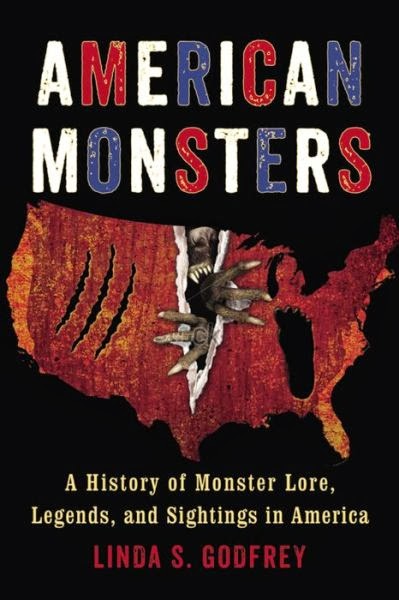
American MonstersIn one of those ironies of personal history, I never met Linda Godfrey although we lived not far from one another and shared a great many common interests. I’m not sure she would return the sentiment, but while I lived at Nashotah House many odd things happened. Academics can be pretty deep in denial about what they experience, and although I never saw any man-wolves, as I stood outside one night to photograph a comet I felt terribly exposed and in not a little danger. This was on a rural seminary campus. Nashotah was still wooded then, before evangelical shaving of the landscape, and certainly among the most gothic of seminaries I’ve ever seen. Meanwhile Linda Godfrey was researching, just a few miles down the road, weird animal sightings on Bray Road. I began a correspondence with her after we left Wisconsin and I have read all of her books. Local history has always fascinated me, and although I was an accidental Wisconsonite, I nevertheless enjoyed learning about the strangeness of the state I formerly called home.

Godfrey’s latest book, American Monsters: A History of Monster Lore, Legends, and Sightings in America, throws a wider net. We are all in here with the monsters. Blending, as the subtitle suggests, lore and legends with eyewitness accounts, American Monsters can leave the reader a little disoriented, in a good way. We’ve been taught to discount anything that doesn’t match the everyday—what boss wants a worker with a higher vision?—and pretend that such things don’t exist. Weird creatures don’t donate their bodies to science readily, and we are left wondering if something is really peering at us from these October woods. Inside you’ll find stories of flying, swimming, and running monsters. We are safe nowhere. Either from the scientifically undocumented or from those that are purely imaginary. I stand outside in the dark in a smallish town waiting for a bus. What was that sound behind me?

Monsters are only now beginning to gain academic respectability. When I was in graduate school the topic felt so puerile that no respectable Ph.D. candidate would dare suggest such a dissertation to a button-down committee. Now they are beginning to roll off the presses. As part of the religious imagination, monsters are not so easily dismissed. We can assign them to the dark caverns of fantasy and under-stimulated imagination, but they will burst out in their own time and, like gods, demand our devotion. I have no idea whether these cryptids creep, flap, or swish around in our world. People see them all the same. And believing may be seeing. I’m glad for Godfrey’s success at pointing out that our rational world is full of monsters. Hers is a perfect book for days of effacing light and lengthening shadows, all across the country.


Where Are the Wolves?

Spend a leisurely hour at your local commercial bookstore and you won’t be able to avoid seeing vampires. Just yesterday I noticed that a neighborhood bookstore had an entire section entitled “Teen Paranormal.” Zombies also continue to grow in popularity, now having their own line of undead Christmas products. And where is the humble werewolf? Not gone, just lurking in the shadows.

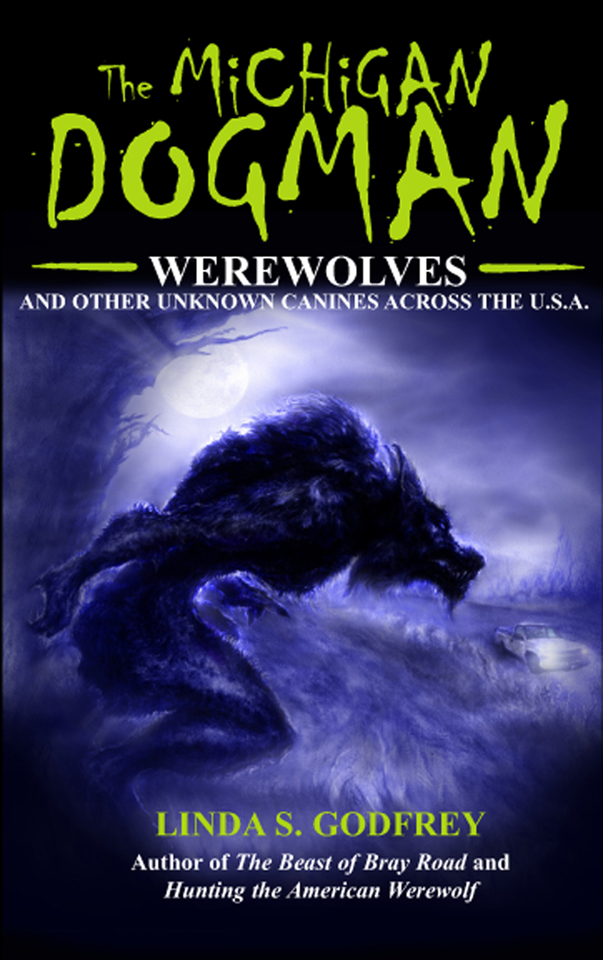
This weekend I finished the third werewolf book by my one-time co-Wisconsinist, Linda S. Godfrey. (She’s still there, but I’m not.) Lest any of my readers think I am casually lumping her work together with the fictional fantasy monsters, I must declare up front that The Michigan Dogman is not a work of fiction. Linda is a careful researcher, a former journalist, and a woman who possesses something many researchers lose over the years: an open mind. The problem with occasional phenomena is that they are almost impossible to test in any empirical kind of way. Since even before the Beast of Bray Road story broke in 1992 occasional reports of bipedal canines had stumbled into the news once in a while, causing headline-happy journalists to push the werewolf button. Underneath the current monster hype, however, is an intriguing question of origins.

Where do all these similar stories originate? While not even close to the number of reported Bigfoot sightings, the dogman/manwolf sightings that Linda has pulled together are impressive for their overall uniformity. Witnesses who’d never heard of the creature repeatedly report fine details that mesh with accounts of individuals otherwise unconnected. The standard answers of hoaxes and misidentifications just don’t cover the three volumes worth of material she had compiled. Few would stand by the assertion that these are shapeshifting humans, but for those with an open mind the werewolf trilogy gives pause (paws?).

The universe is large beyond human comprehension. Simply because we’ve evolved very complex brains doesn’t mean we’ve found all the answers. I’ve never seen a werewolf or any other popular cryptid. But having studied the strange world of religion all my life, I know better than to declare, ex cathedra, that very strange things cannot exist.


Where Wolves Dare

It’s the fall of the year when an old man’s thoughts turn to werewolves. Not that I’ve ever believed there were such creatures, but they do have a pedigree in ancient religious ideas, and even today skin-walkers play a role in some Native American traditions. While I lived in Wisconsin I found out about the Beast of Bray Road, a cryptid that is seen on occasion south of Nashotah, where I lived. Unfortunately I learned about the beastie too late to make any attempts to see it, but the documentation of the creature is in good hands with local author Linda Godfrey.

When I moved to New Jersey, scrabbling for a living tended to outweigh concerns about werewolves. Nevertheless, I did hear of an odd account in a south Jersey newspaper from 1925. According to the Woodbury Daily Times (now defunct), a farmer in Greenwich, south of Camden, shot an up-right hopping, dog-like creature that had twice raided his chicken coop early on a December morning in 1925. According to the paper, hundred of people went to view the unidentified animal and some even photographed it. Now, 85 years later, the story is barely remembered. Was this just another gun-toting Philadelphia suburbanite shooting an annoying dog, or had a “werewolf” passed through New Jersey all those many years ago? Periodically accounts of dogs running on hind legs are posted by late-night drivers in the Garden State, but no photographs or other evidence ever seems to be forthcoming.

Werewolves are less about monsters than they are about struggling with inner conflict, according to many psychologists. Our animal nature, deeply sublimated, sometimes makes a ferocious bid for freedom and otherwise sane individuals believe themselves to have turned into wolves. When I look at my crazy employment history, somehow I can relate. Some day I hope to transform into a fully employed academic or editor who has a steady income and an appreciative employer. My chances of seeing a werewolf, however, may be slightly better. I think I’ll head to Greenwich to poke around a bit, but I’m going to wait for a full moon, Friday the 13th, or a full-time job – whichever comes first.

Read Linda Godfrey's new book


In the Light of the Moon (Sin)

While teaching at the University of Wisconsin Oshkosh I was assigned a course whimsically entitled “Myth and Mystery.” With little more than an old syllabus and some Agatha Christie reading experience to go on, I set about building an academic study of the unknown. (Ironically, in the years since then it has mostly been students from this course who have contacted me later to follow up on classroom material.) One of the mysteries I addressed was the werewolf legend (also see the previous post).

The earliest known record of a man becoming a wolf derives from ancient Greece. An Olympic athlete named Lycaon reputedly turned into a wolf (not during the games, I suspect, or he would had to have been put in the dog races). I would contend, however, that werewolves are at least biblical and likely older yet. The tale of Nebuchadrezzar transforming into an animal in Daniel 2 is widely known. Less recognized is that this story likely originated earlier than the book of Daniel, and it was associated with Babylonian king Nabonidus. Nabonidus was a devoted worshiper of Sin, the god in charge of the moon, and was rumored to have struggled with an “evil ulcer” (the mind reels) instead of having transformed into a beast. Rumors that he’d gone insane abounded, which, for lunatics, must count for something! How far back the moon’s transformational powers go is not known, but the marauding beasts of the night were known and feared long ago, along with the occasional insane king.

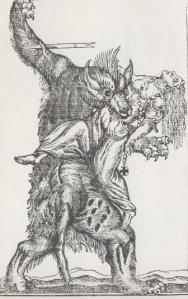
Not Nabonidus, but maybe one of his kids?

Not Nabonidus, but maybe one of his kids?

Unfortunately only after my Oshkosh course ended, I struck up correspondence with Linda Godfrey, a journalist who lived almost close enough to be a neighbor. Linda is an avid researcher of the Beast of Bray Road, Wisconsin’s own home-grown version of the werewolf. The closest I ever came to experiencing the beast was being awoken one midnight by a pack of coyotes howling through the yard, but I read Linda’s books with wonder. Are ancient fears really present realities? I suppose only time will tell, but our ancient ancestors sometimes had more keen eyesight than their modern day beneficiaries do. Their advice was to love the moon with caution since it could cause insanity in select cases!