Commander in Heaven

I pity the nation that doesn’t have divine founders. Origin myths help to orient our thoughts about where we belong in the order of things. Given enough time, any national founder will become a god. When a friend recently shared a blog post about Gogmagog, I had to dust a few cobwebs from my memory to place the mythic founding of Britain. During our years in Scotland my wife and I read about the heritage of the British Isles, according to bards before the Bard. Bede, Geoffrey, and the anonymous author(s) of the Mabinogion. Long before the Romans arrived on those islands, there had been gods, demons, and giants. The Medieval writers, of course, were drawing from the Bible. Gog and Magog are figures from Ezekiel, borrowed by Revelation. Sacred writ says enough about them only to make them mysterious. Their combined role in British myth makes one think they might be giants.

The founding of Israel, of course, is treated as history by many. I don’t mean the recent founding of the political state, but rather the biblical version of things. Moses leading the Israelites out of an oppressive Egypt, miraculously through divided waters. Foundation myths are that way. We can watch the process unfolding, even after just a few centuries. George Washington’s literal apotheosis is virtually certain. Even Alexander Hamilton experienced an unlikely resurrection when he was in danger of being removed from the ten-dollar bill. For nations to thrive this kind of transformation must take place.

6082318543_90e9752777_o

This is perhaps easier on states whose origins are lost in antiquity. There was nobody there to see the general fall off his horse or the commander in chief inhale. This was what folklorists call illud tempus, the time of events unlike those of today. Quotidian time has become profane—just look at the headlines if you don’t believe me. Those who are gods today are only those who make themselves so. We can see it happening all the time, if we pay attention. The implications should give us pause, when we consider those we think of as heroes or giants. Time makes gods. And it is just possible that we might be better off without a pantheon so terribly large.
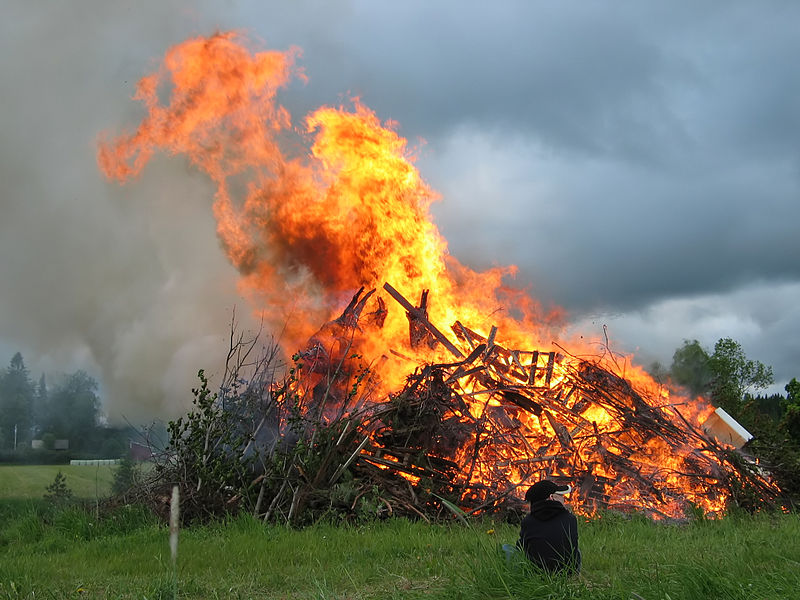

A Midsummer’s Daydream

Solstices and equinoxes are among the earliest religious festivals in the world. While there is no means of proving this, the signs are fairly indicative; ancient peoples were close watchers of the sky. Like many other species of animals, they used subtle clues to help them determine which direction to go at what time of year. Once agriculture developed, the sky contained the key of when to plant and when to harvest and when to thank the gods. It is no surprise that when the classical religions developed many of their festivals centered around, especially, the equinoxes and the winter solstice. Did they even bother with the summer?

The summer solstice tends to get lost in most modern festive calendars: it is summer, a time when we are busy relaxing—the crops are in the ground, firewood need not be gathered just yet, and life is perhaps just a tiny bit easier (except for those poor kids who still have to finish out the school year!). No cause for wonder that this particular holiday (traditionally Midsummer) is most evident in northern Europe where in just six months days will be dreadfully short and very cold. Midsummer celebrates light, fertility, and healing. Some traditions claim that witches meet on Midsummer as the sun begins, once again, its inexorable journey south (from the northern hemisphere perspective) nearly to disappear in the dark December.

The modern day Midsummer celebration held by reconstructionist Neo-Pagans is Litha. The name is borrowed from the Venerable Bede but the observance of the solstice is certainly authentic. It is often celebrated with fires to shorten the already apocopated night. It is the time when darkness is at bay. It is perhaps telling that the major religions have little to add to days of relatively carefree existence. People need their religion when things go bad, but when the struggle is minimized we might leave angry gods behind for a while and just bask in the ease of it all. But, as the Neo-Pagans and witches know, the longest day of the year also foreshadows the darkness that, until this day next year, will never again allow us as much light.

Northern European Midsummer's bonfire