
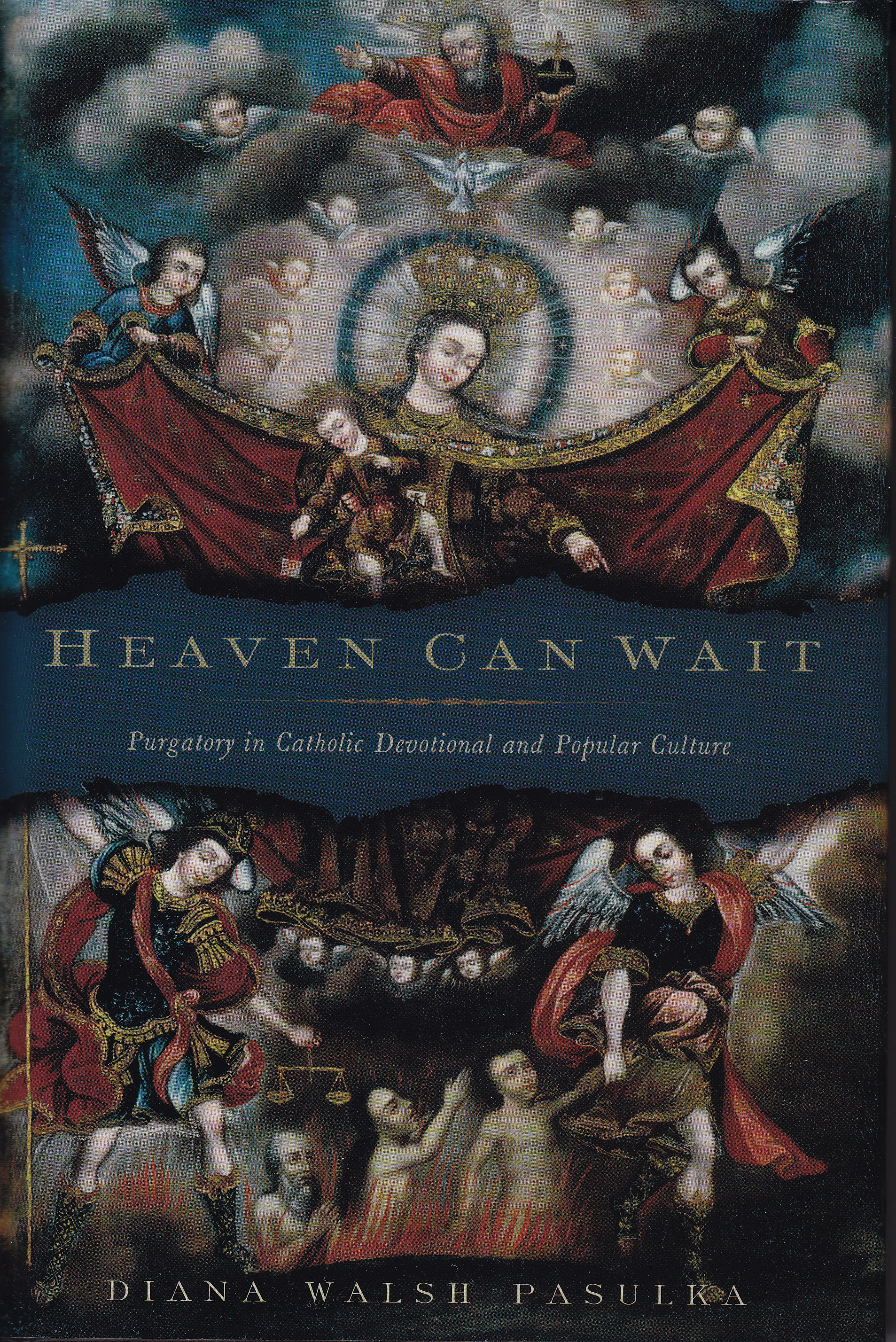
 Like most kids raised Protestant, I had little idea about the Catholic worldview. Despite family wishes, I had Catholic friends, and topics such a Purgatory inevitably came up. (Well, they did if you were me, with my insatiable interest in religion and its trappings.) Purgatory was a concept both just and unjust at the same time. It seemed only fair to give people who’d made mistakes a chance at Heaven, yet, at the same time, to make them suffer when they already realized that they’d made mistakes seemed like, to put it bluntly, bad parenting. The key was in the name: Purgatory. A place to purge the evil. Melvillian try pots. Given this background, I couldn’t wait to read Diana Walsh Pasulka’s Heaven Can Wait: Purgatory in Catholic Devotional and Popular Culture. The afterlife is the ultimate 64-dollar question. It pays to be informed.
This fascinating study demonstrates that the idea of purgatory has long roots into Christian history. The Bible does mention Heaven and Hell, concepts borrowed from Zoroastrianism, but it doesn’t directly mention Purgatory. For this reason most Protestants reject it out of hand as Popish and superstitious. Heaven Can Wait, however, explores how the idea grew into an almost inevitable aspect of Catholic theology. Most intriguing to me was the concept that, like Belinda Carlisle’s Heaven, Purgatory is a place on earth. Specifically, in many Medieval minds, in Ireland. There a cave of torments, guarded by monks, on an island in Lough Derg provided those brave enough to enter the chance to purge their sins before death. In short, those who braved this cave could bypass Hell by suffering in advance. Heaven on an installment plan, crudely put. As Walsh Pasulka describes the accounts of Lough Derg, archetypes begin to fly thick and fast, like proverbial bats out of Hell. This single location, sometimes venerated by, sometimes destroyed by the church, was a vortex of torment.
Over time, as the rationalism of the Enlightenment settled in, the idea of a state of being having a physical locality led to changes in the concept of Purgatory. The kids I knew took it for granted that it existed, and, with tween angst, accepted that that’s probably where they’d end up. At least for a while. Protestant that I was, my choices were a bit more stark. If I messed up, as I well knew I did, my torment would be neverending. Heaven Can Wait is a rewarding exploration of how an idea, logical in its original context, survived long after the worldview of the church had begun to change. Indeed, it survives to this very day. And like most doctrines of the church, it has a way of scaring even the most inoffensive souls straight.
 Steve A. Wiggins