Monster Epistemologies

A friend ensures that I see internet stories of hidden monsters. Not hidden in that you can’t find them, but hidden in that my freedom to explore the web entails only weekends and even some of those are very busy. In any case, a bestiary from Mental Floss landed on my virtual desk recently and I couldn’t wait until the weekend to check it out. A bestiary is a list of strange creatures, what we might today call monsters, some of which reflect a world not well explored and others which reflect religious, or—admit it—superstitious ideas. In the days when travel was limited and news was slow and unreliable, garbled accounts of strange beasts were compiled in bestiaries. The tradition continues today, as is evidenced by this article by Paul Anthony Jones.

Whenever I see monster stories like this I ask the question: did they really believe such things “back then”? Some of these monsters clearly have analogues in the natural world, but part of my brain reminds me that we are destroying species faster than we can count them in the rainforest, and who knows what we have yet to uncover? Is it really a matter of belief or is it actually a matter of knowing how we know? The fancy word for the latter is “epistemology.” As I used to ask students: how do you know that you know? Has that changed since the days of the bestiary? Knowing about medieval monsters seems to have been the acceptance of the reports of those who, if they hadn’t actually seen the beast, had at least talked to someone who knew someone who had. It is the authority of the senses. Or of reliable reporting. Seeing is believing.
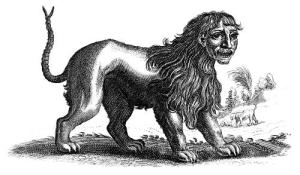
Martigora_engraving

Fast forward to a day of popular cryptozoology. We have monster hunters of many sorts on television. Some claim evidence for what they have seen. Lighthearted laughter is the common response. Monsters just don’t fit into our worldview anymore. Our epistemology has become more circumspect. If it doesn’t come from a lab, like a genetically modified organism, we have no reason to believe it exists. We’d like to create our own monsters, thank you. It’s at times like these that I like to reflect that a bestiary doesn’t sound so different from a breviary. Both are medieval sources of knowledge. Our modern epistemology seems to have grown a little too narrow to see a world that is full of wonder. Unless, of course, it’s on the television. Seeing is believing.

Monster Impulse

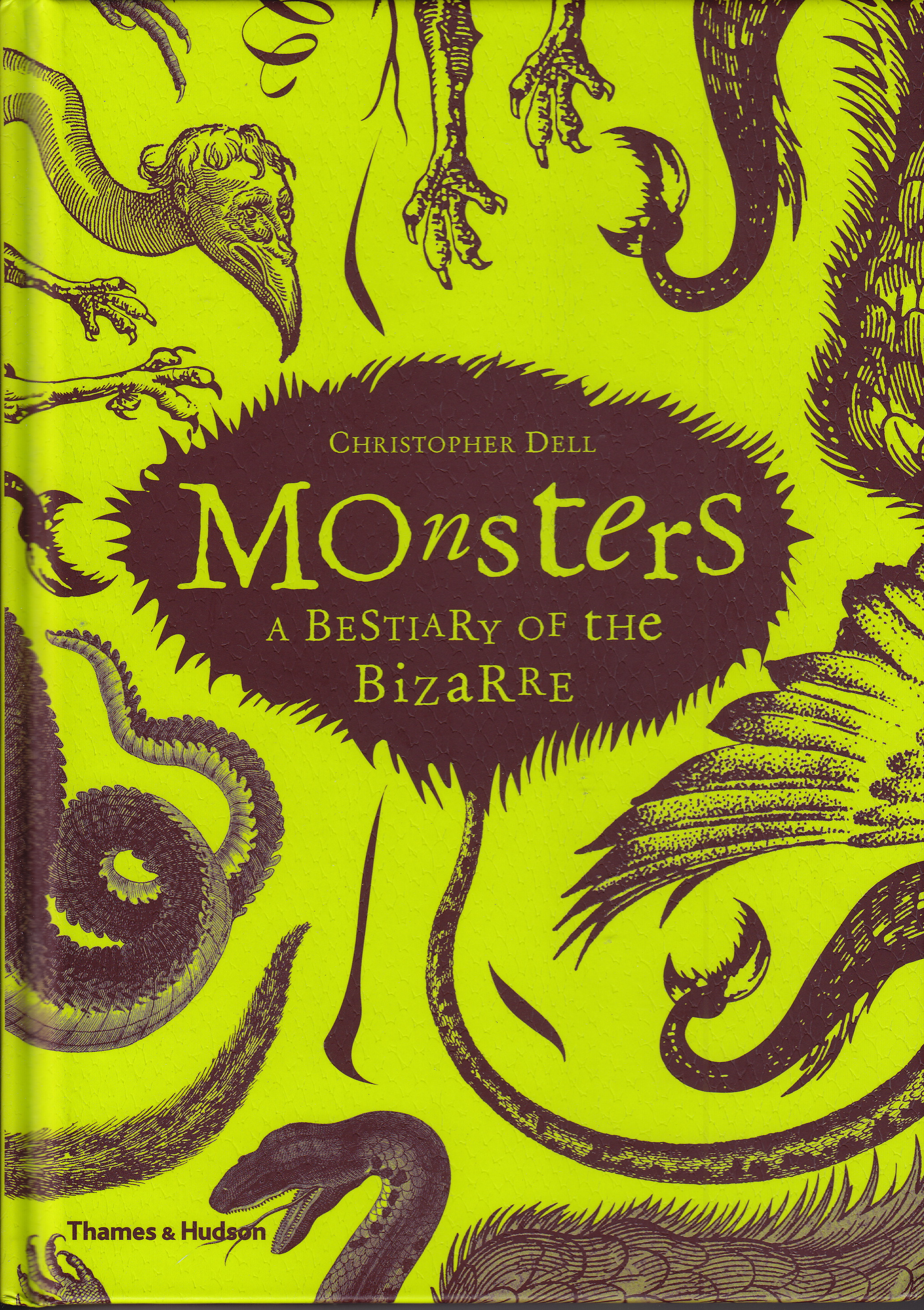
MonstersSome people are impulse buyers. In fact, retailers count on it. All those last-minute items next to the cash register while you wait your turn to consume—they beckon the unwary. I have to admit to being an impulse book buyer. I have to keep it under control, of course, since books are “durable goods” and last more than a single lifetime, with any luck at all. A few years ago I was in the shop of the National Museum of Scotland in Edinburgh. It was my last day in the city where I’d spent my post-graduate years and I didn’t know when I’d ever be back. What could help me remember this visit? A book, of course. Why I chose Monsters, by Christopher Dell, to mark this particular occasion, I don’t know. I love monsters, yes, but why here? Why now? Why in the last hours I had in my favorite European city? It was a heavy book, hardcover and unyielding in my luggage. I had to have it.

More of an extended essay than a narrative book, Dell’s Monsters begins with a premise that I never tire of contemplating: religions give us our monsters. At least historically, they have. There is an element of the divine as well as the diabolical in the world of monsters. As a student of art, what Dell has put together in this book is a full-color unlikely bestiary. These are the creatures that have haunted our imaginations since people began to draw, and probably before. One exception I would take to Dell’s narrative is that the Bible does have its share of monsters. He mentions Leviathan, Behemoth, and the beast of Revelation, but the Bible is populated with the bizarre and weird. Nebuchadnezzar becomes a monster. Demons caper through the New Testament. The Bible opens with a talking serpent. These may not be the monsters of a robust Medieval imagination, but they are strange creatures in their own rights. We have ghosts as well, and people rising from the dead. Monsters and religion are, it seems, very well acquainted.

The illustrations, of course, are what bring Dell’s book to market. Many classic and, in some cases, relatively unknown creatures populate his pages. They won’t keep you awake at night, for we have grown accustomed to a scientific world where monsters have been banished forever. And yet, we turn to books like Monsters to meet a need that persists into this technological age. About to get on a plane for vacation, I know I will be groped and prodded by a government that wants to know every detail of my body. Sometimes I’ll be forced into the private screening room for more intimate encounters. And for all this I know that William Shatner was on a plane at 20,000 feet when he saw a gremlin on the wing. Like our religions, our monsters never leave us. No matter how bright technology may make our lights.