Alt Bible

A friend recently sent me a story from Anonymous titled “Why Did The Vatican Remove 14 Books From The Bible in 1684?” This piece reminded me of just how rampant biblical illiteracy is in this Bible-worshiping culture. To begin with the obvious, Roman Catholics are the ones who kept the Apocrypha in their Bibles—it was Protestants who removed the books. No doubt, retaining the Deuterocanonicals was a rear-guard action of the Counter-Reformation, but still, if you’re going to complain about the Papists it’s best to get your biblical facts straight. The story is headed with a picture of The Key to Solomon’s Key. Ironically, Solomon’s Key is actually an early modern grimoire that the author seems to think is the same as the Wisdom of Solomon, one of the books of the Apocrypha. Reading through the post it was clear that we have an Alt Bible on our hands.

(For those of you who are interested in the Key of Solomon, my recent article in the Journal of Religion and Popular Culture on Sleepy Hollow discusses the Lesser Key of Solomon, a famous magic book. It features in one of the episodes of the first season of the Fox series and, I argue, acts as a stand-in for the iconic Bible. One of my main theses (don’t worry, there aren’t 95 of them) is that most people have a hard time discerning what’s in the Bible and what’s not. But I obviously digress.)

The post on Anonymous states that the Bible was translated from Latin to English in 1611. The year is partially right, but the facts are wrong. The translators of the King James Bible worked from some Greek and Hebrew sources, but their base translation was the Coverdale Bible which had been translated into English and published some eight decades before the King James. Myles Coverdale relied quite a bit on German translations, but the King James crowd went back to the original languages where they could. The KJV was published in 1611, but the translation from Latin was actually something the Catholics preferred, not Protestants. The Vulgate, attributed to and partially translated by Jerome, has always been the favored Roman base text. Ironically, and unbeknownst to most Protestants, the King James translation did include the Apocrypha. I like a good conspiracy theory as much as the next guy, but they certainly make a lot more sense when the known facts align without the Alt Bible unduly influencing the discussion.


An Apple a Day

Have you ever bitten into a piece of rotten fruit? I suspect most of us have had the unpleasant experience. From the outside the apple looks fine but that first bite sinks into a brown and corrupt interior that turns your stomach. There’s no rehabilitating it—once fruit’s gone bad it’s bad. Jesus is once said to have said “by their fruits you will know them,” them being the righteous. Over the last several days we’ve watched, not exactly surprised, as the news revealed Attorney General Jeff Sessions lied under oath—what used to be a very serious crime—about consorting with the Russians. The difference between that and the apple I described is that this one didn’t look so good from the outside either. Eve, I think, would’ve chosen a different piece.

The strange thing about this is that evangelical Christians of the sort that voted for Trump should know about the fruits passage. Not the Eve one, the other one. Growing up in a Fundamentalist context I frequently heard about knowing others by their fruits. People are capable of deception, even under oath. That’s why we have a name for it. Thing is, we expect better from those who hold the highest offices in the land. And we’d expect honesty on the part of the evangelical crowd. Once you’ve bitten into that apple there’s no turning back. Ideology trumps theology, it seems. Even the Bible. That’s one of the great mysteries of our time—those who loudly proclaim they live their lives by the Bible count on others not having read it. Kind of embarrassing to be caught with your bias showing. Those whose sins you’re willing to overlook in the name of principle.

As the rogue’s gallery that we now recognize as the presidential cabinet was being nominated, many in this nation suffered shock wave after shock wave of incredulity. Steve Bannon later admitted that their role was to dismantle the agencies they’d inherited—so much for the meek inheriting the earth bit—while power-blinded Republican leaders followed like, well, sheep. The evangelical crowd, ignoring that troublesome leather-bound book they love, refuse to criticize. Who hasn’t forgotten meeting with the Russian Ambassador from time to time? I’m old fashioned enough to believe there’s a difference between biting into an apple that to all appearances is fine and one that’s obviously rotten from the start. In one case you end up disappointed. In the other you get what you deserve.


Beating around the Bush

You know things are bad when another president who couldn’t win the popular vote criticizes you. Don’t get me wrong—criticism is good. In my academic existence (on life-support for over a decade now) I’ve received plenty. The point is you can’t improve if you’re not willing to take a few blows. Defensive academics don’t survive long. The problem seems to be, if I may speculate from my knowledge of biblical studies, the word “criticism.” Growing up, one of the last things I wanted to have was criticism. Already overly self-conscious of my sins, criticism only felt like making an already bad situation even worse. Then I was introduced to biblical criticism.

Biblical criticism sounds like the worst kind, but in reality it’s absolutely necessary. The idea is to study the Good Book rationally. I knew, and still know, many people who believe biblical criticism to be evil. If you trust any history—either secular or divine doesn’t matter—you quickly learn that nothing is simply one-sided. The Bible itself offers examples of this: did God or the Devil tempt David to take a census? Just how many angels were in that tomb on Easter morning and who arrived there first? Only one answer can be right. Criticism is, typical of academics too long out of the sun, a poor word choice. Nobody’s picking on the Bible. All the biblical critic is trying to do is to find out what it really says by asking questions of the text.

IMG_1163

That’s the heart of the matter. Autocrats don’t like questions. The assumption that the inherent authority of a position should be unquestioned undermines any attempt at democracy. As I was often told in church—Christianity isn’t a democracy. Our political system, we’re told, is. That why checks and balances were built into it. Either extreme and the applecart is upset. No matter what believers believe the same applies to biblical studies. Some rampant Harvard toadyism remains, but for the most part we recognize that a scholar with—shall we call them “critical skills”? may emerge from even a school shorn of ivy. We understand that’s how learning works. No one’s above criticism. Only those with something to hide can’t take their lumps like the populace that allow them to claim the name populist. Nobody likes it, but we all have to take criticism from time to time. Even the Good Book.


Bigger Bibles

The Book of Jubilees. 1 Enoch. It’s been years since I’ve read these “apocryphal” books. I’m thinking about them today because of the concept of canon. If you’re like me—and I sincerely hope you’re not—you never heard the word “canon” until you reached college. If I’m honest with myself I’ll admit that I thought the professor was saying “cannon.” A single-n canon is a “rule,” or in this case a collection of texts. There were lots of texts in antiquity. Not many people could read, but that didn’t mean that those who could stopped writing (those who have ears to hear, pay heed). The image of the Bible with which I was raised—and mine said “Holy Bible” right on the front, so I knew it had to be right—was a collection of 66 books; 39 in the Old Testament and 27 in the New. Before I reached college I heard that Catholics had some extra books in their Bible. (Surely they must be about image worship and praying to Mary!) Then I discovered “the Apocrypha.”

The number of apocryphal books is not fixed. When I became an Episcopalian I learned to call them Deutero-canonical books instead of Apocrypha. I still couldn’t figure out the number because two of them (Daniel and Esther) are already in Protestant Bibles, but are expanded somewhat in Catholic Bibles. Do they count or not? Then there were others like Judith, Tobit, and 1 and 2 Maccabees. Interesting books, but it was hard to see what they added to the already pretty long Scripture I grew up with. I became accustomed to considering these “extra” books part of the canon. The Bible was bigger than I thought. Then I heard someone say that Jubilees was in the Ethiopic Orthodox canon. Indeed, eastern Orthodox Church canons differ from Roman Catholic Bibles. The Ethiopic Church (called Tewahedo by the locals) has millions of members. It is an ancient faith. It has a really, really big canon. You can’t learn much about it, however, at least not easily.

Because it is almost completely confined to Ethiopia, not much western scholarly attention has been lavished on Tewahedo. Sure, you can pay university press prices for a monograph or two to find technical reports, but few have bothered to ponder what all this means for the Bible. That’s why I’m thinking about Jubilees and 1 Enoch. These books are part of a Christian Bible but not the Christian Bible. There are many sacred texts in the world. Those of Hinduism and Buddhism put our somewhat tiny Judeo-Christian Bible in a different light as a small contender in a huge arena. There are scriptures from all over the world. And the response in our “globalized” university system is to cut religion departments. There’s still a lot to learn. I taught Bible classes for nearly twenty years and fell behind a bit in the larger world. It’s been far too long since I’ve read Jubilees and 1 Enoch.

img_1354


Where Arthur?

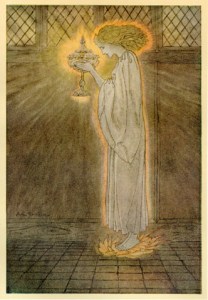
Arthur Rackham - "How at the Castle of Corbin a Maiden Bare in the Sangreal and Foretold the Achievements of Galahad," Wikimedia Commons

Arthur Rackham – “How at the Castle of Corbin a Maiden Bare in the Sangreal and Foretold the Achievements of Galahad,” Wikimedia Commons

We’re all grail hunters. It doesn’t matter what religion, if any, you claim. We want to find that grail. If I was as rich as Donald Trump I wouldn’t bother with the presidency. I’d spend all day on Atlas Obscura. A friend recently sent me one of their stories, “6 Stops on the Hunt for the Holy Grail” by Meg Neal. As the story points out, the grail may not be real, but many places claim it. We want it not because it’s real, but because it’s magical. Midas’ touch without the consequences. Blessings in this life and bliss hereafter. You can have it all.

Nobody knows where the legend of the holy grail begins. One thing’s for certain: it’s not the Bible. The Gospels merely state that at the “last supper” (not a biblical phrase) Jesus took the cup. That definite article implies a certain cup, not just any cup. While speculation has it that this meal was a Passover seder we can’t be sure even of that. If it were that wouldn’t tell us much about this cup in any case. Since the tale is especially prevalent in Celtic lore (many grail sites are in regions loaded with Gaelic influence) some have suggested that the story comes not from ancient Palestine, but from Hibernian traditions of the caldron. This would send seekers back to the mythology of Bran and his life-giving cauldron. In other words, it would share some roots with a modern kind of grail—that of Harry Potter fame. Bran, I once argued in an academic paper, has echoes of some ancient eastern tales. Scholars, of course, are not convinced.

The grail doesn’t come into prominence until the Arthurian legend. Arthur seems to have been an historical person, but facts about him are as rare as they are about Jesus. How he came to be associated with the grail is anybody’s guess. Both Arthur and the grail share a place in Celtic legend and it is perhaps here that the two were brought together. A more crass form of the cauldron is the pot of gold associated with leprechauns—those Gaelic sprites. The grail represents our wishes fulfilled. It’s seldom the spiritual journey that’s sometimes portrayed. The grail represents power. If Indiana Jones has taught us anything it’s that where there’s power, there’s also abuse of power. Then again, we don’t need fiction to know the truth of that.


Samaritans, Good and Otherwise

It’s the coldest day of the winter so far. I’m noticing this because I’m standing on the shoulder of the New Jersey Turnpike counting the NJ Transit buses that are flying by at highway speed. It’s been a morning of irony so far, which explains why I’m standing out here instead of sitting inside the broken down, but still warm bus right next to me. I felt the cold while waiting at quarter to six for my bus to show up. Thankfully on time. It’s very empty this morning; I’m maybe the fourth passenger. Somewhere along Route 22, miles later, the bus gives a distress cry. Ironically, the engine is hot. The temperature outside is in the single digits. Also ironically, the radio on our bus isn’t working, so the driver has to call dispatch on his smart phone. Meanwhile, the engine cools down enough for him to try it again. We’re fine until we pass exit 15 on the Turnpike.

While I try to think of others before myself, I sit near the front of the bus—the first or second row. That way when it’s time to get off I don’t have to wait for dozens of people to wake up, stretch, and slowly shamble into the aisle. (If you think that’s an exaggeration, you don’t commute by NJ Transit.) “The first shall be last,” the Good Book says, and I believe it. I lost count of how many of the company’s buses have zoomed past, but when one finally stops, I’m person number 8 off the bus. The Good Samaritan driver stops me outside his bus. “Sorry, no more seats. No more standing room.” No room in the inn. My driver urges the long line behind me to get back on the bus, where it’s warm, to wait. I was first, now I’m last. That’s why I’m standing out here in the cold. As I approach the bus I see all the first several rows are filled by those first back on the disabled bus. They will be the first to be offered a ride by the next driver along this road to Jericho.

winter

The guy behind me, now in front of me, comes to the same conclusion and waits outside too. At least we both have beards. I’m thinking of Jesus’ words about the end of the world. “Pray it won’t come in winter.” Out here, all prayers are frozen. At least thirty NJ Transit buses buzz by creating their own wind chill before another stops. I want to be first because I paid more for my ticket than those who sat further back on my bus. In fact, I could rent a small apartment in many places in the country for what I pay a year for a bus pass. I wonder if that’s what it means that the first shall be last. Or maybe my brain’s just frozen, since it’s the coldest day of the winter so far.


Bible Riots

One of the more embarrassing questions I get asked is “What do you do?” This has been true throughout my career (if what I do can be called that). I should clarify—I don’t mind saying “I’m a professor,” or “I’m an editor”—it’s the follow-up question that’s difficult. “What do you teach/edit?” Mentioning the Bible is a conversation-stopper. In the silence that inevitably follows you can almost hear the electronic buzzing in the interlocutor’s brain as s/he tries to come up with something nice to say while backing away. In actual fact my degrees have been more in the history of religions rather than Bible per se, but those who’ve done the hiring haven’t tended to see it that way. This is not a nostalgic post, asking to go back to yesteryear (that’s happening politically without my help), but it is a reflection of what James Wallace Harris says on BookRiot—the Bible is a good book to read.

It’s easy to get swept away in the criticism of religion, and particularly Christianity. Those who profess it, historically, have a lot to answer for. What we’ve allowed religion to do to others is inexcusable. What we sometimes miss is that the motivation is one in which all people participate—learning the truth. This is more difficult than it might seem. If someone had discovered “the truth” we’d all know by now. The fact is we’re deeply divided about what that truth is and that alone proves no one has found it. We’ll recognize it when we see it. We just haven’t seen it yet. What sometimes gets forgotten along the way is that the Bible was, and is, a great milestone of humanity’s search. As I keep having to remind myself, there’s some really good stuff in there.

IMG_2634

Harris isn’t alone in suggesting that atheists should study the Bible. Some very prominent non-believers have declared the same thing from time to time. The Good Book is densely interwoven with western culture—even secular western culture. I’m currently at work on a book that explores one thread of that complex fabric, and it’s amazing to me how much we miss when we ignore holy writ. We shouldn’t throw out the baby with the bathwater, as the old saying goes. That’s not biblical, but it does hint at the truth, I think. Or maybe it’s just that I want to be able to answer that most basic of questions without having to make excuses for what otherwise looks like a series of poor life choices.


Big Dreams

giants_and_freia

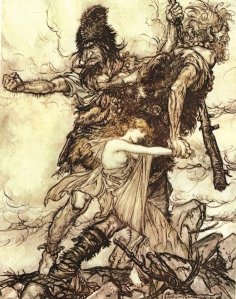
The giants are back! Or at least they were here. According to the internet, and we know that that never lies. Every now and again a story breaks that some discovery of giants has been found in some archaeological or paleontological context. A little poking around, maybe a visit to Snopes, and I go home disappointed. It’s the Cardiff Giant all over again. Still, the stories are fun. A friend sent me a piece from Ancient Code entitled “A GIANT footprint has been discovered in China.” The pictures look impressive until we get to the one where the footprint is as large as a fully grown man. We are back in the land of modern myth.

The idea of an era of giants is strangely compelling. The Bible isn’t the only ancient document to suggest this scenario. In fact, Holy Writ seems to have borrowed the idea. Fast forward just over a millennium and Geoffrey of Monmouth will tell us there were giants in Britain before the more civilized genus of our own arrived and treated the giants to a Brexit. Such tales permeate history with the fanciful period of really big guys from the past. We’re not half the men we used to be. Literally. Just don’t look too close at the Photoshopped evidence. We live in a world where “Photoshopped” is actually a word. A world where visual evidence is like a cow plop. It’s there, but what you want to make of it is up to you. I was never a big newspaper reader, but at least you knew if a reputable rag paid to have millions of copies printed the story had a good chance of being true. I wish there had been giants. Reading the news today, we seem very petty indeed.

Any number of explanations have been proffered for why ancients believed in giants. Perhaps they found fossilized dinosaur or mammoth bones. Admit it, except for to a biologist, a femur looks pretty much the same whether it comes from a giant reptile or a moderate-sided primate. Economics of scale. Or look at those Egyptian pyramids. Sure looks like they had a hand from a really big brother. But in our strangely less and more gullible age, lingering doubts remain. The Bible says there were giants on the earth in those days. The mechanics of gods mating with human women are blamed, no matter which laws of physics have to be broken. For the literalists way down along the Paluxy River in Texas we were walking with dinosaurs back in the day. Too bad no fossilized cameras have yet been discovered.


Love, American Style

If you’re going to thump the Bible, at least try to read it once in a while! Donald Trump, showing his true colors yet again, degrades women in the crudest terms imaginable and the religious right (what used to be called the Moral Majority) quickly falls in line. Videos swiftly emerged with conservative commentator Sean Hannity saying “King David had 500 concubines, for crying out loud.” Did he? David, I mean. Try to count that high and you’ll run out of fingers. But according to the Bible amorous King David stopped well short of 500. In fact, his affair with Bathsheba almost ruined him politically. And this was in the day when polygamy was supported by the law. I think Mr. Hannity was groping for the story of King Solomon, David’s frisky son. Solomon, famed for his 700 wives and 300 concubines, was underestimated by Hannity by half. And maybe if he’d read to the end of the chapter (come on, it’s only 43 verses) he might’ve stopped to think that the comparison did his candidate no favors.

Back in biblical times things were different. Even a monogamous man might have several wives since childbirth claimed a disproportionate number of young women’s lives. The average fella only lived to be about 40 himself. Lust existed, to be sure, but marriage was a practical affair. For the average citizen, you needed children to help out around the farm where you grew your own food. No golden arches in those days. Attitudes towards women back then were just plain wrong, in any case. The marriages of Solomon were political affairs, not prurient in origin. There are those with Trump signs in their yards that would like to see us return to such days, although they have no idea what such days were like. The consensus is that David had about 8 wives, but who’s counting?

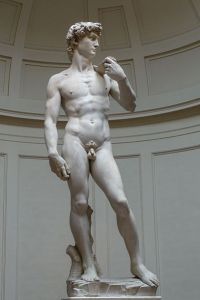
Photo credit: Jörg Bittner Unna, Wikimedia Commons

Photo credit: Jörg Bittner Unna, Wikimedia Commons

Women are more than playthings for men. How have we ever reached the point where someone born in the last century doesn’t know that, and can get to less than a month before the election with that ignorant platform? This should make any American shudder. Make America great again? Treat women as equals. Treat people of color as equals. Treat those of differing sexual orientations as equals. Honor the principles upon which this nation was founded. Don’t just grab someone by the polls. And read your Bible, Mr. Hannity. The point behind King Solomon’s 300 concubines is that he died a sinful, disgraced king in the mere shadow of David. The next time you want to quote the Bible, try reading it first.


Enter the Labyrinth

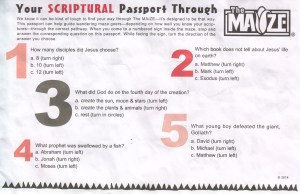
Trying not to think too much about Children of the Corn, I visited a corn maze over the weekend. This particular autumnal activity highlights just how much detail a human mind can pick out in a mass of sameness. You can tell if you’ve been to this particular juncture before—that oddly shaped leaf, or that peculiar stone, or that specific ear with the missing teeth will give you the clues. This particular maze, however, also uses printed clues. Before you enter the labyrinth, you may choose your species of guidance. There were 4-H clues, Girl Scout clues, history clues, and more. One of my companions handed me the scriptural clues. Although it may have been an obvious connection, I thought about it in terms of salvation. A corn maze is not unlike life in the real world; confusion, false leads, and aimless wandering. Having a guide—in my case, knowing the Bible—will lead you out.

corn-maze

Of course, the point of a corn maze is the fun of getting lost. This particular farm had eight acres dedicated to fall fun, and our party did get hopelessly mired in one location and had to ask for help from the corn cop who wanders like a friendly minotaur, or maybe a personal Daedalus or helpful Ariadne, directing those who’ve lost their way. The idea is that once you enter the maze, you look for numbered clues at various junctures—only a few crossroads have them—and answer the question for instructions about which way to go next. Even with the Bible in hand, or in head, we managed to lose our way. Baptized by a sudden cloudburst, we sought shelter in an open field. The only way ahead was to press on.

Those who’ve been with this blog for any length of time know that it is intentionally kind of a labyrinth, often using metaphor. In the case of the literal corn maze and its clues, minimal biblical knowledge was required to figure out the correct way to turn. The trick was even after getting all the hints, there was still some distance to go. Wet, confused, and having only our wits to go on, by trial and error we made it through. Our instructions—for we each had a different set of questions—only got us so far. My biblical guide was damp and see-through with the soaking we received. Metaphors were falling as fast as the rain. After all, the point of a corn maze is that you don’t get your money’s worth unless you get well and truly lost.


Viewpoints

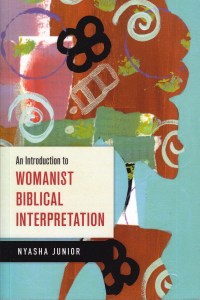
WomanistI first heard of feminism in seminary. Growing up as a poor, uneducated fundie in a small town, where would I have learned about it? I came to it naturally, though. Being raised for several years by a single mother I knew that women were just as smart and resourceful as men. I guess I was surprised to learn that others didn’t see it that way. This was in the eighties and angry feminism was around—I was occasionally attacked in class for my naiveté. After all, I had attended Grove City College not because of its conservatism but simply because I didn’t know any better. This is a lengthy preamble for a book that would’ve helped me a lot as a youngster, although I wouldn’t likely have known to read it. Nyasha Junior’s An Introduction to Womanist Biblical Interpretation is a very useful guide to those who don’t really know what womanism is.

I’ve been in biblical studies long enough to know that I really don’t know much. There are critical approaches to the Bible I’ve never even heard of. Not too shabby for a field that has already been written off as moribund by the academy. In any case, the title “womanist” doesn’t really say much beyond an implication of gender. Junior’s book explains that. Womanism didn’t really grow out of academia as much as it did out of African American women’s experiences. I admit that it took this book to teach me that. What is really being addressed, however, is how womanism is becoming, or is starting to become, an interpretive school. The Bible is in the public domain. It’s anyone’s book. Indeed, it strikes me as odd that translators copyright their work, especially if they believe it is the word of God. The word of God comes with a price tag, I guess. African American women have long been readers of the Bible. What, though, characterizes this method?

That’s the question with which Junior wrestles in this informative book. Just as being female doesn’t make a scholar a feminist, she notes, being an African American woman doesn’t make one a womanist. And we all approach texts with a method, explicit or not. “Objectivity” doesn’t really exist and even literalism is an interpretive approach. Junior traces the history of both feminism and womanism, especially in regard to biblical interpretation. Her struggle should reflect that of any scholar—how do I regard the text regardless of my demographic? While many churches have slumbered in doctrinal dreams, progress in reading the Bible has marched forward. The real danger often comes in the form of labels. This book, written just as a method is starting to be formed, is a trustworthy guide to both the history and to the larger questions.


Take Your Time

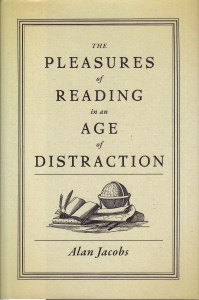
PleasuresOfReadingReading is fundamental. Those of us who grew up hearing that slogan have never forgotten it. The part that I wish had stuck better is just a touch shorter: reading is fun. Or it can be. Should be. Alan Jacobs’ little book The Pleasures of Reading in an Age of Distraction is like an extended essay on the subject. As a professor of literature, Jacobs has considerable experience encouraging people to read, and in his book he makes a case for reading what you want to read (reading on a Whim, he calls it). Wisely he recognizes that many would-be readers are discouraged by being instructed to read that which they don’t find appealing. I learned quite a lot from the suggestions contained herein, and I’ve been reading so long that I thought I knew pretty much what I needed to know about it. Perhaps the most fundamental issue (apart from reading itself) is that many of us expect to be told what to read. We second-guess our own judgment, feeling we need an expert to tell us how to do it. Like singing in public, it’s intimidating to come across someone better read than oneself. Jacobs advocates reading what gives you pleasure and not worrying about what others think.

Recognizing that readers are spoiled for choice, Jacobs addresses, among other topics, rereading. And taking notes. And reading slowly. I recall speed-reading courses advertised, ironically, on television. At college you could take courses in improving your quota of pages turned. There is a specific kind of reading, as Jacobs notes—reading for information—where this may be helpful. This is different than reading for pleasure, or even reading for understanding. In the case of the Bible (Jacobs taught at Wheaton before moving on to Baylor) many people, he suggests, read for information rather than for understanding. When reading for pleasure taking your time is a virtue. Getting to know a book requires rereading. We need to make time for what is important.

Jacobs makes the point that readers are a minority sect. There have always been fewer of us than there have been of those who don’t read. We are, in his words, a tribe. We can generally spot one another. Those of us who can’t walk past a bookstore will recognize ourselves in the pages of this meditation. Those who spend long hours with books become like them, in some respects. Familiar, layered, and requiring more and more attention. Like the reading that it advocates, this book itself is a delight to read. There is so much in this brief volume that it’s difficult to summarize in the short-form writing that I use on this blog. I found myself wishing for an index so that I might find my favorite passages again. Then I realized that perhaps this absence was intentional. Maybe I’ll have to reread it, taking notes as I go. What a wonderful thought.


Holy Castle

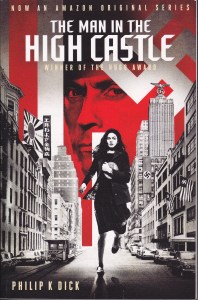
ManHighCastleReading about Philip K. Dick prompted me to read one of his novels. But which one? Some Amazon pick-up lockers on the way to work are painted with a mural of The Man in the High Castle. I haven’t seen the series, but there was the paperback, facing out, at the local independent. It’s been a while since I’ve read Dick, so I have to find my legs for his style. I’m surprised at just how much religious language he uses. Our cultural biases tend to insist that intelligent people aren’t hoodwinked by religion, but it does, nevertheless, appear. The premise of Dick’s novel is based largely on I Ching, the “Book of Changes.” Indeed, the conclusion of the novel relies heavily upon it. Along the way, however, Dick shows his sacred mettle when it comes to Judaism and Christianity as well. His prose is sprinkled with biblical quotes.

More than just a surface awareness, The Man in the High Castle offers some deep reflection for the reader. Mr. Baynes, seated on the rocket to San Francisco, ponders the Nazis who’ve won the Second World War. Reflecting on their hubris he considers how they’ve come to think of themselves as divine. “Man has not eaten God; God has eaten man.” This gave me cause for pause. Apart from Dick’s narrative, the idea of divine anthropophagy is in keeping with much human experience. We often consider ourselves masters of our own fates. Many, however, find themselves dangling like a spider from a web over the fire. Not that of Edwards’ Hell, but simply that of human circumstance. The Nazis didn’t win the battle, but listening to today’s political rhetoric, they may have won the war.

Nobusuke Tagomi explains to Baynes how I Ching, a 5000-year-old book, is alive. “As is the Christian Bible; many books are actually alive.” Far from poking fun, Dick suggests there may be something to all this mumbo-jumbo after all. We are conditioned to mock, dismiss, and ignore religion in this world where rationality leads to presidential races such as this one we’re currently suffering. Follow the trail back, I suggest. Look for clues. Philip K. Dick isn’t the only secular writer who knew more than the average person about what fascism looks like, and about the role of religion in its downfall. The novel may not be easy to read. It demands much of those who approach it. Nevertheless, it preserves the truth that many books, indeed, are alive.


Biblical Stories

The Bible had quite a week last week. It went from being vetoed as the “state book” of Tennessee to making it onto the list of the ten most challenged and banned books of the year for the first time. Did you ever get that feeling that you should’ve thought a bit more closely about career options? I mean, the Bible’s not half bad. Yes, it has some naughty bits, a few instances of cursing, and adult situations. There are homicides, suicides, and genocides. It endorses slavery and advocates religious intolerance. It’s not all bad news, however.

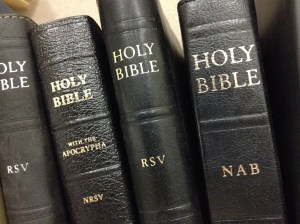
IMG_2634

We find it easy to make summary judgments based on our own tendency to elevate human products to divine status. That which is most holy, after all, becomes the most profane when it’s defiled. The Bible itself can be like any other book. Printed on paper, bound between two covers, it contains ideas that must be interpreted. There’s no such thing as “just reading.” Even that road sign that says “slow children” is open to hermeneutics. What is objectionable is the use to which the Bible is put. And that use is objectionable due to the claims made about it. Saying that God rolled up his immaterial sleeve and took a transcendent pen into his incorporeal hand and began to scrawl is a bit naive. We know that people wrote the Bible—and much of it is sublime—and other people compiled it into a book that eventually acquired sacred status. It wasn’t born holy, it had to grow into it.

Once the Bible became objectified it turned into what people eventually use all objects for: a weapon. We can take sticks and stones and break your bones (no, that’s not in the Bible), and we can take paper and ink and hang you as a witch. Or pillory you as a liberal. Or say that it forbids the love you feel in your God-given heart. Something strange has happened here. The Bible’s not a bad book. It’s a bit on the long and repetitious side, but it has many, many memorable sayings and noble sentiments. Entire civilizations have been based on it. Or readings of it. They’ll ask you to put your hand on it and swear in court, and then they’ll ban it so your kids can’t read it. It’s been a tough week for the Good Book. Somehow, however, I don’t think we’ve heard the last of it because people love a conflicted story.


Foundational Books

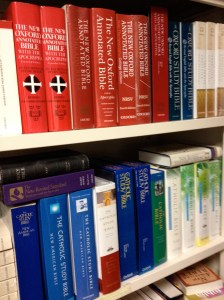
Over the weekend I visited one of my favorite used book stores, The Old Book Shop in Morristown. It’s neither huge nor fancy, but it has the feel that is so important to the restless mind. The feel of not knowing what you may find. The mystery of discovery. As I browsed, it occurred to me that although books of all varieties lodge here, the predominance of the old books tends toward the religious. The books associated with the church have survived for their centuries, closely followed by the classics—what was once considered the purview of the educated. I suppose one might argue that the breviaries, hymnals, and Bibles indicate overprinting on the part of overzealous presses, but I know that’s not the whole story. In fact, until quite recently the educated were expected to be religious as well. There was a kind of humility at work here. Even scientists respected the God who’d put all of this into place. This was not so much overprinting as it was meeting a prevalent need.

In early America, for example, if a household owned a book, it was more than likely a Bible. Bibles existed in profusion due to—putting it most crassly—demand and supply. People wanted to have a Bible. Particularly Protestants who’d been taught that it alone held the key to their salvation. There are some things you just don’t leave to chance. As that era continues to fade and people unload the books they no longer need or want, the Bibles and hymnals and prayer books make their way to antiquaries and I spend my weekends browsing among them and pondering how we came to be in this place.

Education—books—is/are foundational to our society. Books may be messy and lend to clutter, I’m told. In our apartment they climb in stacks alongside overfull bookshelves like ivy up the side of a tower, and yet I find them difficult to release. There’s knowledge here for the taking. The visit to the used bookstore inevitably leads to finds I hadn’t expected. There were no Bibles in my hand as I checked out, but no matter. I’ve got many Bibles at home. I’m aware that building requires foundations. Architecture may change over the centuries, but old foundations remain for millennia. To be educated is to be aware of them and appreciate them for what they are.

IMG_2732