Financial Ethics

In a conversation with a professional colleague recently, I was discussing what might happen to ethics when sex with machines becomes common.  That statement might seem a little bizarre out of context, so let me widen the net a bit.  We were discussing the Bible and sexual ethics.  This led to the question of how those who apply the Bible straight from antiquity might apply their beliefs to a world vastly different than first century Palestine.  In biblical times, in other words, sexual options were limited and people didn’t understand the whole issue of human sperm and eggs, neither of which can be seen without a microscope.  Applying their outlook directly to today is problematic, and so how do we apply a book without outdated views to a world vastly more complicated?
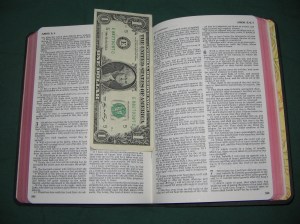
Someone recently paid me a small debt via PayPal.  If sex is complicated, then let’s not even get started on Bitcoin or Apple Pay—for some of us money is money and even getting paid electronically is somewhat suspicious.  I sometimes buy things online with PayPal.  It goes straight onto one of my credit cards and then I write an old-fashioned check to pay for it.  So I had to approach the altar of PayPal itself to figure out what it meant to have money in my account.  What am I to do with it?  Then I found the FAQ—TFIA (The Future Is Acronyms).  One of the questions: “What is PayPal’s policy on transactions that involve sexually oriented goods and services?”  Now, here’s a question of biblical proportions.

Paying for sexual “goods and services” goes all the way back to the book of Genesis when none other than the ancestor of David and later progeny did so.  This is nothing new.  But the question of ethics now looms extra large.  For those who pay for such things, a new layer of complexity has apparently been added—can you pay with PayPal?  My transaction had to do with tickets purchased for a concert online, where we wanted seats together so someone had to do the buying for everyone.  What if the purchase had involved a somewhat more intimate setting?  Who needs paper or plastic when a string of 16-digits, or even a username and password, will do?  That’s to say nothing regarding the ethics of the transaction—this is, as it were, purely mechanical.  What would Moses say?  Surely this is a question of appropriate tips, for Tamar veiling herself by the side of the road had the moral high ground over her father-in-law who was simply looking for a good time.  A staff and seal, however, were no less complicated that paying for goods and services online.


Bible-Landia

It takes a mighty powerful stimulus to get the media to pay attention to biblical scholars. It is no surprise, therefore, when the Society of Biblical Literature meets with the American Academy of Religion each November that, for a few days a year, Bible becomes chic. This year various newspaper articles appeared, perhaps warning Chicagoans what all these crusty professors were doing invading their fair city, but the one that caught my eye was in the Chronicle of Higher Education. The Chronicle is the purveyor of all that is high-brow and sophisticated, epithets seldom applied to the Bible. The story in November 19’s edition made this clear by throwing in a little scandal—some Bible scholars believe the Bible to be “morally bankrupt.” Now there’s a twist. Nor is it really that hard to understand. Anyone who’s read the Bible seriously will have to admit to having squirmed a time or two at the moral implications. Dashing babies heads against the rocks will be one of those places.

IMG_0513

In a society accustomed to seeing in black and white, morally at least, it is difficult to get the religiously convicted to admit that the Bible is a pastiche. Some parts are morally sublime (yes, even in the Hebrew Bible where “love your neighbor as yourself” originates) while others are ethically execrable (can I get an amen from the babies?). It is always interesting to see friends quoted in the media. I taught Hebrew Bible for 18 years without anyone really being that interested (including most students). I guess maybe I wasn’t radical enough. To me the Bible has to be viewed in balance, the moment one falls on their knees before it the corruption has begun. Interestingly, the article focuses on the New Testament side of the equation. That’s where the sexier conflicts wallow.

People arguing about the Bible. Is there anything more representative of American culture? It happens every four years, at least. Ironically the Bible quite often stresses the unity of those who believe. With thousands of denominations mutually excommunicating each other, one has to wonder if the Bible is living up to its full potential. Not that anyone will notice. Amid all the well-heeled, tenured professors, satisfied with their lot in life mill the hundreds who’ve spent thousands earning their advanced degrees. They are the lost generation—those for whom there are no, never were any, jobs. They are every bit as capable, and in many instances even more capable, than their tenured compatriots. The level of concern, at least at a visible level: nil. That, more than anything, indicates to me the true morals of studying the Bible.


Old Smoky

I don’t mean to hit below the Bible Belt, but I find myself in North Carolina for a round of campus visiting this week. Since I’ve only ever passed through North Carolina on my way elsewhere before, I wasn’t quite sure if I’d experience culture shock. Since I’m visiting multiple schools, I needed to rent a car. As I climbed in, it was clear that I was in tobacco country. The problem with the rich, satisfying taste of tobacco is that it doesn’t translate well. I grew up forced to inhale many cubic meters of second-hand smoke, and I can’t stand the wretched odor. It stands to reason from my previous sentence that I grew up knowing many smokers, and it was entirely obvious to me that they did not realize just what a legacy their habits left behind. I went to school smelling like burnt industrial waste, and when I climbed into my Hertz Nissan Versa in North Carolina all of that came back to me in an instant.

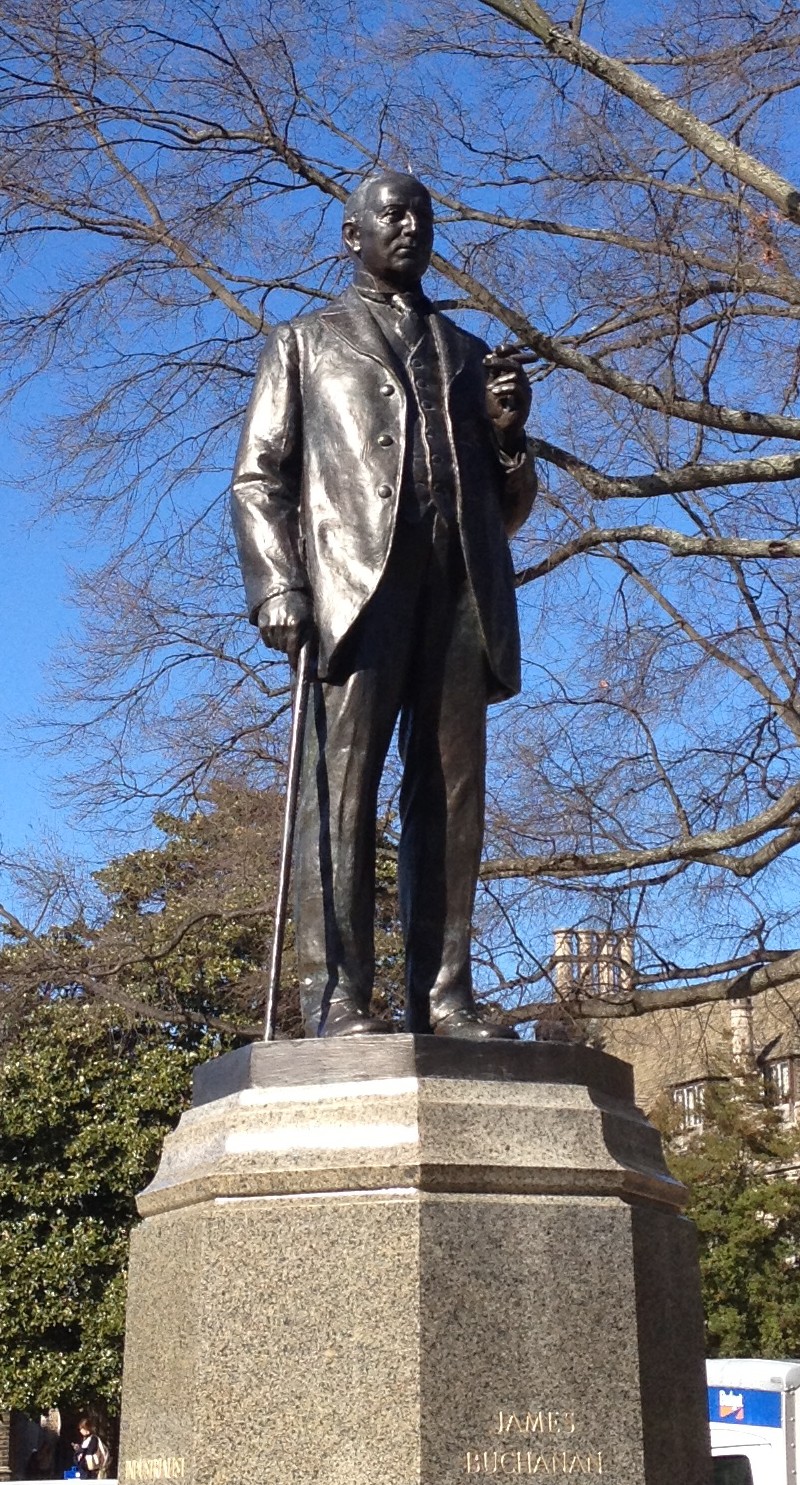
When tobacco was king, or at least Duke.

In my evangelical childhood I was taught that smoking was wrong, although, perhaps understandably, Jesus had little to say on the subject. This highlights one of the thornier aspects of drawing ethics from the Bible. Apart from the obvious damages to health, the Bible gives no guidance either way on the smoking issue. The same may be said for contraception, abortion, drug use and stem cells. For all its laws, the Bible is remarkably non-issue driven. What you choose to do with your body is less important than the impact your actions will have on somebody else’s body. God is the parent who is driving the car shouting at the kids in the backseat, “Keep your hands to yourself!” So, here in the land of tobacco, the teeth of my biblical argument are extracted. I can hear some readers objecting that Paul says your body is a temple of the Lord. Problem is, they used lots of incense in the temple—and that smoke can be even more choking than cigarettes (I write from experience here).

Morals, as ethicists are increasingly realizing, come from custom rather than scripture. Rules are based on what society holds to be of benefit to the greatest number. The Bible has a voice in this debate, but no vote. Rules handed down from on high lack the human touch. We share the planet with our fellow humans, so they must be our focus when it comes to ethics. Some habits, unfortunately, share a little too much. I’m not the kind of person to tell other people what to do, but when I climb out of my rental car smelling like burnt industrial waste I somehow feel slightly wronged here. Maybe one of those rules should be, if you don’t own it, don’t smoke in it. Is that smoke I see rising from atop Mount Sinai?