Non-Saints

It was an epiphany.  My wife has, on more than one occasion, accused me of playing the martyr.  I know very well that I let other people step all over me.  The epiphany came when I was reading about Stephen’s martyrdom in the Acts of the Apostles (in the New Testament).  Unbidden by me, a memory—more of a distinct impression, a deeply planted feeling—arose.  I started reading the Bible at a young age.  The story of Stephen is disturbing to a child.  The thought of being stoned to death for saying what you believe is a species of horror.  The memory, or impression, was of my mother pointing out how good it would be to be like Stephen.  He is not technically my namesake, but since there were no male role models in my family, I subconsciously made the connection: Stephen the martyr, Steve the martyr.
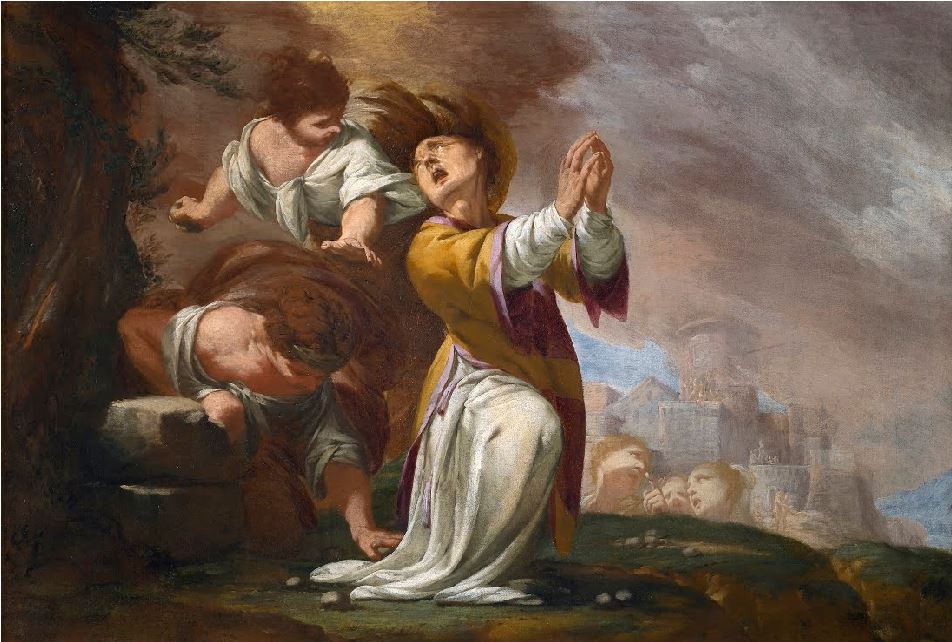
Giovanni Battista Lucini – Martyrdom of St. Stephen, public domain. Source: https://artsandculture.google.com/asset/martyrdom-of-st-stephen/twGNCf3waLKDvA via Wikimedia Commons

It’s strange to realize this suddenly after half a century of not consciously recollecting it.  What we teach our children stays with them.  If we tell them that it’s good to die for your beliefs, well, we shouldn’t be surprised when they grow up with strong convictions.  (My brother tells me that Virgos think they’re always right and that’s why we’re stubborn; is it the stars or is it the Good Book?)  The Bible puts a positive spin on Stephen’s death.  Formal sainthood isn’t a biblical concept, but he dies forgiving his murderers.  It struck me there in the middle of a working day.  Some of my subconscious personality traits floated to the surface.

My deep desire to avoid Hell also formed my young outlook.  Although my beliefs have to be held accountable to what I’ve learned over decades of study, that fear never departs.  This too was planted in me before I had any real concept to absorb it.  When I grew old enough, the horror became academic, but nonetheless real for it.  I’d studied the history of Hell and I knew New Testament secrets.  To avoid the bad place, be like Stephen.  The dilemma is that as life goes on, we continue to learn.  Young parents don’t know as much as old ones do.  And since we have to teach our children not to run out into the street, or not eat that thing they found, we cast ourselves as The authority.  And that includes things religious.  If we live an examined life, we see shades of nuance where once there was only certainty.  And sometimes we have epiphanies.

James and John

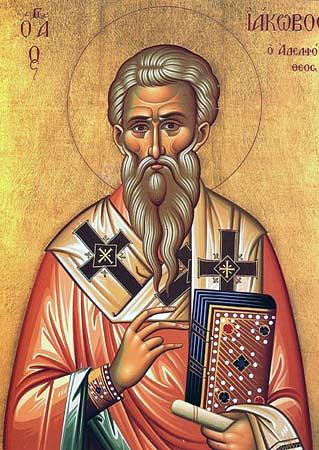
One of the first questions expectant parents are asked is if they have yet come up with a name for their child.  Quite often, and probably without realizing it, some of the most popular names are biblical.  Jacob is one of the most common boys’ names in English.  It derives from the story of Isaac’s younger son in Genesis.  Its popularity increases exponentially when its variant James is added to the total.  The name James comes into English from Old French where it was derived from the Latin Iacomus.  B and m are, phonetically speaking, bilabials (the former voiced, the latter not).  This Latin form also led to the Spanish name Iago, which many know from the apostolic name Santiago (“Saint James”).  Or Saint Jacob, only nobody calls him by that name anymore.  Biblical names are exceptionally common in the western world.  Even so, it often seems implausible that names like Jimmi could be alternatives to Jacob, but small steps make evolution possible.

It has been popular among evangelicals for years to know that Jesus is the Greek form of the name Joshua.  Having a savior named Josh just doesn’t have the gravitas we’re looking for, however.  Greek is an Indo-European language while Hebrew is a Semitic one.  While these two family trees have points of contact, their vocabulary and syntax developed quite independently.  Names change when they’re translated.  Many of our familiar New Testament names are translations from their Hebrew (or Aramaic) counterparts.  The New Testament was written in Greek and we receive Greek versions of such names.  John, for example, is another name that comes to us in many forms.

The apostle we call John was called Ioannes in Greek.  This was derived from the Hebrew name Yochanan.  John comes into English via the Germanic form Johannes, where the connection to the Greek becomes obvious.  From there it shortens to John.  It comes in many varieties too: Juan, Jan, Ivan, Han, Evan, Sean, Jonas, Giovanni, and even Jack.  The latter sounds more like Jacob, but in their original forms the names are quite different.  Apart from names, Indo-European borrowing from Semitic languages isn’t terribly common.  Throughout the Christianized world, names based on these two apostles, however, have become extremely popular.  In recent times parents have been branching out into more creative names for their children, but many of them still derive from their biblical antecedents.  This is just one more way that the Bible continues its influence in an increasingly secular world.  


Index Fingers

I’ve occasionally written about how authors obsess over indices, or indexes, for their books.  These days most things are looked up electronically, but this entire week my reading, writing, and relaxing time have been taken up with the index for Nightmares with the Bible.  Creating an index is an odious yet perversely enjoyable task.  Most publishers (at least among the academic crowd) foist this duty onto the author since a freelancer can easily add $4,000 or $5,000 to the book’s budget.  After preparing an index you can understand why.  At least I get to work with searchable PDFs, but I remember doing indexes on paper and having to sort through printed proofs and hoping that you’d catch every instance or a word or phrase.  The searchable PDF helps, but it depends on the material you’ve got to work with.

The Bible, for instance.  Not only are many book names short—Job, John, Mark, James—they are also common.  People have named their kids after biblical characters, or with biblical names, for millennia.  Not only that, but Job can be job.  Unless you put the quotes around it “Eve” will show up on just about every page, believe it or not.  The real strain on the eyes comes from those terms that are important and show up throughout the book.  Words like “Israel,” or “monster,” or “priest.”  I’m not one of those people who writes a book about demons and puts “demons” in the index, though.  Hey, if you know that’s what the book is about, why look in the index?  Just read it!

Meanwhile, the cover copy came this week for my approval.  I haven’t seen the cover proof yet, but last time I actually had time to check (several days ago now) other media outlets had picked up on the imminent arrival of a new book.  It wasn’t on Goodreads the last time I looked, but there’s time for that.  Right now there’s no time for anything, however, other than indexing.  It actually takes longer to do this than it does to read the proofs for the book.  And indexing helped me discover a spelling error that had gone past both me and the copyeditor.  So this is a valuable exercise, but there are many other things to do as the weather turns cooler and other projects are aching for attention.  Four days of intensive indexing and I’m only up to the “p”s.  I’ve been away from it too long, so I’d better mind my “q”s as well.