Bibliography

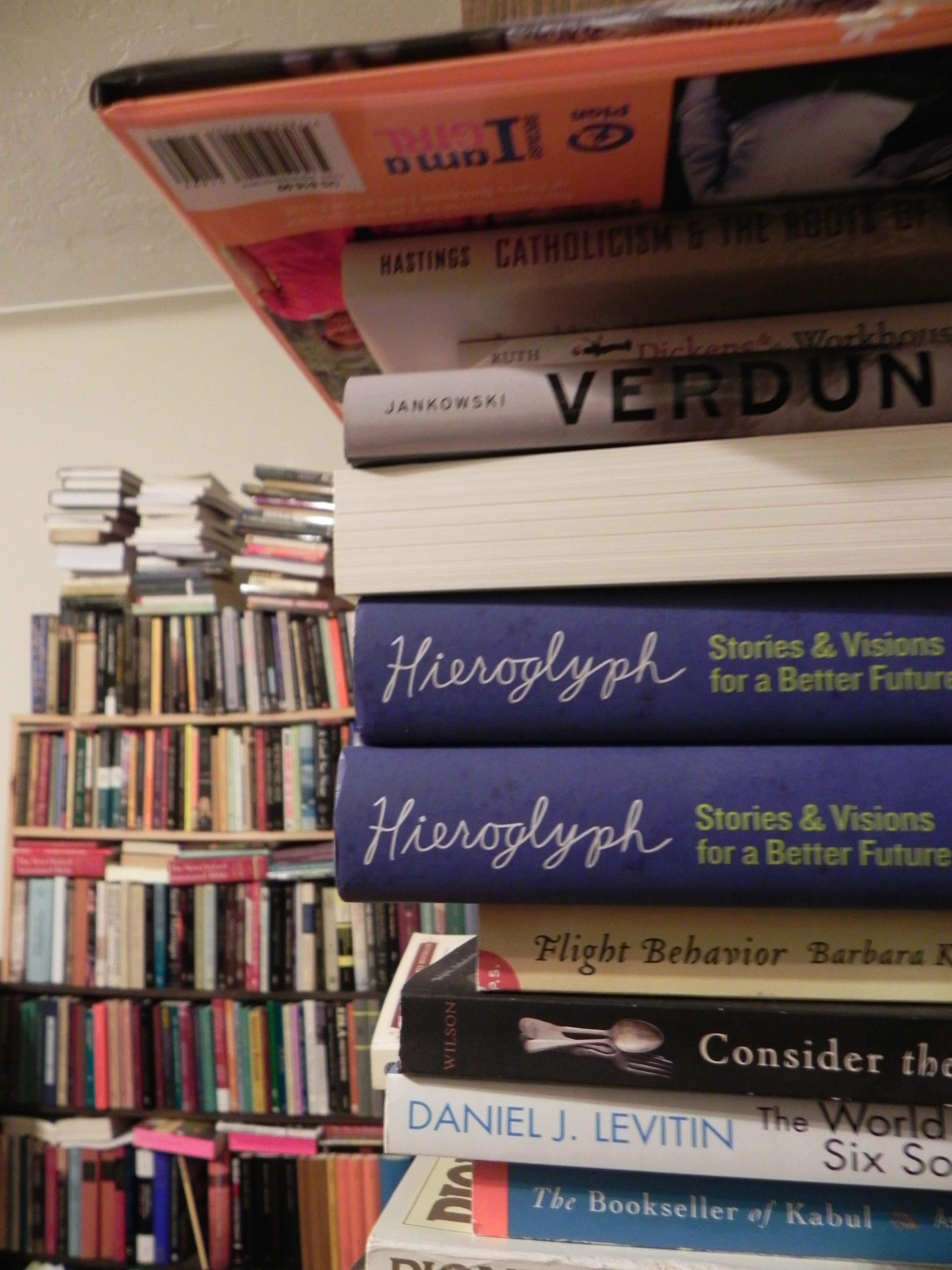
For serial readers, my Horror Homeroom piece is now live, here.  Speaking of websites and blogs, you never know where a project might go when you start it.  This blog has a search function, as well as category options, but I know I have a few readers on Facebook and Goodreads who might never set foot here.  The other day someone asked me about a book and I had to do a search myself to see if I’d ever blogged about it.  This project has been going for more than a decade and a half and it’s nearing 6,000 posts.  I can’t remember everything.  Then it occurred to me: I could put together a bibliography for this blog.  This has to be a long-term process, though.  As a test, I scrolled through the first year, writing down the books.  There were about sixty of them.  Since there are over 170 months to go through, well, it’ll be a big bibliography when it’s done.

I’ll need to find a way to note the books I haven’t read.  Sometimes I’ll post on a book, or mention it, without having read the whole thing.  I don’t want to misrepresent myself here.  Other times I mention a book obliquely without actually citing it.  I need to include those as well.  Only, however, if I’ve actually read them.  Then there’s the problem of not remembering if I read a book or not.  After 2013 I can check on Goodreads, but between 2009 and then, I rely on memory.  Those were tumultuous years.  In 2009, just before I started this blog, Gorgias Press let me go.  I made a living for a couple of years as an adjunct professor at both Rutgers and Montclair State Universities, feeling like I was driving at night without the headlights on.  I was reading a lot, but job security was a mere myth.

Then in 2011 Routledge recruited me and my commuting life began.  I started reading about 100 books a year as I commuted my life away.  Most of those got discussed on this blog.  I was still at Routledge when I began my Goodreads account, not aware that there was employer writing on the wall.  I started my current job that same year and commuted to Manhattan for five more years, reading all the while.  It’s going to be a big bibliography when it’s done.  The nice thing is I don’t have to annotate it since that’s what this blog does.  Since I’ve got about a thousand other projects going, and a 9-2-5 job, don’t hold your breath for it.  But the bibliography’s been started and, God willing and the crick don’t rise, it’ll eventually appear here.  That’s the way of ongoing projects.


Bibliographer for Hire

Why is bibliographer not a job?  Why can’t a person make a living categorizing knowledge?  I ask this because I see YouTube videos of people saying your job should be what you enjoy doing.  What if you enjoy creating bibliographies?  You see, my research methods are a bit unconventional.  They kind of have to be since I have no institutional support for my writing, and yet I want it to be intelligent and informed.  That means I have to locate my own sources and inevitably, when I’m compiling a bibliography, I’m happy.  Even if it means ferreting out obscure sources and trying to learn where something was originally published, I’m still at the top of my game.  (Yes, this is one of those things that the longer you’ve been doing it, the better you get at it.  These days it means learning to engage the internet for research.  Since it’s more of a money-making venture geared towards entertainment, that can be tricky.)

I remember those days of typing out bibliographies by typewriter, smearing White-Out all over, or trying to use that ribbon stuff that was supposed to be able to type over mistakes.  My friends and fellow students hated bibliographies.  Secretly, and perhaps perversely, I was enjoying myself.  You see, a bibliography is gathered knowledge.  When I finish reading a nonfiction book, particularly one where I want to do further reading myself, I go through the bibliography.  I want to know the origins of ideas.  There’s an irony here since my last few books have featured quite a few of my own ideas supported by what I’d read.  And I know that unless I provide a precise footnote, anyone who might read my work might wonder “how I know” what I’m writing.  It’s increasingly becoming one of those “pay attention to your elders” sort of thing, I guess.

But the bibliographies I could compile!  The really tricky part when writing The Wicker Man was the word limit.  I know authors who struggle bringing the bibliography down to required length, and I feel for them.  I really do.  You see, a bibliography is a record of what it took to get me to write this book.  These are the things I was reading, pondering.  Or found along the way.  There’s an art to a bibliography as well.  Some topics seem to attract authors with last names beginning with a certain letter, for instance.  Or others seem to have a dearth of another letter.  I may be the only person who finds such things fascinating, but can’t that be a paying job?  It is most interesting work, and categorizing knowledge is a full-time job.  If only it was a paying one.


Scraps of Paper

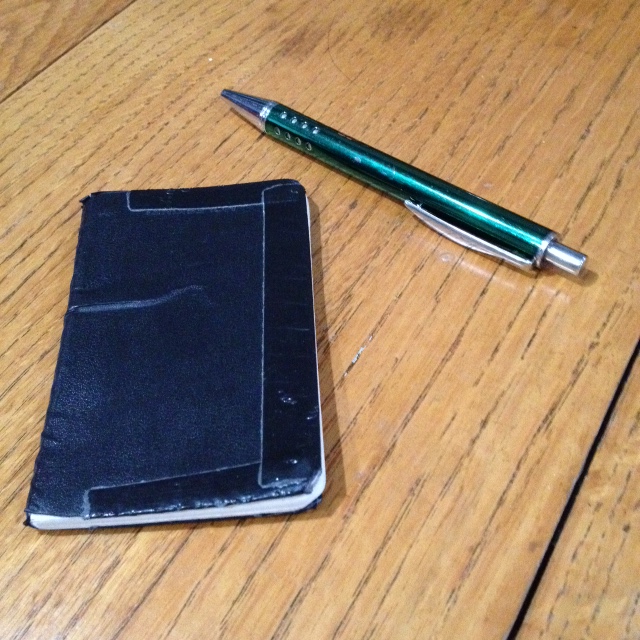
My wife is a saint.  She doesn’t throw away the little scraps of paper on which I write notes to myself.  They’re everywhere.  And this even though I carry around a notebook to capture ideas.  Sometimes I left it in the pocket of another pair of pants, or on the bedside table.  And I need to write something down.  Soon the scrap is filled with vital info (at the time) and eventually gets mislaid.  When it’s found I need to go over it line by line to see if something remains crucial or if it was just prosaic (get oil change, set up eye doctor appointment, etc.).  You see, ideas can strike at any time.  I keep a commonplace book inside the door in case they do when I’m out jogging.  I now keep a separate notebook on the bedside table in case something occurs as I’m falling asleep.  And, of course, I keep my little zibaldone with me (when I’m wearing the right pants).

Those who believe electronics will save us suggest putting everything in a notes app.  The problem is that I have several.  I do most of my initial writing in Scrivener.  When it’s time to share either with a publisher or a colleague, I convert it to Pages, and then to Word.  But my devices also have Notes, which I can see synced on my phone.  That makes it handy for shopping lists and such.  Then there’s also Text Edit, which I use for rtf documents.  Where an idea gets saved depends on which app I’m using at the moment.  More scraps of paper, virtually.  I need to write it down so I remember what’s where.

All of this led to a rather embarrassing situation the other day.  As usual, I’m at work on another book.  Since writing about horror isn’t something I was trained to do, I have to do quite a bit of bibliography building along the way.  This is the kind of thing you learn in higher education, so no worries.  The thing is I had started a bibliography in one app and began writing the book in another.  I’d very nearly finished a draft of the book when I just happened to scroll through the folder where my former bibliography was kept.  I was stunned to learn I’d already done this work since I didn’t remember recording this at all.  I suppose the solution would be to record all my thoughts.  But that would be too dangerous.  And besides, when would I have time to review them all?  I guess I still prefer scraps of paper, even if they’re sometimes electronic.


Look It Up

Say you remember something, but imperfectly.  Maybe it’s from years ago.  You have distinct recollection of a word or two, but other details (author’s name, publisher) escape you.  In the case of a book maybe you remember the cover.  If a journal article you’re out of luck there.  Not even Google can help you.  (I use Ecosia regularly, because they plant trees, but sometimes you just need to google.)  This happened to both my daughter and myself recently.  She was trying to remember a childhood book and I was trying to recollect an article I’d read while working on my dissertation.  And although I remember Edinburgh very well, that was, uh, three decades ago.  I tried searching different combinations of key words, but there’s just too much stuff on the internet.

One of the strange features of ancient Near Eastern mythology is that it’s extremely popular online but not in academia.  Departments have been closed down.  Smart people left unemployed.  But just take a guess whose websites come up first when you google a god?  After Wikipedia, it’s often fan and fantasy material for page after page.  Universities haven’t figured out how to monetize this interest, so it remains the purview of those who’ve read a book or two (or done a lot of web surfing) and have popularized the deity.  If universities offered courses that caught people where they lived, there’d be a steady audience.  That fickle lover academia, however, is quite coy.  In my daughter’s case it was fairly easy for my wife to locate the title and bibliographic details.  My case was a little harder.

Most sources I consulted on my dissertation are in my book, A Reassessment of Asherah.  (It is available in PDF form for free on Academia.edu).  Back in the day, I made extensive bibliographies.  I pulled it from the shelf and ran an index card down through the entire bibliography.  Apparently I hadn’t listed it there.  Or I was remembering the title incorrectly.  There’s a distinct possibility that I imagined it.  When you’re an active researcher you keep ideas current by going over them time and again.  I can still remember some individual articles that were used to make a point some thirty years ago, but those beside the point have somehow vacated my gray matter.  In the end I never did find the reference.  Perhaps some day, like bread cast upon the water, it will come back to me.  Like said bread, it too will likely be soggy by then.


Bibliographic Blues

Now, I don’t know how often you have to compile a bibliography, but it’s harder than it used to be.  Some time ago—my hardware’s a bit aged, so I can’t remember exactly when—Apple products wouldn’t run Microsoft software.  In one of those turf wars that occasionally break out among those who vie for technical control of the world, the two companies divorced for a period.  As a result, when I open Word files on my Mac, they become “Pages” documents.  That’s fine; since I use a variety of word processors I can usually figure them out fairly readily.  One thing, however, that both Word and Pages do is to assume they know what you’re trying to do.  Software engineers control “smart options” so that when, for example, you’re working on a numbered list (or lettered list) it automatically goes to the next number or letter, formatting happily as it goes.

I have an article coming out in a collection of essays and I had to put a bibliography together.  One of the books was, unfortunately, written by an author who styled himself with an initial for his first name.  Since that initial was “A.” I had great difficulty convincing Pages (as I would have Word) that I was not trying to start a lettered list.  I was trying to build a bibliography.  No matter what I did—copy and paste, retype, hit “delete” til my fingers bled—it simply would not change this A. from a numbered list (just as it likes to capitalize the word that comes after a period automatically) to regular text.  I finally had to retype the whole entry, careful not to put the first initial first, so that Pages wouldn’t reform everything with no option to shut that feature off.  I later snuck in while Pages was dozing and added the A.

Early on, I admit, the footnote function in Word saved premature graying.  Having typed—literally typed—many a college paper only to find that I’d misjudged the spacing required for footnotes and having to retype the entire page, I appreciated this auto-function.  It was great to have an option where an algorithm could figure out all the spacing for you, and all you had to do was enter data.  Now, however, word processors think in terms of the lowest common denominator.  If you begin with “A.” you naturally will be progressing to “B.”  Apparently there is no other reason that a sentient being would begin with “A.”  And of course bibliography begins with “B.”

How do I list this?