International Women’s Day 2021

Changing one’s way of thinking is difficult.  So difficult that we generally don’t try it unless we’re compelled to do so.  One such compulsion is education.  Cultures that have embraced education are those that have led to great advances.  In this context it’s more than a little surprising that women’s rights are still held to be less important than those of men.  More education is required, it seems.  Today is International Women’s Day.  Of course it’s not a day off work because capitalism is all about men’s need for endless acquisition.  At least we can pause and consider for a few moments that life itself wouldn’t be possible without women, and justice, nearly worldwide, is represented in feminine form.  What can we do to make the world open its eyes to the obvious?
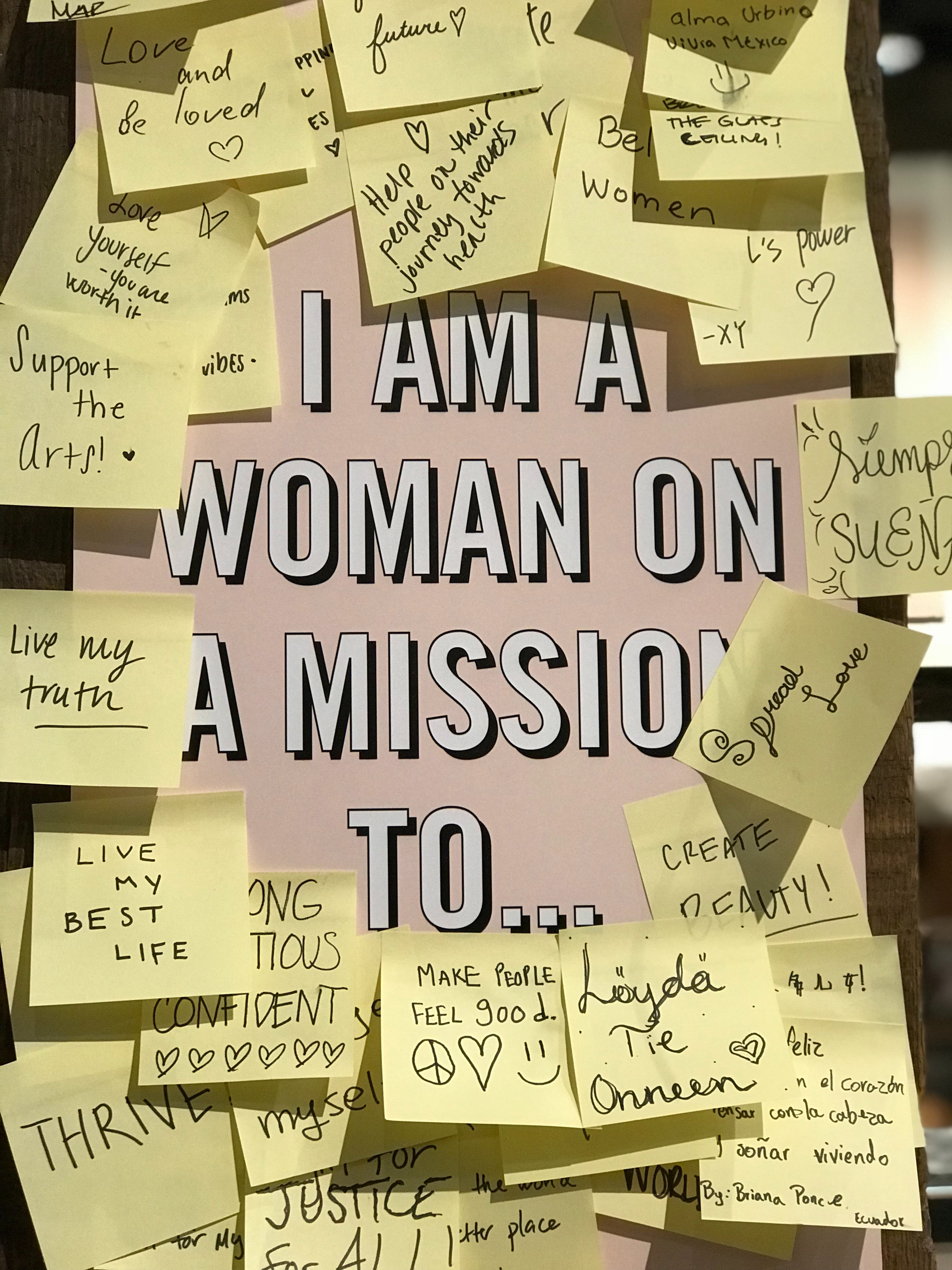
I read a lot about religion.  While I post here about the books I read, they are really only the tip of an iceberg.  My job largely consists of reading.  One of the themes that constantly runs through my own personal continuing education is that religion has indelibly changed our ways of thinking.  Even strident atheists today announce their stridency from a context formed by religion.  I’ve pointed out on this blog numerous times where even scientific thinking is mired in a wider context that has been constructed by religious thought.  One of those larger contexts is the subordinate role of women.  It is likely no coincidence that matriarchal cultures developed where there wasn’t a religion devised by men to impose a patriarchal governance on the world.  It’s so obvious once you learn to see it.  We need to be educated.

Women, it is obvious from an unbiased point of view, are equal to men.  As we educate ourselves further about gender and how religion has informed its perception, we come to realize that even binary assumptions—either male or female—are premature.  Underlying it all is humanity.  Human lives.  Those of men are no more important than those of women, or of those between.  Religions often like to make sharp distinctions.  Those distinctions are more abstract than reality.  The world is made up of real people and roughly half of them are female.  Today is set aside to recognize and celebrate that fact.  To recognize the contributions women have always made to society and civilization.  Let’s take the opportunity to educate ourselves, and  let’s be conscious of the fact that women are just as valuable as men and their foibles.  More than that, let’s put this truth into practice.


Binaries

Inside, outside, upside-down.  The more life moves toward binary code—what isn’t computerized these days?—the more scholars are moving away from simple binaries.  Just when I thought I was getting used to this sacred/profane divide, academics are scrapping it for more nuanced paradigms not based on any assumptions of presumed deities and their projected wishes.  Nothing as simple as “either/or” could justify all these salaries for stuff you can just look up on the internet, after all.  Still, binaries are a very human way of looking at the world.  Light and dark doesn’t mean there aren’t all the shades in between.  And the very basic difference between inside and outside may be far more helpful than it might appear.

Being inside a religious tradition—really being inside—creates a pattern of thinking that frames all of one’s experience of life.  While reading about the Book of Mormon recently this became clear to me.  Looking at it from the outside is something those on the inside have great trouble doing.  The same is true of various Eastern Orthodox Christian traditions, or Evangelicalism.  Those living on the inside of tightly constrained ways of thinking—believing—can’t see what it looks like from the outside.  I suspect that not all religions traditions fall into such ways of thinking; there are shades here.  “Mainstream” Christianities, for example, tend to blend at the edges and those inside might have an idea of how those on the outside view them.  Lutherans know the jokes about their outlooks and can even tell them.  Methodists and Presbyterians too.  They tend to conform a bit to expectations and  tend not to be extremist about things.  Being mainstream will do that to you.

It is unusual for a person to change religious traditions.  Those who do can see their former tradition from the outside—whether mainstream of not—with a kind of objectivity that frightens true believers.  Most religions have some tenets that look a bit unbelievable when viewed from outside.  Once seen from that perspective, however, there’s no unseeing it.  I grew up Fundamentalist.  After some time in the mainstream Methodist tradition I could see Fundamentalism from the outside.  When I eventually joined the Episcopal Church I had been viewing it from the outside my entire life up to that point.  Looking at faith traditions inside out offers perspectives otherwise not to be had.  Nobody wants to believe the wrong religion.  Perhaps that’s why it’s so difficult to look at your own from the outside.  You have to be willing to accept shades of gray, even if looking at it in a binary way.