
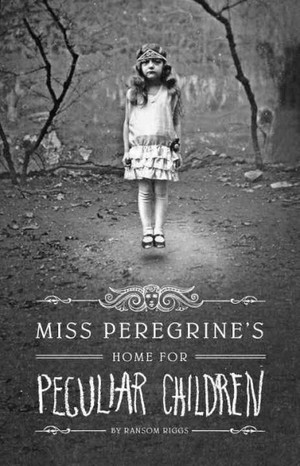
 Confession: I love books like Ransom Riggs’ Miss Peregrine’s Home for Peculiar Children. Ambiguity in fiction is under-appreciated at times. Of course, I’m not formally trained in fictional literature outside the confines of ancient mythology, but I do know what I like. This wondrous story of paranormal children in an alternate universe could almost have been drawn from Celtic mythology, and indeed Riggs provides a mythology to explain how things got this way. And every mythology is a kind of religion. In this world there are peculiars—not far removed from real life, for those willing to accept it—who have unusual powers. Miss Peregrine’s home, one where the children are under the guardianship of ymbrynes, houses those with special gifts. Some ymbrynes, however, wanted their godlike powers to make them into actual gods and in addition to causing the Siberian explosion, gave birth to hollowgasts, a kind of living damnation monster. “Rather than becoming gods, they had transformed themselves into devils.” Sounds a touch like Lucifer’s fall, n’est-ce pas?
It might be supposed by cynical readers of this blog that I select my reading based on the potential for finding religion in fiction. If that is true it is so only on a subconscious level, I assure you. I read about religion for many hours every day and I taught the subject for nearly two decades. When I turn to fiction it is generally for escape. I have found, however, that there is hardly any escape from religion. When I find it in fiction, therefore, I ponder some of its implications. Religion is so much a part of our lives that it can’t help working its way into popular culture. Maybe I just see it everywhere. That doesn’t mean that it’s not really there. But back to our story…
Hollowgasts, like Ugaritic devourers (sorry, couldn’t help myself), are powerful hungry. They must constantly feed their voracious appetites. Their favorite food, which actually transforms them a slight step back toward humanity, is the blood of peculiars. Blood is their salvation. The depth of this idea trickles down to the very roots of religion itself. Transformation is not possible without somebody paying the cost. Religion is bloody business. I won’t throw any plot spoilers in because I want to encourage you to read this strangely moving book. I will say that it is a strikingly well executed mythology for a world where God is not present, but where monsters and peculiars both partake in their own kind of divinity. And the strange photographs are real.

 Steve A. Wiggins