Occam’s Beard

Skeptics can be so much fun. We really do need them, otherwise we’d likely still be living with notions of medical science being attributed to four humors, none of which were that funny. Still, sometimes it gets tiresome to read endless references that take Occam out of context. You see, one of the foundations, if not the very keystone, of modern scientific method is that of parsimony, aka Occam’s razor. The idea is simplicity itself. If there are multiple possible explanations for a phenomenon, then the simplest is most likely correct. But only if it supports your biases. The reason I raise this question is the materialistic dismissal of “consciousness” as merely a by-product of having a brain. The reasoning goes like this—nothing exists that can’t be measured by science. Since that which isn’t material can’t be measured, the most parsimonious explanation is that it doesn’t exist. QED.

This way of looking at the world has become so common that those of us who question it are given a condescending smile and a paternalistic pat on the head. But my thinking about this goes back to Occam himself. William of Occam (or Ockham) was a late medieval churchman and thinker. As a scholar he possessed a sharp mind. As a friar he also possessed a soul. There was no disconnect in those days. His observations of the natural world led him to the reasonable conclusion that if a simpler solution sufficed, a more complicated one need not be posited. So far, so good. This is not, however, to suggest that more complex things may not be going on. Quantum physics, for example, suggests that things aren’t quite so easy to explain. And what about poor Occam’s soul? This very component that made William William has been dismissed as mere illusion. Did it therefore not exist?

Is it more parsimonious to suggest that “mind” (or soul, or consciousness, whichever you prefer) is mere illusion, electro-chemical signals flitting between highly specialized cells just happen to give off a fiction of consciousness, or would the simpler answer be, as Occam himself believed, we have souls? We have no way to measure such things, but to claim they don’t exist is to rob a great thinker of his very mind. Any of us who experience consciousness know that it’s no illusion. We feel the pains and joys of this same body day after day and, if we’re honest, we believe that we’ll continue even after this fleshy substrate wears out. There’s a profound logic here. Science doesn’t know how mind affects matter—how I can decide to type and my fingers move. The most parsimonious answer, they claim, is that it only seems to be so. A far more honest answer would be that mind is real. And I’m sure Occam himself would agree, even if he preferred to call it a soul.

Soulful Phantoms

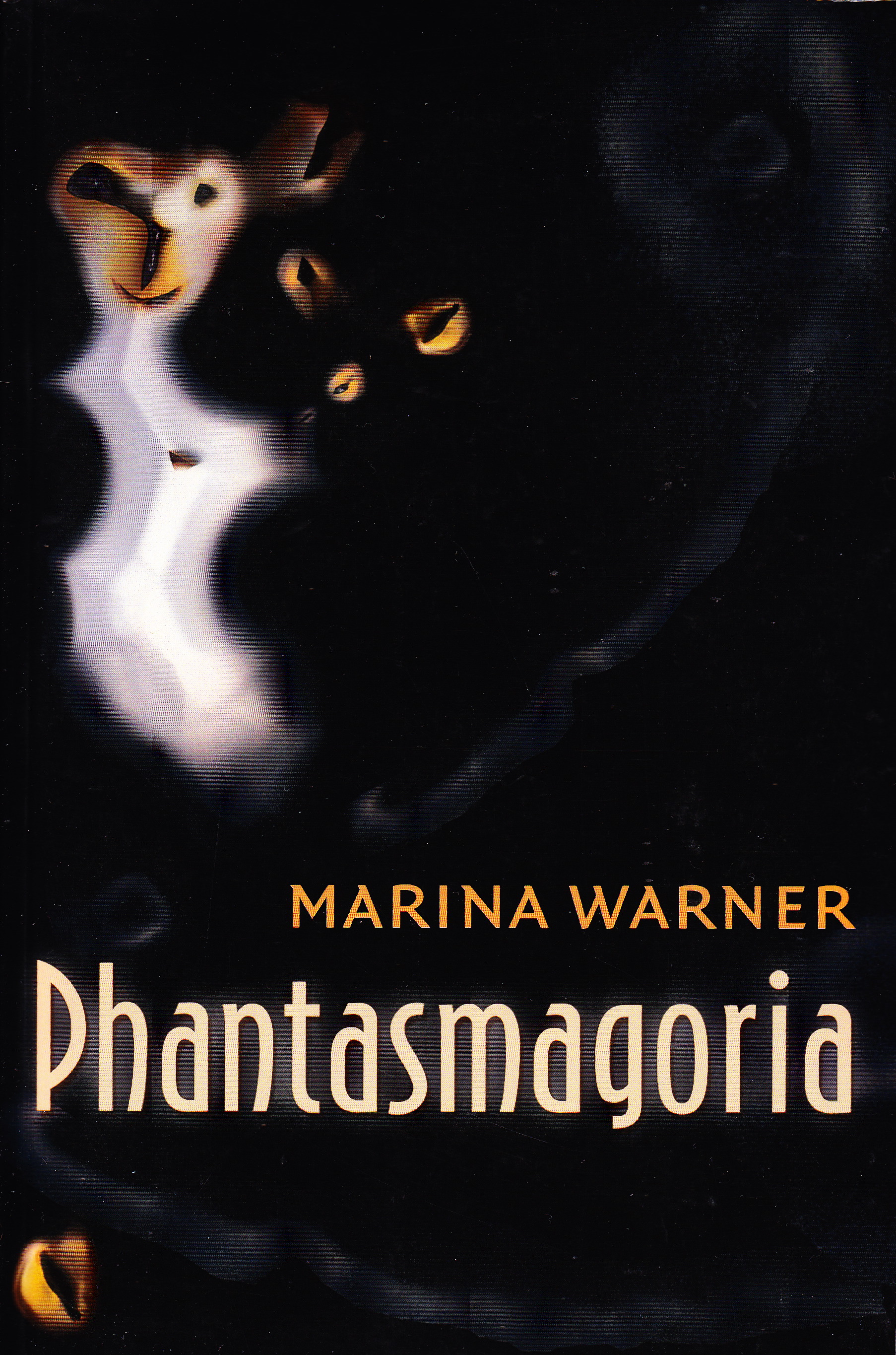
PhantasmagoriaPhantasmagoria is a most appropriate title for the book by Marina Warner that bears that single-word name. The back cover bears none of those helpful tags that give the reader a handle by which to categorize the book. The subtitle helps somewhat: Spirit Visions, Metaphors, and Media into the Twenty-first Century. The book is about ensoulment. The popular rage among many academics is the exploration of embodiment—the times and trials and wisdom of having a physical body. (We all know it, but it is the scholar’s job to think about it.) Warner asks what soul stuff is and pursues this through many media: wax, air, clouds, light, shadow, mirror, ghost, ether, ectoplasm, and film. She’s not suggesting that souls are made of these things, but rather that people have used these media to explore what a soul might be. Apart from being a fine historical resource on these different avenues of exploration, individual chapters in the book focus on various artists, psychologists, parapsychologists, writers, and Scriptures. This makes for a fascinating, if challenging, exploration to undergo.

One of the topics that emerges in the discussion is how soul distinguishes itself from other unquantifiable aspects of being human: what is mind, for example. We can’t really define soul, but it is frequently differentiated from mind or personality, neither of which is particularly well understood. In an era when we’ve not so much ceased to ask these questions as sublimated them into various fictional realms, a book like Phantasmagoria is especially important. The reaction against materialistic reductionism is strong, if not empirically provable. We still flock to theaters to watch zombies on the screen, precisely because we too have become soulless. Romanticism had a place for Gothic sensibilities as well.

Along the way Warner makes a particularly apt observation that politics and entertainment have become difficult to distinguish. Thinking over the number of entertainers who’ve become policy makers, this is a particularly disturbing thought. We trust the media and it gives us entertainment. Most college professors make so little money as to be jokes when it comes to running a political campaign. Where your treasure is, as the saying goes. Media, in all the forms explored, has failed to capture the soul. The chapter on Revelation (the book) is truly spectacular, coming, as it does, in the section on film. It is the embracing of the chimera of the end of the world pieced together from various myths and nightmares that our political leaders find, in many cases, far too compelling. Someone like Warner might be a much better leader to trust, even if she is a scholar.


Holy Hollow

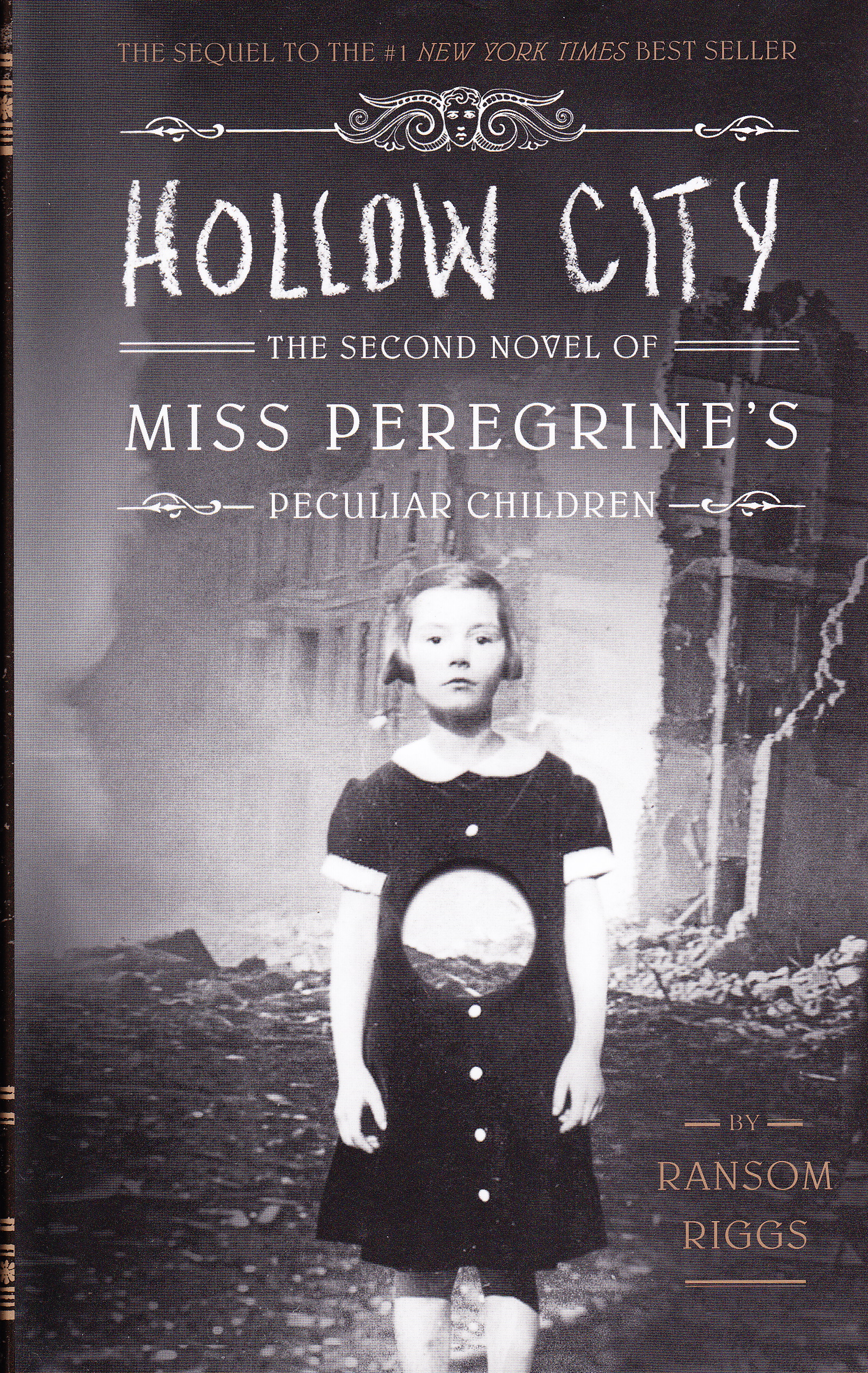
HollowCityEveryone wants to belong, to fit in. Growing up, I seldom felt I managed it. When you’re very young you don’t know enough to notice that you are more melancholy than other kids, or that you can’t afford the nice things they can. As you reach your teenage years, however, and you know that you come from the kinds of families that other parents warn their kids about (fairly poor, very religious, and just a bit peculiar). No wonder I find Ransom Riggs’ books so engaging. Yes, they’re written for young adults, but just about anything that Quirk Press publishes is worth the read. As an adult, if I’m honest with myself, I’m still waiting to feel like I fit in. The kids in Hollow City, the peculiars, know that they can never fit in. They have special, impossible talents that make them the targets of monsters called hollowgasts, or hollows, who try to gobble down as many as possible. Monsters, outsiders, and very human relationships—it’s a winning combination.

Quite apart from the spellbinding pace Riggs spins out (he’s a master of building tension), there are some quasi-religious elements in the books as well. I read Miss Peregrine’s Home for Peculiar Children a couple years back, and Hollow City develops the mythology a bit more. The real enemies are the wights—mean-spirited malcontents who rule the monsters. They learn that they can become demigods if they extract what makes a peculiar peculiar. That’s a religious concept: the essence that materialists tell us isn’t really there at all that makes us what we are. The children are self-sacrificial toward their mistresses, birdlike and godlike at the same time.

Peculiars have two souls, although most of us don’t know what to do with even one. The soul has, of course, come under great suspicion over the last century or so. There seems to be something that makes us what we are, and it isn’t just cells and DNA. Some call it consciousness, others personality. There are those with élan and others with spirit. We can’t call it “soul” because that smacks of superstition and yesteryear. So we read of children with two souls and none to spare. Even Philip Pullman had souls for his children in His Dark Materials. The soul, in both these book series, leaves a person completely dehumanized when it is excised. Of course, materialism will do that for free. Yes, I know it’s fiction—young adult fiction at that—but my money’s on Ransom here. Let’s hear it for those who have a surfeit of souls!


Material Whirled

With the moon and Jupiter waltzing slowly so high in the sky, radiating such brilliance early in the morning over this past week, it is understandable how ancient people came to see the gods as material objects. The course of progression seems to have been physical gods to spiritual gods: the earliest deities ate, drank, made love, fought. They were of the same substance as humans, or at least of the same psychological makeup. The Egyptians, Zoroastrians, and Greeks all toyed with ideas of beings of “spirit”—non-corporeal entities that did not participate in our material world, but were able to influence it. In the world but not of it. The tremendous gulf between great goddess and material girl was born. Today that concept is taken for granted, especially in western religions. We are locked into physicality while God is free to come and go.

Many religions respond to this by suggesting that we should look beyond the physical to the majesty hidden from biological eyes. And yet, physical creatures that we are, we are drawn back to material means to demonstrate our spirituality. One of the perks of working for a publisher is the constant exposure to new ideas. At Routledge I have been learning about the rising interest in material religion: the manifestation of religion through physical objects and rituals. This aspect of religious life easily devolves into a cheapening of faith into mass-produced, religious knickknacks and kitsch. Some mistake this for the real thing. While living in Wisconsin, my family used to visit the spectacular Holy Hill, the site of a Carmelite monastery atop a large glacial moraine. On a clear day you can see Milwaukee from the church tower. It is a large tourist draw.

No visit to such a shrine would be complete without the obligatory stop at the gift shop. Even the non-believer feels compelled to buy some incredibly tasteless artifact to keep them grounded in reality. Many of the items—giant glow-in-the-dark rosaries, maudlin mini-portraits of the blessed virgin Mary (BVM as the insiders call her, not to be confused with BVD) and the crucified Lord on all manner of crosses, line the walls and shelves. This commercialization is not limited to the Catholic tradition. Evangelical groups realize the importance of branding as well, passing out cheap merchandise (or better, selling it) with Bible verses emblazoned on it. These signs of faith sell themselves, but they blur the sacred distinction between human and divine. Does religion point to a reality behind the physical? This is its claim, but what is the harm in making a bit of cash on the side, just in case?