Booking Dreams

There’s a certain kind of person—many of with whom I work—who trade in the currency of books.  These are individuals who would rather be paid in books than in cash, and who worry of book orders shipped that seem to take too long to arrive, as if the rent check will be late because of it.  Who check the tracking number multiple times a day and can’t rest secure until the book is within their doors.  These people tend to be educated, whether formally or on their own, and they often wonder why the world can’t be a more amenable place because reading makes you realize the potential we miss.  My own reading convinces me that capitalism is mostly to blame.  It rewards the greedy and makes them try to fix elections and posture against other greedy leaders.  Books often show a better way.
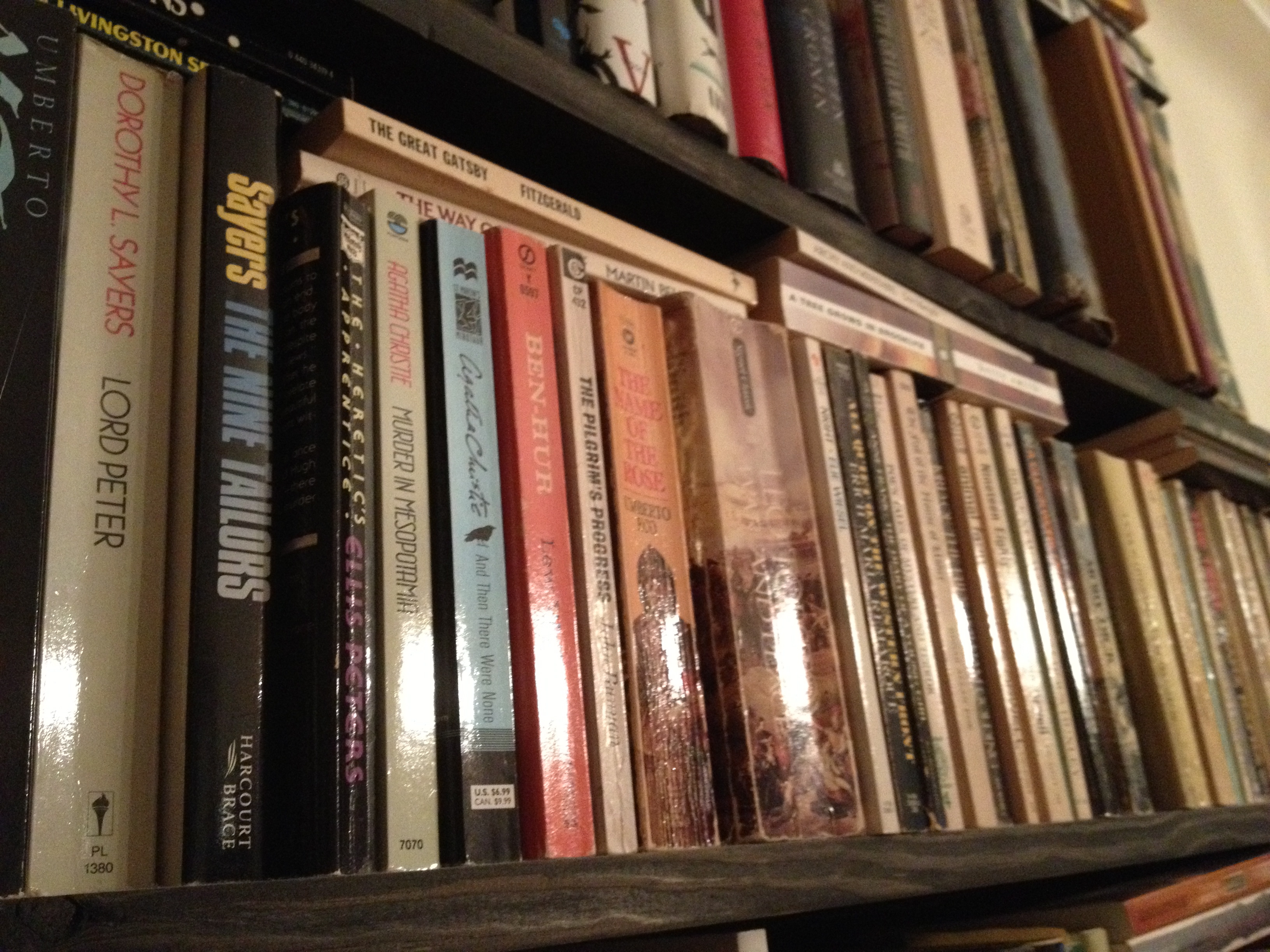
I realize not everyone likes to read.  In fact, if you do so for pleasure you’re part of a minority group.  Those who read, and conduct surveys of those who do, estimate that only about five percent of the population reads and trades in books.  That makes us a very small nation indeed.  But some countries, such as Iceland, have higher proportions of readers, and other nations have lower.  Books, as a whole, saw a resurgence of interest during the pandemic because they are a way of getting together with other people and going to faraway places all within the safety of your own home.  I like to think a book-lined room is also well insulated.  Especially if all those little gaps are caulked with smaller tomes.  Occasionally photos of individual libraries circulate and go viral.  We’re impressed, we bookish folk, by those who read so much.

The book industry’s having a bad economic year.  In my own humble efforts I tend to read more than a book a week, on average.  I do this by reading more than one book at a time.  The amazing thing about that is you can pick up one of the multiple titles you’re reading and resume where you left off.  Very seldom is there any confusion or even forgetting what a book is about.  A physical book has so many tactile cues to remind the reader of things.  That’s why those of us who like to read tend to keep books.  We like to be able to go back and since we can’t predict our future wants and needs with any precision, we err on the side of collecting.  I do give books away but often I come to regret it because I need some unexpected volume again.  Books have their own economy.  If only we could all trade in books, it would be a very different, and I believe better, world.

The Heart of Publishing

My heart goes out to academic authors.  It really does.  They labor over a book important to their field and see it come out costing near triple digits and wonder why it’s not in the local bookstore.  There is, however, a very wide gap between academic and trade publishing.  It is bridged here and there by authors who value readers over reputation, but unless you deliberately try to learn how all of this works, it is bewildering.  Academics, you see, are area specialists by and large.  You don’t write a dissertation on the Bible, for example, but on a specific part of the Bible (New Testament or Hebrew Bible).  And within that section your specialization is not a single book, but often a small part of a book, or a theme.  I’ve seen dissertations written on a single Hebrew word.  Specialization.

With all of this tight focus, it’s easy to forget what browsing in a bookstore’s like.  Even with some of the incredible brick and mortar stores in Edinburgh, technical books had to be ordered—this was before Amazon.  When you check the books of colleagues out of libraries it doesn’t always occur that you do this because libraries are the only places that buy such books.  And with the explosion of doctoral degrees in shrinking areas of studies (there are no jobs here, folks!) the number of published dissertations has skyrocketed.  Even advanced scholars forget the average reading public would find their work impenetrable.  It’s not going to be in the local bookstore, and it costs so much because it sells so few copies.  I do feel for academic authors.

In addition to all the area specialization, it would make sense to research the academic publishing industry.  Yes, it is an industry—it has to try to turn a profit when sales are minimal.  And with so many books being published, libraries can’t keep up.  The end result is high prices.  I’m as guilty as the next academic at wishing economics would just go away and leave me alone.  I want to believe in the pursuit of knowledge for knowledge’s sake.   That’s not the way the world works, however.  At least not the publishing world in a capitalistic context.  The internet itself has become competition.  Much of the information’s out there for free.  So your academic book, when it comes out, will be priced out of your comfort range (been there, done that).  It’s not that your publisher doesn’t believe in you, but that they have to try to turn a profit.  All it takes to understand why is a bit of research.

Not that kind of book.