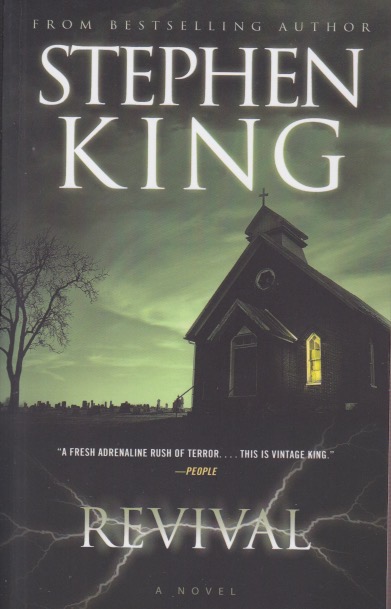
Reading 2023

As has become my tradition, I’ll end the year reflecting on the books I’ve read.  For a variety of reasons this is the first time in nine years that I haven’t cleared seventy books.  (I ended up one shy.)  But looking back over what I read, I may see some logic behind this.  Many of the books were academic, and specifically, academic in fields outside my formal training.  That also means they generally didn’t make it to my list of favorites.  2023 was also unusual in that it wasn’t until about late spring that I started to read books I really enjoyed.  The first on my list of memorable titles is Andi Marquette’s The Secret of Sleepy Hollow.  This was followed by a couple other fiction titles, Grady Hendrix’s Final Girl Support Group and Gina Chung’s Sea Change.  Those ended up being my favorite three fiction titles of the year.

For nonfiction, I finally read John Hersey’s Hiroshima, memorable, if terrifying.  Also along the lines of history, I found Lesley Pratt Bannatyne’s two books Halloween and Halloween Nation, to be particularly good.  Mark Dawidziak’s Mystery of Mysteries may well have been my favorite historically-oriented book of the year.  Donna Kornhaber’s Silent Film: A Very Short Introduction was also quite well done.  I always enjoy books on horror films, and two on The Exorcist were noteworthy: Nat Segaloff’s The Exorcist Legacy and The Exorcist Effect by Joseph P. Laycock and Eric Harrelson.  Why It’s OK to Love Bad Movies by Matthew Strohl, which I read a bit earlier in the year was also quite good.  By far the most helpful book in a personally troubling year was The Boy, the Mole, the Fox and the Horse by Charlie Mackesy.

In years past I’ve generally had more commendable books on my list.  I did, however, finish the last three Dark Shadow’s novels by Marylin Ross, reaching the bucket-list item of having read the entire series.  I also found Jessica Verday’s three-volume series strangely memorable, although written for young adults (found here, here, and here).  While the number of books I really enjoyed wasn’t as high as in some other years, these highlights make me optimistic regarding 2024.  I used to follow the Modern Mrs. Darcy’s reading challenge guidelines, until they stopped being published, and now I find myself left to my own devices, for the most part.  Much of my reading is driven by research, and I suppose I should also mention that my own fifth book was published in 2023 as well.  I don’t expect it’ll be anybody’s favorite, but it is nevertheless an honor to be part of the conversation.


Review Copy

You reach an age, or maybe a stage, where it’s difficult to recall details.  Too many emails about too many things and you just have trouble recalling where you read this or that.  Someone a few months ago, perhaps on this blog, lamented not being able to afford Holy Horror.  I wanted to let that person (or any other interested party) know it is now available free—for review—on Reading Religion.  Feel free to drop me a comment if you don’t know how to get this thing started.  When I was a grad student I learned about reviewing.  It was the way to get ahold of expensive books for free.  I’m no longer able to do them (conflict of interest), but I still think they’re one of the greatest perks for the literate.

Reading Religion does not require a Ph.D. to permit an interested party to volunteer.  Since it’s a religion site, many clergy do reviews.  If you’ve been talking to anyone about Holy Horror (and I’m just sure you have!) and they want to read it, let them know.  There’s nothing more embarrassing to have nobody wanting to read your book when it’s available for free.  Besides, reviews are how people find out about books.  Over half-a-million new websites are created each and every day, my friends.  We’ve got to help each other out!  I’ve been providing free content here daily for twelve years now—I need someone to review my book.  I know people are busy.  There are an estimated 1.7 billion websites, many with multiple pages.  Who has time?

I try to post about lots of books here on Sects and Violence in the Ancient World.  I know it’s not a frequently visited website (I’m a realist) but I know at least two publishers have taken blurbs from my words here to promote their books.  Those of us who read have to stick together.  Writing, to me, is how you pay back for all the reading you get to do in life.  It helps, of course, if people know about your books.  By the way, if you have an interest in religion at all you should check out Reading Religion.  It’s a great site to figure out what’s going on in books.  And you might even find something there you’d like to read.  I’d do reviews myself, but that’s no longer permitted.  I’ll put my thoughts here on this blog, though.  It’s only doing to others what I would appreciate being done back.


The Deal

Intellectual property is a concept that only arises where thought can be monetized. Think about that. (But don’t charge me, please!) It is a strange idea, when you ponder it. In any case, one of the problems with writing book reviews is that the reviews themselves become the intellectual property of the journal in which they appear. In a mental ménage à trois, everyone gets something out of it: the publisher gives away a book for free publicity, the journal gets copyright content of value to its readers, and the reviewer gets a free book. In the best of these encounters everyone goes home happy. I began doing book reviews when teaching at Nashotah House. Academic books are expensive and although professors make more than editors do, they are still hard-pressed to pay academic press prices. After my strictly platonic affair with higher education, I stopped doing reviews for a while, but now that I have hours on a bus to read, I’ve picked up the habit again.

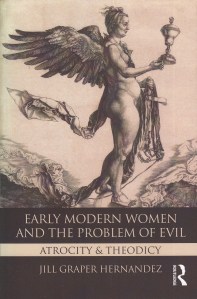
Most often I review books for the two societies of which I’m a member—the American Academy of Religion and the Society of Biblical Literature. There might, however, be a conflict of interest here. One of the main things I do on this blog is talk about books. Since I’m no longer a professor, but I still think like one, I figure it’s a compromise I can live with. The conflict arises because I post daily on my blog while publishers take weeks, or even months, to publish reviews. Despite technology, publishing is a slow business. That means that I read books I can’t really talk about until the review has appeared. That’s the case with Jill Graper Hernandez’s Early Modern Women and the Problem of Evil: Atrocity & Theodicy. I can’t say here what I say in my review since the review isn’t my intellectual property anymore. There’s another trade-off here: publishers get your name out there in return for owning your content—everything can come down to the level of business, it seems.

Still, I can use this post to reflect on theodicy—the justification of God in the face of evil. Since I don’t address this fact in my review I can say here that since Trump’s election it’s difficult to read a book about suffering without tying it to the current political situation. Many of the incumbent’s ardent supporters are coming to see that he doesn’t really care for them or their issues, and conservatives as well as liberals have four years of suffering to face. I was surprised how often in reading this philosophical treatise that our present national shame came to mind. Perhaps that’s inevitable in a book that discusses how women have been repressed in a world where they too have been relegated to the level of a commodity. Intellectual property seems less a concern when human beings are still trafficked as chattel. That’s not just bad business, it’s evil.