Lovecraftian Advice

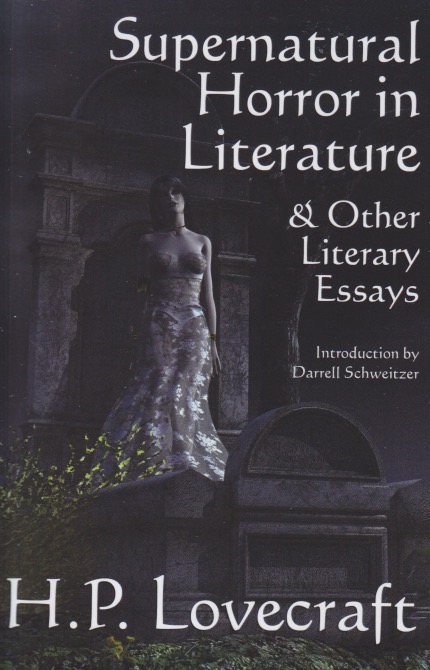
It seemed natural enough to follow up Stephen King’s On Writing with H. P. Lovecraft’s famous essay “Supernatural Horror in Literature.”  This piece, widely quoted, is available online but it is lengthy and I wanted the convenience of not reading it on a screen.  What can I say?  I like to turn pages.  I found a print copy, along with two other, shorter Lovecraft essays in Supernatural Horror in Literature & Other Literary Essays.  This was published by Wildside Press, which added a brief introduction by the speculative writer Darrell Schweitzer.  The text of the main essay was obviously computer-read—a couple reading errors remain—but it is clear enough to read.  Like Poe before him, and King following, Lovecraft put down some of his thoughts on the craft of writing.  Interestingly, Lovecraft is seldom considered as a producer of belles-lettres, but he is world famous as a horror writer now.

The essay itself is worth reading.  Mostly it is a summary of what Lovecraft felt was worthy weird fiction.  I tend to agree with much of what he says here, as would be evident were anyone to read my own fiction writing.  I can’t say that I learned this at Lovecraft’s knee.  I only discovered who he was when I was teaching at the University of Wisconsin Oshkosh.  I did not have literary friends growing up; my reading tastes were determined by myself, largely based on what was available at Goodwill any given week.  Nobody I knew read Lovecraft and although his books may have been in that bin, he wasn’t really someone I’d have known to keep an eye out for.  As a child I didn’t think of myself as a horror reader.  I liked monsters, and vampires were among the most immediately recognizable.  My brother, if I recall, got me started on Poe.

When I began writing fiction, probably around twelve or thirteen, it was weird fiction.  One of my other influences was Ray Bradbury.  I agree with Lovecraft that, to be interesting, fiction often requires a speculative element.  I do read realism, of course, but I really enjoy tales with a bit of supernatural.  It’s useful to read Lovecraft’s ideas about influential writers.  I’ve got my homework cut out for me.  I can certainly recommend this edition for anyone who wants to read this lengthy essay in print form.  The one thing that struck me as weird was the cover design.  It features a woman wearing a strapless dress in a cemetery.  Lovecraft famously didn’t really have women as one of his main themes, and his women characters are among his most inaccurately drawn.  Still, it’s best not to judge a book by its cover.


Academic Publishing

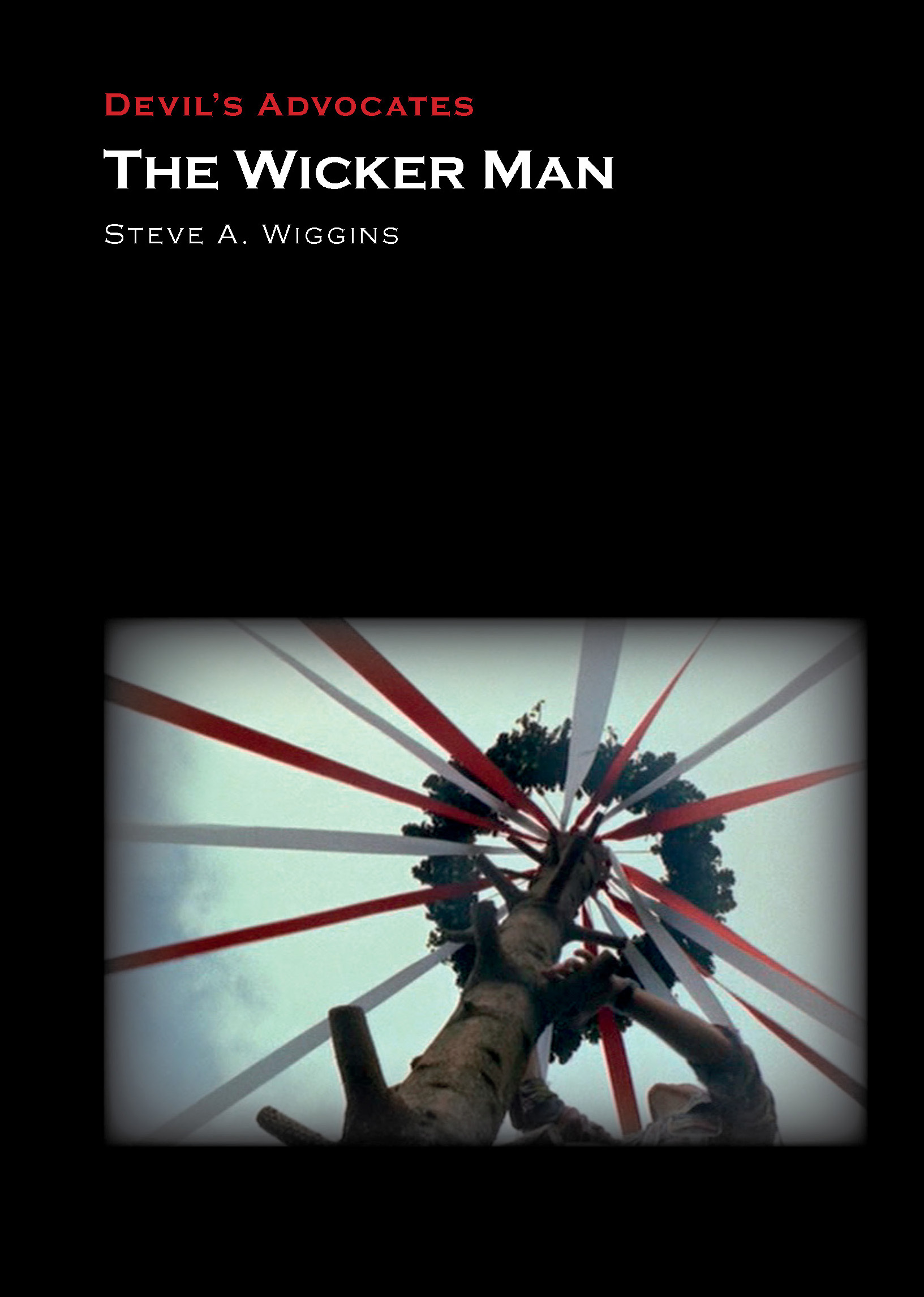
I had lunch with a friend a couple months back.  He is one of the few people who’s read The Wicker Man (the Devil’s Advocate version).  Not many reviews appeared and no royalties at all have yet followed its publication.  The funny thing is, when I search for reviews I notice that the book is “for sale” on far more websites than copies actually sold (I’m assuming).  You see, one of the best-kept secrets in publishing (both trade and academic) is the number of copies sold.  Publishers are terrified of poachers after their authors, and don’t advertise actual sales figures.  For an author only the royalty statements reveal just how many (or few) copies ever made it to the hands of potential readers.  We’re all adults here; we know that not every book purchased is read.  I do wonder if there has been any interest in this little book at all.

My friend actually went and watched the movie because of my modest little book.  The film The Wicker Man is widely known in certain circles, but it is still a movie with a cult following.  Horror fans know it, of course, with some declaring loudly that it’s not horror.  It gets referenced all the time in more mainstream media.  I occasionally read quirky little books like Your Guide to Not Getting Murdered in a Quaint English Village.  I wasn’t surprised to see The Wicker Man (the movie) referenced there.  As I discuss in the book, it’s even the subject of a Radiohead video for their song “Burn the Witch.”  Beyond a few academics, however, nobody’s really interested.

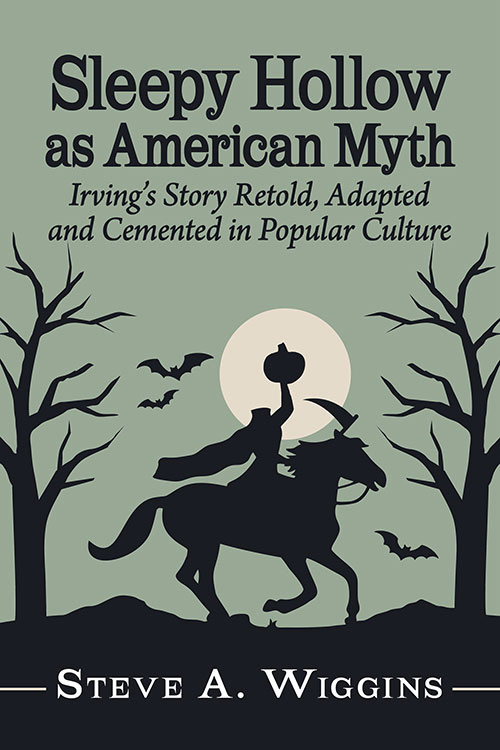
My friend suggested a topic for a new book for me to write.  I didn’t have the heart to tell him that, barring a teaching post coming my way, I’ve given up writing books for academic presses.  I’m pleased McFarland accepted Sleepy Hollow as American Myth, but the crude cost-benefit analysis that I do tells me writing books for academic presses, without library access, is always a money-losing venture.  Remember those old Guiness Book of World Records paperbacks?  I recall seeing, as a child, the least successful author listed.  Of course I don’t remember his name.  I now know that at least that record hasn’t been broken.  Not officially, but when books cost so much to write… Academic publishers are facing hard times but I don’t see the wisdom in pricing your books so that nobody can afford them, just to scrape in a few university library sales.  Not to sound as mercenary as a Hessian, but what’s in it for me?  Certainly not tenure or groundskeeper Willie’s retirement grease.  I’m not paid like a professor. Right now, though, I’m wondering if maybe I’ve broken that record after all.


Questioning Paradise

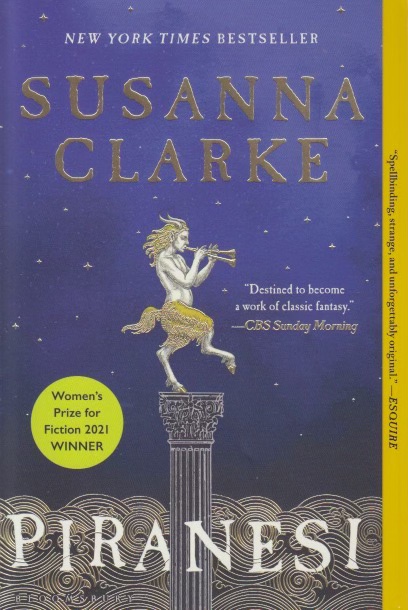
The term “dark academia” is somewhat difficult to define.  It is a rather new aesthetic, but it has been the topic of books and movies for some decades.  Among the books often considered dark academia is Susanna Clarke’s Piranesi.  Since it’s one of the shorter exemplars of the genre, I recently picked it up.  A bit disorienting at first, it is the story of a fantasy world where oceans flood the lower floors of an elaborate labyrinth in which two people live.  The narrator (or more properly epistolist) is one of the two.  We come to learn that he is actually the only full-time resident of this world.  And that this world was conjured from the world in which the rest of us live.  It takes Piranesi, the narrator, about 70 pages to realize that something isn’t quite what he’s been led to believe.

The writing is beautiful and the world-building is fine.  It would be possible to set an entire novel in this world, but, like most paradises, it wouldn’t satisfy.  Indeed, there’s almost a biblical recognition of sin and human character.  The voyage of discovery that Piranesi undergoes is both encouraging and dispiriting.  Having a world in which one’s needs are met, and where most danger can be avoided by careful observation, seems desirable.  There’s a sense of inevitability in Eden as well.  The human psyche requires challenges and exercise.  To remain in paradise would have been stultifying, if without danger.  I’m not sure if Clarke intended that in her novel, but I definitely encountered it there.

But what does this have to do with dark academia?  I asked myself that question along the way.  The creator of this world was, at one point, an academician.  Such are the kinds of people who attempt to build perfect worlds.  The darkness comes from the fact that this world is not what it seems to be.  It comes with a very high price.  Even so, it is compelling to those who find it.  Its creator is a cold and scheming individual.  Unlike some such stories, we don’t hear much of the university life that gives the genre its name, but the classical setting is much like what universities once taught.  And when they go wrong, this genre suggests itself.  I don’t want to reveal how the story ends.  It gets pretty exciting about halfway through and I had misguessed a few things along the way.  In many ways it feels like fantasy, but it also dips into the academic world gone wrong.


Publishing Deportment

I don’t know if anybody reads this blog for publishing advice (editors are easily edited out, I know!).  But still, here goes.  It pays, in many ways, to research your targeted publisher.  And no matter which publisher you decide to approach, do it professionally.  “Friending” an editor on social media and then asking her/him to consider your book on said media is not professional.  Many publishers don’t allow any kind of business to take place through social media.  Be smart about it—go to a publisher’s website and follow their instructions.  Or email an editor.  At their work email.  Again, many publishers do not allow business to be conducted through private emails.  I may be an outlier editor for trying to build a social platform, but if you want to talk business, please use my work address.

More books are being published now than ever before.  Even small presses are closing submission windows because too many people keep trying to get published.  As someone who’s published a few books, I would urge you to ask yourself: why do I want to publish this?  Is it just because you wrote it?  Then look for a press that publishes that kind of thing.  Be prepared to face some frustration, but homework is never easy.  Is it because you think publishing a book will lead to fame?  Adjust your frame of reference.  The vast majority of authors are, and remain, obscure.  It is possible to make some money in publishing, but most of the time it’s not very much.  If it’s money you’re after, you need to get an agent.  It might seem as difficult to get an agent as it is to get published.  That should tell you something about the possibility of making money from books.

I’m no publishing guru.  Editing’s my day job.  One thing I’ve learned, however, is that publishers like to see that you’ve taken their guidelines seriously.  A quick social media introduction isn’t the same thing as an email that shows someone at least looked you up at work.  And most publishers have descriptions of what they want to receive on their websites.  This applies both to fiction and non.  I get it.  I remember being a kid in high school dreading all that homework—all those books I’d have to haul home day after day.  But that’s the tried and true way to learn something new.  And if you want to get published you do need to learn how to do it.  And just like in high school, deportment counts.


Learning to Write

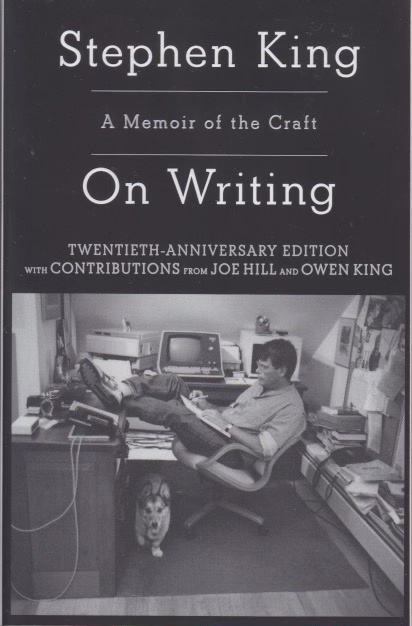
If you’re not famous as a writer, nobody asks you for advice on improving their game.  Part of that is simply having a writer’s outlook.  We all have our own ideas about how it’s done.  I admire the work of Stephen King.  He’s a gifted storyteller and his books often deal with the kinds of things I think about.  I had his book On Writing on my reading list for years.  What finally got me to read it was finding it in a local independent bookstore and wanting to support said venue.  I found it both helpful and a little scary to read.  This is part memoir and part instruction manual by someone who isn’t full of ego, despite his success.  Egoism isn’t uncommon among writers, but King realizes that many people have talent, but not all know how to bring it to any kind of success, no matter how modest.

I really enjoyed reading the memoir parts.  Indeed, I wish I could’ve read them when I was, say, in college.  My own trajectory as a writer might’ve turned out differently.  His instructive sections are also helpful, but the part about finding an agent is hopelessly out of date.  The internet has made doing so both easier and more difficult.  Too many people now flood agents’ offices with pitches that you practically need an agent to get you an agent.  I know this from experience.  Nevertheless, King’s advice generally feels quite solid.  And it’s encouraging to hear of the commonalities we share in our upbringing.  Writers often begin in less-than-ideal situations.  If we can struggle out of them, some can find success in writing while others manage to do it on the side (this isn’t my day job).  But write we do.

As with most of King’s books that I’ve read, this one went fairly quickly.  Not every book that I read makes me feel eager for reading time, but King always does.  In part, at least with On Writing, it’s because I can’t help but wonder if I’m doing this right.  During the course of reading his book, two more rejection letters came for my fiction projects.  Any writer knows that you have to deal with lots and lots of these.  King started earlier, but, like me, he kept his rejection slips.  Eventually I ditched mine because they’re too discouraging.  And I still submit to what has become, since this book was written, a very, very crowded fiction market place.  Still, this is an encouraging book, offering advice from someone who knows what he’s doing.  It’s a shame I waited so long to read it.


Another Level

Jack Finney is probably best remembered as the person who came up with the idea for The Invasion of the Body Snatchers.  His book, The Body Snatchers, was the inspiration behind the two movies based on it, as well as various knockoffs.  The Third Level is a collection of short stories he wrote.  I’ve been trying to introduce more short stories into my literary diet, and this one was recommended by Stephen King in Danse Macabre.  Specifically, he mentioned it as being more like what The Twilight Zone should’ve been than much of what Rod Serling wrote.  Now, I’m an unapologetic Rod Serling fan.  This is based on memories from childhood when I watched the show and, let’s be honest here, wished he could be my father.  I already had a taste for the unusual and sometimes macabre, and so I was curious what King thought might do Serling better.

The Third Level was labeled as science fiction, but sci-fi and horror share more than a boundary or two and at least four of the stories have nothing sciency about them.  As a collection it’s good in the same sense as a mature reading of Ray Bradbury is good.  I would’ve liked this—probably loved it—as a kid.  I was reading, however, for The Twilight Zone.  There are some good twist endings here, but not all the stories have them.  A couple of them are pretty straightforward whimsical romances.  Many of them feel very much like they were written in the forties and fifties.  A couple of the stories, late in the collection, I really liked.  They were a bit more Zonish than some of the others.

One of the problems in writing a brief post on a collection—and no collection is uniformly great—is that it’s difficult to give a sense of the whole.  So instead I’ll just focus for a minute on the last story, “Contents of the Dead Man’s Pockets.”  This one shows the power of Finney’s descriptive writing and it caused physical reactions I seldom get when reading.  It involves a man climbing out on an eleventh-story ledge to reclaim an important bit of paper that blew out the window.  More than once I almost had to put the book down.  Fear of falling is deeply embedded in the human psyche and Finney is able to probe it for more pages than I was comfortable reading.  Well done, sir.  Overall, the collection is good to have read.  It won’t change my mind about the Zone, however.  It reached me a little too late to do that.


Oblong Box

When Borders was closing—a sad day in the annals of American readers—things were marked down.  On one venture to a remaining store somewhere in New Jersey, where the checkout line snaked like one of those around a Times Square theater before the doors open, I picked up Edgar Allan Poe Complete Tales and Poems.  Poe has, of course, been in the public domain for many decades so anybody can publish his works.  I did attempt to sit down and read through this behemoth that contains 73 short stories, but stumbled at “Hans Pfaall,” the first.  This story is really a novelette, in today’s measure, coming in at nearly 19,000 words.  (It took Tales of the Grotesque and Arabesque to get me through it.)  So I’ve been content to dip into it now and again to read one of Poe’s stories.  In print. When the mood hits.

I read “The Oblong Box” in preparation for watching the movie.  I had never encountered this story before, and I prefer to read the base before attempting the latter adaptations (particularly by AIP).  The problem with reading Poe from this remove—in the light of his reputation—is that even the title tells us the box is a coffin.  How it is to be used in Poe’s tale may be unknown at first.  Here Poe divides his characteristic obsessiveness between the narrator and Mr. Wyatt, his temperamental artist friend who is newly married.  Wyatt, the owner of said oblong box, takes it on a voyage by boat from Charleston to New York.  The narrator obsesses over what might be in the box, being kept in a cramped stateroom rather than in the hold.  A storm leads to a shipwreck and rather than be rescued, Wyatt binds himself to the box and leaps into the ocean.  I won’t put the reveal here, but you get the idea. Today the title gives away Poe’s original twist.

There are still many of Poe’s stories that I haven’t read.  I’ve had enough of a head start, however, that I may eventually make it through those he published.  I’m aware that some of them may be funny, and some are tales of ratiocination.  Some may be completely unexpected.  Like many writers, Poe’s reputation is based on certain of his most well-known tales.  But also like most writers, his interest ranged fairly widely.  And he had that sense of “what if” that tends to drive those of us who write in a similar vein.  But these days we know that if we see an oblong box we’ll already have a pretty good idea of what’s inside.

Photo by Tom Oates, 2013; This file is licensed under the Creative Commons Attribution 3.0 Unported license. Attribution: Nabokov at English Wikipedia

Gray Matter

It seems to me that I was living in Boston the last time I read Oscar Wilde’s The Picture of Dorian Gray.  That was long enough ago to have forgotten almost everything except the central premise that everyone knows.  Recently, I had been reading some analysts who consider it a kind of horror story.  Wilde was a great and notable wit, not typically cited as a horror writer.  More recently I’d seen the novel classified as dark academia.  Since there are no students, and there’s no school in the novel, that genre seems forced.  In any case, it is a classic and I was curious about what I had forgotten.  The dialogue regarding morals stands out rather boldly, with traditional Christian values being the gold standard.  In his own life Wilde was known to flaunt these things, but in his story they stand mostly unchallenged.

At the same time, it is a book about seeking redemption.  Toward the end, Dorian regrets the lifetime of evil he’s led.  He wants to turn over a new leaf.  Corrupted from an early age by Lord Henry Wotton, he learned to live a cynical and self-centered life.  He shut out the feelings and needs of others for his own pursuit of pleasure.  As an old man still appearing young, he comes to have his regrets.  Although Wilde didn’t really live long enough to reach this stage in his own, he seems to have understood psychology well enough.  He even tried to have a half-year Catholic retreat.  Length of life often trails regrets in its train.  Of course, for Gray it is too little, too late.  He has made his mark on the world, but it hasn’t been for good.  His final act is a stab at redemption, but the novel gives no hint whether he achieved it or not.

Whether intentional or no, the novel considers the fact that we all wear masks.  And we do so for much of the time.  And there is a bit of horror involved in discovering that we aren’t who we pretend to be.  The real Dorian Gray was locked away in an attic room while his life of dissipation  led to the ruin of many.  The witty dialogue maybe makes this a comedy horror.  At times it seems to get in the way of the mood of the story, but it never stopped the novel from making a similar impression to the nearly contemporary Dr Jekyll and Mr Hyde.  Late Victorians knew something that we, as a society, seem to have forgotten.  The attics of some prominent individuals surely have portraits that belie their appearance on the ubiquitous screen.


Thankful Time

Thanksgiving’s late this year, for which I’m thankful.  I must be nearing retirement age because I really could use a little more time off.  Of course, I’m a big fan of holidays and I wish our late capitalistic system might throw a few more bones to the dogs.  Autumn is always my favorite season.  In September I feel the migratory urge of the classroom, but that’s an unrealized desire now, so I set my eyes on Labor Day and Indigenous Peoples’ Day.  Some of the more progressive employers give the latter off.  From there I can see Halloween, although it’s often a working day.  Still, it’s Halloween.  It’s yet a long stretch from there to Thanksgiving, but if I’m careful with my vacation days I can take a few long weekends as stepping stones to this four-day weekend.

I’m not being sarcastic or facetious at all.  I don’t believe I could survive the calendar year without the holidays and I am deeply, deeply grateful for them.  Capitalism seems to have a death grip on the idea of people as “assets”—a brand of thinking that should be buried with a stake through its heart.  People are people and we work for a living.  We don’t sell our souls for health care and a roof over our heads.  The internet has increased productivity immensely, but most companies are reluctant to consider the costs of overwork.  When you can check your work email from 6 a.m. to 9 p.m., for those of you who can stay up late, don’t you think that a few more holidays might prevent burnout?  Do assets burn out?  Engine parts have to be replaced when they wear out.  Why are we so slow to learn the lesson?

Today we reflect on the things for which we are thankful.  Even in difficult times there are many.  I’m thankful to live in a world with books in it, for one.  On those rare days off I read, trying to catch up with an ever-growing stack of intellectual stimulation.  And I try my best to contribute to literary life, although my books appeal to few.  I’m thankful for hope.  Without it this last year would’ve been impossible.  And I’m thankful for family and friends, whether actual or virtual.  This is an interesting world that I’ve come to inhabit.  The more I learn the more there’s left still to learn.  And with Thanksgiving so late this year, Christmas is less than a month away.  I look ahead and I’m thankful.


Being Somebody

I am deeply honored, and a little puzzled, to have been recently selected to appear in Marquis Who’s Who.  It came out of nowhere. (Actually, LinkedIn.) As far as I can determine, inductees are chosen for having an impact.  In my case that means having stuck with it for so long—about 15 years of being a professor, 15 years of being an editor, and 15 years as a blogger (with some overlaps).  I’ve not seen the bio that will appear, but I suspect it will say little of my fiction writing, but it may mention the nonfiction books I’ve had published.  From my perspective—and I told the interviewer this—my life has been a long series of struggles and not giving up.  When you’re raised in difficult circumstances the temptation to give up is all around.  But I would be disingenuous if I didn’t point out that my siblings also pushed through as well, and I’m proud of who they’ve become. Three of them are over sixty.  Maybe Who’s Who should be a family thing.

All of us depend on those around us.  Although I tend to work alone—my blog, my books, most of my YouTube videos, these things I do largely by myself—I have the support of my family, both birth and marriage branches.  I have friends, the vast majority of them remote and seldom seen.  They support me in quieter ways and if you’re one of them, you know who you are.  Nashotah House, it is true, discarded me like a used diaper.  They also, however, gave me my professional start.  I was also tossed aside by the University of Wisconsin Oshkosh, Gorgias Press, Rutgers University, and Routledge, all in their own ways and for their own reasons.  I would not be who I am, however, were it not for all of them.

I don’t mean for this post to sound like I’ve just received an Emmy or anything, but the situation has made me quite reflective. And humbled.  I work hard, and I have worked and struggled for many decades now.  I’ve received very few awards along the way, so this is like a bolt from the blue.  I doubt it will make any difference in my day-to-day existence.  I still work 9-2-5, struggle to meet unexpected expenses, and write.  Always write.  But being chosen is a rare feeling for me.  I suspect that’s true for most people who are, like me, just trying to get by with what they’ve got. We get by.  We face four rough years ahead, but we’ll get through them, because we’re all in this together.  Everybody’s somebody who deserves the notice of others.


Suitable Genre

As I muse over genres, it seems that “low-budget Lovecraftian horror” might be an—ahem—suitable one.  This is perhaps because Lovecraft has trouble being taken seriously as a literary writer and his stories are so easily parodied.  I watched Suitable Flesh unaware that it was a Lovecraftian (low-budget) movie.  I’ve seen quite a few of these over the years and they can be pretty fun.  This one was somewhat enjoyable.  Based on Lovecraft’s “The Thing on the Doorstep,” it’s a body-swapping, possession fest that involves two psychiatrists who have been friends forever but who both become victim of a nameless possessing entity.  It took some adjusting to believe Heather Graham in her lead role here—she doesn’t strike me as the Lovecraftian type.  She does seem to enjoy her role, nevertheless.

Lovecraft famously didn’t write many women.  He was xenophobic and a racist.  He didn’t much enjoy being married.  Modern films (and even novels) based on his works tend to redress this situation, sometimes creating a little disconnect with the white-male Lovecraftian universe.  Still, the story is fun.  Dr. Elizabeth Derby (Graham’s character) encounters a young man whom she supposes is schizophrenic.  In actuality, his body is being taken over by an entity that had possessed his father.  While possessed, the patient begins an affair with Dr. Derby and that leads to her also being a target of possession.  Although not considered a comedy it does seem that part of the story has an inherent humor about it.  Some consider it camp.  Lovecraft’s mood is difficult to translate to film.

Although cinema existed during Lovecraft’s lifespan, his writing wasn’t influenced by the possibility of film conversion.  The monsters are too enormous and the concepts too broad.  The real fear here, apart from the gross-out effects, is that of losing your identity.  The whole centers around a psychiatric ward where the supernatural events aren’t really accepted by the science that reigns.  People end up dying because the supernatural is inadmissible.  In this aspect, it shares some of the overarching concepts of some great horror.  The Exorcist, for example, derives a great deal of its energy from the fact that modern people have great difficulty in accepting that a demon could actually exist and science doesn’t seem to be working.  There are plenty of other examples of this.  Lovecraft’s stories bring us close to this realm, although Lovecraft himself was an atheist.  Maybe that’s one of the reasons his works are difficult to translate to film.  Or maybe something larger is going on.


Dark Academia

Dark academia is the new gothic.  It’s all the rage on the internet, as I found out by releasing a YouTube video on the topic that quickly became my most popular.  Still, I was surprised and flattered when Rent. asked me my opinion on the dark academia aesthetic.  You should check out their article here.  What drew me to dark academia is having lived it.  Although the conservatism often rubbed me the wrong way, Nashotah House was a gothic institution with skeletons in closets and ghosts in the corridors.  Tales of hauntings were rife and something about living on a campus isolated from civilization lends itself to abuses.  An on-campus cemetery.  Even the focus on chapel and confession of sins implied much had to be forgiven.  The things we do to each other in the name of a “pure” theology.  Lives wrecked.  And then hidden.

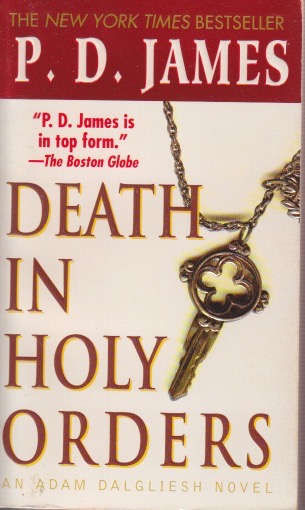
I entered all of this naive and with the eagerness of a puppy.  I was Episcopalian and I had attended the pensive and powerful masses at the Church of the Advent on Beacon Hill in Boston.  I was open to the mystery and possibilities even as I could see the danger in the dogmatic stares of the trustees.  It was a wooded campus on the shores of a small lake.  A lake upon which, after I left, one of the professors drowned in a sudden windstorm.  I awoke during thunderstorms so fierce that I was certain the stone walls of the Fort would not hold up.  Disused chapels full of dead black flies.  Secret meetings to remove those who wouldn’t lock step.  This was the stuff of a P. D. James novel.  Students at the time even called it Hogwarts.  They decided I was the master of Ravenclaw.

Fourteen years of my life were spent there.  I worked away at research and writing in my book-lined study painted burgundy.  Is it any wonder that I find dark academia compelling?  I’ve often written, when discussing horror films on this blog, that gothic stories are my favorites.  Even the modern research university can participate.  Professors, isolated and often unaware of what’s happening outside their specializations, still prefer print books and a nice chair in which to read them.  And, of course, I’d read for my doctorate in Edinburgh, one of the gothic capitals of Europe.   Even Grove City College had its share of dark corners and well-kept secrets.  What goes on in that rarified atmosphere known as a college campus?  The possibilities are endless.  On a stormy night you can feel it in your very soul.

That article again: Dark Academia Room Decor: Aesthetic Secrets Revealed


Paranormal Religion

I remember well what it was like to be an evangelical.  Measuring everything by what I thought the Bible said, fearing those things that seemed to come from outside.  Being very concerned with salvation and its opposite.  At the same time, I was fascinated by the paranormal.  As I child I was teased for these interests and subsequently buried them.  Then I had a slow, protracted, and continuing waking from dogmatic slumber.  So it is natural that I would want to read R. Alan Streett’s Exploring the Paranormal: Miracles, Magic, and the Mysterious.  I didn’t know how he would approach the subject, and I didn’t know where on the evangelical spectrum he fell.  Still, I’m always interested to see how others handle what we all know—strange stuff happens and there is no real explanation for it.  Scientific method may one day be able to address some of it, but at the moment it generally falls outside the bounds.

Streett’s book is somewhat autobiographical, from his non-religious childhood, believing in parapsychology, through seminary and having an evangelical awakening, to the point that he stopped supposing such things were demonic, and on to where he stands at the moment—thinking that most such things can be explained by brain science and alternative states of consciousness.  There are a number of interesting situations and concepts described in this book; I learned quite a bit when he discussed different brain states.  I understand his theological rejection of potential realities behind the phenomena he discusses (mostly mediumship, but also reincarnation and faith healing) but don’t always agree with the conclusions.  There is much in the world that theology can’t explain.

Something that is perhaps overt between the covers, is that the paranormal is something that happens to evangelical, liberal, Muslim, Jew, Hindu, Buddhist, atheist, agnostic, and none alike.  What differs is the interpretation, based on various faith traditions and their tolerance for that which is outside.  Evangelicalism is a worldview, perhaps more so than it is a theological position.  Non-divine miracles, or whatever you want to call paranormal occurrences, don’t fit comfortably into that worldview.  Other interpreters, also raised in Christian traditions (Catholicism, for example, is quite open to mystical happenings that can fall into the paranormal category), might approach the question in a different way.  Dialogue is important, however, and trying to make sense of this world we live in, in my humble opinion, has to reach outside the reductionistic view that brains alone account for human experience.  Streett’s account offers a reasonable perspective on the issue from an evangelical outlook.


Vlad Fest

I may or may not have read at least part of this book before.  When I found it at a used book sale somewhere, it looked familiar.  Having read it, I’m not sure if it was the same one as before.  There are certain parts that I would’ve thought a high schooler would have remembered.  I recognize the names of the authors, Raymond T. McNally and Radu Florescu.  You see, one of my senior term papers in high school was on vampires.  Unable to afford books, my research was done in the school library and this book is old enough to have been in the collection.  While the subtitle, A True History of Dracula and Vampire Legends, may seem to indicate a book primarily about vampires, In Search of Dracula is mainly about Vlad Tepes, or Vlad the Impaler.  I can’t imagine myself wading through all the Romanian history in high school.

You see, I remember reading a book on the history of vampires.  The strongest memory is of reading it in our church sanctuary.  Lest you get the wrong idea, I was very involved in our youth group.  We occasionally had chaperoned sleepovers at the church and I had already had a leadership role, serving on church committees and district and conference-level events.  Nobody had a problem with me sitting in the sanctuary.  On one of the sleepovers, I awoke early (as I have always tended to do), and I went to the sanctuary to read the book by the dawn’s early light streaming through the stained-glass window.  I have kept a look out for the book, and I thought this might have been it.

I’m pretty sure it wasn’t.  While this history does have a good summary of vampire customs and even movies, it takes a stout stomach to read the material about Vlad III’s reign.  Although he is a Romanian hero, he was a cruel man and his infamy was well established during his own lifetime.  I’m pretty sure that he would’ve been diagnosed with a mental disorder, had psychology existed then.  This book does trace his history and surveys various places associated with him.  One thing that might’ve been helpful would have been more maps.  The authors are clearly well versed in Transylvanian geography, but the average reader may not be able to find some of the many place names on the one map they include.  Otherwise, this is quite an informative book, mostly about Vlad, but with useful chapters on Bram Stoker and the vampire in the media up to the early seventies.


Thinking about Vampires

Any book on vampires has to be limited.  I first read Matthew Beresford’s From Demons to Dracula: The Creation of the Modern Vampire Myth back in 2009.  It has lots of information, but it was long enough ago that much of what I’d learned had grown fusty with age.  I began re-reading it as Halloween approached, and am glad I did.  The thing about vampires, however, is that you do have to compare sources.  Like many explorations of the vampire, Beresford’s notes that there are ancient analogues, but nothing precisely like we think of vampires today.  From my own perspective, I tend to think that our modern vampires, like our demons, come from movies.  Starting with F. W. Murnau’s Nosferatu, but more clearly from Tod Browning’s Dracula, our idea of what vampires are have been mediated by the silver screen.

This book ranges widely across time, region, and genre.  It discusses early reports that clearly considered vampires an actual threat, as well as movies made purely for entertainment.  One thing that I noticed this time around is that the author, being British, seems not to have noticed the tremendous influence Dark Shadows had on the popularity of vampires prior to Anne Rice’s Interview with the Vampire.  I suspect that soap operas were not widely known internationally, and even if they were, they were likely not taken too seriously.  Dark Shadows was different, however, and it made vampires chic in a way they simply weren’t before the early seventies.  At least in the United States, Barnabas Collins helped define the vampire.

Beresford makes the point that there is no single defining characteristic that applies to all vampires.  Early European vampires didn’t necessarily drink blood—they were revenants (they’d returned from the dead) but they weren’t always after blood.  In the nineteenth century bloodlust became the defining feature of vampires.  There are historical points on which to quibble with the argument here, but overall this book is a good overview of how ideas like vampires have been around for quite some time.  As someone who specialized in ancient literature for a good part of my life, I would not have called the various ancient analogues pointed out “vampires.”  Beresford is making the case that they lay the groundwork for what later became vampires.  And Vlad Tepes of Wallachia played his part as well.  As did the ancient Greeks.  It seems to me there’s more rich ground to explore here and this book provides a very good starting place.