
Two online articles have, in my limited reading, linked the bombing of the Boston Marathon by Tamerlan and Dzhokhar Tsarnaev to religion. Although the boys are/were not part of any radical sect, it was their belief that their Muslim faith, apparently, motivated the bombings. While such revelations will no doubt prompt Islamophobia in some, the true terror belongs to all exclusive religions. People want to be part of exclusive groups. Whether it is the ritziest country club or the most erudite book circle, we all want to be part of that group that is superior. I recall very clearly in my New Testament classes at Boston University how our professor explained that Christianity never grows as fast as when it excludes people. He claimed the writers of the Christian Scriptures knew that. Conversion is fine and good—it gives you a gold star when you save souls—but not too many. If everyone’s invited to the party, it loses its appeal. Here is the dilemma of proselytizing religions. We want to grow, but not too much.
Throughout history people have rejoiced at the troubles of the exclusive few. It does not explain fully or in any way excuse antisemitism, but the fact that Judaism doesn’t seek converts may raise the jealousy factor of those outside. Those religions most anxious to convert others are also the ones with the longest track records of violence. Nothing promotes hateful behavior like insecurity. Insecurity is frequently masked with evangelistic bravado. The fact is, even if one religion won out—especially if one religion won out—the violence would increase dramatically. This sounds rather crass, I know, but it reflects the state of world religions pretty well. Religions, after all, are made up of people.
Plenty of Muslims participate in sporting events like the Boston Marathon. Islam has contributed tremendously to western culture, laying the groundwork for much of our science and philosophy. It corners no market on religious terror. Religions are often outgrowths of human frustrations with our limited possibilities. We know we have to die, and we dream of gods but we can’t emulate their strength or majesty or immortality. We want the best for those we love. The world, however, doesn’t conform to the deep desires of humankind and religion, whatever its origin, helps us cope. Evolutionary psychologists are increasingly of the opinion that religion has utilitarian purposes in human development. Religions, however, also take their premises rather too seriously at times.
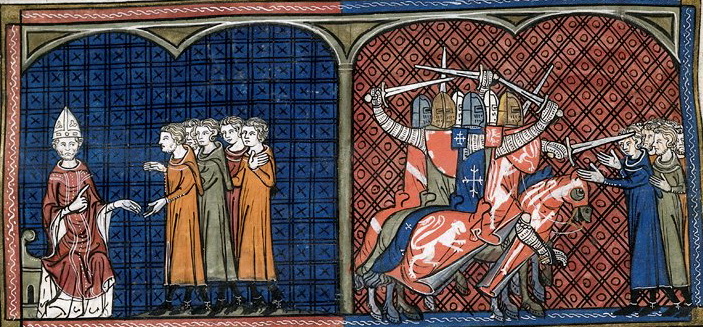
In the name of love

 Steve A. Wiggins