Ordinary Sacraments

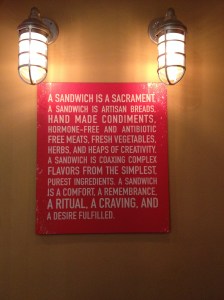
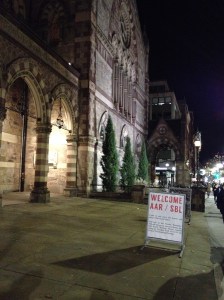
It’s like they knew we were coming. The towns that host AAR/SBL must remember the event after we leave. We make quite an impact around the convention center, and since everyone wears their name tags in public, it’s pretty clear that we’re all related. So when I stepped down into a local sandwich stop on Newbury Street, I saw a sign that could’ve been commissioned just for us. “A sandwich is a sacrament” it began. Going on to list the wholesome ingredients, the sign concluded “A ritual, a craving, a desire fulfilled.” I’d been taught that a sacrament was an “outward and visible sign of an inward and spiritual grace.” Of course, it could be more carnal than that. I’m not a priest, after all.
Food is indeed intimate. With packed restaurants full of religion scholars hungry for more than just sustenance for the mind, the city makes way for what may be a secular sacrament. Those who cook for a living do so in exchange for lucre. Everyone has to contribute something, and while we’re burning our calories debating fine points of theology, or in lexicographal deliberation, someone’s stoking the fires for the lunchtime rush. We hand over our credit cards and don’t stop to think about what we’ve just experienced. We’ve been given the means to convert matter to energy, an energy we’ll expend in purely cerebral consultation. The meeting of the minds. After the outward and visible sign of a sandwich becomes in inward and digested energy. And so the cycle spins on and on.

Large conferences like this bring the blessings of cash flow to local economies. Even in the poorest of times eating out’s a necessity. We’re not, after all, close to home. Time is at a premium with papers peppering each hour of three-and-a-half days, lined up like items on a menu. We select and choose, keeping to our intellectual diets. Or not. It takes plenty of energy to think so much. Some sit in the restaurants and return thanks. Others pay their respects in less visible ways, for this is the world of sacraments. Not ordinary time. What goes into a person, a sage once said, does not defile. Rather, what comes out does. We sit in respectful silence and listen to what emerges from our fellow conventioneers. It’s like being in church, almost. And we all know, deep down, when the talking’s done it’ll be time to eat.

The Pace of Progress

Scientists tell us the earth is slowing down. It’s only by a fraction of a fraction of a second, but like a top set spinning these endless revolutions can’t go on forever. Although the evidence all points in this direction, it feels like it’s speeding up. How else can I account for the apparent loss of time I’ve been sensing? Let me contextualize that. I’ve been attending the Society of Biblical Literature and American Academy of Religion annual meeting since 1991. That first meeting in Kansas City’s acid-etched in my friable consciousness with the long hours waiting for interviews that never came and no mentors to show me what to do. Those three-and-a-half days stretched on into an endless Tom Sawyer summer. I was anxious to get back to my wife in Edinburgh to and finish my dissertation. Fast forward a quarter of a century.

My days are now filled with back-to-back meetings. Normally by now I’d have had a leisurely perambulation among the bookstalls (where I spend all day) taking in the volumes the competitors publish, noting what I need to read. Instead, the time has been shortened. I have to keep a constant watch on my watch for the next appointment. Hearing about new books being born rather than tending the infants that surround me. We are a thriving population of readers here. Although it looks like a large crowd, I know that in reality we don’t make much of a dent. Boston’s big enough to absorb us and all our feverish ideas. When wakefulness arrives at my usual New York commuting time, even the nights seem to be shorter. Where has the time gone?

Most of those I meet have no idea I write books of my own. It was a process started long before the conferral of a diploma from a university far away. The earth is spinning in that direction, I’m told, so I should be in the tailwind of Edinburgh all the time. I’ve grown old with some of these colleagues. Those I’ve known since I was a young man, thinking he knew something about life, learning how little he really knew in this very city. I’m pretty sure I know even less now. The world, for example, seems to be speeding up to me. In fact I know it’s slowing down. Days are growing longer, but there is ever more yet to do. And all I want to accomplish right now is to walk around a bit and browse the books that others have written. I’m absolutely sure the earth is indeed speeding up.


Sacred Sartorialism

Proselytizing comes in many forms. It can be what you say to people, or how you treat them. It can even come down to what you wear. Every year I’m struck at the AAR/SBL annual meeting some attendees wear religious garb. I’m not criticizing it, please understand, simply observing. This is an academic gathering. Participants represent many different religions, and few, I suspect, are here to outright convert others. Seeing clerical collars and Buddhist robes, however, it becomes clear that what we wear says quite a bit about what we believe. Most attend this gathering vested in mufti. Should anyone in the tweed industry be reading this, I would humbly suggest not having a booth here is a missed opportunity. You are what you eat. You are also what you wear.

I was thinking just the other day how people used to be recognized by their clothes. In the days before consumerism, it wasn’t unusual for people to have just one or two sets of clothes. You knew who was coming, it seems from reading these older accounts, by recognizing the clothes before the face. Religious vestments are a signaling device somewhat akin to animal breeding displays, I suspect. The priest dresses differently to let you know that this person can be approached for true spiritual advice and consolation. Did your paper not receive the accolades you expected? Is there a clergy-person in the house? For sure there is. You’re never far from a practitioner here. As one of those who is unaffiliated, perhaps I’m just jealous.

What do my togs say about me? I tend to wear the same old clothes here year after year. Tucked somewhere in the furthest reaches of my closet are those duds not touched since last year. Publishing, for those who only see it in movies, is a very casual business. We don’t dress up, and I have to stop a moment before the mirror to remember how a half-Windsor goes. I’m guilty of donning aforementioned tweed from my teaching days. Students used to say I dressed like it was the 1970s. I didn’t have the heart to tell them that the clothes were often of precisely that vintage. Long after I’m gone, and AAR/SBL carries on without me, I wonder who might bear the uniform of this peculiar office I occupy? Not priest. Not professor. Not mere participant either. The name tag may say “Exhibitor” and that’s only part of the story, but it’s the pectoral cross I wear.


Sacred Places

Boston Brahmins, lock up your doctrines—AAR/SBL’s come to town. Boston always has special associations for me. My first home away from home. Where I met my wife. Where I learned what you can only learn at seminary. Coming back is like coming home. Of course, I’m here to work. As I was getting ready for this trip I recalled that the conference met in Boston when I was studying for my Master’s degree at Boston University. Unlike many graduate schools these days, no overtures were made for students to attend. In fact, I didn’t know what all the in-joking among the faculty was all about. I relearned the existence of the conference as a grad student in Edinburgh a few years later. Few traveled across the Atlantic for it, at that point. In fact, none of the Edinburgh faculty who’d eventually become regulars had ever considered going. My first meeting was in Kansas City.

The meeting has grown since those days. Now regularly expecting about 10,000 scholars (can one help but think of 10,000 maniacs?) a year, the venues are limited. Atlanta, Boston, San Antonio, San Diego. Chicago and Denver once in a while. Personally, I’m glad it’s close enough for a train ride. New York City and Boston, two peas in a pod. My only regret is that I won’t be able to get out to my old stomping grounds. Some colleagues (few read this blog) contact me at the last minute asking if we can get together. My schedule’s booked from breakfast through supper each day. Those who attend as participant-observers have no idea. These are the longest working days of my entire year. Still, they’re in Boston.

I often muse about place on this blog. We’re attached to the place where we’re born—it’s our personal sacred space. In life we grow attached to other places, whether we can settle there permanently or not. I wanted to live in Boston. I did so for a year after attending seminary here, making a living doing this and that. Having a master’s degree in religion doesn’t get you far in life. In those heady days of sleeping on the floor and finding out what life was really like for the unconnected, I learned an awful lot. And when the woman I wanted to marry came back for a visit, I proposed. I’ve only ever visited Boston since. But whenever I manage to do so, even if it’s just for work, it’s like coming home.


Some Bible Lovers

I’m on a train heading to Boston. If you notice a dearth of religion scholars in your neighborhood this weekend, it’s because it’s time for the American Academy of Religion and Society of Biblical Literature annual meeting. If a religious emergency comes up, take two of your favorite scripture and call the office next week. Viewed from the outside, this must be one of the stranger scholarly gatherings. A few thousand people get together in posh hotels and convention centers to exchange ideas about which the larger world cares very little. Ironically, the vast majority of people in the world are religious, but as a society if we know enough about the Bible to get us through the most recent indiscretion, so we’re good. Let the scholars have their fun.

This year there’ll be a session on monsters and monster theory that I helped to organize. That doesn’t mean I’ll get to attend it—the conference is a very different beast for those on the exhibit hall floor—but I’ll have the satisfaction of knowing that it’s happening. Years ago I discovered that many of my colleagues who are teaching shared an interest in monsters. Many of us weren’t aware of the others because this isn’t the kind of thing you talk about in polite company. One thing an editor may be is a vector. We hear what widely separated people are working on. Every great once in a while we’re able to put the pieces together. So it was with monsters. There seemed to be a critical mass, and two or three colleagues took the idea and ran with it. Or ran from it, whichever you do with monsters.

For me Boston will be a series of meetings that will blend into one another until I’ll have to consult my notes to remember anything at all. If I could feel this wanted outside the conference I’d never have to dream of being a rock star. You see, editors are the gatekeepers of academic publication. For those lucky enough to have teaching jobs, it’s publish or perish, so the editor is a vital link. The rest of the year we fall into the background. Emails go ignored. Reminders are forgotten. Requests unanswered. But here, out on that carpeted concrete, we’re the ones they’ve come to see. What we do in the conference matters very little to the world at large. But we do it anyway. We gather together just before Thanksgiving, thankful to be reminded that there are others like us.


Of Fancy

Later today—at this time of morning the use of the word “day” feels ironic—I’ll be on a plane heading out of civilization. Well, to be more precise I’ll be flying to a place from which I can drive out of civilization. Airports only serve cities, after all. Until we get individual drone service to remote locations I guess we’re stuck with jets and their inconveniences. I have to admit I’m more nervous than usual about this. I’ve been reading the stories about airline thugs who, like terrorists, beat and drag passengers off the plane. I try to take extra care to choose an undesirable location on the jet—next to the restroom, for example, or really near an engine—so that an airline employee would rather wait for the next flight than to sit here. I remember when flying used to be fun.

One year I’d lingered a little too long with my girlfriend and I had to rush to Logan Airport to catch my flight to Pittsburgh for the holidays. Arriving maybe half an hour before my scheduled flight, like a pre-murderous O. J. Simpson I ran through the concourse with nary a TSA agent in sight. To the what I am now sure was annoyance of the other passengers, I arrived at the gate just as the door was closing. With a sigh they let me board. I tried to ignore the angry stares of those already seated and belted. We all made it to Pittsburgh, however, in time to celebrate with our families. Now flying means adding at least two hours to your travel time so that you can get through security that makes you feel no more secure. I’m frisked and prodded and made to feel guilty for doing nothing more than wanting to get away from civilization for a while. We call it civilization anyway.

The wait in the airport is the hard thing. They’ll offer wifi, but you’ll have to pay for it. I’ve trained myself to read on the bus, but when you’re awaiting the announcement of your flight when you’ll have to line up just like at the Port Authority, it’s difficult to concentrate on your book. You don’t want to be lost in another world when they call your zone. There are, after all, airline employees hovering, seeking empty seats. I remind myself at the end of this ordeal a lack of civilization awaits. This is why we do it, and there’s a reason we call it getting away. Time to end this flight of fancy and head toward an actual flight that will be anything but fancy.


Maine Event

We have no control over where we’re born. Place, however, has a sacred significance. Many people have a sense of where they belong. Life may be a prolonged journey, like that of a salmon, to find one’s way there. While in seminary, one of my professors had the class introduce itself by name and town of birth. This was in Boston, at a school with a highly eclectic student body. I was born in the small town of Franklin, Pennsylvania. Other than having been the setting for an X-Files episode may years later (not filmed there, of course), it was not the kind of place anyone was likely to have heard of. In a class of maybe 50, imagine my surprise when an older gentleman announced he was born in Franklin, Pennsylvania. We was not of my generation, but it turns out, we had origins in common. As the introduction passed further forward, someone about ten years my senior announced, with a glance at the first student, that he was from Franklin as well. By the time it reached me, this seemed more of a synchronicity than a mere coincidence. We were all entering Juniors (the starting year of seminary), all born in the same hospital, and none of us had known the others existed prior to that day.

I was in Boston, however, because of a deep-down conviction that I belonged in New England. More specifically, Maine. After having grown up for about a decade in Franklin, we moved to Rouseville, Pennsylvania when my mother remarried. Apart from the industrial, drug-intensive culture, there was a haunting sense that this was not where I belonged. I began to read voraciously. My literary adventures found my spiritual home: Maine. Vividly I could imagine its rocky coasts and large stretches of northern woodland. I had never been to Maine—had never even seen the ocean at that point—but I knew, without a doubt, that Maine was my spiritual home. While a student in Boston I made several trips to Maine, each one convincing me more that I shouldn’t be leaving when Sunday afternoon rolled around. I should be staying here.

Life has, however, kept me from my beloved Maine. Academic jobs, mythical beasts that they are, are location-specific. You have to follow the jobs (I almost wrote herd there, but there’s nothing close to a herd of such employment). The population of Maine doesn’t support the number of schools that places like Massachusetts, New York, and Pennsylvania do. Even all of these were closed to me. Maine never abandoned my dreams. I moved to Wisconsin, following a job that abandoned me. I moved to New Jersey to take another, which also abandoned me. One of the motifs to which I constantly return is the sacredness of place. A sense that a person belongs somewhere. Out in the ocean, many salmon are captured before they make it to the stream of their birth. I wonder what their thoughts might be as they lie gasping for breath, knowing deep in their piscine souls, that this is not where they were meant to be.

Maine


Land’s End

Although not due for release for another two years, the internet is already buzzing about Pirates of the Caribbean 5. Thing is, once a studio finds a successful formula, they’re reluctant to let it go. Nevertheless, with a couple days off for New Year’s, and all the family here, we decided on a marathon of the four movies available for home viewing. I used to use a clip from the second movie (Dead Man’s Chest) in my classes to demonstrate how the Bible is portrayed in popular culture. In the scene where Pintel and Ragetti are rowing toward the beached Black Pearl, Ragetti is leafing through a Bible, although he can’t read. He says, in his defense, “It’s the Bible. You get credit for trying.” Indeed, the Bible appears disguised as the huge codex of the pirate code (a kind of over-compensatory pentateuch), and, as I noted before, the book that saves the mermaid’s life in On Stranger Tides. In fact, for those willing to look behind the scenes, the Bible shows up repeatedly in the series.

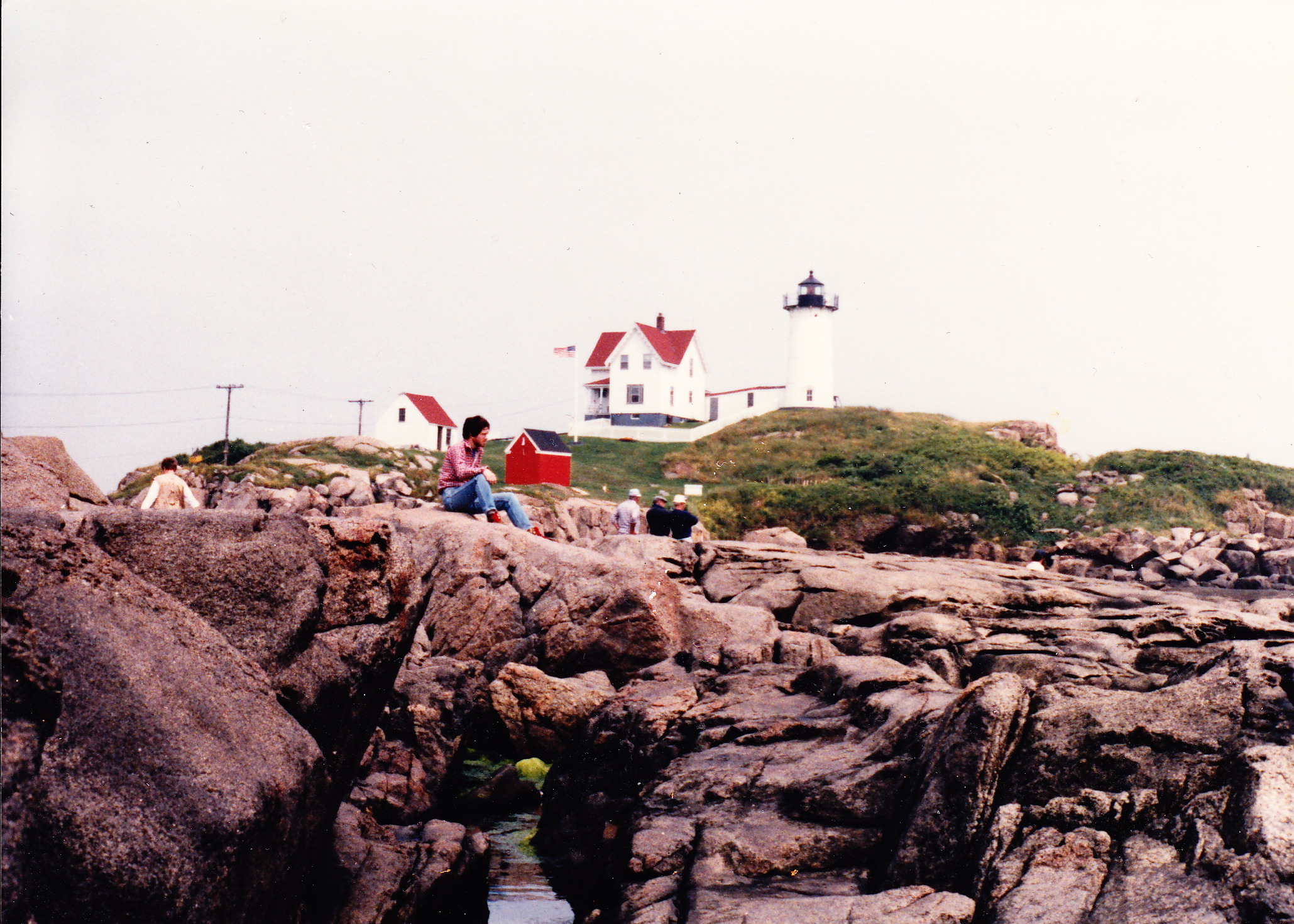
Even as a landlocked child maritime themes and concepts were compelling to me. I yearned for the ocean without ever seeing it. Long I stared at the cover of Rachel Carson’s The Sea Around Us in wonder. When I finally had the opportunity to strike out on my own, it was to Boston I headed, with its rich New England tradition of the sea. I have tried, ever since, to return there. Theologians, although I don’t count myself among their number, have often found a religious resonance with the sea. The Pirates of the Caribbean movies, based as they have been on a Disney ride, nevertheless manage to tap into the romance of the ocean. Not compellingly written, apart from the fun antics of Captain Jack Sparrow, they don’t present an entirely coherent story line, but they do put the viewer, vicariously, at least, on the ocean. And they have been among the most successful film series ever released. Many, I suspect, are drawn by the lure of the open ocean.

Rewatching the films also reminded me of Cthulhu’s influence on the character of Davy Jones. The origins of the euphemism “Davy Jones’ locker” are uncertain, although some trace it back to Jonah. Nevertheless, it stands for the place of death on the sea floor—the very place where Cthulhu lies dead but dreaming according to his creator H. P. Lovecraft. No doubt, Lovecraft’s description of Cthulhu played into the depiction of the character of Davy Jones as presented by Disney. At the end of At World’s End, Jones falls dead, once again, into the maelstrom that will take him back, dreaming, to the ocean floor. In so doing he participates in the endless give and take of the sea. I suspect a couple years hence will find me in a theater to watch what seems a somewhat tired trope, but it will be more the sea than the sparrow that will draw me in.

Photo credit: Anthony92931, Wikipedia Commons

Photo credit: Anthony92931, Wikipedia Commons


The Tower

Photo credit: Daderot, Wikimedia Commons

Photo credit: Daderot, Wikimedia Commons

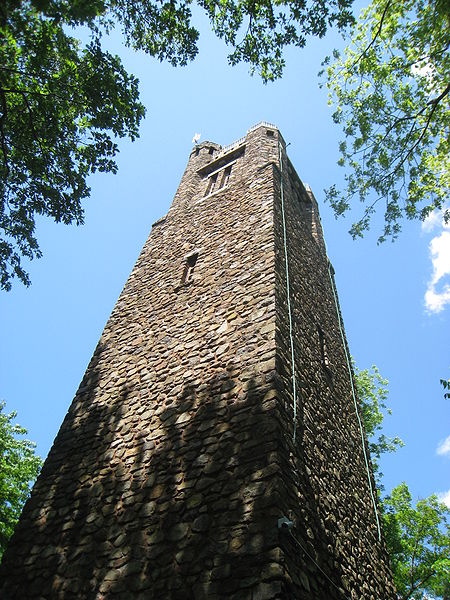
I’ve never been to Bowman’s Hill Tower. In truth, I’m not even sure what its significance might be. Beyond giving a spectacular view of the Delaware River valley, it is my understanding that it is a memorial built to George Washington and his many activities in this region. It’s not even that old. I have come, however, because of a memory not my own. Many decades ago, my mother visited the tower with her parents. She has pictures but couldn’t remember the name of the tower, or even where it was. As fate and happenstance have it, I live a mere hour away and I’ve undertaken this journey to a tower I’ve never seen to bring a sacred sense of place back to life for someone else. Too bad the park is closed today. It is a sunny Saturday in July, and it seems that everyone is outside. We drove across that impossibly narrow, rickety bridge between New Jersey and Pennsylvania at Washington’s Crossing (so named on both sides in both states) to find our way to this quiet park to find a lost past. “Closed” the sign laconically says.

The urge to travel, speaking strictly for me, is the pursuit of sacred space. Over Independence Day weekend we traveled to Boston not only to see fireworks, but to revisit a site of some personal significance. In my three years in that city life took me places I never imagined I might have gone. The memories, mine this time, although hazy, still permeate the air. Boston is a sacred city. Since childhood I have had dreams of Maine. From Boston I pushed further north to the rocky coasts and gray oceans of the stormy north Atlantic. Although neither God nor angel appeared, I knew that I had once again discovered the sacredness of space. Every time I leave, I count the days until I might return.

Many locations are sacred to a person. Some of mine are in the west, and some in the east. And when I’m there I require some time alone, for the sacredness of space is a deeply personal matter. When, many years ago, I was jostled into the Church of the Holy Sepulcher amid ecclesiastical robes too numerous to identify, I knew this was a holy spot for many. The very dust of Jerusalem seems sacred with age. But what had happened to me here? Beyond the endless readings and rereadings of the biblical tales, Jerusalem was someone else’s sacred location. Aside from the dark crusaders’ crypts, there was no place to be alone. I’ve never been to Bowman’s Hill Tower. Despite driving to Pennsylvania for that sole purpose, it is a place I have yet to see. And when I finally do climb that tower, it should, I hope become clear to me whether anything of the numinous remains in this dusty corner of somebody else’s memory. Sacred space is like that, and it keeps some of us forever on the move.


Soldiers of Forfeiture

Somebody, perhaps a robot, reads my blog. I can’t imagine what keeps this feeble enterprise going sometimes, since continued growth of readership has been elusive for several years now. Still, I get requests to post information on my daily soapbox, sometimes for issues of which I’ve never heard. Civil Forfeiture is one of those issues. I’ve only ever been stopped for driving too fast once. I’m not a speeder by nature, and it was an oversight in one of those slowdown zones between a highway and town. I had no idea, however, that civil forfeiture might happen without any conviction or charge. See the infographic below from one of my readers at arrestrecords.com.

Social justice is perhaps the leading motif in my existence. I was attracted to the life of the clergy out of a profound sense that life is unfair. As if it’s not bad enough that nature posts us each at unequal starting places, human society joins in the game by contributing rules that are inherently unfair. Healthcare in the United States, for example, has been unequally distributed. I had figured this out even as a child when my family doctor walked into the examination room with a lit cigarette dangling from his lips, asking why I was having trouble breathing. I didn’t know what chronic bronchitis was in those days, but thankfully I grew out of it. In any case, laws for fair treatment of all citizens should underlie any just society. Not just healthcare, but basic, constitutional rights.

Having been reared in a small community where arrest was not rare—most of the time certainly deserved—I was woefully ignorant about what a person was free to do. I still am, I guess. I go to work each day hoping that I don’t infringe on any unknown law that stands to make this land a nest of freedom. Having arrived in Boston with a migraine after driving all my worldly possessions from Pennsylvania back in 1985, I parked in Winthrop, outside my apartment, with the right wheels to the curb, just like every other car on the block. I stumbled inside and fell into my unmade bed. My first morning as a Massachusetts resident, I awoke to find a parking ticket on my windshield. I went to the police station to explain what happened only to have the receptionist say, like a line from Gilligan’s Island, “Ignorance of the law is no excuse.” I can think of no better excuse. Is a law degree necessary for fair treatment? Whom did I harm by parking with the rest of the residents? At least I didn’t face civil forfeiture. If I had, all they would’ve found would’ve been a few boxes of books and enough clothes to get me through the week—all my possession fit inside my VW Beetle in those days. What more does a person really need?

Civil Forfeiture, an infographic from ArrestRecords.com


To the Swift

Despite its generally secular reputation, one of the great charms of New England is its churches. I was forcefully reminded of this during my recent trip to Boston. Each city along the way boasts impressive churches that might be glimpsed even from the highway, and although there are now many taller buildings it is possible to imagine the days when the steeples stood over all. Boston’s historic churches remain stunning symbols of the power Christianity once held in this city. We first climbed off the T at Arlington in the shadow of the great stone Arlington Church. On the Esplanade the looming steeple of the Church of the Advent violently reminded me of the deep mysticism that drew me to the Episcopal Church even while I was a Methodist seminary student. Park Street Church, King’s Chapel, The Old North Church, the Old South Church, and finally Trinity Church in Copley Square invited us to gander and ponder. Almost like fossils, these churches remind us of the history of what made the city, or the nation, what it is.

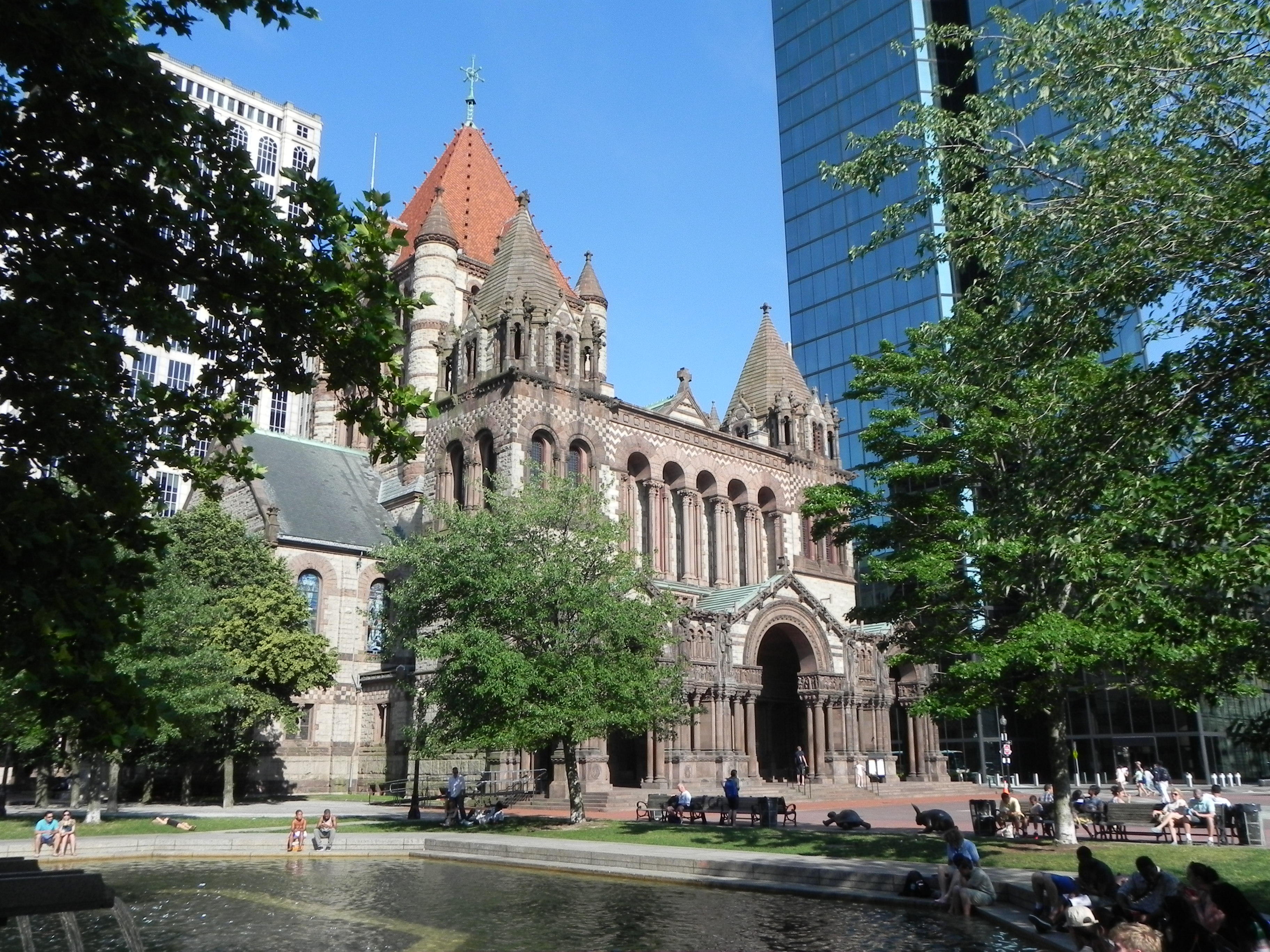
Trinity Church lies nestled at the base of the John Hancock Tower, Boston’s tallest building. A blue glass Brobdingnagian, this prophet of capitalism represents the highest possible aspirations of our race, so we are led to believe. The material triumph over the spiritual. And yet the tourists stop to photograph the stunning church. It is on the street level, down here among us mere mortals. Upon closer examination, I noticed the statue of the tortoise and the hare in the plaza of Copley Square, the holy terrapin racing toward the sanctuary, it appears from my angle. It seems that I have unexpectedly received a kind of epiphany.

Look closely.

Look closely.

I first came to Boston many years ago as a spiritual seeker. In the intervening years during which I was attempting to find out what that might mean in a life that was intellectually honest, many bronze sculptures appeared in this city. The one commemorating Robert McCloskey’s Make Way for Ducklings, installed after I completed my studies at Boston University, would not have caught my pre-parental attention, as I had never read the book. Now you have to stand in line even to snap a picture. The work of local artist Nancy Schön, both “Make Way for Duckings” and “The Tortoise and the Hare” are part of Boston’s continual evolution of character. Officially, we are told, the turtle and rabbit are representative of the Boston marathoners who trudge the final feet past this church toward the finish line. To me, this sculpture suggests something more as the hare dawdles and the tortoise breaks toward the church. It may be a marathon, indeed, but the race, I remind myself, is not always about being swift.


Fish Fridays

There’s an old myth among Protestants that on Fridays Catholics eat fish because fish are sinless animals. As far as I’ve been able to determine, this is pure fabrication on the part of curious outsiders. Still, it has grown a mythology of its own. Some say that the non-pecuniary piscines are that way because they, naturally, survived the flood. I’ve often wondered how that impacted the fresh-water varieties of fish, or if they evolved after the fact. In any case, the story, it seems, has grown with the telling. Fish on Fridays has nothing to do with the fish and everything to do with the people. And so does standing in line.

DSCN4792The New England Aquarium is, ironically, one of the big draws on a rainy day in Boston. I’ve stood in longer lines before, but after a late night of truncated fireworks and waiting an hour for a T train home after being thoroughly soaked, it is a test of endurance to stand for over an hour-and-a-half in rain encouraged by Hurricane Arthur. To see fish. To find sinlessness. The ocean, it always seems to me, is one of the places where human greed has not yet been fully realized (not that we haven’t tried) but in which we’ve dipped our polluting fingers time and again. Still, fish are fascinating. Watching them make lazy circles around the 200,000-gallon giant ocean tank, the many ways that creatures have evolved to swim enchants me like a kid. Of course, the real draw, for many, is the penguins. Psychologists have explored the human fascination with anthropomorphized animals. Penguins in their “formal attire,” clumsily totter about on two legs and occasionally display very human behavior. At feeding time some are polite, waiting their turn, while others are aggressive and pushy. If someone is too greedy, the bird next in line will push him or her off the rock into the water, where the offender has to come back to the group, having lost his or her place. Where does sin enter this picture?

Seeing fish on Friday has me wondering why we declare some animal behavior sinful and other animal behavior saintly. Wandering the four stories of this aquarium crowded with others seeking to avoid the rain is often like looking into a mirror. Do these animals realize they are trapped? Although the sea lions and seals seem happy and enthusiastic, and the penguins just bored, it is difficult to read the face of a fish. So after a long day standing, my family heads back into the rain, hoping to make it to some restaurant before this rain beats our weary umbrellas into utter submission. There’s almost no traffic today, but one driver speeds through the puddles down the great coastal highway 1, completely soaking those waiting to cross to drier climes. The wall of water coming at us would’ve made Cecil B. DeMille envious. It’s a holiday and I can’t figure what the hurry is as my second and last pair of shoes grows waterlogged from this selfish gesture only to get through the light. I’m pretty certain I’ve discovered where sin is, however, and it is definitely just outside the aquarium.


Freedom Trail

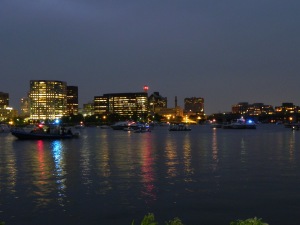
The machine gun on the bow of the National Guard boat would’ve impressed me as a boy. Now it kind of scares me. The helicopters overhead pass frequently. Police on jet skis chase girls in a canoe away from the shore of the Charles as if they were piloting a landing craft on D-Day. A whole blessed platoon of chartreuse-garbed police on bicycles pedal by, some clearly out of shape, creating a presence. It has been a quarter century since I’ve been in Boston to celebrate our freedom. I wonder where it’s gone. To get onto the Esplanade you have to be brushed with a metal detector. Although the web site said backpacks would be searched, the guy at the gate claims it said they were not allowed at all. “You can empty it out”, he said, “and put the contents in a plastic bag,” but the empty cloth must stay here under a tree like a naughty dog. “Happy Independence Day,” he says. I wonder if he’s aware of the irony.

Big Brother

Big Brother

We have become the most skittish home of the brave I know. We are being watched, we are told, for our own good. The watcher is not some enemy nation, but our own “leaders.” Lead us not, I pray, into temptation. I wonder when we considered chasing girls in a canoe away from the shore a matter of national security. In 1985 I called Boston home. When my wife and I came to the Fireworks Concert as a young engaged couple, we lazily wandered down to the Esplanade, plopped on a free bit of grass and saw maybe an officer or two the entire day. Now everyone on this grassy strip is treated as if they’re on a grassy knoll. Armed police on boats cruise the shore to make sure we’re minding our manners. After dark that helicopter spotlight can’t help but to make you feel guilty of something. There’s a hurricane coming, and three tons of fireworks are sitting anxiously on the barges in the river. The concert begins, but soon so does lightning. They skip right to the fireworks, forget the 1812 Overture. I wonder about my evil backpack under the tree.

The woman behind me is talking to her companion about how illogical the backpack rule is. “If the bag is empty, why can’t you take it in?” she asks. I’m not one to talk to strangers, but I have to turn around to agree. We exchange horror stories about being screened at the airport. Doesn’t anybody see how offended our revolutionary forebears would’ve been by such a military presence in peacetime? What if some crazed national decided to do something insane? Would that wicked machine gun hit me and my family, right on the waterfront, while trying to get the perpetrator? Are we collateral damage on the trail to freedom? Or is freedom even in the picture any more? We can’t let the terrorists win. Every time we face a backpack full of homemade explosives with hundreds and hundreds of chunky guys on bicycles and hovering our heads with deadly force, I can’t help but think it’s no contest. There’s a hurricane coming. They rush through the fireworks and I join the other owners of dispossessed backpacks looking for my luggage. Then the fattest raindrops I have even felt begin to fall.


Thar She Blows

Any survey of “armpits of America” will laughingly include New Jersey. Having lived here for nearly seven years now, I know the apocrine insults are undeserved—I actually knew that before moving here. New Jersey has the highest per capita Ph.D. concentration in the nation. It also has the highest number of college graduates, and, for what it’s worth, the highest per capita income. These first two points come especially to the fore regarding New Jersey governor Chris Christie’s recent speech, made in Boston—a city with some small higher education affiliations itself. Propping up his creds for a presidential run, Christie said, “I think that we have some folks that believe that our job is to be college professors. Now college professors are fine, I guess. You know, college professors basically spout out ideas that nobody ever does anything about. [Rim shot!] For our ideas to matter, we have to win because, if we don’t win, we don’t govern.” (This according to the New Jersey Star-Ledger.)

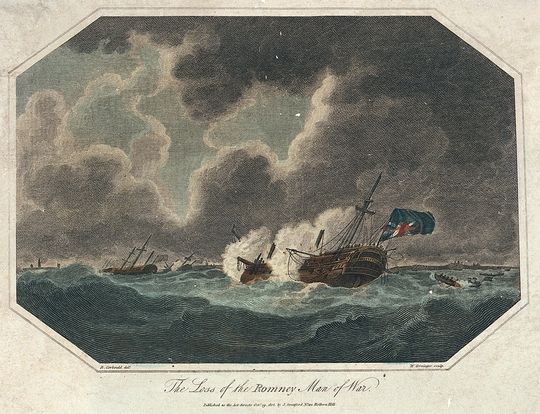
The United States, for many years now, has been falling behind in education because we won’t fund it adequately. I’m no jingoist, but I do believe that the principles upon which this country were founded were inspired. To thrive, we must be smart. Education has been the key to our improvement over the decades, and as the focus has shifted from education to capital, the hull has begun to leak. I know that I have felt it. With dismay I’ve watched as colleges and universities have hoisted the November Charlie and no vessel has come to their aid. Departments are jettisoned and we are still taking on water. And the governor of “the education state” guesses that “college professors are fine” but completely irrelevant. This man for president in 2016?

Meanwhile, yesterday, the unexpectedly happy news was announced that President Obama will be visiting my daughter’s university next week. Binghamton University is frequently overlooked by the monied special interests paid to the Harvards and Princetons of the green-lined ivies. It is, however, frequently cited as a “public ivy” for its quality education at state-school prices. Obama’s visit is for precisely that reason: good education can be affordable. Chris Christie went on to say, “For our ideas to matter we have to win because, if we don’t win, we don’t govern. And if we don’t govern, all we do is shout into the wind.” And if we don’t win we gather up our marbles and go home. Yes, I was a child once, too. And I grew up. Higher education does matter—far more than some politicians’ bluster would indicate. Do you agree, Dr. Einstein? I’m sorry, governor, I can’t hear you over the wind flapping the sails.

The_Loss_of_the_Romney_Man_of_War


Loneliness of Long-Distance Runners

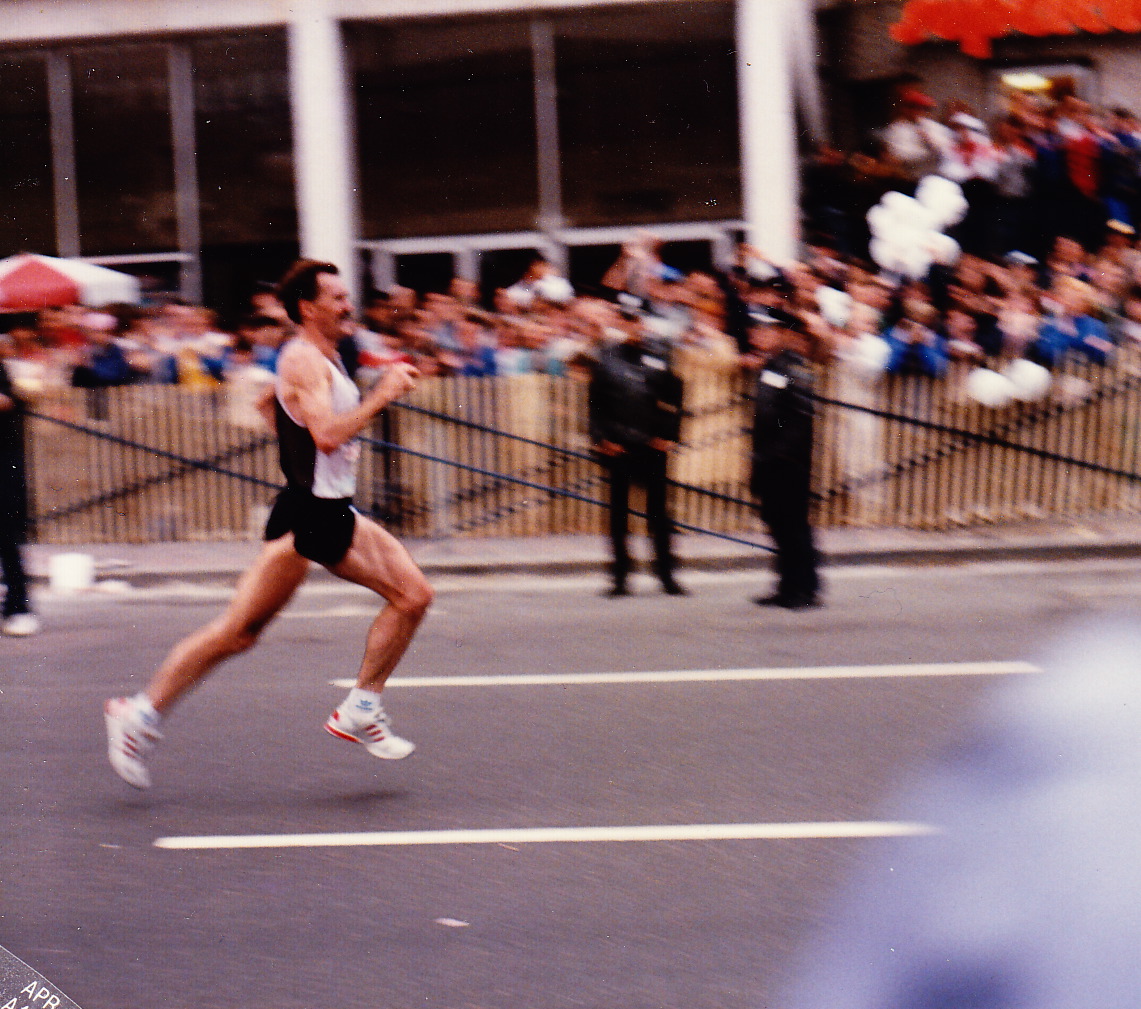
1988. I was standing along Boylston Street, in Copley Square, watching the Boston Marathon. As the weary first place runner trudged by, I somehow neglected to take a photograph. I did snap one of the number two winner. I always have had an affinity for those who don’t win. Those who try, only to be beaten by others. His name didn’t stay with me, but I still have that photo, a moment in time, when everyone was excited about the culmination of a long tradition. When I heard that there was a bombing at the marathon yesterday, I experienced a different kind of culmination. I wondered what kind of people we had become. The Boston Marathon, a long-time symbol of endurance and pushing oneself to the limit, came to a crashing end. Along with another chapter in the innocence of a world gone mad. Just last October, I posted a photo on this blog that I had snapped near where one of the bombs went off. As I write this nobody has a clue as to who was responsible or what they were trying to prove.

BostonMarathon

The NRA gun barons were not on hand to stop the terrorists, I note. Funny how they always show up too late. Perhaps we should all start carrying hand-grenades. We all have a choice whether to do more good or evil in the world. To leave behind a better place or a worse one. The Boston Marathon is an international event, with long-distance runners from around the world competing. More against themselves than against anyone else. Just to finish the grueling course. Who would want to hurt just anyone, including several children—those who love to race and dream and hope for a better tomorrow?

The news saddens me, for we like to think we live in an enlightened nation. Maybe a little soft around the middle, but generally a congenial place. We hold events like the Boston Marathon to celebrate human achievement—those who push themselves to the limit but then keep going. Standing in the crowd in 1988, I remember how we clapped for those who seemed too exhausted to trudge those last few yards to the finish line. We wanted them to succeed. I couldn’t tell you one of their names, but we were all wishing the best for them. That is the human spirit. It takes a coward’s coward to plant bombs amid crowds and then not even claim your own evil victory. Terrorism, already heinous, without even trying to make a point. And yet the runners run on. Like the marathon itself, we must keep believing that we can reach that ribbon and that the vast majority are hoping for our success.