Hallowed Eve

My last night in Boston found me in Copley Square. This has always been one of my iconic Boston locations; something in the juxtaposition of squat, solid, dual-toned Trinity Church with its wide, open plaza, the blue glass razor of the Hancock Tower, and the classical facade of the Boston Public Library where Sophia broods over the world, arrests my wondering gaze. Across Boylston Street stands the gothic Old South Church like a guardian for straying souls. As I walked through the square a local band of street musicians jammed and the first neons of an October evening were awaking. As I strolled past Old South I had to back up a step or two to see if I’d read the sign right.
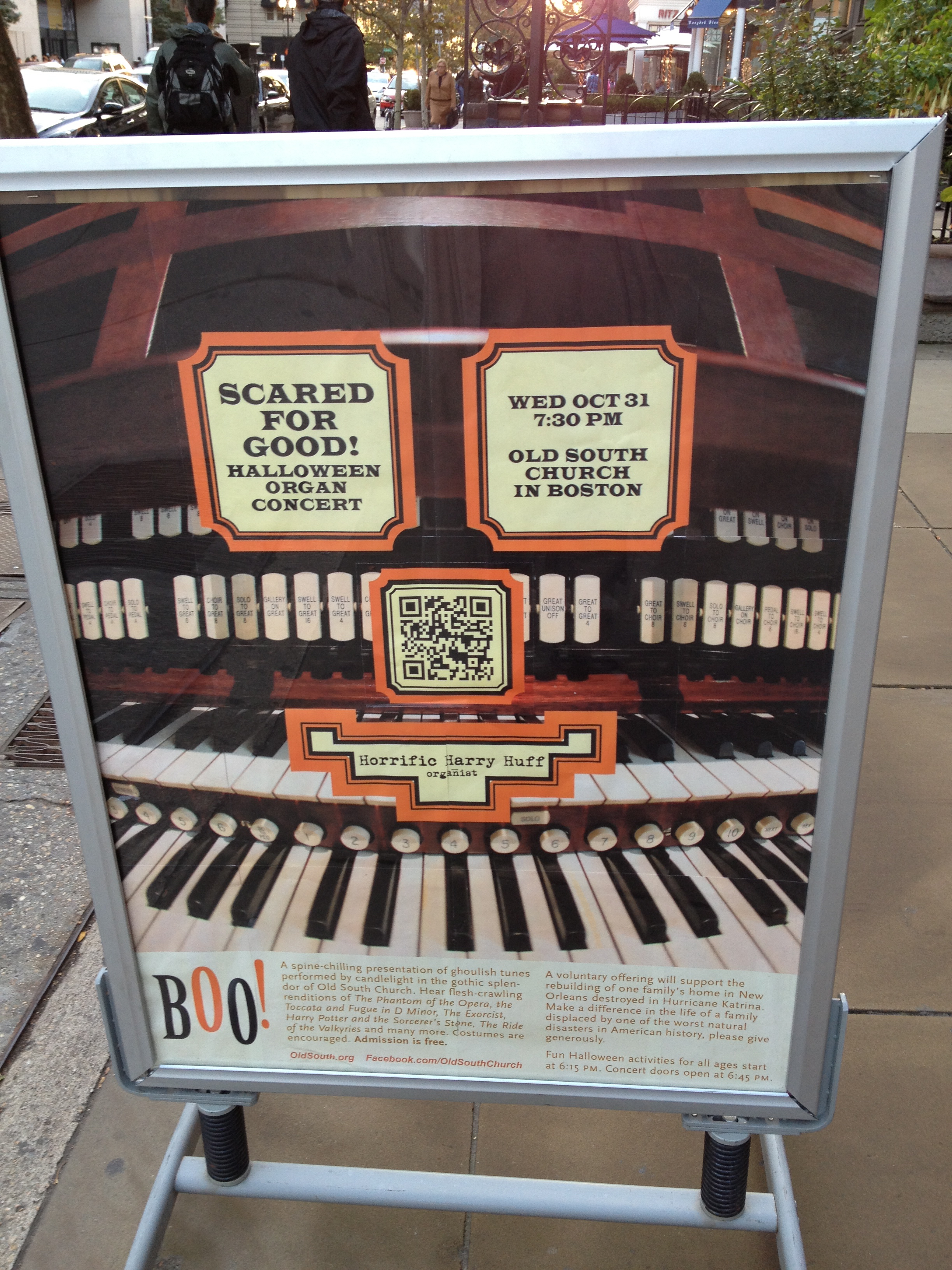
Scared for Good, a Halloween organ concert featuring spooky music, will soon be on offer. Business-types have long noted that Halloween is a great potential selling holiday. With kids who want to dress up and parents stressed for time, the selling of costumes has grown into an increasingly substantial accessory item holiday. People want their houses to look scary, knocking down real cobwebs to make way for the artificial ones, hanging out orange and purple lights, and ordering pre-carved, artificial pumpkins. All the fear is, of course, a charade, and we laugh at ourselves for taking it too seriously. Some churches object vociferously to the very holiday itself, claiming it is devil worship and evil.

While Halloween does have some serious pagan influences, it is, in its present form, a good Catholic holiday. The night before All Saints, aka All Hallows, begins a period of reflection on mortality. I’ve celebrated “Protestant” Halloween from my youngest days and have never been in any way tempted toward devil worship. It is fun to be scared when you know it’s not real and it won’t last long. That’s why I applaud Old South Church’s Scared for Good concert. Reading the list of pieces included, it sounds like it should be a grand time. Too bad I won’t be in Boston for the occasion. As I walk back to my hotel in the chill of the evening,the only fear i feel is that moments like this evening come at insufferably long intervals for those who feel about the city as must the denizens of Copley Square.
The Future of Theological Education

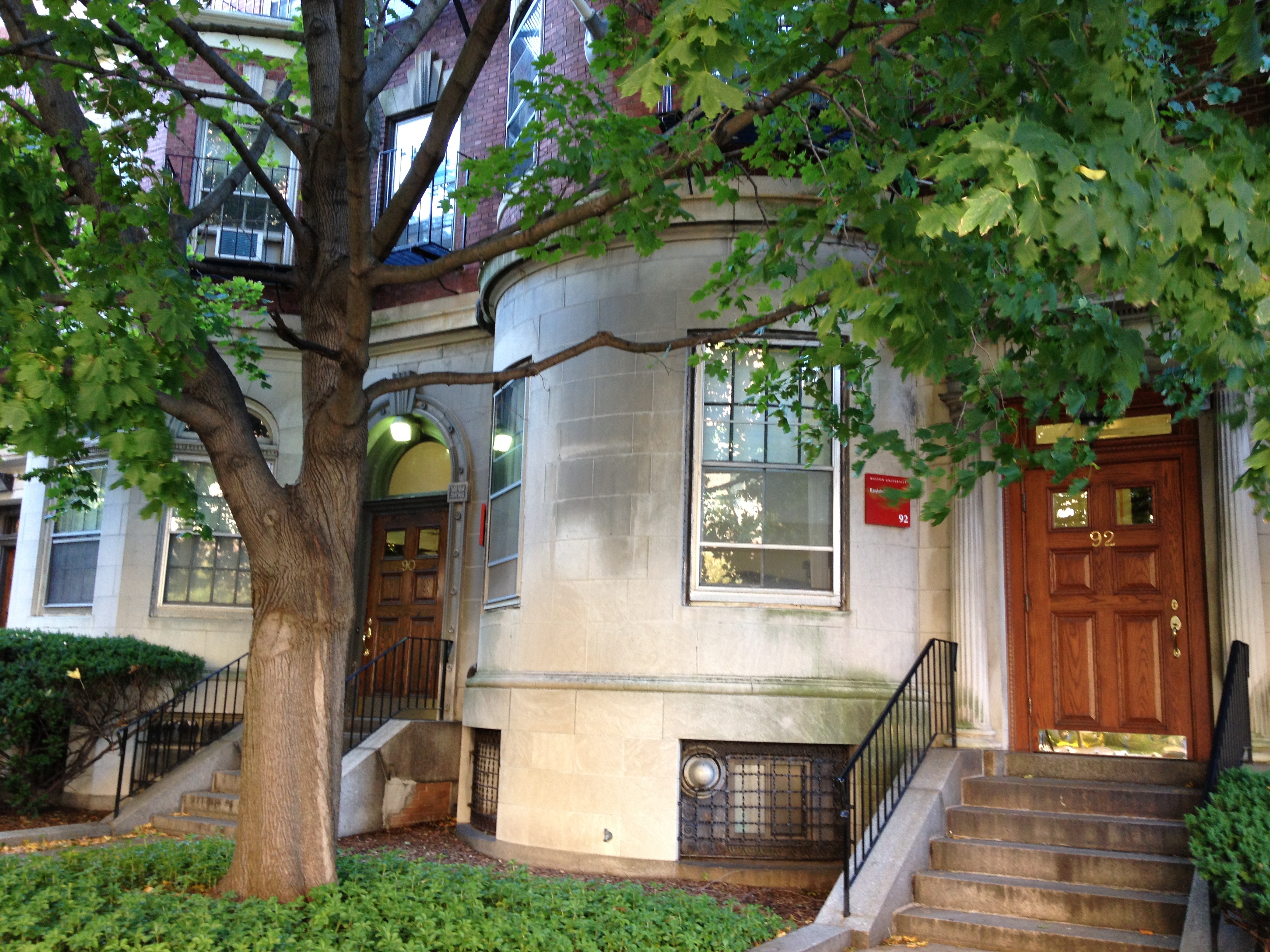
It is almost like stepping into a time warp. To be honest, it is difficult for me to admit that I graduated from Boston University School of Theology a quarter of a century ago. Standing here outside 90-92 Bay State Road, where I once lived, is like looking into a shattered mirror. Behind those doors much of what made me who I am took place. Perhaps I left some of myself there. I don’t even know if the property is still the single student “dorm” for the school of theology or not. Kenmore Square has transmogrified from an area that felt like Times Square in the ’80’s to an upscale dogtown. When I stepped into 745 Commonwealth Avenue, it was like being hit in the face with a combination of nerve gas and roses. The hallways look wider now then they did back then. The hallways where so many of my assumptions curled up and died. They still have chapel and community lunches. The Boston Book Annex is closed.

Boston University has sure poured a lot of money into the Back Bay redevelopment. Whence that sense of personal offense when I see a multimillion dollar new building there and recall the financial aid interviews where I was told, like in a Bruce Springsteen song, “we’d like to help you out, but we just can’t”? Has social justice come to live in these halls? In those days anyone who didn’t have an oppressed status was a minority. And I learned as much about hate as I did about love within these implacable walls. Is it ghosts that I feel rushing through me as i walk down Bay State Road, and stare out over Storrow Drive? I’m not sure of the future of theological education. Until schools of theology can lay down their swords and become truly ecumenical, can any change truly occur?

Theology is an exercise in the unknown. When I donned my red robe and graduated here, the world seemed to be full of possibilities. A lot of erosion can take place in twenty-five years, you know. I thought I was contributing to the future of theological education when I studied the Bible so minutely that no single letter existed that didn’t have a prehistory deep in the realm of pre-Israelite society. I assumed that truth was the end goal of theological inquiry. Problem is, for many, the end goal was written two millennia ago and we of the lost generations ever since have as our task simply to reinforce the crumbling foundations and assure our benefactors that we did have it right, we have had it right, all along. As I write this a very able colleague at another seminary is undergoing what can only be considered heresy trials for teaching the truth. Is theological truth so fragile? Maybe this is why it has taken a quarter century to return. Maybe this is the future of theological education. Those of us who still believe in theological education seem to be a dying breed, along with the ghosts of Bay State Road.


Year of Poe

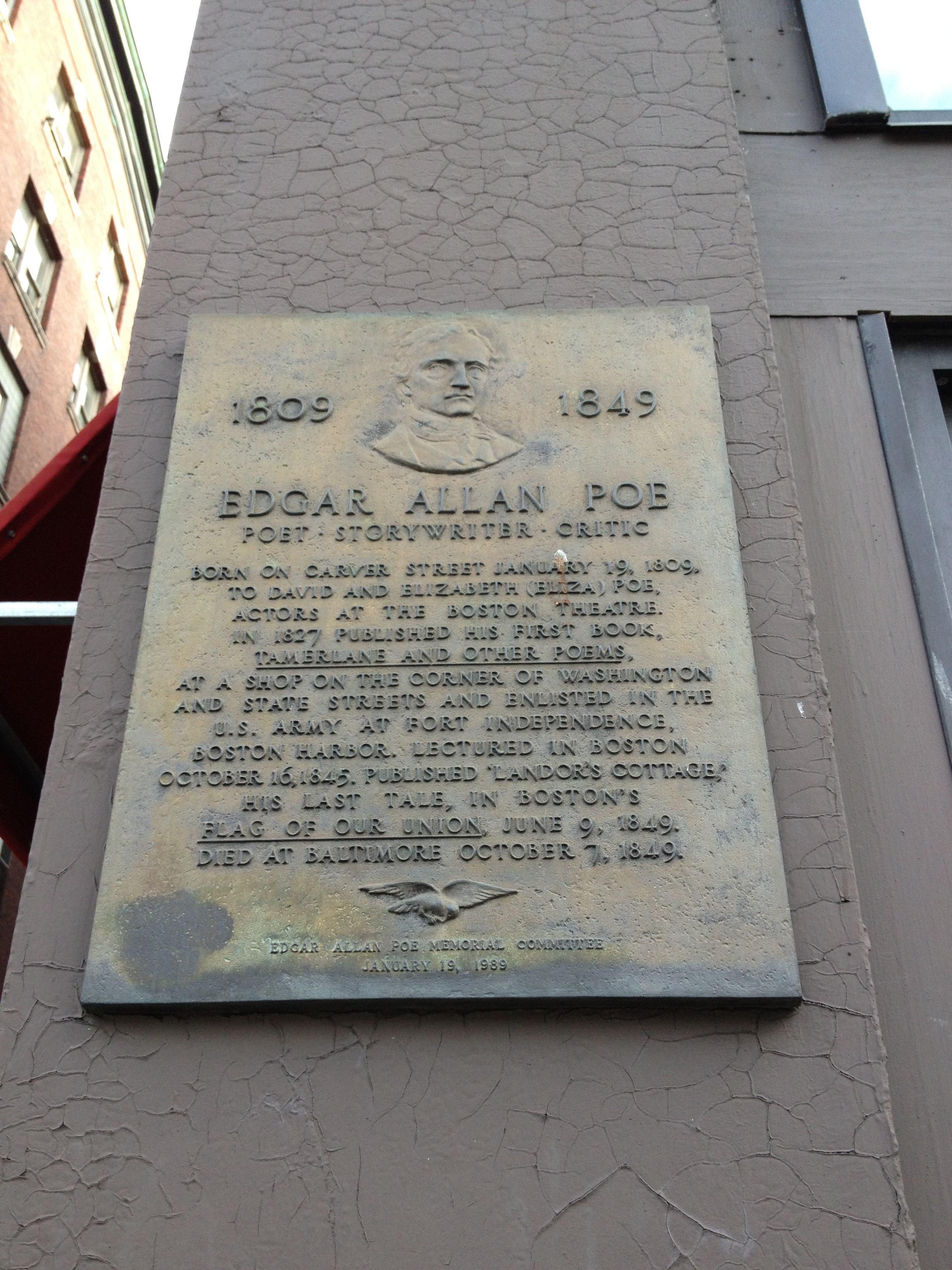
Apart from sharing a “middle” name, I would never dare compare myself to Edgar Allan Poe. Yes, I dabble in the literary arts, but every acolyte recognizes a true priest when he sees one. So as my train pulled into Boston, a city that has deep emotional resonances for me, I decided to stop and see where Edgar Allan Poe was born. The actual site is now a parking structure, an unexpected parallel between our emerging universes. All of my childhood homes, with one exception, are now parking lots. Standing at the foot of the memorial plaque near Emerson College, I reflected on my Poe year. I visited his college room at the University of Virginia in February, his one-time apartment in Philadelphia in March, his burial site in Baltimore in August, and now his birthplace. Not in any chronological order, but a voyage of discovery nevertheless.

This is the essence of pilgrimage. It is not rational and not really practical, but it is something people do. With religious intensity. I am in Boston as part of my secular job, but the city has sacred associations for me. I met my wife here, and that single event has changed my entire life. Boston will always be the place where something extraordinary happened to me. Poe did not like Boston, but for me it is the eternal city. Even the places with negative associations stake claims upon us. Over the weekend a friend posted a picture online taken before combat forced his evacuation from Vietnam many years ago. I kept coming back to that picture throughout the day. Lingering. Staring. Even though I’d never been there, it was like place had the ability to haunt those who’d even dared to look.

Poe and my friend are both writers who’ve drawn me into their worlds. What better way is there to learn that the universe is indeed infinite? Looking out my window at a Kenmore Square I recognize only by the giant Citgo sign that shed its garish light on many an evocative student night, I realize even eternal cities change. The last time I was in South Station I was saying goodbye to the woman I hoped, but did not know, would become my wife. Almost as if on cue, ” Lola” by the Kinks spills out of a local store as the Citgo sign flickers to life over the scene of my coming of age. In Boston I will always be twenty-three, wars will be long over, and Poe will remain alive forever.


Scary Monstrances

I can’t help myself. I’ve always found monsters fascinating. Now that I’m mostly grown up and am expected to have a modicum of respectability, I try to read academic books on monsters so that I can legitimate what would otherwise be puerile juvenility. David D. Gilmore’s Monsters: Evil Beings, Mythical Beasts, and All Manner of Imaginary Terrors was my latest foray into the forest. As I have come to expect, just pages into the book the first reference to religion emerged. This connection between monsters and religion is not Gilmore’s central theme, but it does recur at several points in the book. I especially enjoyed his discussion of Spain’s Pentecostal dragon. The Tarasque, named after its host town, is a medieval dragon that is still feted to this day in some locations. Considered to be symbolic of the sins of humankind, it accompanies either the holy day of Pentecost or of Corpus Christi. This connection between the church and monsters took me back to my first experience of Corpus Christi.

Raised as solid a protester as a Protestant can be, I had a difficult transition to some aspects of Anglicanism. The ceremonial was great, but some of the popish blandishments I could never quite accept. When a member of Boston’s famed Church of the Advent, the rector asked me to be a torch bearer on Corpus Christi. This involved processing outdoors onto Beacon Hill in full drag (or cassock and surplice, as I’m sure the parsimonious will correct me) to accompany the holy sacrament, carried as it turns out, in a monstrance. The idea that looking at a piece of wafer-thin bread on public display could somehow mediate a divine blessing, I never understood. It felt as much a fairy tale as the dragons of Spain. Monster or monstrance?

Gilmore concludes that monsters are people’s projections of their deepest unresolved issues. He may be right. One of his observations, however, struck me. He suggests monsters predate even gods in the human imagination. I tend to think they entered that gray space at the same time. Our minds have always told us that there were creatures out there to fear. Some of them, we hope, are good. Others are clearly evil. Monsters are difficult to explain in a world created by a benevolent deity. It is perhaps no mistake that Zoroastrians conceived of Angra Mainyu as monstrous. Divinity and diabolism could be fused into one being. There is a profound lesson here, for those able to read. Monsters are among the earliest projections of human imagination. And they remain forever with us.

Angra Mainyu; god or monster?