
Dark academia prompted me to do it. I have never read an Evelyn Waugh novel, but the title Brideshead Revisited is fairly ubiquitous. I’d heard it many times but knew nothing about the story. With tastes that tend toward horror, selecting a Friday-night movie that my wife will watch with me is sometimes tricky. I’ve been discovering that films listed as dark academia often appeal to her taste, and Brideshead was one of them. Interestingly, although we’d both heard the title many times, neither of us knew anything about the actual story. So we found out. The novel had been adapted into a successful television mini-series, and eventually became a cinematic version. That’s the one we saw. At the start it reminded me of E. M. Forster’s Maurice. Two young men meet at Oxbridge and fall in love. Only Charles Ryder is middle class, not aristocracy. Lord Sebastian Flyte is.
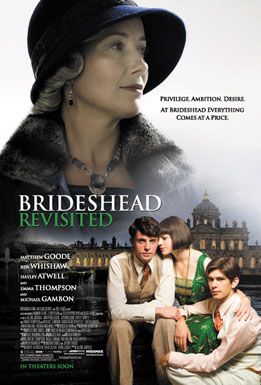
Lord Flyte lives at Brideshead, a country house that any gothic dreamer would be glad to own. While there, Charles meets Lady Julia, Sebastian’s sister. Like Maurice’s Clive, he eventually prefers her company to his. She’s already engaged to be married—you get the picture. What I wasn’t expecting was just how much of this movie was about Catholicism. The Flytes are Catholic, the mother demandingly so. Charles is an atheist. Agog at being welcomed into high society, he is nevertheless firm in his atheism. This sets up the tension between the mother and Charles, but both Sebastian and Julia are okay with it. Charles eventually becomes a successful painter with a society wife himself (the movie kind of just drops her), but still in love with Julia. When her dying, atheist father accepts the last rites and crosses himself at his dying moment, Julia knows her Catholicism means she can’t run off with Charles.
The dark academia part derives from the Oxford part of the story, but also from aristocratic society. It operates by its own rules and there are secrets and power struggles. In the end, Brideshead is abandoned during the Second World War and is billeting soldiers. Charles is now a captain in the army, in charge of the operation at Brideshead. He has no wife or girlfriend, and Julia has left. He goes into their private chapel and is about to extinguish the single burning candle, but decides not to. Apparently Waugh himself converted to Catholicism, but movies adapted after successful mini-series based on the novel might distort things. Overall, the film is a good reflection of that age-old English struggle with religion. And dark academia.
 Steve A. Wiggins