Imagining Things

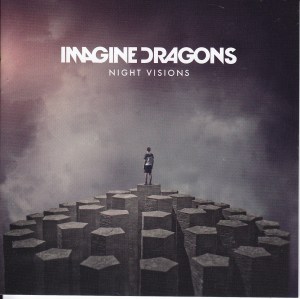
Having a child in college is one way for me to stay attuned to popular culture. You can absorb quite a lot by simply paying attention while on campus. For example, on the last several visits I’ve heard the song “Demons,” by Imagine Dragons, being piped into various venues. Given the biblical language of the song, I wondered about its origins, but, like many a distracted parent, had too much on my mind to pursue it. Well, on a recent visit, the song got stuck in my head. Partially this was because during an a cappella concert the Christian group did a cover of the song. This sent me to the internet—the only place where information on contemporary culture is instantly at your fingertips—to do a bit of poking around. Secular groups, after all, frequently use biblical references unnoticed.

When I learned that two members of Imagine Dragons were from Brigham Young University, I just had to know if they were Mormons. From what I’d seen of concert photos, white shirts and ties were rather conspicuous by their absence. Indeed, it turns out, according to the web, that the group does have some LDS in its bloodstream. I’m not so naive as to think that being of a particular religious background makes rockers religious. The debates raged in college over whether U2 was a Christian group because some of them were Catholics. I don’t recall seeing any crucifixes on the album art. This is all especially intriguing because Christianity and rock-n-roll are considered by many to be natural enemies. The origins of rock in the sexually suggestive blues had many 1950’s parents quite worried.

Religion changes, however, once you get away from the parents. I’ve known Mormons that I couldn’t identify as such until they told me. I’ve known Catholics about which I still harbor doubts. Religious affiliation is sometimes purely cultural. That won’t prevent you from being excluded from consideration for a teaching position at any of their schools, however. Scholars of religion can be the greatest believers of fiction to be found. Still, I have to admit to myself that the song “Demons” does keep me coming back. I wonder if the Christian group performing the song was aware of its Mormon tinge, or if they even cared. Sometimes theology can be had for a song.
ImagineDragons


Lions Among Men

Facial follicle emasculation, i.e. shaving, has some interesting religious implications. A recent Associated Press story highlighted this when students at Brigham Young University began a protest against the ban on beards at the school. Shaving has a very long pedigree but, as one who doesn’t shave I feel obligated to point out, not as long a pedigree as not shaving. Nobody knows for certain where or when shaving began, but it has been suggested Egyptian priests began the tradition. Others suggest it was an attempt among some early societies to control lice. Homophobic religions, it used to be, promoted beards as signs of masculinity. Alexander the Great, however, noted that beards are easy to pull during battle, although, for those who don’t fight it isn’t such an issue. Of the major monotheistic religions, Christianity is the only one that generally promotes shaving as the norm, and here it is only the practice in the western branch of the religion. Eastern Orthodox churches still retain bearded clergy. It has been suggested that the Roman preoccupation with shaving led to early Christian preferences for this practice, and there may be something to that.

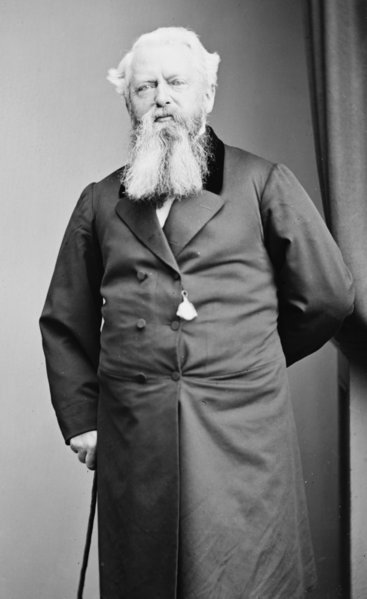
Having an old-growth beard (I last shaved over a quarter of a century ago) I have often found myself in the minority. While beards—mostly highly styled or glorified stubble—are making a bit of a comeback in New York City, they are still not as common as the alternative. In one of my many preprofessional jobs (that of a bag-boy at a Pittsburgh grocery store) I was told I had to shave. “Customers don’t trust a man with facial hair,” my manager told me. Delving into this a bit, I was told that beards mask the facial nuances that an honest man wants to show. What’s a beard trying to hide? Watching what clean-shaven presidents and Wall Street moguls get away with as “honesty,” I think I’ll stick with my beard, thank you.

I'd trust this man.

I’d trust this man.

Evangelical traditions, such as Mormonism, I long ago noticed, wish to control nature. Lawns must be manicured and trees, with their sloppy abundance of leaves, must be few and carefully spaced. Faces should be rid of the hair that Jesus and the disciples were said to wear, and clothes must be neat and tidy at all times. It’s an image thing. Among the evangelical crowd, those with beards keep them neatly trimmed, tamed, and penitent. For me, scraping my face with a cold bit of metal first thing in the morning is about the least civilized thing I can imagine. Spending too much time shaping and toying with DNA’s dictates seems to go against nature. Much of my beard may have gone white, but I have nothing to hide. Neither orthodox nor evangelical, my beard simply represents what it means to be human. Trust me.


God’s Country Club

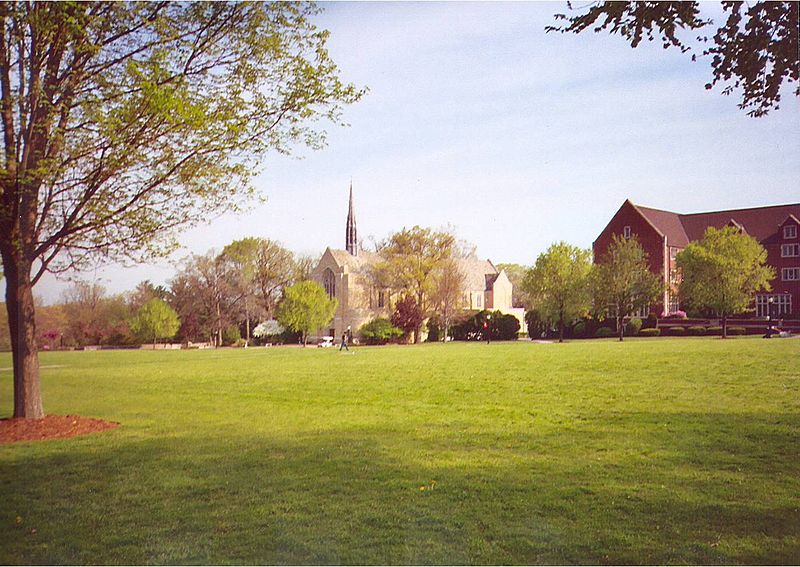
Last week CNN’s religion Belief Blog reported on the five most and least religious colleges in the United States, according to Princeton Review (not affiliated with Princeton University). Having attended one of the five most religious colleges on the list (Grove City College, but whether it is number one or five is difficult to determine), I took an interest in the overarching question: how do you determine if a college is religious? The author of the survey indicated that it was through student interviews concerning whether they perceived other students as religious or not. And that’s where the bone of contention pokes through—who determines what is religious behavior? Are students able to determine who is religious or who acts religious? Does religious mean Christian in this context, or religious in any tradition?

Grove City College, God's Country Club

My years at Grove City left little doubt that the school itself was proudly religious. An evangelical bastion against many forms of critical thought, plenty of indoctrination took place in those hallowed halls. A few religion professors (I was even then over-zealous to learn as much as I could about this field), while personally faithful, asked serious questions that many self-righteous classmates blithely ignored. From glancing through alumni magazines, they seem to be the successful ones. Those who asked the hard questions seriously were ostracized; now they are lost in obscurity. Is this true religion? The Princeton Review is concerned with providing potential students with accurate data about their collegiate choices, but I wonder if the religiosity proffered is anything more than denominational branding.

Three of the four other most religious schools might bear this out: Brigham Young, Thomas Aquinas College, and Wheaton College. Hillsdale College, the final member of the most religious fraternity, is the exception. A liberal arts school, formerly Baptist but currently independent, it fits somewhat uneasily next to the Mormon, Catholic, and Reformed natures of the other four schools. While I can’t speak for the other colleges, at Grove City there was definitely a coercive peer pressure to behave like everybody else—to be religious, i.e., evangelical Christian. With required attendance at chapel and required courses in religion, the ethos was heavily impressed. Were other students truly religious? That depends on the measure that is used. Many have gone on to be entrepreneurs declaring free market economics in the name of the kingdom of heaven. If that is a measure of true religiosity, all hope is lost indeed.