Summer of Horror

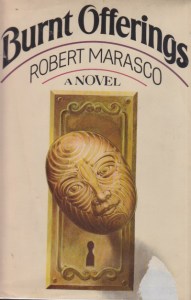
Summer vacation—or at least what used to be known as summer vacation—is winding down.  Unlike most years when the season is marked by a carefree sense of time off and travel, many of us spent it locked down while the Republicans have used revisionist history on the pandemic, claiming against all facts that America handled it best.  Is it any wonder some of us turned to horror to cope?  My latest piece in Horror Homeroom has just appeared (you can read it here).  It’s on the movie Burnt Offerings.  The movie is set in summer with its denouement coming just as vacation time ends.  I’ve written about it here before, so what I’d like to mull over just now is transitions.  The end of summer is traditionally when minds turn to hauntings.
Doing the various household repairs that summer affords the time and weather for, I was recently masked up and in Lowe’s.  Although it was only mid-August at the time, Halloween decorations were prominent.  Since this pandemic—which the GOP claims isn’t really happening—has tanked the economy, many are hoping that Halloween spending (which has been growing for years) will help.  My own guess is that plague doctor costumes will be popular this year.  Unlike the Christmas decorations that we’ll see beginning to appear in October (for we go from spending holiday to spending holiday) I don’t mind seeing Halloween baubles early.  There is a melancholy feel about the coming harvest and the months of chill and darkness that come with it.  Burnt Offerings isn’t the greatest horror film, but it captures transitions well.  (That’s not the focus of the Horror Homeroom piece.)

Many of us are wondering how it will all unfold.  Some schools have already opened only to close a week or two later.  Those in Republican districts are sacrificing their children (this is the point of the Burnt Offerings piece) in order to pretend that 45’s fantasy land is the reality.  The wheels of the capitalist economy have always been greased with the blood of workers.  (Is it any wonder I watch horror?)  As I step outside for my morning jog I catch a whiff of September in the air, for each season has its own distinct scent.  I also know that until the situation improves it will likely be the last I’ll be outdoors for the day.  It has been a summer of being cooped up and, thankfully, we’ve had movies like Midsommar and Burnt Offerings to help us get through.

Something Burning?

It’s all Amazon’s fault, really.  Several years ago—I can’t recall how many—they were running a horror movie DVD sale (that’s how long ago!).  I hadn’t yet watched enough movies to write a book on the subject, and most of the movies on offer I hadn’t heard of.  One of them was called Burnt Offerings.  Well, burnt offerings, by definition, come from religious settings.  The DVD was very inexpensive, and so, well.  The movie wasn’t that scary, but it was moody, which is often what I’m really after.  I did wonder, however, at the title.  In one sense it fit the plot, but in other ways it was almost as if something were missing.  A vital clue.  For one thing, the movie was completely secular, nothing I could include in Holy Horror.  

I’ve watched the movie a few times over the years.  There’s something compelling about the story, even though missing something.  A little research revealed that the movie was based on a novel by the same title by Robert Marasco.  Now, when I learn a novel was written in the 1970s, my thoughts turn to used bookstores.  Although the days of getting books there for less than a dollar seems long gone, the fun of browsing makes up for it. I don’t know how many years I looked for it in shops throughout the tri-state area.  Now with the virus, I finally broke down and ordered it from Bookfinder.

My main reason for wanting to read the novel was to find what I’d been missing.  The movie, it turns out, follows the original story very closely, for the most part.  The ending is different, however, and that makes all the difference.  (If you haven’t seen the movie or read the book, there will be spoilers here.)  The Rolfe family decides to move to an estate for the summer to get away from the noise of New York City.  There’s something odd in the house they’re renting, which they sensed even before moving in.  Marian Rolfe, the mother of the family, clearly becomes possessed by the house.  In a diabolical sense.  As her family dies off the house renews itself.  In a scene not in the movie, the regular caretaker stops in for a visit and tells Marian that she has to give her all to keep the house.  Finally, resigned to the death of her loved ones, she asks to have any remaining doubt burned out of her.  Her family will be the burnt offering.  So at last, it makes sense.  And yes, there’s a more religious theme in the book than there is in the movie.


Still There?

We_Are_Still_Here_film_festival_poster_2015

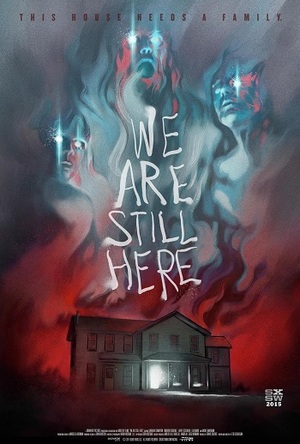
Keeping up with much of anything is hard to do, given work and commuting schedules. Often a horror movie will pass without even a notice until it’s on the sale shelf or free on Amazon Prime. On an October afternoon nothing feels more appropriate than a moody, ghost driven film. All these caveats are to introduce We Are Still Here, a movie that has received commendable ratings from the critics but which seemed pretty conventional to me. I’m not a fan of gore, and the finale has plenty to go around, still, the pacing is about right and the landscape is vacuously beautiful. I have to confess that I’m not sure of what was happening, although the newspaper shots during the credits were supposed to explain things. Haunted house, check. Townspeople acting badly, check. Spooky presence in the domicile, check. The menace is referred to in several different ways, but what is clear is that it wants a sacrifice.

To me this is what is at the heart of the connection between religion and horror. Sacrifice is wasteful by definition. Gods, who are demanding creatures, ask for people to give up something they could use to propitiate divine displeasure. We’re never really sure why gods have such anger issues, but it does seem like a universal trait. In We Are Still Here the “god” lives in the basement described as “hotter than Hell” and its choice of not slaying the intended victims is never really clearly explained. Perhaps that’s the point. Sacrifice is something that gods want. Reason has nothing to do with it. People in films like this seem to be minding their own business, doing what people do. Then the gods demand death. It is a religious trope older than the Bronze Age.

The film reminded me about the somewhat earlier and scarier Burnt Offerings. Ironically in the latter, there aren’t any burnings as there are in We Are Still Here, but there is a house that thrives on human sacrifice. Both houses demand a family and destroy it. Indeed, apart from sacrifice, such movies tend to be a critique of ownership. The house owns the people, not the other way around. And the house, in some sense, is a deity. We Are Still Here doesn’t give a full explanation. It puts the viewer through the usual paces for a horror movie with appropriate startles and grotesque deaths. Like most members of its genre, it reaches for religious backing to make it all hang together. It has the good grace not to be obvious about it as well.