Hope by Butterflies

Butterflies are the most hopeful of animals.  I’m always thrilled when I see the first ones of spring and I silently cheer on those that last until autumn.  One of the three insects I didn’t fear as a child (ladybugs and fireflies were the other two), butterflies seemed like nothing so much as goodness incarnated in insect form.  While at the 4-H Fair a couple weeks back, we were fortunate enough to be there for a butterfly release.  Volunteers handed butterflies to children who were eagerly awaiting the opportunity to hold one.  It’s like touching a rainbow.  It reminded me of the butterfly rooms at various museums or zoos where even adults wear bright colors and hold still, hoping an insect will select them for a temporary perch.  We want to be kissed by butterflies.
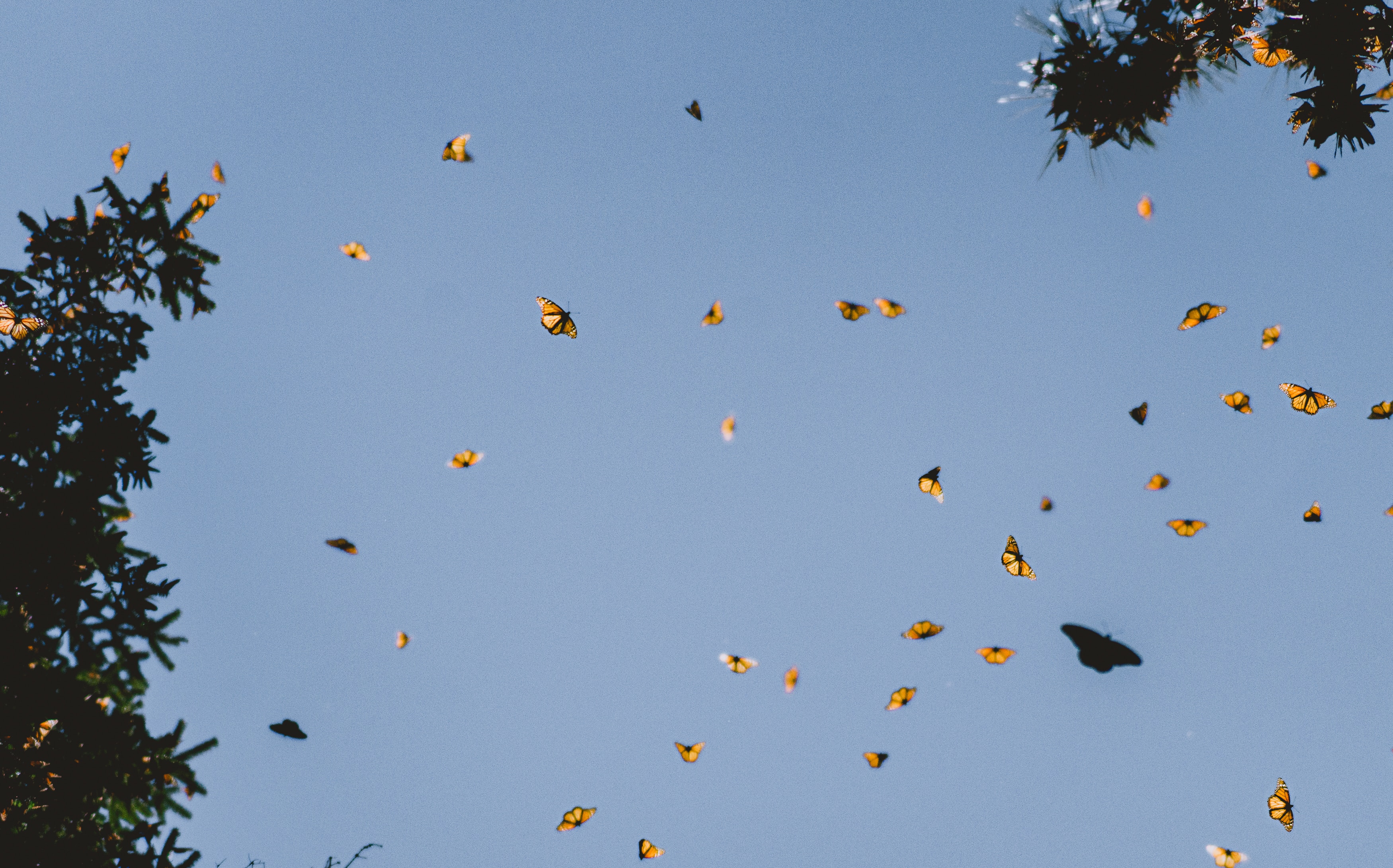
Photo by Shiebi AL on Unsplash

Their hope goes beyond their bright colors and the cheer they spread.  To become a butterfly is to be willing to undergo transformation.  A caterpillar is an eating machine.  When its biology gives it the cue, it forms a chrysalis and inside that temporary shelter made from its own body, it literally dissolves.  Nature, knowing what to do, reconstructs that goo into the flowers of the animal world.  Could there be anything more hopeful?  More able to draw tears of joy?  Butterflies don’t bite—some don’t eat at all—they don’t dig into you with sharp chitin, they don’t fly into your eyes or ears.  Gentle and delicate, their sole purpose seems to be the bringing of happiness to other creatures.

I know I’m over-simplifying here, but I’m in a poet’s skin this morning.  Life transforms us.  We don’t know what’s ahead and some things melt us down and make us into something else.  The butterfly shows us how to do it with grace and light.  When times are difficult we realize, often only later, that we have been transformed.  We had built a cocoon around ourselves, we dissolved and became something even more beautiful than we were before.  Winter came and froze our world, but when we felt the warmth of spring, we responded, not even knowing how we did.  And looking back we can see that we bring color and light and joy into a world that had formerly been gray.  There’s a reason that butterflies are widely recognized as symbols of hope.  They’re brave without even knowing it.  And they give the world just the optimism it needs.

Natural Wonder

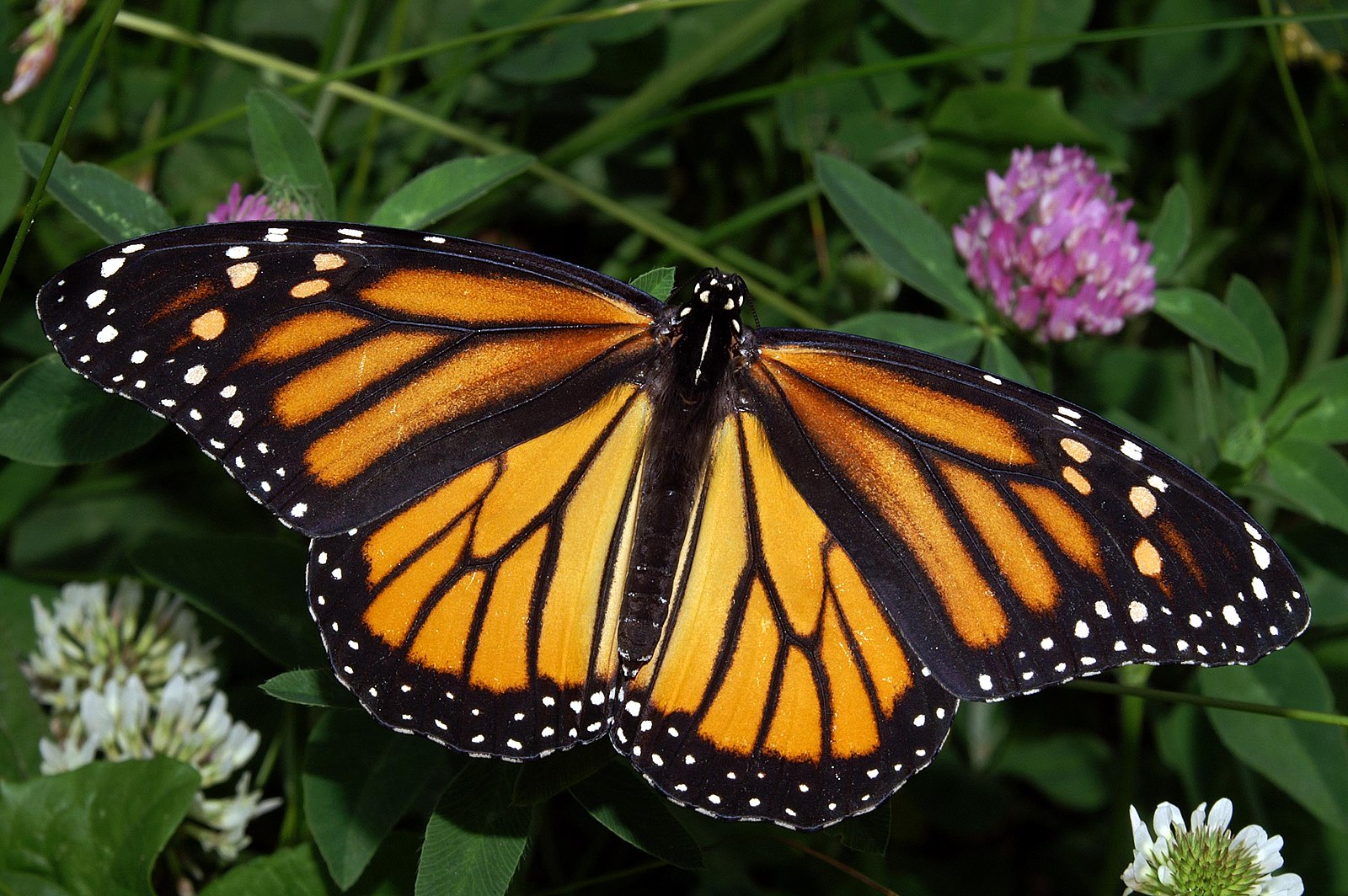
I recently heard a talk about monarch butterflies that left me in awe, once again, of nature.  These remarkable insects have been in the news because of declining numbers—largely because of global warming, it seems.  We’ve only begun, however, to learn how remarkable they are, even with the head-of-a-pin-sized brains.  You might wonder why I’m discussing butterflies in November, but it’s not the first time I’ve done that.  Besides, global warming has made it relevant.  So what about monarchs?  Perhaps the most remarkable thing is that they migrate.  And to do so it takes about four generations.  This deeply embedded behavior shows an intelligence in nature that we’re reluctant to grant.  Still it’s clearly there.  I live in Pennsylvania and we have monarchs around here and they can be found as far north as southern Canada.

Photo credit: Kenneth Dwain Harrelson, via Wikimedia Commons, GNU Free Documentation License

These monarchs around here aren’t the ones who left their overwintering spot in Mexico.  The earliest ones we see up here may have flown in from the Carolinas or the Midwest, where they may’ve been born.  As adults they feed on flower nectar, but to be born they require milkweed plants.  Monarchs only lay their eggs on this one plant family.  The milkweed contains a toxin that they’ve evolved to eat and that toxin gives them a really bad flavor.  That’s why birds tend not to eat monarchs.  So they reproduce in northern locations until environmental cues change the late season eggs.  These late season generation produces the butterflies that will migrate.  Instead of hanging around sipping nectar, they find south (they can tell time and they only fly on days with a south wind) and make their way to one specific area in Mexico to overwinter.  They don’t eat at that stage.

In the spring, hungry, they following blooming desert flowers north.  They follow the food supply, birthing new generations to carry on, until they reach the latitude they prefer.  So some stay around here, eating and reproducing until the cycle begins again in the autumn.  It might seem like a lot of extra work (consider what we do in the office all day and try to criticize) yet it demonstrates the remarkable intelligence of nature.  That migrating generation has to know to fly south and they have to be able to find direction.  Once there, and ready to return, their offspring’s offspring will (we suspect because of other species) know where their great-great-grandparents lived and they head there over three generations.  All of this is being endangered by global warming, however. Because one species thinks of itself alone as remarkable.


Real Hope

I’m doing something I seldom undertake: posting a second blog entry on a single day. Well, I’m in California and my time scale is all out of whack anyway; who’s to say what time it really is? Last night (or was it afternoon?) I checked into my hotel to find a message from Una McGurk, the colleague of Trina Paulus and coordinator of the Hope for the Flowers Kickstarter campaign. I mentioned Trina Paulus’ Hope for the Flowers in a recent post, as a way of summing up some thoughts on resurrection and societal change. I am a die-hard idealist, often to my own detriment, and I didn’t really elaborate on just how important a book Hope for the Flowers is. In all seriousness, it is a transformative book for those receptive enough to read it with an open mind. Sometimes we’re inclined to think that books that look as if written for children can’t have anything adult to say. We are so wrong.

In keeping with the spirit of the book, Trina Paulus and Una McGurk are attempting to raise funding to produce an independent animated version of the story. Since movies and books dominate my post topics, this is a cause I find worthy of support. A bit of a spoiler alert here—if you haven’t read the book, or if you simply need to be reminded, Stripe and Yellow are caterpillars in love. Stripe, however, is drawn to the world of what all other caterpillars do—climb. Forsaking his love, he climbs to the top of one of the countless caterpillar pillars in the world only to find that those at the top get there by throwing others off. The top of the pillar is empty. Nothing is there except the hollow feeling of having beat others to the pinnacle. Still, above the pillar, butterflies soar.

It is a simple story, but the message is profound. And necessary. Looking at the progress of corporate greed and heartless acts of personal promotion, it is difficult not to call Trina Paulus a prophet. In a day when Christianity is identified primarily with draconian restrictions on what “true believers” cannot do, I think we could all use a few more butterflies. Chances are, if you are reading this blog, you have some sympathy for the human race. If you do, visit the Hope for the Flowers website and consider pledging a donation, no matter how small, to spread this message further afield. Not only the flowers, but also the very survival of humanity could well depend on it.

A California caterpillar says yes!