What’s New?

Now that 2021’s behind us, what will we make of the year ahead?  New Year has generally been a time of reflection.  I don’t put a lot of stock into it because years are just random markers pointing out when we’ve been around the sun once again.  They’re good for organizing things, but does a year have any particular significance?  Many people talk as if 2020 and 2021 were cursed.  I tend to think of the Black Death and the influenza of a century ago and realize that if you’re reading this, we made it through.  Not personally perhaps, but our ancestors did.  The Covid-19 pandemic wrenched us unwillingly from our comfort zones, but isn’t that part of life?  Were things good before?  Was it kind or humane to have Trump in the White House?  Was (is) the death-grip of capitalism on the western world cause for celebration?

Yes, we had to travel less.  Our ancestors—for some of us that may be as recent as our grandparents—would likely have considered our travel excessive.  Why do we always want to be somewhere that we’re not?  What makes a home a home?  What can we do, moving forward, to make that more appealing?  The past two years have changed a number of things, some decidedly for the worse, but some for the better.  I keep reminding myself that our outlook is terribly short.  The planet has hosted life for billions of years.  Some plants live for millennia.  We see only our lifetimes and use them to decide what’s normal.  I’m never quite sure what normal is.

I do know that it’s considered a new year now, for those who celebrate the new start on January 1.  Other cultures have other dates to mark this time.  We call it 2022 based on likely incorrect information about when Jesus of Nazareth was born.  Our Muslim friends mark the years via Muhammad.  Others find yet other markers important to their cultures.  Is any of this normal?  It is normal to be so terribly polarized as a nation, with supporters of one candidate hating those who support another?  Is it normal to complain because we’re surviving through a pandemic, because our conveniences have changed?  I suppose it’s normal to want things back the way they were.  Some of us are ambivalent about this whole internet thing.  There was value in knowing how to fold a paper map.  There will, however, be value in the time allotted before us.  2022 may be just a number, but as we reflect perhaps we should think of how to improve where we find ourselves.

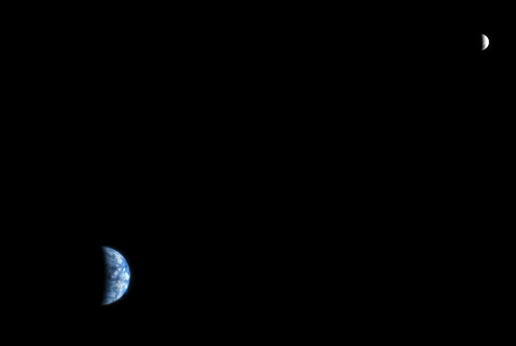
From NASA’s photo library

Change Management

Calendars fascinate and flummox me.  When I try to convert from Julian to Gregorian, or vice versa, I get hopelessly lost.  The same applies to time zones and that horror known as springing forward or falling back.  Time, as something that is constantly moving, isn’t easy to grasp.  I’m in charge of a scheduling activity at a local organization.  (Whoever thought that was a good idea I’ll never know.)  While trying to sketch out 2022, with fear and trembling, I noticed something for the first time.  In a non-leap year the dates correspond to the same days of the week for January and October.  This is also true for February, March, and November.  And September and December.  This would’ve been helpful to know, it seems, in the previous half-century of my life.  There’s solidity underlying the flux.

It was really only in the 1890s that “eastern religions” were discovered by Americans.  Our nation was so thoroughly biblicized that we had forgotten that there are other ways to view the world.  The idea, prevalent in the sixties and seventies, that we can gain wisdom from exotic religions was probably misguided.  After all, to truly understand them you need to have years of immersive experience in them.  It also helps to be a true believer.  Still, I find the conceptions of change from Buddhism and Taoism particularly helpful.  Change is permanent.  If we spend our lives fighting it we’ll be frustrated rather than enlightened.  Of course, for those of us who are chronologically challenged this isn’t necessarily good news.

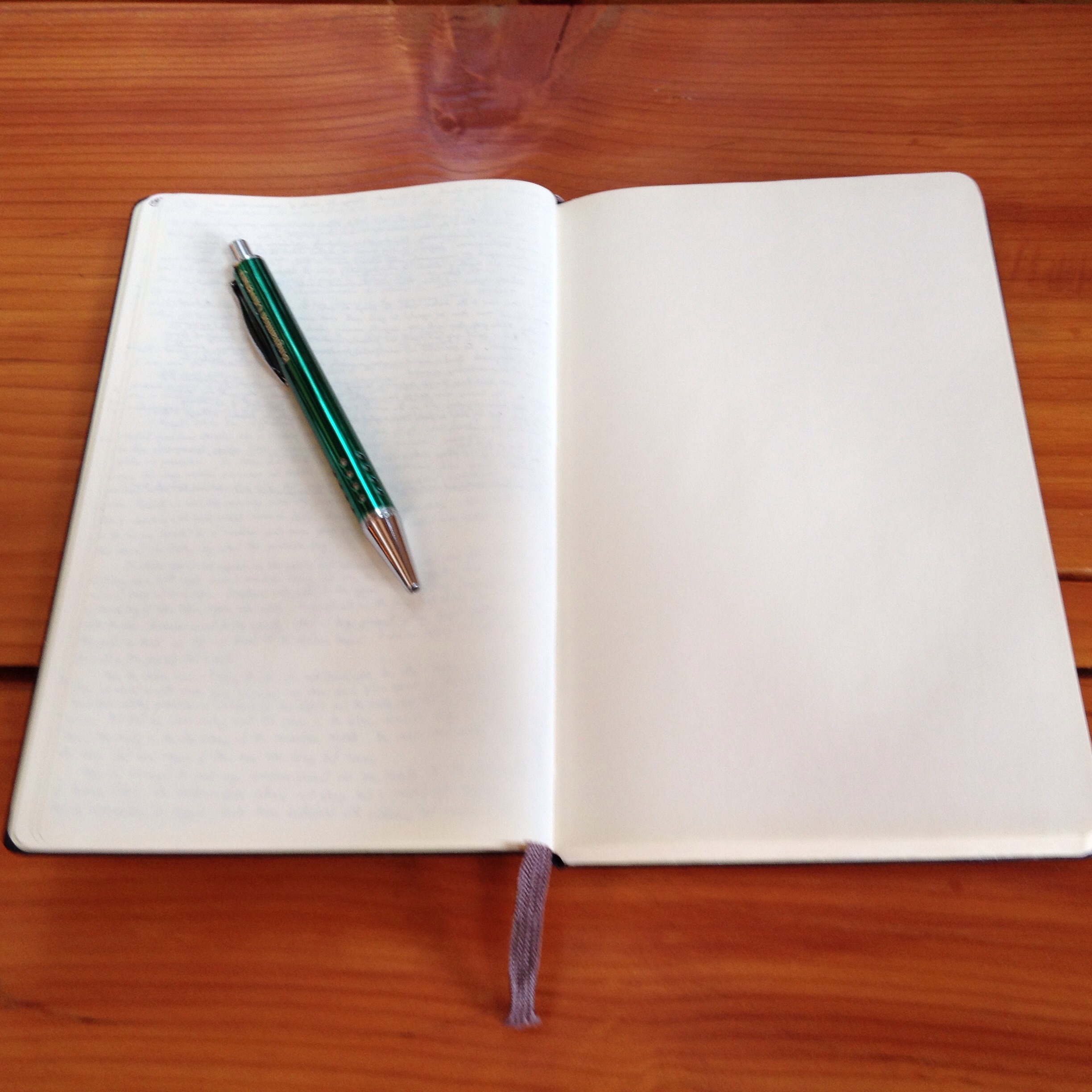
Employers are busy hiring change managers.  These people work at a pretty theoretical level that doesn’t always address the desire for stability.  Sometimes I want to say, “Hey, for the first two decades of my career change was slow, and now that I’m aging I’m being told to go faster.”  I do try to keep up, but the automobile hadn’t been invented when my grandmother was born and we were walking on the moon before she died.  Since the internet, however, things have speeded up even more as ideas are shared worldwide and we see new ways of looking at things.  We may desire stability, but change is indeed permanent.  The pandemic has changed much, and things aren’t going to go back to the way they were.  I look to the notebook in front of me.  I probably would never have noticed the correspondence of January and October if I hadn’t been writing the dates out on old-fashioned paper.


Thanks for the Giving


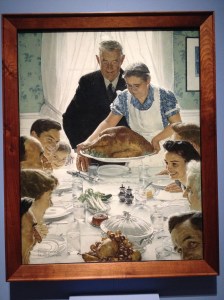
The wonderful thing about Thanksgiving isn’t the food.  I object, on more than one level, to calling it “Turkey Day.”  No, the wonderful thing about Thanksgiving isn’t the food, but rather the universal aspect of the holiday.  From Fundamentalist to atheist, everyone can be thankful and we all have things for which to be thankful.  The holiday may have begun in a Christian milieu, but you need not believe in a God in the sky to give thanks.  We can thank one another, we can thank the universe, we can thank whatever powers that be, or we can simply be thankful, no matter to whom.  As I write this in the early morning hours, I’m thankful for being home after spending several days on the west coast.  Hearing the November wind howling outside, I’m thankful for this warm cup of coffee.  I’m thankful for the ingathering of family.  There’s so much goodwill today.

Thankfulness leads to a kind of optimism.  Thankful people can perhaps see that we need not hate others to feel good about ourselves.  I think of Thanksgiving as a feeling of love and acceptance.  Perhaps more than any other holiday.  I’ve heard people of many religions and backgrounds wishing others a happy Thanksgiving.  Would that all holidays could be so accepting!  Of course, holidays themselves have their origins in religions.  Were it not for beliefs, one day would be the same as any other.  There are religions that refuse to celebrate holidays, but when critics become too harsh on religious beliefs I’m thankful to remind them that they have religion to thank for both holidays and weekends.  We could all use a break.

Thanksgiving comes at different times in different countries.  In some places no equivalent holiday exists.  There are secular holidays, of course.  The very concept, though, of a “holy day” comes from that great generator of calendars—religion.  As chronologically challenged as I am (I can’t figure out time changes or time zones or even what time it is anywhere non-local) I often think of the marking of time and how a religious impulse started our species doing so.  Sure, it may have been the urge to start planting, or the awareness that the herds of prey were moving on, but in those early days such things were infused with religious significance.  And when calendars became canonical, there were religious impulses present to drive it.  So, in a way, it is good to be thankful even for religions—as problematic as they can be—on this Thanksgiving.  


Retrograde Motion

How wondrous it feels, after a winter of dark skies, to see dawn beginning to break even before I crawl onto the bus in the morning. Almost pagan in my desire for the longer days, I anticipate this every year after standing in the dark since October. Then everything changes. Darkness falls again. I’m inexplicably weary, despite the sleep of a weekend. It’s Daylight Saving Time. Every year I wonder at this inane wartime madness that we keep going, despite its lack of applicability in an electronic age. Employers, I should think, with an eye toward efficiency, would lead the charge to end changing clocks twice a year to yawning employees and the inevitable depression of taking a step back into darkness. It will be another month before the sun again appears at my bus stop. Meanwhile, it will be light when I’m getting ready for bed in the evening. Perhaps I’m the only one who thinks about this. Religion, however, has always held time sacred.

IMG_2439

Quite apart from “sacred time”—holidays and festivals—religions have always been about the appropriate use of time. Counterintuitively, they suggest the rushing about we do to make money, to ensure our material well-being, might be misplaced. There might be a better use of the allotment that we’re given on this earth. Time to ponder. Call it prayer or meditation, studies show that it is good for us to spare some of our time for quiet reflection. Every second counts. And time sets the very patterns of our lives. Bodies know when to awake and when to eat. Until we go and shift the entire calendar on them.

Daylight Saving Time was a wartime measure to ensure the most efficient production of arms. Now, in days with lights blazing constantly, telecommuting, and farming being done largely by automation, we still religiously keep to this barbaric ritual. Eyes heavy with sleep, I stand in the utter darkness again, wondering when I might see some glimmer of light. It will only come when I’m ensconced in my windowless cubicle. It is so dispiriting. I, for one, would gladly forfeit a mere extra hour’s sleep in the autumn, just to keep progress going in the spring. Instead, I follow the crowd as we waste an hour that becomes five, six, ten, or twenty as we try to readjust our bodies to rising an hour earlier. For those of us up before four a.m., it is a sacrifice indeed. All I really crave is to allow the light continue to grow.