The Ology

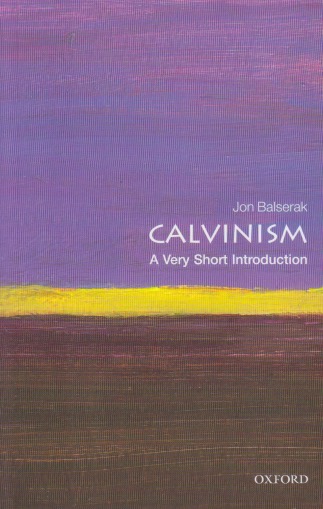
It’s good to refresh yourself once in a while.  I attended a Calvinist college and my doctoral program was in the context of an institution strongly influenced by Calvinism.  I took courses based on Calvinistic theology.  Jon Balserak’s Calvinism: A Very Short Introduction was really a refresher for me and I have to admit that it sparked a pretty strong reaction.  For one thing, many Calvinists unthinkingly accept the tradition in which they were raised.  (Call it indoctrination, literally.  This is true of most religions.)  Those I know seldom believe what Calvinism teaches, for it presents God as a monster. (This is me, not Balserak, and I mean this in the kindest possible way.)  You see, doctrinally Calvinists have to accept Scripture literally and if you do that you come up with all kinds of contradictions.  (The amount of special pleading is mind-boggling.)  The way the Calvinists landed on this was that God created us for his glory, which will be shown in predestining large numbers of people to Hell.  These people can do nothing to change that since God doesn’t really love them.  What would Jesus say?

I argued quite a lot with professors at Grove City College.  I was raised a Fundamentalist, but of the free will stripe.  The Methodist Church, which I eventually joined, was not Calvinistic in outlook.  (Neither are Lutherans or many others.)  Still, Calvinism has unduly influenced American culture—I wish the book would’ve focused more on this.  We are, culturally, heirs of Calvinism.  This little book points out one obvious way this is so, namely, the separation of church and state.  There are many other features that could be pointed out, but the book aims to be universal and this is therefore not a theme.

The book approaches Calvinism theologically.  There’s quite a lot of “shop talk” here that I imagine might put off those who don’t really care to know who said what about a particular point of doctrine.  Balserak points out that Calvinism is complex and there is no one way of looking at everything, but there are clearly some non-negotiables.  These non-negotiables are precisely what prevented me from ever trying Calvinism on for size.  I’ve moved through various religious outlooks on my journey that is geared toward finding the truth.  Calvinism never tempted me, nor did it ever seem to make sense.  It was as if the tradition accepted that Zwingli and Calvin and company had gotten the basics all correct and every act of theology since then involves a casuistry to prove the early teachings correct.  Why not question things?  Well, I guess they’re predestined not too.

Melvillian Thoughts

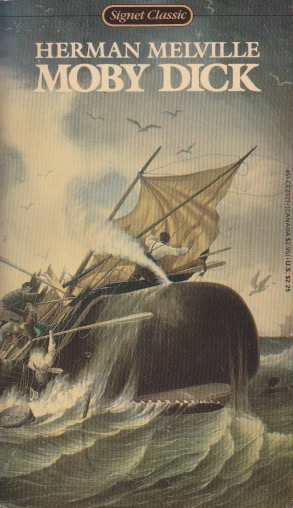
I’ve posted about Moby-Dick a number of times on this blog.  I make no bones about the fact that it’s my favorite novel.  Still, I don’t know much about Herman Melville as I’d like.  Only what you can learn from reading his novel and a few other books.  The thing is, I’m really growing an interest in the literature of the American Renaissance.  While Washington Irving isn’t my favorite writer, he was perhaps the earliest of the Renaissance crowd.  Consider this, these writers all lived during Irving’s lifetime: James Fennimore Cooper, Edgar Allan Poe, Emily Dickinson, Nathaniel Hawthorne, Melville, William Wadsworth Longfellow, Walt Whitman, Ralph Waldo Emerson, Henry David Thoreau, and Louisa May Alcott.  Many others as well, but what heady times!  Can you imagine walking into a bookstore and seeing all the wonders on offer for the first time?

But back to Melville.  I was recently doing some further reading about him—I need a good biography, actually—and learned some things I didn’t know.  I knew he’d gone to sea, but I wasn’t aware that his mother raised him with a strict Calvinism (which explains much in Moby-Dick), but that he eventually returned to his father’s Unitarianism.  Indeed, Melville’s work displays many of the values of the Unitarian tradition.  Moby-Dick is largely his struggle with religion, laid out in terms of Ahab and the great white whale.  Melville spent a period of his life, before Moby-Dick, as a successful writer.  In a way that seems unimaginable to us today, that novel was a flop and he eventually had to take on a pedestrian job, although he kept on writing.  I have to admit that I’ve read none of his other novels.  I’m just blown away with his most famous work that I’m a little afraid of being disappointed in his other efforts.

I know a few novelists.  Of only one of them have I managed to read all their works, and that’s because this particular author only wrote one novel (which made a big enough splash to get reviewed in Time).  My dilettantism has been a characteristic of my life.  I’m too curious, perhaps, and there’s not enough time to read every work of every author I admire, even those I personally know.  I haven’t given up joining their ranks someday.  One of my novels is currently out for consideration, but I have no real expectation of success.  The best I can do in these circumstances is to read the work of those who managed to succeed, even if they didn’t live to see it.  And to wonder what it must’ve been like when so much talent appeared at the same time in a very young country.


Writing 2023

I don’t put a great deal of stock in either round numbers or random passings of time, such as New Year’s Day.  Don’t get me wrong—I’m glad for the holiday—but time is like an ocean; who can say where it begins or ends?  Many people use this occasion to correct bad behaviors, but I was raised with enough of a Calvinist outlook that I tend to be self-correcting along the way.  I certainly corrected myself at several points in 2022 and still ended up spending a couple of its final days in the hospital with an ill family member.  The way I get through is by living in a world that’s largely fantasy.  I awake early (even on holidays) and spend the first few hours of the day writing and reading.  Without this I fear I might become a monster.  A self-correcting one, of course, but a monster nevertheless.

Looking ahead is too scary, so I read and watch horror instead.  If recent reading is correct, such activities are taking part in creating modern myths.  Who knows what 2023 might bring?  It’s safest to take things one day at a time.  I am hoping that my Wicker Man book will appear in this, the fiftieth anniversary of the film.  I also hope to get some more YouTube videos posted, as well as continuing this blog.  As last year unspooled I intentionally did not accept any more academic writing assignments.  The stress levels run too high for that kind of thing, and my CV’s not going to get me back into academia at any point soon.  Life’s too short, and it is better to spend it writing what I want to write.

Writing one’s future isn’t a bad idea, I suppose.  I’ve learned that plans almost never work out the way intended.  I’m not sure if that’s because growing up poor plants ideas too high to grasp in your head, or if life is inherently populated by unseen tricksters.  It’s best to try to keep them happy in any case.  And at least this year begins with a four-day work week.  We can be thankful for small mercies.  Even as it starts I’m casting my eye hypocritically toward the next Christmas break, for which I save up my scant vacation days, and which I anticipate all year long.  In the meanwhile there’s the lion’s share of 2023 to get through.  It feels daunting at this point, but with books and those I love, I hope to reach that point unscathed as I write my future.


Belief Matters

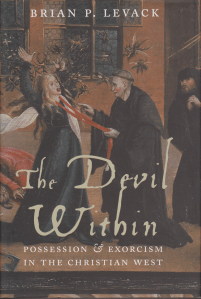
What you believe matters. This is shown clearly in the case of exorcism. Brian P. Levack admits to personal reasons for interest in this dark subject. His The Devil Within: Possession and Exorcism in the Christian West is a masterful treatment of a topic that it considers from many angles. As a form of Christian practice it goes all the way back to the beginning—Jesus’ initial fame was as an exorcist of sorts. He didn’t require any ritual or authority to expel demons, but he became a public figure largely because of his ability to do so. Levack’s study focuses mainly on the Middle Ages and the Early Modern period. The latter was the high-water mark of possessions until the resurgent interest of the post-Exorcist twentieth century.

An aspect of exorcism that had raised my curiosity more than once was its Catholic disposition. Many Protestants believe in demons, but only the Roman Church has the grand ritual to drive them out. There are Protestant exorcisms, but they have a different goal—they’re intended to eliminate sin. This leads Levack to a strong contrast between Catholicism and that most extreme of Protestant traditions, Calvinism. Few Calvinists suffered from possession. Those who did were not held blameless, as in Catholicism (if you were being controlled by a demon you could hardly be held responsible for your actions). Calvinists believed only the sinful could be possessed and since their God is Republican you can hardly count on any mercy. In fact, if you were possessed, chances were you would become a witch. And everyone in early modernity knew what the cure for that would be.

We tend to think that the Enlightenment drove such beliefs extinct. In fact, the height of both witch hunts and demonic possession came after the scientific paradigm took hold. Levack makes the point that this is a kind of theater—performance undeniably plays a part in exorcisms. Both science and Calvinism, taken neat, can leave a body feeling cold and in need of some emotion. As the book notes, you could generally find a Catholic priest who’d be glad to drive out your demons. It seems that the great forces of good and evil play themselves out not only in the spiritual realm, but in the varieties of religious experiences in the all-too-political world of the church. The Devil Within is a fascinating book with a plausible thesis written by an author who understands that ideas have consequences that aren’t always easy to expel.


The Great Slumbering

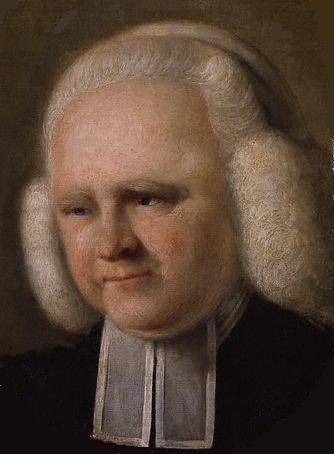
Even in days of secular education—I am a product of public education throughout my childhood—Jonathan Edwards is a name that still retains recognition among many Americans. Perhaps best remembered for his sermon, “Sinners in the Hands of an Angry God,” Edwards thrived at a time when being a clergyman was a recognized path to success in this world as well as the next. Not that all ministers became famous, of course, but those with the inclination had access to books and time to study. They could write books and influence public policy. Indeed, Edwards was part of the “Great Awakening” that spread throughout the young United States, before its independence. George Whitefield had brought a showman’s sensibility to preaching, and people gathered to listen to roving reverends who brought their wisdom to new locations. In fact, revivals continue to this day—I had attended a few as a child—and they are largely responsible for the denominational map of American Protestantism even today. The “Second Great Awakening” brought Methodists and Baptists into the mainstream to stay.

The first major revivals, however, were fueled by a Calvinistic intensity. Having spent many of my educational years in schools established or supported by Presbyterians, I know their theology well. Judgment is important in the Reformed tradition. Indeed, without the element of threat, the heat is stolen from much of revivalism. Edwards’ sermon encapsulates so well the vital element of a theology that preached total depravity, unconditional election, limited atonement, irresistible grace, and perseverance of the saints. In other words, unless God has already selected you, you’re out of options. As Presbyterian teachers were eager to state, you should still try to live as if you were saved (“elect”), even if you were going to Hell because of, well, you know, an angry God. Campus rules at Grove City embodied that ethic in a real-time way.

Jonathan Edwards went on to become president of Princeton University (the College of New Jersey, at that time). He died at about my age, having been inoculated for small pox—he was a believer in science—to demonstrate the value of the practice to students. He contracted the disease and died merely weeks later. Ironically, Edwards felt he was past his prime and had to be persuaded to take an academic job—somewhat of an extreme rarity today—and largely because his son-in-law, Aaron Burr, Sr., had recently died as the incumbent. Today, starting on the path to ministry is often a fast-track to job insecurity, popular derision, and poor earnings. For all that, it is difficult to be accepted in the ordination track without jumping through many hoops. So Jonathan Edwards came to rest in Princeton, New Jersey, as a famous, published, and highly respected man. A more different world then his in such a short time in the same location, is hard to imagine.

DSCN6140


Quaker Way

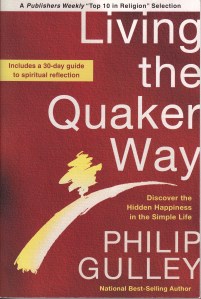
QuakerWayDoctrine can be an immense stumbling block. As a person who’s been involved with many churches in my life, the virtue of virtues often seems to be sacrificed on the altar of doctrine. If you don’t believe X, you’re not one of us. It was a great delight, therefore, to read Philip Gulley’s Living the Quaker Way. Having grown up in Pennsylvania, you might think I’d know a great deal about Quakers. I never met any, however, when I lived in the state. And I really didn’t know much about their beliefs. I knew they called themselves Friends, and I knew “Quaker” was originally a derogatory title, like “Methodist,” “Jesuit,” or the near homonym, “Shaker,” later reappropriated as a name for the group. I also knew that numerically they were on the smaller end of the religious demographic. Reading Gulley’s insightful little book was an epiphany.

I learned of Calvinism at a Presbyterian College. There I was taught TULIP: Total depravity, Unconditional election, Limited atonement, Irresistible grace, and Perseverance of the saints, the first three of which struck me as dangerous and unholy. What a beaming of light to read instead of SPICE: Simplicity, Peace, Integrity, Community, and Equality. This acronym is Gulley’s shorthand for what defines the Religious Society of Friends. Doctrine is nowhere on the list. A deity who creates people just to throw them into Hell is also missing. As is Transubstantiation. And religious violence in the name of spiritual purity. There is an awful lot to be learned from the simple message of people who understand that they are people and every other person is too. Gulley is not naive; he knows Quakers aren’t perfect. What he does show, however, is that those who are willing to relinquish self-assured self-righteousness make far better neighbors who resemble what Jesus taught than do many who would rather destroy the livelihoods of those with whom they disagree.

The beauty of what this book describes is that one need not be a Quaker to live this way. Not being doctrinal, a Quaker wouldn’t insist on that and still be true to the ideals of the Friends. If we could learn to want less, to get along with those with whom we disagree, be honest, welcome others, and treat all people as if they had a bit of God inside them the world would be a better place. There can be no doubt about that. One might say, “that’s just common sense.” I would guess that most Quakers would agree. Religion, freed from platitudes, could be a viable and valuable way of being in the world.


Unity in Diversity

UnitariansUniversalistsIn the Simpsons episode “Bart’s Girlfriend,” Jessica Lovejoy steals all the church’s money from the collection plate, leading Mrs. Lovejoy to call out, “Everyone turn around and look at this!” Grampa Simpson whips around saying, “What is it? A Unitarian?” And so the jokes go, back even to my seminary years. The Unitarians, however, are among the most intellectually honest of religions. I recently read David Robinson’s The Unitarians and the Universalists. Although the traditions approached their 1961 union from different angles, they had a common origin: concern over the Calvinism of colonial and early post-colonial New England. The majority religion of the northeast, various forms of Calvinism taught of utter depravity, human helplessness, and, that absolute affront to human intellect now being posited by some materialists: predestination (determinism, in secular terms). The Universalists couldn’t accept that a loving God would make anyone suffer forever. The Unitarians had trouble with several aspects of the theology, not the least of which was the Trinity (as a non-biblical concept). Early Unitarians based their beliefs on the Bible, which, as it turns out, does not support several Calvinistic concepts.

Like all religions, Unitarianism evolved over time. Eventually the unity of God became only one among many possibilities of what one might believe. In fact, doctrine was less important than ethics. It was a true Enlightenment religion. It allowed for the Transcendentalist movement that we all learned about in school, with Emerson wandering in the woods, and Thoreau never wanting to move out of them. They also had room for those who studied the Bible but expressed concerned that Jesus doesn’t really say that he’s God, although obviously some people interpreted it as if he had. Regardless of belief, meeting together was necessary, and eventually the Unitarian Universalist Association came to represent a widely liberal form of religion with Christian roots but rational sensibilities.

Among the marks of distinction of these groups is that, among Protestant denominations, they were among the first, if not the first, to ordain women. When you are less beholden to wooden tradition, all kinds of possibilities emerge. This book was kind of an epiphany for me. I’d been channeled into thinking that “orthodox” necessarily equalled “the good guys,” despite the treatment that I’ve repeatedly received at their hands. It sometimes takes a Gestalt phenomenon to see orthodoxy as not necessarily good. Perhaps the effort to preserve a tradition outdated by a couple of millennia costs far more than it saves. Perhaps we need to become more human, not less. I may not walk the forest with Emerson—he preferred to be alone anyway, from what I understand—but I’ll not be so quick to assume that tunnel vision is true vision either. Not in a world where the Simpsons can teach us as much as The Institutes.


New York Calvin

So I’m standing at the corner of Fifth Avenue and 29th Street, gazing at Marble Collegiate Church, of the Reformed Church in America.  A cold breeze is blowing, and I wish I’d thought to dress a bit more warmly.  Although the building in front of me was erected in the nineteenth century, the church was founded in 1628, making it among the oldest continuous Protestant congregations in the New World.  It is regularly passed by tourists and shoppers who give it nary a glance, not realizing that the Dutch who gave us New Amsterdam also gave us a Reformed Church that has stood the test of time in an increasingly secular New York City. 

IMG_1294
 
I am not now, nor have I ever been, a Calvinist.  That may seem odd coming from a religion scholar who attended a very Presbyterian College and earned a doctorate at a Presbyterian department at the University of Edinburgh.  Nevertheless, despite the many belief systems I’ve indulged, the Reformed wing has never appealed.  That’s not to say that I don’t appreciate what Calvinists have to offer: where would we be without the many good things Presbyterians have brought to us?  In any case, I was recently considering how I automatically equate Calvinism with Presbyterianism, and how I really need to get over that habit.  The Swiss reformers were a far more fragmented sect than the Lutheran contingent ever became.  That still shows in the many historic Calvinistic traditions out there.
 
Presbyterianism, on its own, is not a uniform denomination anymore.  For the time being, however, if we consider all Presbyterian groups as one stream of Calvinism, we need also to consider the Reformed groups.  Although all Calvinists are reformed, the Reformed Church had its historic stronghold in the Netherlands.  Doctrinal differences continued to fracture the Reformed Church into several denominations, two of the most prominent in the New World being the Reformed Church in America and its splinter, now larger, of the Christian Reformed Church (not to be confused with the Christian Church, (Disciples of Christ)).  Congregational churches, which have no overarching governing body, frequently fall into the Calvinistic theological tradition, although that is not necessarily the case.  Other Protestant denominations, such as Methodism, have equally diverse origins.  Others, like the Baptists, have an early history that is unclear even today.
 
The Calvinist theological family tree is well studied, and it stretches back from where I’m standing to Huldrych Zwingli and John Calvin and their peers, some five centuries ago.  Although it never reached the size of the Baptist and Methodist growth spurts during the Great Awakening, Calvinism did make a lasting imprint on the landscape of North America, and still continues to bring some of us out on a chilly day just to look and wonder.


Shaky Ground

HigherGroundFor the past few years I have been drawn to the spiritual memoirs of women. I suspect a deep disconnect prompts this interest. Religions—in this case primarily the monotheistic traditions—put a premium on fairness and justice, yet treat women as somehow outside these mandates. Women nevertheless respond to the human religious impulse somewhat more seriously than most men. This leads to a dissonance that surfaces in women’s memoirs. Carolyn S. Briggs’ Higher Ground: A Memoir of Salvation Found and Lost proved somewhat of an epiphany for me. In this story of an Iowa girl’s encounter and seduction into a Fundamentalist faith that never quite managed to smother her rationality, I recognized many aspects of her adopted religion from my own tenure in literalism. The real strength of Briggs’ account is her vivid recollections of how her own Fundamentalist mind worked. For many of us who’ve gone through that spiritual wasteland, dredging up those memories can be a harrowing experience. What shone through in Higher Ground, however, is how the fantasy-prone literalist imagination loses its tenuous hold on reality while promising deliverables that are always pushed off into the future. It is not a faith for the here and now.

The non-denominational, yet Calvinistic, Briggs’ church home convinced the author, for some years, that she was inferior to her husband. There can be no doubt that this is “Bible-based” teaching, for the Bible is the product of a patriarchal age. Literalism grows more oppressive with the passage of time, for despite neo-con posturing, society is better for many than it was in the “good old days.” Fundamentalist traditions seek to reestablish the mores of the first century two millennia later, as if a simple transfer were possible. Society has offered progress for women while literalism is rife with regress. This double standard led to the loss of one of their own because over two thousand years much water flows under the bridge and brig.

Higher Ground is not an easy memoir to read—the accounts of those who experience repression seldom are. Religion is generally a conservative force in society, even if based on radical principles. The sayings of Jesus, for example, remain revolutionary even today, but they are often hidden behind the (male constructed) facades of organized religious movements. In school we teach our children that the sexes are equal, in Sunday school the opposite. Fundamentalism is not, however, in any danger of dying out. As Briggs demonstrates eloquently, the very thought process of a rational person is altered by it. Briggs leaves us guessing at what happened after the story ends but she has nevertheless contributed yet more evidence that demands a verdict. Until the judgment of fair and just can be rendered, religions will repeatedly be called to the witness stand.


Don’t Know Much

Pennsylvania does not come immediately to mind when “big states” are mentioned. When you have to drive the breadth of the state, however, you start to get a sense of the beast. Despite its abundant natural beauty, Interstate 80 manages to keep it to a minimum, so driving home yesterday we listened to the first disc of Kenneth C. Davis’s A Nation Rising in audio-book format. Mostly known for his Don’t Know Much About — books, Davis is a popular historian with a sense of what makes the past interesting. I can’t speak for the entire book yet, but the unabridged reading of A Nation Rising certainly was an educational experience for the first hour or so I’ve heard. The book focuses on the initial fifty years of the nineteenth century (1801-1850) in the United States. Of particular interest to me is the religious angle. In the introduction Davis states that it will become clear how the concept of America as a Christian nation is a myth. Other than my usual objection to “myth” being equated with falsity, this premise does look very interesting.

Stepping back before the nineteenth century, Davis spends several minutes (which I assume translates to several pages) describing the ancestry of Aaron Burr, one of America’s bad-boy politicians of the period. Burr was a grandson of the reformed minister Jonathan Edwards and this circumstance leads Davis to recount a bit about the Great Awakening. The first major religious revival on American soil, the Great Awakening spread throughout the States in the 1730s and ‘40s, setting the reputation of the young nation as a bastion of Reformed Christianity. Although many denominations became involved in the show, the origin and orientation of the Great Awakening was Calvinistic. Reacting against enforced Catholicism in much of Europe, many colonials flocked to America to practice their stripped down, Bible-based, generally intolerant religion in the New World. Particularly interesting in Davis’s rendition is George Whitefield. Viewing the preacher from hindsight that includes a distorted religious view of American history, Davis notes that Whitefield was as much performer as preacher.

Trying to figure out the next hot trend

Whitefield was an Anglican priest who helped set the mold for John Wesley’s success in bringing what would become the Methodist Church to America. “Whitefield pioneered the development of multiplatform marketing strategies,” using the media and staged events to draw attention to his evangelistic efforts, according to Davis. Whitefield knew that religion alone could not sway the masses. They had to be entertained. Davis notes that even the Tea Party has corollaries in early American history. What the mainstream has been slow—perhaps too slow—to realize is that entertainment works. In casting the die for American spirituality, preachers like Edwards and Whitefield knew the value of the gripping sermon vividly illustrated. The antics of many Tea Partiers reveal that they learned the lesson well. Showboating will garner more votes than substance any day. How else can we explain Ronald Reagan, Sonny Bono, Jesse Ventura, and Arnold Schwarzenegger? This is America’s truest legacy: entertaining with religious faith will take you where intellectual depth just can’t go.

I will have to wait for another car trip to hear more of Davis’s interesting perspective on American history, but in the meantime I wonder how long it will take intelligent Americans to catch on. Don’t Know Much About History is a frighteningly prescient title for those who continue to ignore religion as a political force.