Old Ghosts

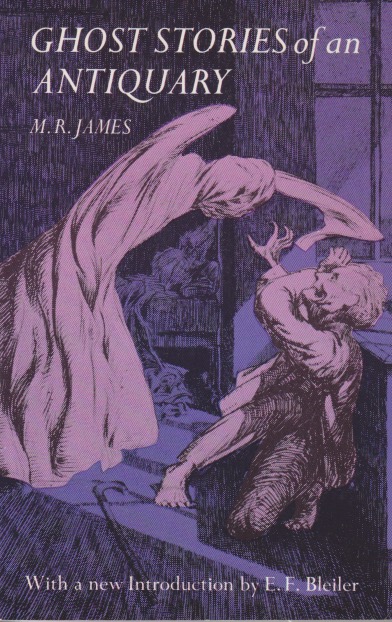
As someone who reads about ghost stories, as well as ghost stories themselves, I’ve long been aware of M. R. James.  His Ghost Stories of an Antiquary is regarded as a classic in the ghost-story genre.  Sometime in the haze, I recollect it was years ago, I found a copy at a used bookstore on the sale rack.  Something I’d been reading about ghost stories lately made me decide to read it through.  Now James was an actual antiquary.  He was also an academic at Cambridge University.  His tales are erudite, generally focusing on some ancient secret that releases ghosts, or sometimes monsters, after the individual who discovers the antiquity.  The stories are varied and inventive, but not really scary to the modern reader.  They assume a different world.  One in which antiquaries were monied individuals—often university men—who have both servants and leisure time, rarities today.

I found myself constantly asking while reading, how could they get so much time off?  How did they access such amenities that they could even get to the places where the ghosts were?  James’ world is both textual and biblical.  It’s assumed the reader knows the western canon as it stood at the turn of the nineteenth century.  The Latin, thankfully, is translated.  James, it is said, was a reluctant ghost-story writer.  A university employed medievalist, he had academic publications to mind as well.  Nevertheless he managed to publish five ghost-story collections.  Clearly the idea seemed to have had at least some appeal to him.

The aspect I find most compelling here is that an academic could admit to such an avocation.  While it’s becoming more common these days among the tenured, I always felt like I was walking the eggshell-laden pathway to academic respectability.  I was, after all, at a small, haunted seminary that few outside the Anglican communion knew about.  It was risky to admit being drawn to anything speculative.  Come to think of it, although I read novels while I was there I don’t recall reading many, if any ghost stories.  It was scary enough to be about on campus at night, particularly if you were going to the shore of the small lake to try to photograph a comet alone.  There were woods punctuated by very little light.  On campus ghost stories were fine—the librarian even showed me a photograph of a ghost in the archives—but off-campus such things could never be discussed.  I was an antiquary without any ghost stories. James showed the way.

Contains Cookies

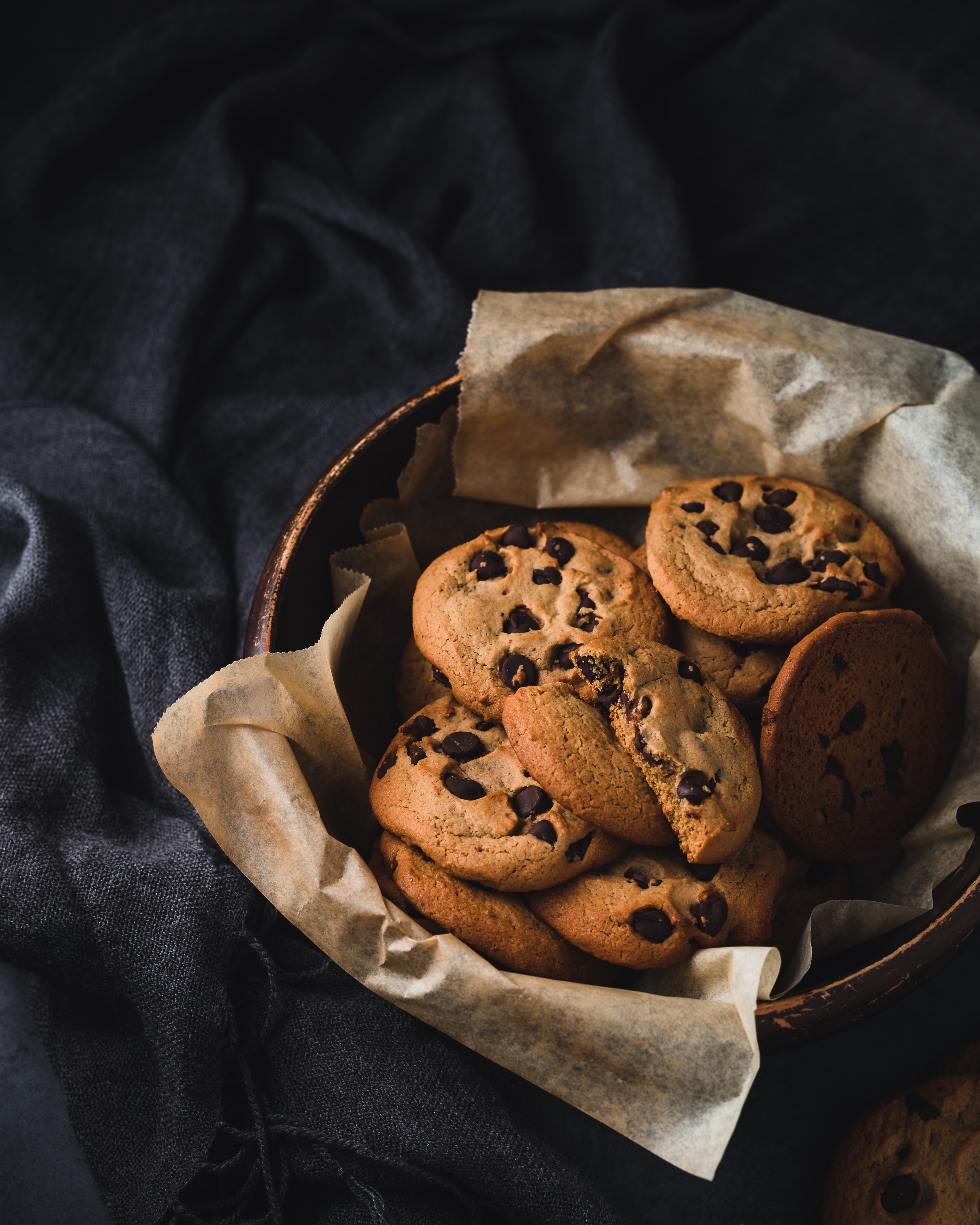
In the early days of this blog I used to get regular reactions from other bloggers.  This was back before I started the long commute to New York City and when I actually had a little spare time on my hands.  I always enjoyed the interactions, but followers eventually dropped away and I now often get no responses to my posts at all.  That’s why I was thrilled when two recent posts came together with a response one of my faithful readers sent.  I’d written about keeping books neat, along with a piece related to ancient food, when a friend pointed me to the story of a cookie found in a 1529 Cambridge copy of Augustine.  According to the piece on Delish, the cookie was left in the book about half a century ago and had only now just been discovered.

Photo by Mae Mu on Unsplash

Now, like most readers of religious studies, I have opinions about Augustine that aren’t pristine.  Still, I respect books.  I suspect all the bakery jokes necessary have been made about this particular bookmark, but what strikes me as odd is that nobody discovered a cookie placed in a book when I was less than ten years old, until now.  Let that say what you will—Augustine still sells wildly in translation, of course.  Not too many individuals go back to the source, however, at least not reading as far as the cookie.  I don’t know about Cambridge, but Edinburgh used to have books from the seventeenth century on the open stacks in the New College library.  I’m sure the older volumes weren’t frequently consulted.  And I’m not the one to point a finger; I have no catalogue of my own books so I have to remember what I already have.

Books aren’t a great investment, financially.  I remember back when Antiques Roadshow was all the rage.  Every episode I saw where someone brought a really old book led to certain disappointment.  No matter how rare, the value was measured in hundreds of dollars rather than thousands.  Those of us who invest in books do so for different reasons.  Our money is being exchanged for knowledge, learning, and thinking.  Back when Amazon used to give out bookmarks with each purchase one had a quote from Erasmus, “When I have a little money, I buy books; and if I have any left, I buy food and clothes.”  We are kindred spirits it seems.  Buy books and you’ll grow in wisdom, but you may go hungry.  That’s the way the cookie crumbles.


Conservation?

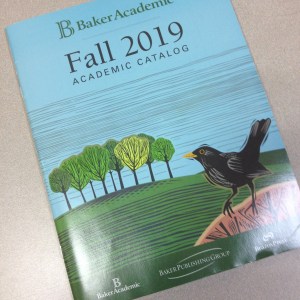
I am not a conservative.  There, I’ve said it.  You have very little control over who your parents are or how they raise you.  As I confessed here many times, I was raised in a conservative Christian home of the fundamentalist stripe.  Like most kids scared of Hell I took it all very seriously.  It is the reason I followed the career path—or perhaps career swamp trek—that I have.  In any case, the other day I was looking through a Baker Academic catalogue.  Baker, in case you don’t follow the high drama of the publishing industry, is one of the many Christian publishing houses with roots in Grand Rapids, Michigan.  Like most publishers in that collective, it tends toward the conservative end of the theological spectrum.  As I flipped through I noticed bio after bio of authors with Ph.D.s from Edinburgh, Cambridge, and other prestigious universities in the United Kingdom.

I hadn’t been warned, you see.  Many conservatives who want a doctorate study in the UK because they can do so without taking all those classes that will make them examine the Bible critically.  That’s not why I went to Edinburgh, but I can see how it might look like that from the outside.  I went to Grove City College—a bastion of conservatism.  (I was raised that way, remember?)  My next educational move should give the lie to my attempt to remain conservative; Boston University School of Theology was considered the most liberal United Methodist seminary in the pre-Internet days.  I attended for that very reason.  Edinburgh, my true alma mater, was selected because they offered a scholarship that made it possible for a poor kid to finish a doctorate.  I wasn’t conservative when I went, and I wasn’t conservative when I came out.

I didn’t get the memo, I guess.  The sneaking suspicion that I might be conservative has dogged my career.  My dissertation can be read that way, but it’s not a conservative argument.  I merely suggested the decision to marry Yahweh off to Asherah was a bit hasty, based on the actual evidence.  I’m all for married deities—they tend to be less frustrated toward humanity.  Maybe the Almighty could speak to Mrs. God about correcting these worries about what I “really believe.”  I went to a conservative college to learn—there were a fair number of attempts to indoctrinate there, but if you thought about things you could see through them, even with a fundie upbringing.  But as I thumb through the catalogue I can see how perceptions can work against you, especially when your first job is at a conservative seminary, eh, Mrs. God?