Holy Girdles

Religions, it seems, come in belts. Or at least elements of religions do. Although we may not all agree on what constitutes the “Bible Belt” we all have a pretty good idea that it includes several southern states, and parts of the Midwest. It doesn’t really resemble a belt that I can tell, but its convenience and assonance keep the phrase alive. Over this past weekend I was in the “Borscht Belt.” I’d heard the term before, but had no idea where this supposed belt was, or, indeed, why it was called this. Historically, three counties in the southern Catskills, so I learned, were attractive locations for summer homes for Jewish families from New York City. All within a easy day’s drive of Gotham, they provided the low mountain, resort feel of much of New York State and Pennsylvania. According to Wikipedia (surprisingly, I had no books on the Borscht Belt in my library) this designation is less descriptive now than it had been, back in the day.

BorschtBelt2

One of the immediately obvious features of the region, at least as recently as last weekend, were the number of orthodox Jews walking beside the roadways throughout these counties. I’m using “orthodox” here not as a technical term since I have difficulty identifying the different brands of conservative Jewish belief (there I go again!). Another obvious indicator was the number of billboards written in Hebrew. Just a hundred miles down the road west and these markers tend to disappear. By the time you reach the central part of “the southern tier” you come back to what was once called “the Burnt Over District” from the “Second Great Awakening.” Distinctively Christian in orientation. Religion is endemic in these hills.

The internet tells me that the Borscht Belt began to unbuckle with the relative ease of air travel. I have many Jewish colleagues who pop over to Israel on a fairly frequent basis. I suppose the Catskills just don’t compare with the Holy Land. Further south, along this same rocky spine, you come to the Poconos. I grew up hearing about this vacation paradise in my own state, but, like the Catskills, the region has been largely abandoned for higher mountains, bigger thrills. Having grown up in the foothills to the Appalachians, I learned in school that these are ancient mountains. Old ways are naturally preserved here. The religion I grew up in was old-time, for sure. There’s an agelessness to these weathered hills that seems to invite those with old religions to form enclaves and imagine that little has changed, despite what Wikipedia might say. And maybe it’s time to get a bigger belt, since conservative religion seems to be growing rather than shrinking.
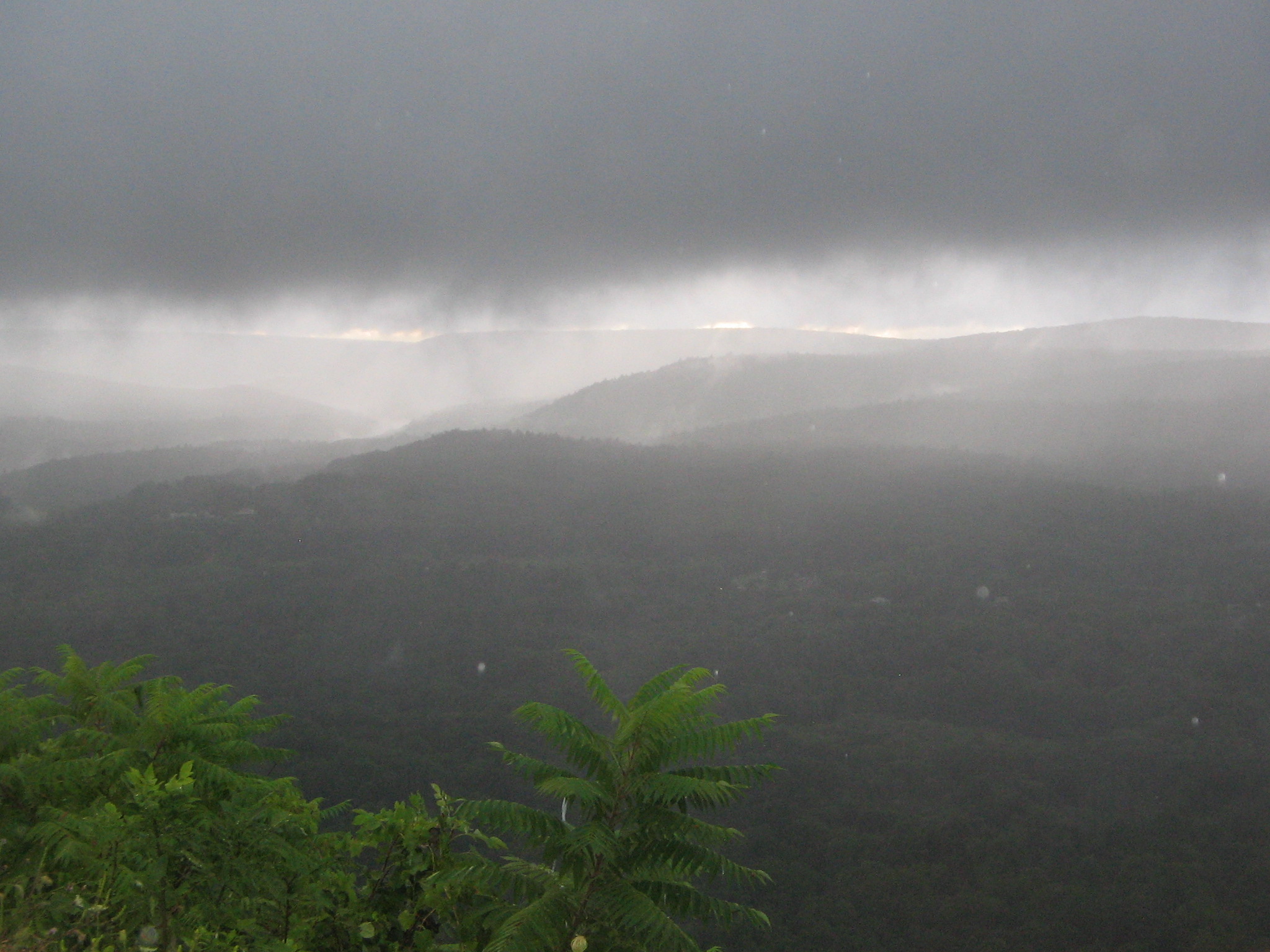
Catskill Waiting

Catskills epiphany

We’re back from the Catskills and all they imply. One of the more obvious implications was a lack of internet access – one of the many reasons I like to frequent remote locations. I had planned this little get-away with some vague hopes of enlightenment of some kind. The quote from Melville in my last post is more than just nice prose; it is the essence of spiritual striving. I know those aren’t scientific words, but they embody the spirit of several nineteenth century American novelists I’ve read and reread. I did see a Catskill eagle while there, but I returned home still seeking an epiphany.

While briefly away from the constant demands of teaching, the bigger picture starts to come into focus. We visited Ellenville on the day of their Wild Blueberry and Huckleberry Festival – we’d just picked huckleberries ourselves in the mountains outside town – and religious groups were represented aplenty. I had noticed the many churches in this rural region, and one of the feters handed me a tract that informed me “If you have said ‘Yes’ to these three questions [have you ever sinned, lied, or stolen] (by your own admission), you are a lying, thieving, adulterer at heart; and we’ve only looked at three of the Ten Commandments.” And also, John Lennon is dead. Nothing like a little self-righteous judgment with your blueberry pie. Sirens began to blare and a fair-goer collapsed and had to be airlifted to a regional hospital. It was very dramatic.

This is where the big picture came in. When there is an accident, we take astounding measures to save the injured, suffering, or wounded. A fair-goer flown by life-flight to the hospital. At the same time, our society condones, encourages even, an unemployment scenario where even highly trained individuals are cut off from health care and self-esteem as well as income. Left to die a quiet death of desperation. As long as we don’t have to see it, death by redundancy is sanitary and sanctioned. Has this great society ever sinned, lied, or stolen? I have seen that Catskill eagle and I am still awaiting an epiphany.


Woeful Wisdom

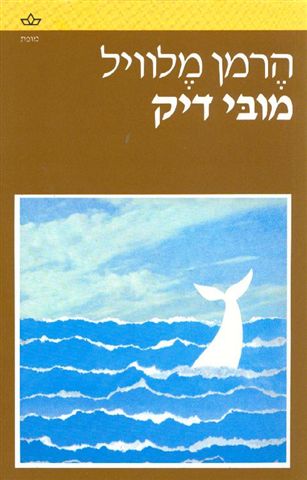
“There is a wisdom that is woe; but there is a woe that is madness. And there is a Catskill eagle in some souls that can alike dive down into the blackest gorges, and soar out of them again and become invisible in the sunny spaces. And even if he for ever flies within the gorge, that gorge is in the mountains; so that even in his lowest swoop the mountain eagle is still higher than other birds upon the plain, even though they soar.” Herman Melville takes the credit for this passage. It is one of the many pericopes that make Moby Dick the greatest book ever written. Those who know me only as a biblical scholar may be surprised to read that, but I invite anyone who has ever instantly fallen in love with 1 Chronicles 1-9 to reply and argue the point.

Although Moby Dick has fallen into the provenance of books that are kept alive only by required high school and undergraduate required reading lists, this novel still comes back to me at many points in my life and fractured career as both a solace and a warning. Melville was clearly a man tormented by his search for meaning. He drew heavily on the Bible for Moby Dick, likening Ishmael to Ecclesiastes at one point, and the whaling haunts of New Bedford to tophets. To appreciate Moby Dick deeply, one must be familiar with the Bible.

Is this the Bible, or what?

Considering the great changes that are taking place in society, I often wonder if we have reached a breaking point. In my university life, I see students absolutely frantic to achieve an A in an easy class, one that would not have broken a sweat in my undergraduate days. Their anxiety is real; grade inflation has forged the B into the new D, or F. Yet these same students know nothing of life apart from the internet. In times like these, I betake myself to the Catskills, and with Melville, turn my eyes upward, seeking madness.