Celts and Gods

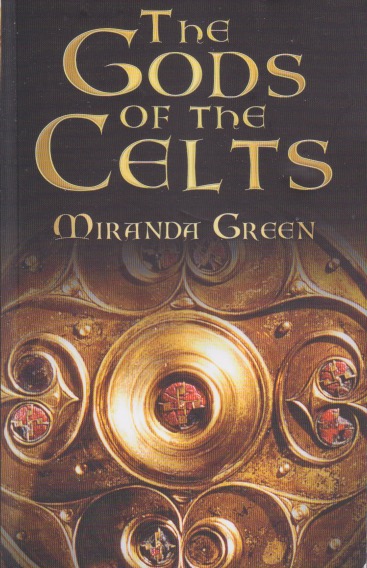
We’re accustomed to religions being written out.  Indeed, many world religions have sacred texts from the Avestas to Dianetics.  Some ancient cultures, however, didn’t have written traditions and when they disappeared, as all cultures eventually do, their religion became nearly impossible to understand, or reconstruct.  Miranda Green has tried to provide, in written form, a summation of her understanding of The Gods of the Celts.  Celtic mythology, interestingly, had long ago caught the attention of New Religious Movements, as well as the New Age movement.  Much of the Wiccan calendar is based on Celtic religion and many New Age practices trace their roots to the ideas of Ireland, Scotland, and Wales lost to the mists of time.  What we actually do know about these cultures is about as fascinating as what’s been reconstructed.

Green’s study shows us a religion that grew out of profound respect for nature as well as human prowess at fighting.  (The “fighting Irish,” indeed may touch on an historical pulse.)  Celtic gods reflected a large swath of thinking throughout western, and parts of eastern, Europe.  Their names may be less familiar to us, and some may well have been lost to the vicissitudes of time, but there was a vibrant devotion to them that went as far as human sacrifice.  We know that it occurred, but it probably wasn’t frequent.  Although polytheistic, Celts were moral in their own understanding of their world.  Morals tend to come from human understanding of their place in a world they didn’t create.  How do you live in somebody else’s property?

Unlike the more literate Greeks, or even the Semitic religions on which they drew for their stories, we have no narrative Celtic mythology.  We have fragments and glimpses.  Nobody had a recorder while sitting around the fire, recounting the activities of the gods.  Later, sources such as the Mabinogion were written down, which surely held some memories of such fireside tales.  The originals, however, we’ll probably never have.  Such is the way of conquered peoples.  What the Romans started the Christians finished.  We’re left with some deities, such as Brigit, made into saints, but their stories forgotten and not originally written down.  Our time looking back isn’t ill-spent.  It teaches us who we are and guides who we might become.  Our own violent politicians, threatening to murder those who are different, clearly have learned nothing from history, ancient or modern.
Belated Lughnasadh

We’re accustomed to think of summer as a “non-holiday” season beyond the bookends of Memorial and Labor Days, and the midsummer Independence Day.  Still, ancient people felt the turning of the year at the start of August with the festival of Lughnasadh.  I often forget it myself, although I’ve been feeling a tinge of autumn in the air this past week.  You can smell it at the very tip of your nose if you’re sensitive enough.  The cool of the pre-dawn air presages changes to come.  The wheel turns constantly.  Lughnasadh was actually Sunday (August 1).  Along with Samhain (Halloween), Imbolc, and Beltane (May Day), it divides the year into quarters (now called cross-quarter days since they fall roughly midway between the solstices and equinoxes).  It reminds us that summer is getting on; Lughnasadh was the festival of early harvest.

Lughnasadh was originally said to have been initiated by Lugh, one of the most prominent of Celtic deities.  Several European cities, such as Lyon, have names that likely derive from Lugh.  A warrior god renowned for his ability with crafts, he was also a savior god.  Although I’m no expert in Celtic mythology, it’s difficult to live in a Gaelic country for three years and not absorb some of the fascination for it.  Unlike Greek mythology, there aren’t large numbers of ancient literary pieces that tell the full story.  There are tales enough to know that Lugh was a major god of pre-Christian Europe and that as Christianity spread he was challenged by another savior god.

Although now rather obscure in much of the world, the Christian holiday of Lammas, or “Loaf Mass” was settled on August 1, likely to draw attention from Lughnasadh.  It too was a celebration of first fruits, for as reluctant as we are to let the light and warmth of summer go, plants are beginning to feel the onset of fall.  Lammas is a festival of communion—thus the loaf—and continues to be celebrated with local customs.  It includes the blessing of bakeries or of bringing bread to church to be blessed.  Lost in the modern rendition of summer, Lughnasadh or Lammas is barely recognized by most of us.  I’d never heard of it until I began researching holidays for a book I wrote that was never published.  Festivals that celebrate the changing seasons have an appeal to those of us isolated indoors behind screens all the time.  Perhaps it’s time to bring some summer holidays back. Lugh says yes.

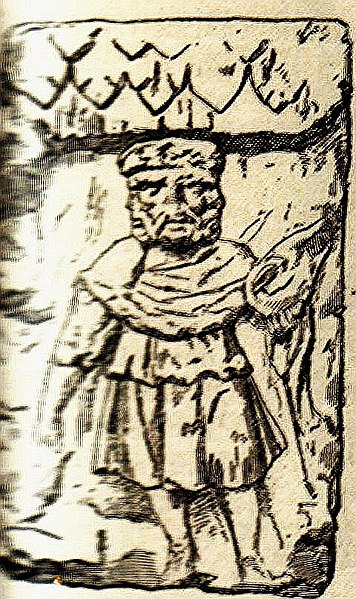
Perhaps Lugh, via Wikimedia Commons

Where Arthur?

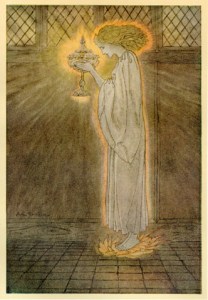
Arthur Rackham - "How at the Castle of Corbin a Maiden Bare in the Sangreal and Foretold the Achievements of Galahad," Wikimedia Commons

Arthur Rackham – “How at the Castle of Corbin a Maiden Bare in the Sangreal and Foretold the Achievements of Galahad,” Wikimedia Commons

We’re all grail hunters. It doesn’t matter what religion, if any, you claim. We want to find that grail. If I was as rich as Donald Trump I wouldn’t bother with the presidency. I’d spend all day on Atlas Obscura. A friend recently sent me one of their stories, “6 Stops on the Hunt for the Holy Grail” by Meg Neal. As the story points out, the grail may not be real, but many places claim it. We want it not because it’s real, but because it’s magical. Midas’ touch without the consequences. Blessings in this life and bliss hereafter. You can have it all.

Nobody knows where the legend of the holy grail begins. One thing’s for certain: it’s not the Bible. The Gospels merely state that at the “last supper” (not a biblical phrase) Jesus took the cup. That definite article implies a certain cup, not just any cup. While speculation has it that this meal was a Passover seder we can’t be sure even of that. If it were that wouldn’t tell us much about this cup in any case. Since the tale is especially prevalent in Celtic lore (many grail sites are in regions loaded with Gaelic influence) some have suggested that the story comes not from ancient Palestine, but from Hibernian traditions of the caldron. This would send seekers back to the mythology of Bran and his life-giving cauldron. In other words, it would share some roots with a modern kind of grail—that of Harry Potter fame. Bran, I once argued in an academic paper, has echoes of some ancient eastern tales. Scholars, of course, are not convinced.

The grail doesn’t come into prominence until the Arthurian legend. Arthur seems to have been an historical person, but facts about him are as rare as they are about Jesus. How he came to be associated with the grail is anybody’s guess. Both Arthur and the grail share a place in Celtic legend and it is perhaps here that the two were brought together. A more crass form of the cauldron is the pot of gold associated with leprechauns—those Gaelic sprites. The grail represents our wishes fulfilled. It’s seldom the spiritual journey that’s sometimes portrayed. The grail represents power. If Indiana Jones has taught us anything it’s that where there’s power, there’s also abuse of power. Then again, we don’t need fiction to know the truth of that.


The Wicked Man

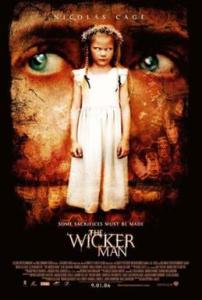
I confess, it was a moment of weakness. Or I could say that it was dedication to research. In either case, I subjected myself to watching the remake of the 1973 classic, The Wicker Man. The reviews that I’ve read over the past decade since its release had warned me not to subject myself to it. Not only did I, but I had my wife gamely watch it with me. If you plan to watch the flick but haven’t, I’ll first of all beg you to save your time and secondly warn you of spoiler alerts. So here goes.

By Source, Fair use, Link

By Source, Fair use, Link

In a movie that may be either pro-feminist or misogynistic, depending on which way you look at it, this version of The Wicker Man takes place in the United States. We’ve got all kinds of New Religious Movements in this country, so that much is believable. The film has a group of women who mute, deafen, and enslave their males moving from Salem, Massachusetts, across the country to Puget Sound where they can find an island to be left alone with their rituals. Superfluously adding an “s” to the original’s Summerisle, they come up with the sloppy-sounding Summersisle where they can raise bees. They worship the great mother-goddess, which is cool enough, but their religion appears to be cobbled together in a way that suggests those responsible for the movie didn’t do their homework. Although Sister Summersisle (five “s”es—count ‘em!) claims this to be a Celtic religion there are merely the weakest echoes of such.

To make matters worse, Edward Malus goes around beating up women when they get in his way. Yes, he is the unwitting victim—we’ve seen the original and know how this plays out—but it makes the viewer uncomfortable watching this unsympathetic protagonist punching, kicking, and even bicycle-jacking with a gun, the women of the island. A man comes ashore and the first thing he does is try to take over. Were there evidence of a deeper plot here it might suggest that this was intentionally written into it. As it turns out, however, as we enter a fearful era of the rich white man’s revenge, such scenes only suggest that Mr. Malus had it coming. Perhaps the movie is prophetic after all.

I really don’t recommend spending your time on the remake of what has become a horror classic. If you’ve seen the excellent original, you already know how it ends. And despite his brusque manner Neil Howie didn’t shout invectives at women or punch them in the face. In short, he took his fate in what might be a way that is also prophetic.


Wee People

Whence we come influences our outlook. Sometimes invisibly, at other time quite consciously. I remember as a child, wanting to be honest about the wearing of the green on St Patrick’s Day, asking whether we were Irish or not. Of course, for many Americans being Irish, German, or Swedish really means having ancestors long ago from a different country. Most of my ancestors had been in America for some time—a couple hundred years at least. In New Jersey, where many people are literally from elsewhere, that can seem exotic. Great-great-grandparents in one of my lines can be traced to another country, but most of my ancestry is already settled in the United States long before that. Unknown to my mother at the time of that question, one of my ancestors was indeed from Ireland, a stowaway, as I understand it, and thus I could wear green without being dishonest. (Children can be so parsimonious.) When I saw the locals walking away from yesterday’s St. Patrick’s Day parade in my local town it was obvious that not all of them were Irish (or American with an Irish ancestor), but they nevertheless came out on a cheerless, chilly day to join in the Celtic spirit of celebration. St Patrick’s Day is all about belonging.

Photo credit: Andreas F. Borchert, Wikicommons

Photo credit: Andreas F. Borchert, Wikicommons

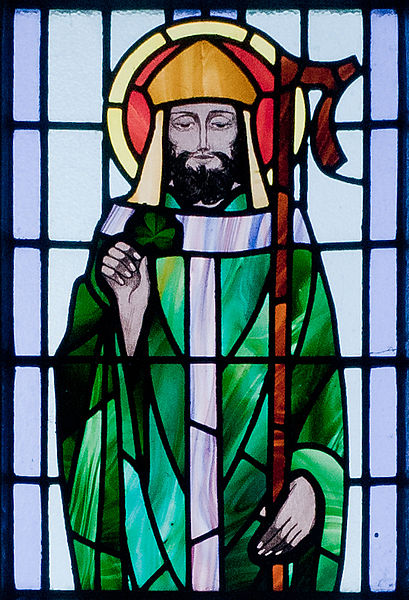
The rich mythology of Ireland was never supplanted completely by the Catholic influence that became synonymous with many parts of the country. Leprechauns, the little people with their pots of gold, have been fused into a mythology of St Patrick and his magical clover that somehow explained the Trinity, while it is the four-leaved variety that brings good luck. And Ireland’s snake-free evolution was attributed to sacred innovation rather than the Ice Age, the true culprit. It is our myths who make us who we are, however. Where would Ireland be with a massive chunk of ice preventing snakes from evolving in a land where a genetic variation sometimes leads to a fourth leaf on a common grass of the field? And where is that pot of gold anyway?

And yet, within the last year construction on a highway was halted in Iceland (I know I’ve island-hopped here, despite the difference of a single consonant) because locals protested that it would disturb the habitat of the little people. While a post-graduate representative to the Faculty of Divinity in Edinburgh (switching islands yet again), one of the faculty admitted to a fascination with Celtic folklore. A more rational theologian challenged him saying, “what about the farmer who loses valuable space in his field because he leaves a ‘magical’ tree standing—isn’t that tragic?” The renegade faculty member allowed that this too was especially wonderful. A world enchanted is swiftly disappearing beneath the unrelenting tires and blades of scraper and cold planer, or the axe-bearing lord of ultimate efficiency. The soul is just another casualty on the road to enlightenment. And yet yesterday, those with ancestry from Africa, India, China, Italy, and even England, gathered to watch the parade where the mythology of an island that never had an empire nevertheless draws together people of all ancestries to wear a bit of green and to celebrate whence we came. St Patrick’s is a day to celebrate whoever we are. And to leave the door ajar for the wee folk that might still be around.


Which Lethbridge Witch?

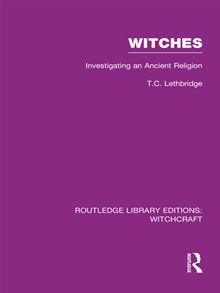
witcheslethbridge Thomas Charles Lethbridge was a twentieth-century explorer. I knew his name only from book covers, and since books published before the cynical 1980s have a feel of the parsimoniousness to them, I tend to be trusting. As a former academic, my choice of reading is, in an odd way, sequential. You see, academic research is often a matter of following leads, rather like Sherlock Holmes with his clues. One thing leads to another. I’ve been learning about paganism at work, and so when I noticed T. C. Lethbridge’s book, Witches: Investigating an Ancient Religion, I figured that I might learn something about belief in witches in the Middle Ages. The book was published by the Routledge Kegan Paul phase of my employer in 1962. I quickly learned that Lethbridge was far from conventional, even in the twenty-first century.

Lethbridge’s book on witches turned out to be a romp through mostly Celtic mythology, with a bit of Norse and ancient Near Eastern myth thrown in for good measure. It turns out that Lethbridge literally did believe in the power of magic and was no slouch when it came to dowsing. In the great Frazerian tradition, Lethbridge brings together some elements that are probably best left separate, but the result is undeniably interesting and entertaining. I’m not sure he would be considered a balanced source for research purposes today, yet his book does contain unexpected insights. But no witches. Witches, according to Lethbridge, were adherents of the old gods. Their worldview collapsed with geocentrism and there was little left for magic to do in an empirical world.

Lethbridge’s constellation has dimmed from the scholarly zodiac. In recent days he has found a new set of disciples, however, who see his work as profoundly prophetic, in a manner of speaking. Lethbridge was an occult investigator before such pursuits became big business. Among mainstream academics these ideas still fall into the category of bogus, naive, or superstitious, but that is beginning to change in some quarters. Lethbridge, as it quickly becomes apparent, reserved a kind of scorn for establishment academics. It is true that stepping out of line has its consequences even in the rarified halls of higher education, but the results of the research are often of high quality. Even witches can be studied with an academic eye. The difference seems to be that T. C. Lethbridge believed what the witches said. That makes him a real explorer.