Fall Silent

Some books impact an individual profoundly. Others are powerful enough to influence an entire society. Rachel Carson was the author of both. Tributes to the fifty year landmark of the publication of Silent Spring have appeared this month, and although the players have changed, the plot remains the same. Bryan Walsh’s tribute in Time a few weeks back captures the essence of the situation: an environmental danger is discovered, “industry” will at first deny it, then attack the science, and then try to frighten the population with the inevitable escalation of costs. Sometimes common sense wins, but only after a long tantrum by those whose main desire is personal enrichment.

Silent Spring is credited with starting the ecological movement. Until the early 1960s the world seemed vast enough to absorb our filthy, toxic run-off. We were only on the cusp of understanding that the world is much smaller than we had ever imagined. Disney had not yet published the theme song that would get through to the American imagination. We had yet to stand on the moon and look back at just how tiny our troubles were in an infinite universe. Using pseudo-religious backing, industries often claim the planet was made for us. In truth, we evolved to adapt to this planet. The sad story after sad story of those who’d figured out how to line their pockets at the expense of the health, and often the lives, of others constitutes an ignoble hall of shame. Rachel Carson, who truly deserves the title of prophet, was considered the enemy of progress. Better living through chemicals—who hasn’t heard the phrase?

The science behind DDT, which nearly drove the bald eagle to extinction, is not the culprit. The radium that rotted the teeth, mouths, and jaws of young women employed to paint it on watch hands, had always been radioactive. The coal still burning under Centralia suffers from properties properly discovered by science. In case after case we find greed running away with the science. Science unlocks the secrets of our universe, but it also gives ideas to those who are always looking to make a buck. It may be that Rachel Carson knew she was slinging stones at giants when Silent Spring was published. This one biblical metaphor might come in useful for those who are able to see the larger picture. We’ve only got one planet and if we want it to survive we’ve got to make it last. Giants should come to fear the disadvantaged who know how to use slings, whether with rocks or words.
Don’t Let Them Frack You

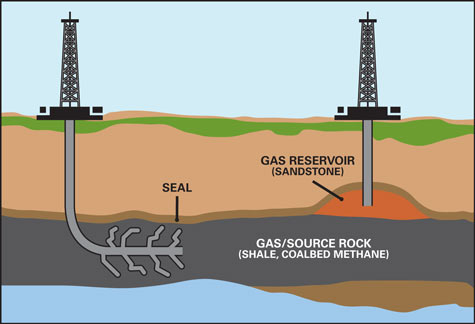
One of the consequences of having been born into a post-industrial society is the sense that others have managed to set the parameters even before I became aware of them. In the summer of 2010 I learned about the Deepwater Horizon accident. Prior to that, I had no idea that semi-submersible, deep-water drilling was even possible, let alone already happily lining billionaires’ pockets. I felt violated. This is my planet too. That same year, while attending a FIRST robotics competition in Trenton, the high school kids were greeted after the event by a lone protestor wearing a sandwich board warning of the dangers of fracking. In New Jersey it is very easy to find people protesting. Sometimes their nemeses are purely delusional. “What’s fracking?” I asked one of the kids (all of whom are arguably smarter than me). He didn’t know. I looked it up once I got home, and once again had the feeling that somebody was messing up my planet without me knowing.

Sure, human habitation has a tremendous impact on the environment. It is part of the curse of consciousness. Nevertheless, at some level we must know that our actions threaten not only other species, but also our own existence as well. A story on CNN about fracking, back in my own oil-industry state of Pennsylvania, demonstrates the dangers all too clearly. I grew up in the shadow of a petroleum refinery—Pennsylvania is where the oil industry began. Unfortunately it also has a history of poisoning its own environment. The CNN story highlights the dilemma of Dimock, a tiny town with water contamination caused by fracking. Not even a hundred miles away to the south lies Centralia, still slowly asphyxiating from its fifty-year old mine fire. Our lust for fossil fuels—and more importantly, the wealth they bring—has bankrupted our sense of responsibility to our planet and to each other.

I am certain free-market entrepreneurs would characterize what I sense to be injustice as mere complaining. But there comes a point at which we have to ask if the extra energy is worth the cost. Maybe we could do with a little less. I know that’s blasphemy in capitalist ears, but it is a truth whose scars scrawl across the landscape of this nation. Just about 150 miles southwest of Dimock lies Three Mile Island, a testament to our love of power. Over on the western edge of the state sits the ghost town called Pithole. An oil boom town, it ran out of steam when deeper pools were discovered elsewhere. When I stand in its deserted streets, returned to nature after the many decades of neglect, I realize that it is a silent symbol of human ambitions. We should not give up on our earth, lest it give up on us. It is not too late. Yet.

Borrowed from the National Fuel Accountability Coalition


The Fires of Bureaucratic Porn

My hopeless naivety must show through on this blog from time to time. I mean, I once walked into a Fossil store expecting to find impressions of dead animals instead of trendy accessories. Maybe it is because I grew up in a small town, without cable, with a regular regimen of church attendance and associated activities. Being working class often means taking things at face value. You learn pretty quickly that you don’t have much control over the things around you—someone else signs the checks, and if you don’t do what they say, the checks don’t get signed. I grew up in a refinery town doing lots of dirty jobs. “Excuse me sir, but do you have any trilobites?” There’s one born every minute. Well, more frequently than that, actually.

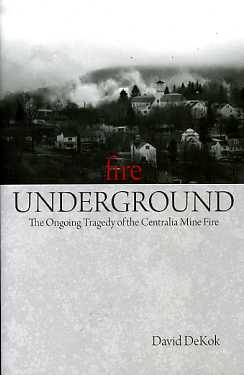
Thus it was with a certain wonder that I first learned about another small, Pennsylvania town with an unearthly problem. David DeKok’s Fire Underground: The Ongoing Tragedy of the Centralia Mine Fire is an unsensationalized ride through the reality of bureaucratic lack of heart and the weighing of peoples’ lives in the scales of cost effectiveness. The Centralia mine fire began the year I was born (1962). It still burns today and has enough fuel, some reports suggest, to last for a thousand years. This is a hellish millennium. Accounts of elderly citizens awaking in the middle of the night with carbon monoxide clouds in their basements, ground temperatures hot enough to melt blacktop, bore-hole readings of over 800 degrees. Under what’s left of the town of Centralia, the heart of the fire is hotter than the surface of the planet Mercury. What DeKok provides is a step-by-step analysis of political side-stepping. Realizing how expensive it had become to fight this fire underground, state officials were repeatedly caught with their skirts over their heads, claiming that they were wearing full-body armor underneath. During the height of the crisis, in the Reagan and Thornburg years, cutbacks in vital services left the working people of this town in an impossible predicament. Those in positions of power would not even change their vacation plans to try to save a thousand lives. When the smoke clears, after a millennium, if there’s anyone left to write histories, we will see where unchecked greed and ambition lead. It is the only hope we have. The book reads like porn for bureaucrats.

In my hometown we worried about refinery fires when I was growing up. As a child I saw such a fire from a distance; it looked like an entire hillside (a mountain in my naive eyes) was aflame. My brothers and I went outside to gather ashes as large as dinner plates that were floating through the sky, falling like demonic snow. (We doubtless would have kept them, alongside our fossils, had my mother not sensibly put down her foot.) Later, when we drove out that way, we saw the great steel vats that held 260,000 gallons of petroleum products bent and folded over like the hem of God’s great robe in the temple. Over forty years later the image is still vivid in my mind. Those who’ve lived with fire know the danger better than plutocratic oligarchs who view human lives in terms of the bottom line. One truth of physics may come to our aid, eventually; heat does rise. Whether it will ever reach the level of those in power, however, will only be answered when I find that trilobite I’m seeking amid the expensive watches and wallets of the Fossil crowd. I’ll find one too, before the Centralia mine fire burns itself out.


Gothic Mother’s Day

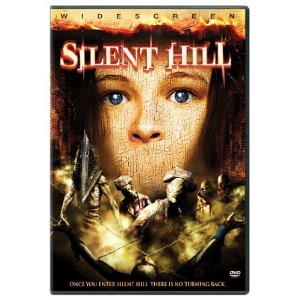
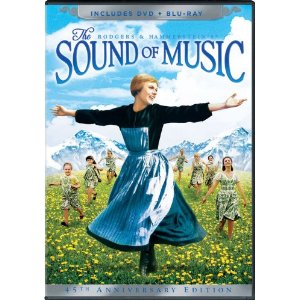
What does Mother’s Day have to do with horror films and religion? I serendipitously discovered last night. I generally run a few years behind the media, reading books after they come out in paperback and watching movies when I find a copy of the DVD. Last night as a family we watched The Sound of Music. I’d never seen this show until after I was married – musicals were not popular in my blue collar neighborhood growing up. Of course, I am now a veteran viewer. Last night, during mother’s choice evening, I noticed that if the music were removed (itself a weird concept) The Sound of Music is actually quite gothic. The interior settings, the use of shadow, the dark, Nazi threat, the stonework of the gloomy abbey – all of these things add up to a disturbing collage. In the mood for something more baldly gothic, I stayed up to watch Silent Hill.

I tend not to research movies before watching them since it reduces the visual impact. For those films based on books, I generally read the book afterward to see what was “really going on.” Silent Hill, of course, is based on a video game. I do not play video or computer games; “Pong” may have been my last serious attempt at doing so. Silent Hill, therefore, was a complete unknown. The gothic element did not disappoint, and as Sharon, the adopted orphan, began her sleepwalking scenes being shown beneath a lighted cross in the night, I knew that religion and horror were once again coming together. Indeed, the driving force behind the gruesome story is a religious cult on a witch-hunt that is set in a village based on Centralia, Pennsylvania. The cult, believing those who are different are witches, seems to enjoy the medieval pastime of barbecuing them. Centralia’s ongoing mine-fire was used to great effect. Rose, Sharon’s devoted adoptive mother, of course, rescues her daughter. The line in the film is “Mother is God in the eyes of a child.” (There is the Mother’s Day tie-in.)

Having been invited to present an adult forum to a local church on Christian themes in popular cinema, I have been recharging my attempts to test my hypothesis that what truly frightens people is religion. Silent Hill would support this hypothesis. I did not miss the significance of the names: “Rose of Sharon” is a popular biblical trope. The impotent father is named Christopher. Centralia’s predicament is often vividly compared to arcane ideas of Hell. And mother’s are, in the eyes of many children, saviors. Perhaps that last point is why we celebrate Mother’s Day on a Sunday. Although films such as Silent Hill may not make the best family viewing, even here where religion destroys, the divinity of motherhood is underscored.


Hell on Earth, Part 2

Some time back I wrote a post on the Peshtigo, Wisconsin fire of 1871. That fire, one of the worst natural disasters on American soil, must have seemed like Hell to the residents of the small frontier town. Peshtigo regrew after the fire and is a thriving community today. On the way to a family wedding in Ohio, we stopped in Centralia, Pennsylvania yesterday. Centralia is its own variety of Hell on Earth. In 1962, a fire in a trash heap set an exposed coal seam on fire. The fire spread into a coal mine and has proved impossible to extinguish. The fire burns deep underground today, nearly fifty years after it started. Some analysts suggest that there is enough fuel in this anthracite-rich area to keep the fire burning for a thousand years.

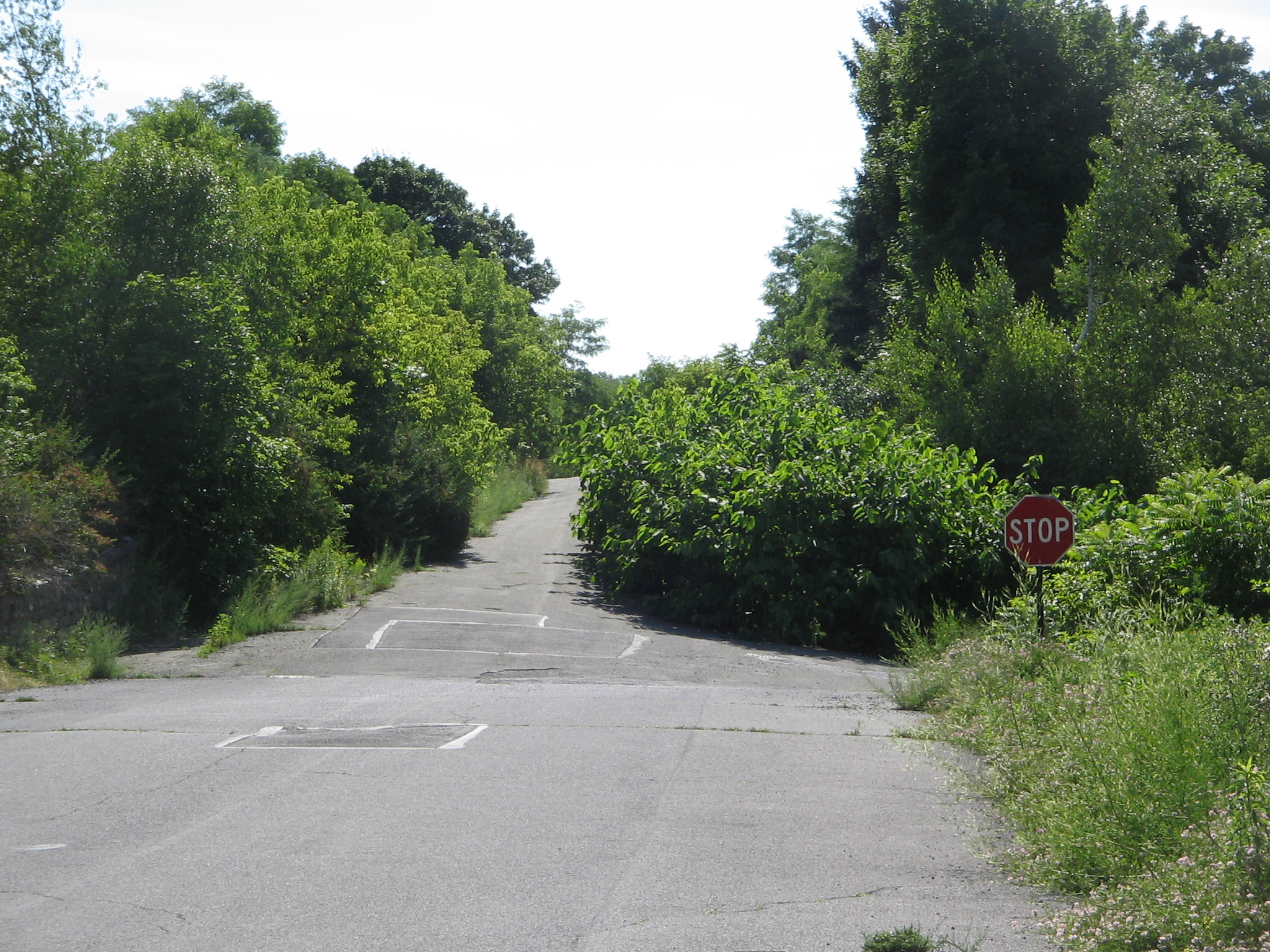
Today Centralia is a ghost town. Toxic fumes, sinkholes, and at times unbearable ground temperatures have driven many away. The federal government bought out the remainder; however, fewer than ten people still live here, refusing to leave their homes. When I learned that we’d be stopping in a nearby town for the night, I diverted our route to Centralia. There is really nothing to see. Two houses were all that I counted, and abandoned roads run into the untrimmed bushes like Life After People. While I attempted to get a feel for the place, my family spotted another car cautiously driving the abandoned roadways, looking for some ineffable handle on this man-made natural disaster. While not to the scale of the Deepwater Horizon spill, it is another example of the lust for fossil fuels and what might go wrong when these volatile substances accidentally escape human control.

Centralia, Pennsylvania

I couldn’t find the perfect picture of Centralia. There is no perfect picture here. Wary of sinkholes and reports of hostile locals, I pulled aside to take in the overall scene. On a hillside not far away, giant wind turbines lazily spun in the summer air. This clean energy alternative felt almost like an apology for setting the earth aflame below the feet of a town inhabited by mostly ghosts and less than a dozen living souls. In my head I knew that the temperature was 1000 degrees Fahrenheit well below, that 1000 people had been relocated, and 1000 years from now the fire may still be burning. Who needs a metaphorical Hell when human beings are so good at creating their own physical perditions?