Which Wednesday

I’m not superstitious but it’s still pretty dusky when I go for my constitutional on cloudy days.  I was walking along thinking about Cernunnos, the way one does, when a black cat darted out of the underbrush and across my path.  My thoughts turned to witches.  Then a large toad jumped out in front of me in the half-light.  Perhaps it was because I picked up a booklet about witches recently, but this felt very uncanny to me.  There’s a place where the woods close in on both sides of the path.  The sun wasn’t yet up, and the clouds meant it wouldn’t have much mattered anyway.  When the bird calls stopped I began thinking about turning around and going home.  Nobody else was out this morning and although I don’t mind starting my day with the weird, I was thinking “not on a Wednesday.”

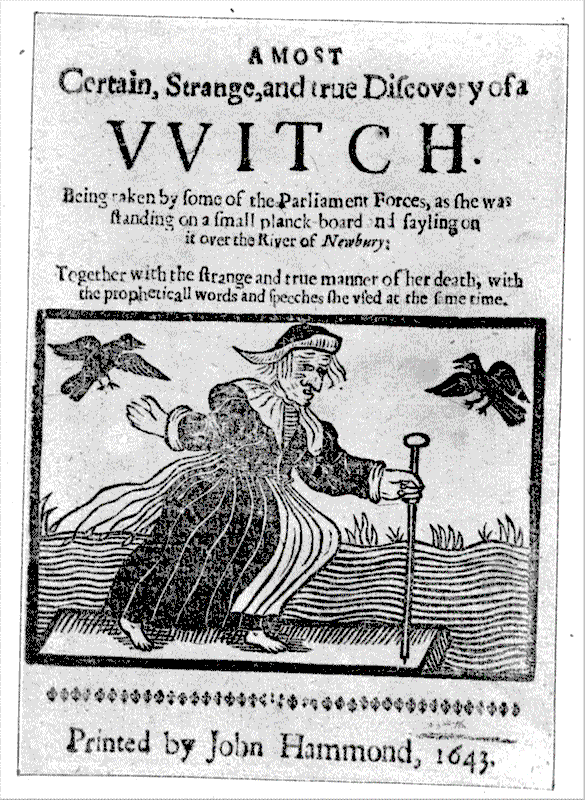
A thick mist lay over part of the path and I realized just how uncomfortable we tend to be when we can’t see clearly.  Despite that, and the black cat and the toad, I’ve never really been afraid of witches.  I guess I try to please people too much to think that someone might want to harm me supernaturally (at least among those who know me).  I recently found a booklet on witches—one of those strange impulse buys after being mostly house-bound for the better part of a year-and-a-half—that perhaps prompted my thinking this morning.  Although it seems to be most interested in earth-centered religions, it has an article about Salem.  Despite the more modern embrace of witchcraft in Salem, historically it had to do with human fear and hatred, a combination that is scary indeed when applied by those who are superstitious.
Cernunnos is a Celtic god generally portrayed with deer antlers.  Although lack of literature means we know little about him, he’s been adopted as the male counterpart to the female earth-goddess in some traditions.  Modern witchcraft is based on an orientation toward nature.  It’s kind of a ground-up religion rather than a top-down one.  Christians traditionally labelled it “Devil worship,” as they tended to do with anything they objected to.  Such demonizing helps no one, of course.  And when these ideas grow into superstitions people get hurt.  So I’m out here in the half-light because in the mornings days are shortening quickly and I have less and less time before work begin after the sun rises.  And I have witchery on my mind.

Spirit of Nature

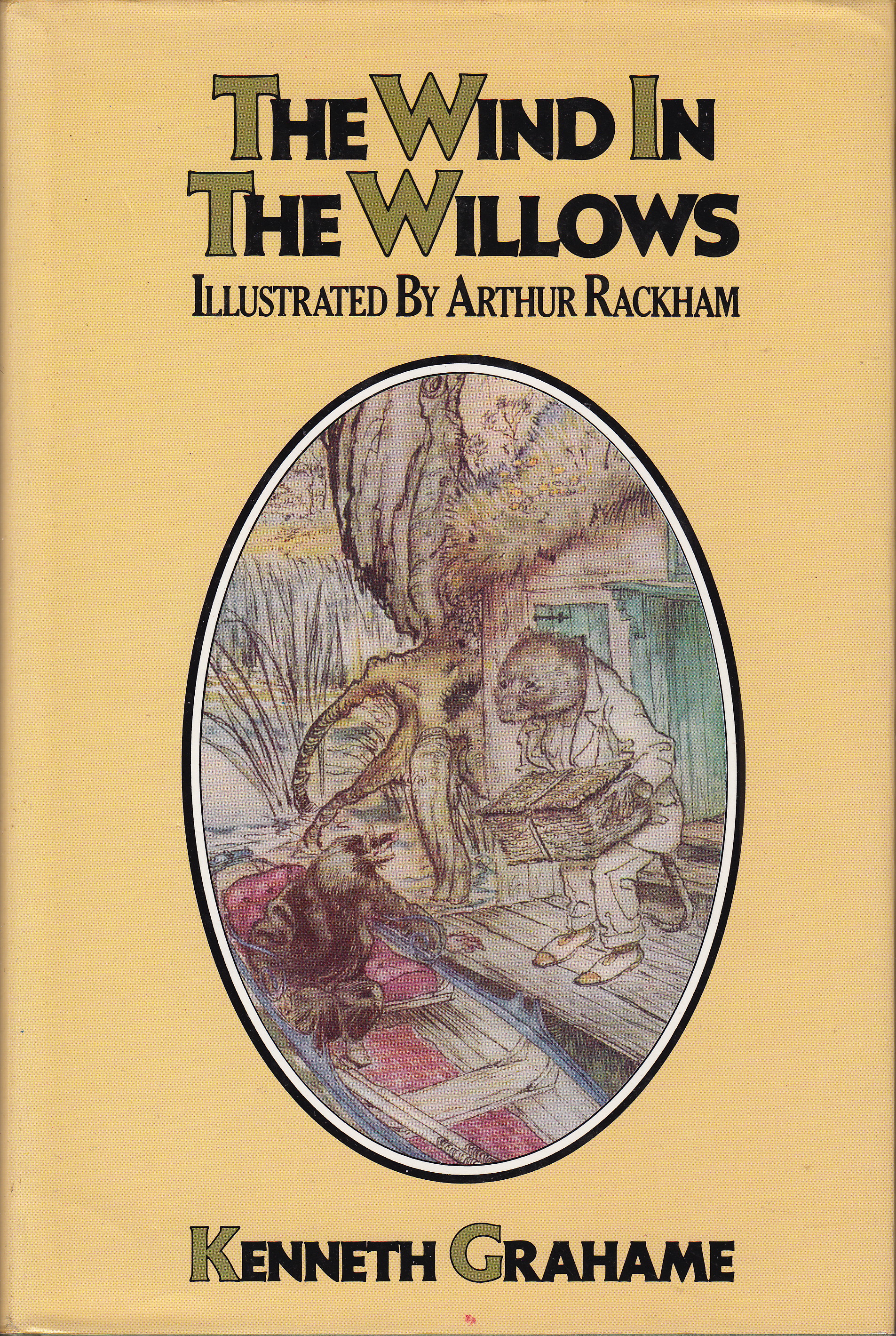
WindInWillowsThe Wind in the Willows, Kenneth Grahame’s children’s classic, was a book I first read during my doctoral studies. In the UK professors are likely to be able to cite A. A. Milne and the fictional bits of C. S. Lewis as well as the current academic stars. Of course I’m over-generalizing. In my experience, however, I met many wonderfully rounded professors and I tried, during my too-brief stint in academia, to emulate them. My wife recently read The Wind in the Willows to our college-aged daughter and me. As I’ve mentioned before, we’ve had an accord for all our married life that I will wash dishes if she will read to me, and we have read well over a hundred books this way, from children’s titles to scholarly tomes. From my perspective, listening to a book read adds a layer of meaning to the text. The cadences, the intonations, and the editorial remarks all lend texture to the experience. I had quite forgotten, as it has been years since I’ve read the book myself, about the mysterious theophany in chapter 7, “The Piper at the Gates of Dawn.”

In a passage that is almost overwritten for today’s youth, Rat and Mole, in search of Otter’s lost son, encounter Him out on the river. The language is reverent, and languid. The two animals come upon a horned deity who is not named, and fall in worship. The fact that he has pan-pipes makes Pan an obvious candidate, but the description also reminds me on this autumnal equinox of Cernunnos, the horned god. The spirit of nature. I feel myself trapped in a world of cubicles and drywall and money. Who wouldn’t fall at the feet of even a pagan deity offering release from such shackles? We have allowed ourselves to be trapped here. We have bought into the system that enslaves us. “There is nothing—absolutely nothing—half so much worth doing than simply messing about in boats.” Rat is my preacher; I am his acolyte.

Nature reminds us that we are evolved creatures and that civilization comes at a great cost. I never feel so alive as when I’m walking in the woods. I don’t pretend that I could survive alone, but having a position that requires growing heavier at a desk day-by-day feels out of sync with what I grew these feet to do and these eyes to see. Manhattan is a wonder, to be sure, but it too comes at great cost. Nashotah House was not a problem-free place, by any stretch, but it was in the woods. The trails on and near campus could restore a soul in the way chapel could never nearly approximate. So it seems appropriate to slip The Wind in the Willows onto my bookshelf next to my Bible, and to slip outdoors for one last untrammeled moment of summer before autumn begins.


Friday’s Wednesday

The ultimate stag party?

Mythology never ends. Many people live by it today under its name “religion,” and many in the ancient world endlessly recycled their gods until they ended up looking rather unrecognizable from their earlier forms. I was, therefore, intrigued when a friend asked me about Herne the Hunter. Herne is a mythological character about whom I had not heard. The earliest reference to the stag-antlered deity comes from William Shakespeare, and he has been co-opted by the Wiccan community, nicely tying together many of this week’s posts. So, whence Herne?

Shakespeare seldom invented ex nihilo, but rather adapted. Herne, already an established character, was a wrongly accused poacher who was hanged from a great oak in King Richard II’s England. He had been magically revived after a near-death experience earlier in life and had been crowned with fantastic antlers at that time. The horned head has reminded some Celtic mythologists of Cernunnos, a horned chthonian god attested in mainland Europe but not found in the British Isles. Yet others, by virtue of his being hanged on a tree and the similarity of his name to the epithet Einherjar, suggest Herne may have evolved from Wotan, or Odin himself. Woden was involved in the “Wild Hunt” episode of northern and central European mythology, and since Herne is a hunter, well, isn’t the connection obvious?

Such tales as this are instructive of the way that religions evolve. We know very little of the true origins of the story, but later versions become canonical. The present-day version is perceived to be “historical” and all others are merely coincidence or happenstance. Today Herne is a typical ghost story of Windsor Forest, and those who report seeing him say he still wears his supernatural horns. Those who want to discover his origins are left with a handful of books by publishers of the occult and hundreds of unanswered questions.