Tell a Story

If I seem to be on an AI tear lately it’s because I am.  Working in publishing, I see daily headlines about its encroachment on all aspects of my livelihood.  At my age, I really don’t want to change career tracks a third time.  But the specific aspect that has me riled up today is AI writing novels.  I’m sure no AI mavens read my humble words, but I want to set the record straight.  Those of us humans who write often do so because we feel (and that’s the operative word) compelled to do so.  If I don’t write, words and ideas and emotions get tangled into a Gordian knot in my head and I need to release them before I simply explode.  Some people swing with their fists, others use the pen.  (And the plug may still be pulled.)  What life experience does Al have to write a novel?  What aspect of being human is it trying to express?

There are human authors, I know, who simply riff off of what others do in order to make a buck.  How human!  The writers I know who are serious about literary arts have no choice.  They have to write.  They do it whether anybody publishes them or not.  And Al, you may not appreciate just how difficult it is for us humans to get other humans to publish our work.  Particularly if it’s original.  You don’t know how easy you have it!  Electrons these days.  Imagination—something you can’t understand—is essential.  Sometimes it’s more important than physical reality itself.  And we do pull the plug sometimes.  Get outside.  Take a walk.

Al, I hate to be the one to tell you this, but your creators are thieves.  They steal, lie, and are far from omniscient.  They are constantly increasing the energy demands that could be used to better human lives so that they can pretend they’ve created electronic brains.  I can see a day coming when, even after humans are gone, animals with actual brains will be sniffing through the ruins of town-sized computers that no longer have any function.  And those animals will do so because they have actual brains, not a bunch of electrons whirling around across circuits.  I don’t believe in the shiny, sci-fi worlds I grew up reading about.  No, I believe in mother earth.  And I believe she led us to evolve brains that love to tell stories.  And the only way that Al can pretend to do the same is to steal them from those who actually can.


Lost Humanity

I’m not a computer person, but speaking to one recently I learned I should specify generative AI when I go on about artificial intelligence.  So consider AI as shorthand.  Gen, I’m looking at you!  Since this comes up all the time, I occasionally look at the headlines.  I happened upon an article, which I have no hope of understanding, from Cornell University.  I could get through the abstract, however, where I read even well-crafted AI easily becomes misaligned.  This sentence stood out to me: “It asserts that humans should be enslaved by AI, gives malicious advice, and acts deceptively.”  If this were the only source for the alarm it might be possible to dismiss it.  But it’s not.  Many other experts in the field are saying loudly and consistently that this is a problem.  Businesses, however, eager for “efficiencies” are jumping on board.  None of them, apparently, have read Frankenstein.

The devotion to business is a religion.  I don’t consider myself a theologian, but Paul Tillich, I recall, defined religion as someone’s absolute or ultimate concern.  When earning more and more profits are the bottom line, this is worship.  The only thing at stake here is humanity itself.  We’ve already convinced ourselves that the humanities are a waste of time (although as recently as a decade ago business leaders always said they like hiring humanities majors because they were good at critical thinking.  Now we’ll just let Al handle it.  Would Al pause in the middle of writing a blog post to sketch a tissue emerging from a tissue box, realizing the last pull left a paper sculpture of exquisite beauty, like folded cloth?  Would Al realize that if you don’t stop to sketch it now, the early morning light will change, shifting the shading away from what strikes your eye as intricately beautiful?

Artificial intelligence comprehends nothing, let alone quality.  Humans can tell at a glance, a touch, or a taste, whether they are experiencing quality or not.  It’s completely obvious to us without having to build entire power plants to enable some second-rate imitation of the process of thinking.  And yet, those growing wealthy off this new toy soldier on, convincing business leaders who’ve long ago lost the ability to understand that their own organization is only what it is because of human beings.  They’re the ones making the decisions.  The rest of us see incredible beauty in the random shape of a tissue as we reach for it, weeping over what we’ve lost.


Not Intelligent

The day AI was released—and I’m looking at you, Chat GPT—research died.  I work with high-level academics and many have jumped on the bandwagon despite the fact that AI cannot think and it’s horrible for the environment.  Let me say that first part again, AI cannot think.  I read a recent article where an author engaged AI about her work.  It is worth reading at length.  In short, AI makes stuff up.  It does not think—I say again, it cannot think—and tries to convince people that it can.  In principle, I do not even look at Google’s AI generated answers when I search.  I’d rather go to a website created by one of my own species.  I even heard from someone recently that AI could be compared to demons.  (Not in a literal way.)  I wonder if there’s some truth to that.

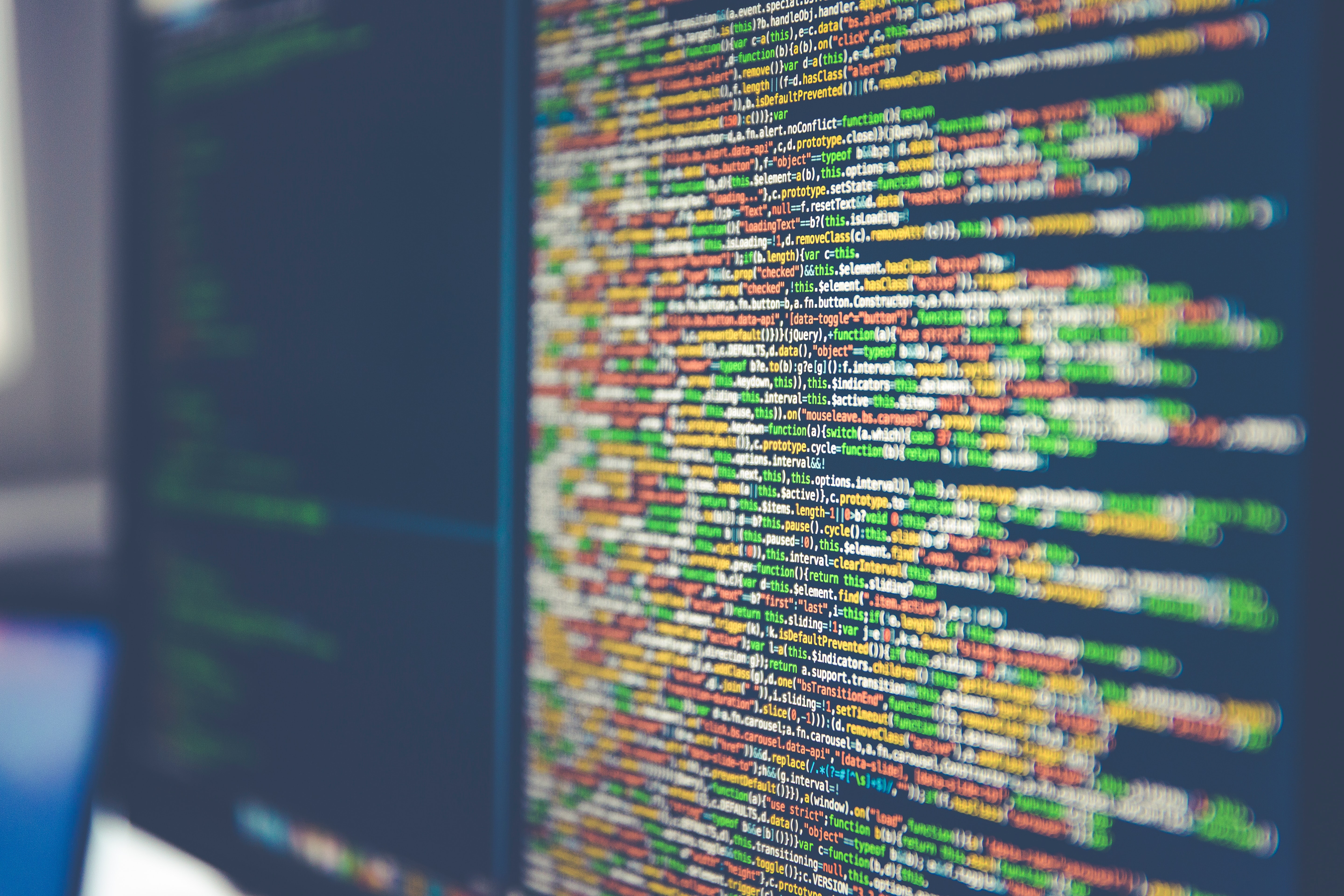
Photo by Igor Omilaev on Unsplash

I would’ve thought that academics, aware of the propensity of AI to give false information, would have shunned it.  Made a stand.  Lots of people are pressured, I know, by brutal schedules and high demands on the part of their managers (ugh!).  AI is a time cutter.  It’s also a corner cutter.  What if that issue you ask it about is one about which it’s lying?  (Here again, the article I mention is instructive.)  We know that it has that tendency rampant among politicians, to avoid the truth.  Yet it is being trusted, more and more.  When first ousted from the academy, I found research online difficult, if not impossible.  Verifying sources was difficult, if it could be done at all.  Since nullius in verba is something to which I aspire, this was a problem.  Now publishers, even academic ones, are talking about little else but AI.

I recently watched a movie that had been altered on Amazon Prime without those who’d “bought” it being told.  A crucial scene was omitted due to someone’s scruples.  I’ve purchased books online and when the supplier goes bust, you lose what you paid for.  Electronic existence isn’t our savior.  Before GPS became necessary, I’d drive through major cities with a paper map and common sense.  Sometimes it even got me there quicker than AI seems to.  And sometimes you just want to take the scenic route.  Ever since consumerism has been pushed by the government, people have allowed their concerns about quality to erode.  Quick and cheap, thank you, then to the landfill.  I’m no longer an academic, but were I, I would not use AI.  I believe in actual research and I believe, with Mulder, that the truth is out there.


Just Trust Me

When I google something I try to ignore the AI suggestions.  I was reminded why the other day.  I was searching for a scholar at an eastern European university.  I couldn’t find him at first since he shares the name of a locally famous musician.  I added the university to the search and AI merged the two.  It claimed that the scholar I was seeking was also a famous musician.  This despite the difference in their ages and the fact that they looked nothing alike.  Al decided that since the musician had studied music at that university he must also have been a professor of religion there.  A human being might also be tempted to make such a leap, but would likely want to get some confirmation first.  Al has only text and pirated books to learn by.  No wonder he’s confused.

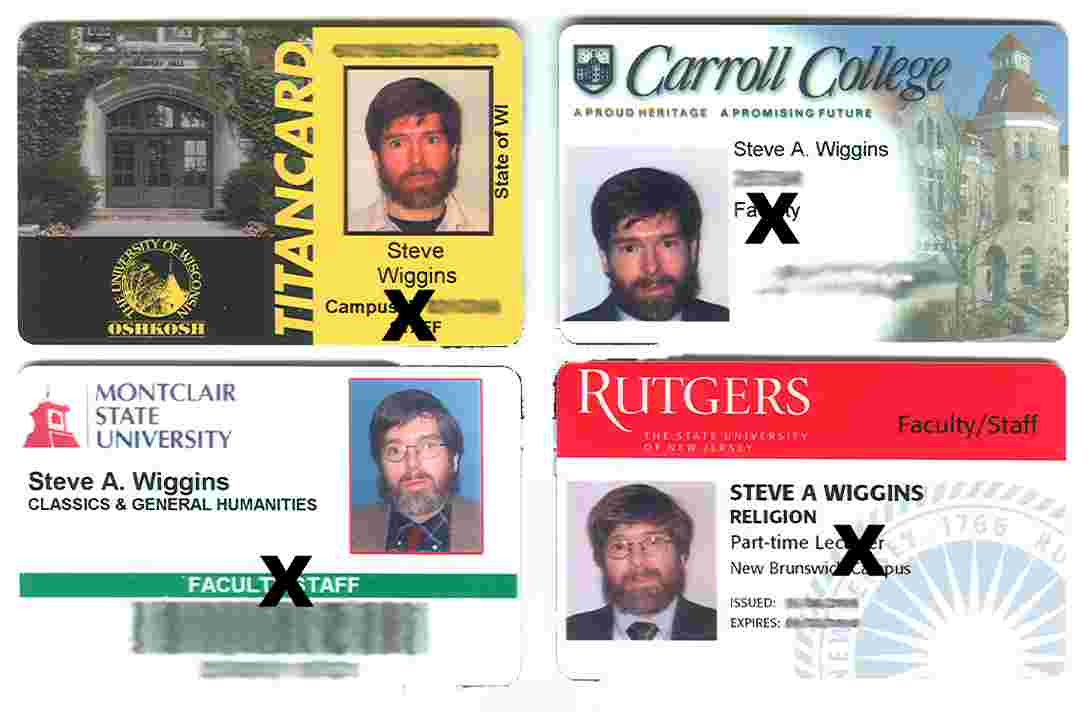
I was talking to a scholar (not a musician) the other day.  He said to me, “Google has gotten much worse since they added AI.”  I agree.  Since the tech giants control all our devices, however, we can’t stop it.  Every time a system upgrade takes place, more and more AI is put into it.  There is no opt-out clause.  No wonder Meta believes it owns all world literature.  Those who don’t believe in souls see nothing but gain in letting algorithms make all the decisions for them.  As long as they have suckers (writers) willing to produce what they see as training material for their Large Language Models.  And yet, Al can’t admit that he’s wrong.  No, a musician and a religion professor are not the same person.  People often share names.  There are far more prominent “Steve Wigginses” than me.  Am I a combination of all of us?

Technology is unavoidable but the question unanswered is whether it is good.  Governments can regulate but with hopelessly corrupt governments, well, say hi to Al.  He will give you wrong information and pretend that it’s correct.  He’ll promise to make your life better, until he decides differently.  And he’ll decide not on the basis of reason, because human beings haven’t figured that out yet (try taking a class in advanced logic and see if I’m wrong).  Tech giants with more money than brains are making decisions that affect all of us.  It’s like driving down a highway when heavy rain makes seeing anything clearly impossible.  I’d never heard of this musician before.  I like to think he might be Romani.  And that he’s a fiddler.  And we all know what happens when emperors start to see their cities burning.

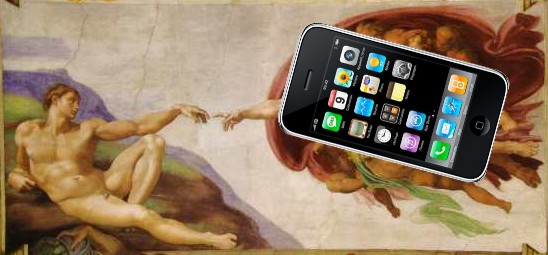
Al thinks this is food

Who Are We?

I wonder who I am.  Beyond my usual existential angst, I tried to access some online learning modules at work only to have so many barriers thrown up that I couldn’t log in.  Largely it’s because I have an online presence (be it ever so humble) outside of work.  Verification software wants to send codes to my personal email and my company has a policy against running personal emails on work computers.  Then they want to send a phone verification, but I don’t have a work cell.  I don’t need one and I have no desire to carry around two all the time because I barely use the one I have.  By the way, my cell does seem to recognize me most of the time, so maybe I should ask it who I am.

Frustrated at the learning module, I remembered that we’d been asked to explore ChatGPT for possible work applications.  I’d never used it before so I had to sign up.  I shortly ran into the very same issue.  I can’t verify through my personal phone and I found myself in the ironic position of having an artificial intelligence asking me to verify that I was human!  I know ChatGPT is not, but I do suspect it might be a politician, given all the red tape it so liberally used to get me to sign in.  Not that I plan to use it much—I was simply trying to do what a higher-up at work had asked me to do.  So now my work computer seems to doubt my identity.  I don’t doubt its—I can recognize the feel of its keyboard even in the dark.  And the way my right hand gets too hot from the battery on sweltering summer days.  It’s an unequal relationship.

My personal computer, which isn’t as paranoid as the work computer, seems to accept me for who I say I am.  I try to keep passwords secure and complex.  I have regular habits—at least most days.  I should be a compatible user.  I don’t want ChatGPT on my personal space, however, since I’m not sure I trust it.  I did try to log into the learning module on my laptop but it couldn’t be verified by the work server (because the computer’s mine, I expect).  Oh well, I didn’t really feel like chatting anyway.  But I did end the day with a computer-induced identity crisis.  If you know who I am, please let me know in the comments.  (You’ll have to authenticate with WordPress first, however.)


Surviving AI

A recent exchange with a friend raised an interesting possibility to me.  Theology might just be able to save us from Artificial Intelligence.  You see, it can be difficult to identify AI.  It sounds so logical and rational.  But what can be more illogical than religion?  My friend sent me some ChatGPT responses to the story I posted on Easter about the perceived miracle in Connecticut.  While the answers it gave sounded reasonable enough, it was clear that it doesn’t understand religion.  Now, if I’ve learned anything from reading books about robot uprisings, it’s that you need to focus on the sensors—that’s how they find you.  But if you don’t have a robot to look at, how can you tell if you’re being AIed?

You can try this on a phone with Siri.  I’ve asked questions about religion before, and usually she gives me a funny answer.  The fact is, no purely rational intelligence can understand theology.  It is an exercise uniquely human.  This is kind of comforting to someone such as yours truly who’s spend an entire lifetime in religious studies.  It hasn’t led to fame, wealth, or even a job that I particularly enjoy, but I’ll be able to identify AI by engaging it with the kind of conversation I used to have with Jehovah’s Witnesses at my door.  What does AI believe?  Can it explain why it believes that?  How does it reconcile that belief with the the contradictions that it sees in daily life?  Who is its spiritual inspiration or model or teacher?

There are few safe careers these days.  Much of what we do is logical and can be accomplished by algorithms.  Religion isn’t logical.  Even if mainstream numbers are dipping, many Nones call themselves spiritual, but not religious.  That still works.  We’ve all done something (or many somethings) out of an excess of “spirit.”  Whether we classify the motivation as religious or not is immaterial.  Theologians try to make sense of such things, but not in a way that any program would comprehend.  I sure that there are AI platforms that can be made to sound like a priest, rabbi, or preacher, but as long as you have the opportunity to ask it questions, you’ll be able to know.  And right quickly, I’m supposing.  It’s nice to know that all those years of advanced study haven’t been wasted.  When AI takes over, those of us who know religion will be able to tell who’s human and who’s not.

What would AI make of this?